Recipe: Creamy Double Mushroom Soup with Green Onions

5 Mar

Mother Nature is really letting us have it this winter; we have been hit with yet another snow storm. The government has shut down and so has my office: today is an official snow day. Being home on a day such as this, my thoughts turned to warm and comforting things such as soup. Specifically, to an earthy soup featuring two types of mushrooms and lots of green onions–hence the name. I might have called it quadruple mushroom soup because it features mushrooms four ways: dried (and soaked) mushrooms, sautéed sliced mushrooms, fresh chopped mushrooms–and sliced raw mushrooms as a garnish. This is definitely a soup for mushroom lovers, of which I am one. But it is also a good soup for anyone needing some flexibility (that would be me, too). Not enough dried mushrooms on hand? Add more of the fresh ones. Don’t like (or have) button mushrooms? Substitute portabella or another type. Use one, two, or all three of the broths suggested below. Make it vegan, or not (see below). This is a forgiving soup perfectly suited to an unforgiving day.

Mushroom Soup

Creamy Double Mushroom Soup with Green Onions
Serves 4-6

2 oz. dried mushrooms (porcini, shitake, etc.)
2-3 tbsp. olive oil
20 oz. white button mushrooms–slice half the mushrooms, finely chop the other half (save two mushrooms to slice later for garnish)
2 bunches green onions/scallions, trimmed at both ends, rinsed clean, and thinly sliced (save one green onion to slice later for garnish)
3 cloves garlic, minced
freshly ground pepper, to taste
dash of dry sherry or splash of white wine (optional)
5 c. beef broth (or veggie broth or miso broth, or combination of broths)
1 tbsp. soy sauce (optional)
pinch of sugar (about 1/2 tsp.), to taste
1 c. heavy cream (or unsweetened coconut milk or soy creamer)

Preparation
1. Place the dried mushrooms in a bowl and pour enough boiling water over them to cover; soak for 30 minutes.
2. Meanwhile, heat half the olive oil in a soup pot over medium-high heat, add the sliced white mushrooms, and sauté until they start to turn golden; remove the mushrooms from the pot and reserve.
3. Add  the remaining olive oil to the soup pot and sauté the green onions until soft. Add the minced garlic and pepper; cook for another two minutes. Add the sherry/wine (if using) and reserved sautéed mushrooms. Turn heat to low.
4. Strain the soaked mushrooms through a fine sieve, saving the dark mushroom liquid. Rinse the mushrooms twice in a small amount of water, adding the first rinse to the dark mushroom liquid and discarding the second rinse. 5. Add the rinsed mushrooms to the soup pot. Strain the saved mushroom liquid and add it to the soup pot, along with the broth, soy sauce (if using), and sugar. Turn the heat back to medium high.
6. Using an immersion blender, blend the contents of the soup pot (or blend in batches in a blender and return to pot).
7. Add the chopped mushrooms to the soup and simmer for 20 minutes. Turn off the heat and add the heavy cream (or coconut milk/soy creamer). Check seasonings, adding more pepper, soy sauce, or sugar as desired.
8. Serve soup in individual bowls and top with a few thin mushroom slices and a sprinkle of sliced green onions.
Recipe: Blueberry Cream Cheese Coffee Cake

28 Feb

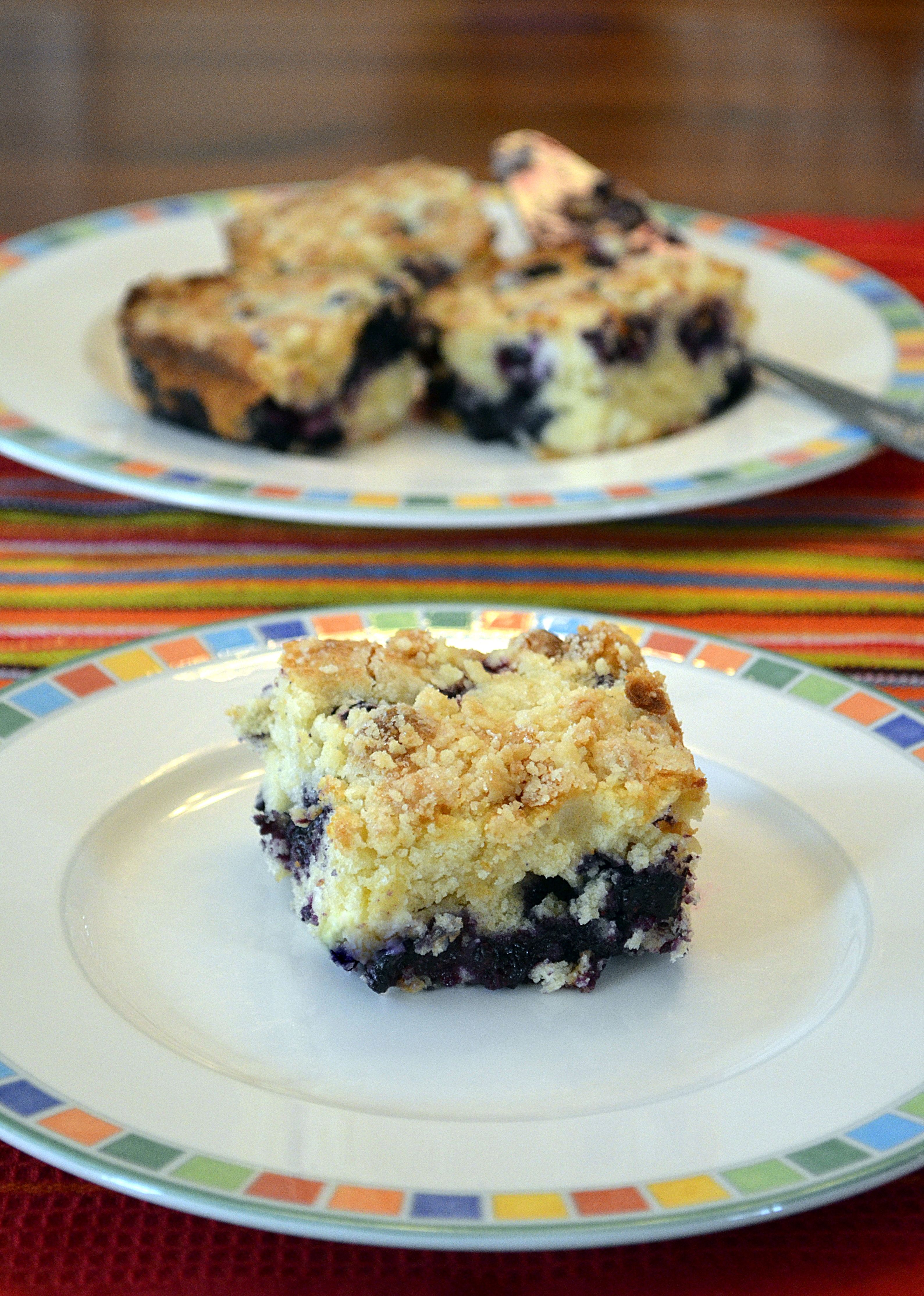
Last night, we ended up with an abundance of blueberries, due to my lack of attention to the contents of our refrigerator. I stopped at the grocery store to pick up some items for dinner and of course bought a number of other things not on my shopping list, including fresh blueberries. I was pleased with this impulse purchase since the blueberries were for my husband, who likes to sprinkle them on top of his yogurt in the morning. I was sure he would be happy to have them, and he was indeed quite happy to have blueberries–the blueberries he himself had bought the day before. Argh. How had I not noticed them? All I can say is, it was the end of a long work week and my powers of observation were obviously not  very powerful. There was only one way out of this dire situation: we would have to make blueberry coffee cake. The best thing was that my husband made the cake, which was so good I may “accidentally” buy extra blueberries more often.

BCCC3

Blueberry Cream Cheese Coffee Cake
9  servings

Cake
1/4 c. butter, softened
2/3 c. sugar
1 egg
1/2 c. all-purpose flour
1/2 c. whole wheat flour
1/2 tsp. baking powder
1/4 tsp. salt
1/2 c. milk

1 c. fresh  blueberries
2 tbsp. flour
3 oz. cream cheese, softened , and cubed

Topping
4 tbsp. all-purpose flour
4 tbsp. sugar
2 tbsp. cold butter

Preparation
1.Preheat oven to 375°. Grease an 8×8 baking pan.
2. Cake: In a large bowl, cream the butter and sugar until light and fluffy. Beat in the egg. In a medium bowl, combine the all-purpose and whole wheat flours, baking powder, and salt. Add half the flour mixture to the butter/sugar mixture; stir to combine. Add half the milk to the butter/sugar mixture; stir to combine. Repeat with remaining flour mixture and milk.
3. Toss blueberries with the 2 tbsp. flour. Stir the blueberries and cream cheese cubes into the batter (batter will be thick). Pour into the prepared baking dish.
4. Topping: In a small bowl, combine the flour and sugar. Cut in the butter until crumbly. Sprinkle the topping over the batter.
5. Bake the cake for 40-45 minutes or until a toothpick inserted in the center comes out clean.

Recipe based on a Taste of Home recipe.

Recipe: Marinated Feta

14 Feb

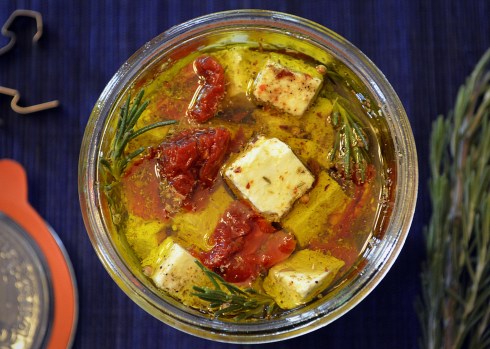
A jar of marinated feta in the fridge will more than earn its place there, especially since it takes 10 minutes–at most–to prepare it. That doesn’t count marinating time, but once you’ve introduced all the ingredients to each other, you can step back and let the magic happen on its own. Marinated feta is good with bread and crackers, in sandwiches and salads (including pasta salads), and as that little something extra in many other dishes. And the leftover olive oil is fantastic in a Greek salad dressing or tossed with vegetables prior to roasting. Amazing to think that a mere 10 minutes of matchmaking leads to so many happy returns.

MF2
Marinated Feta

12 oz. feta
4 oz. sun-dried tomato halves, in oil
1 tbsp. dried oregano
1 tsp. coriander seeds
1/2 tsp. chili flakes (can add more if you like extra heat)
freshly ground black pepper
3-4 sprigs fresh rosemary
extra-virgin olive oil

Preparation
1. If the feta is wet, pat it dry. Cut it into 3/4-inch cubes. Cut each sun-dried tomato half into four pieces.
2. Transfer half of the feta and half the sun-dried tomato pieces to a canning jar or glass bowl with a tight-fitting lid. Sprinkle the feta and tomatoes with half of the oregano, coriander seeds, chili flakes, and ample black pepper. If using a canning jar, place the rosemary sprigs upright around the edges of the jar; otherwise, scatter them about. Add the remaining feta and tomatoes and sprinkle with the remaining spices. Pour the oil from the sun-dried tomatoes over top, then add enough extra olive oil to cover the feta.
3. Tightly cover/seal the jar or bowl, and refrigerate the feta for at least a couple days (and ideally, for one week) to let the flavors marry–if you can wait that long. The olive oil will solidify, which is normal — it will return to liquid form at room temperature (allow the feta to reach room temperature before serving).

MF1

Recipe: Baklava

8 Feb

I have a thing for baklava. But I’m particular about it–though I’ve seen (and tasted) many, many versions of it, this recipe has always been my absolute favorite: made with walnuts instead of pistachios and with rose-scented sugar syrup (known as atr) instead of honey. Baklava is a bit labor-intensive, but in the past I had eager young assistants to help cover and uncover the filo dough, and to watch this sweet, crispy, buttery, nutty confection unfold–and then, to help eat it in no time at all. This time, I lacked the assistants but had guests willing to do the honors, so the baklava disappeared just as quickly. Unfortunately, I realized far too late that I had not taken any photos of just one piece of baklava on a plate.  I hope the other photos can do it some justice in conveying its deliciousness. The recipe is adapted from Lebanese Cuisine by Madelain Farah.

B9

Baklava

Sugar Syrup
2 c. sugar
1 c. water
squeeze fresh lemon juice
1 tsp. rose water

Baklava
1 pkg. filo dough, thawed
2 c. chopped walnuts
1/3 c. sugar
1 tbsp. rose water
3 sticks butter, melted

Preparation

Syrup
1. Combine sugar, water, and lemon juice in sauce pan. Boil over medium heat for about 10-15 minutes, or until slightly viscous. Add rose water, remove from heat, and let cool completely. When cool, put in the refrigerator. The syrup must be cold when used later.

B1

Baklava
1. Combine nuts, sugar, and rose water; set aside.

B2

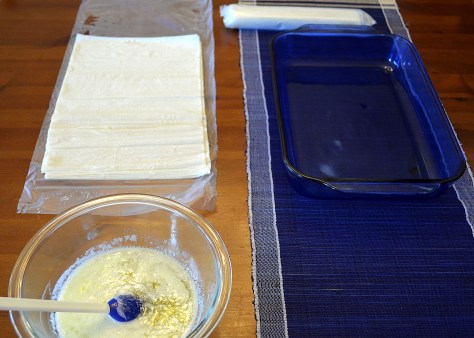
2. Preheat the oven to 300 degrees. Spray a 9×13 (or 10x 14) baking pan with cooking spray. Unwrap the filo sheets (seen below split into in two packages), keeping unwrapped filo covered with a piece of plastic wrap and a slightly damp kitchen towel. Have melted butter ready. (Note: some recipes call for clarified butter, but this one does not–and the results are equally delicious.)

B3

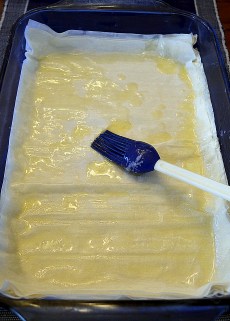
3. Remove two filo sheets from the stack, place in baking pan, and brush with melted butter. Repeat with more filo sheets, until you have used half of them. Do not brush the top two sheets with butter. Spread walnut filling on top of the unbuttered filo sheets, in an even layer.

B4  B5

4. Continue topping with remaining filo sheets, brushing every two sheets with butter, except the last two. Using a very sharp knife,  trim any bits of filo that hang over the edges of the pan, then carefully cut the top of the baklava into a diamond pattern, going only as deep as the walnut layer, not all the way down. Brush butter into the cuts, and across the baklava pieces. This will require a steady hand.

B6

5. Bake the baklava until golden brown–about one hour. Immediately upon removing from oven, spoon cold sugar syrup all over baklava. It’s important to use cold syrup, or the baklava will get soggy. Let cool completely before serving, then cut pieces all the way through and serve.

B7

Postcard from San Diego: Sunsets and Pelicans

3 Feb

What is it about watching the sun set? The jewel-like colors in the sky? The feeling of being witness to that day’s curtain call? Or is it that magical feeling that comes from watching that last flash of light as the sun dips below the horizon–that blink-and-you might-miss-it moment? For me, it’s all three.

A National Geographic article on the science of sunsets says the sun sometimes appears as if it is raging against the dying of the light, but for me, the sun’s final act of the day is a moment of utter silence and absolute peace. If I can capture even a fraction of that with my camera, I feel lucky. On a recent evening on the pier at Ocean Beach in San Diego, I felt doubly lucky when I came across two brown pelicans, who, like the sun, were also calling it a night.


Recipe: Walnut-Pomegranate Dip (Muhammara)

31 Jan

In the world of dips, hummus reigns supreme–but there is another Middle Eastern dip that also has lots of protein and lots of tang, and is equally easy to make. Although, now that I think of it, I realize it’s been a while since I made my own hummus; my local grocery store now devotes entire refrigerator sections to it and I have gotten lazy. This is a sad state of affairs–because hummus is really incredibly easy to make…. But back to the Muhammara. It gets its protein from the walnuts and its tang from pomegranate molasses, which you can find in Middle Eastern and Indian grocery stories and at a certain national, upscale grocery-store chain that shall not be named. Roasted red peppers also add to the slightly sweet undertones of this dip, which deserves a spot on any appetizer palette. This recipe comes from Bon Appetit magazine.

Muhammara
Walnut-Pomegranate Dip (Muhammara)

1 c. walnuts
½ c. roasted red bell peppers from a jar, drained (reserve the liquid)
1/3 c. panko (Japanese bread crumbs)
2 tbsp. extra-virgin olive oil
1 tbsp. pomegranate molasses
1 tsp. cumin
1/2 tsp. dried crushed red pepper

Preparation
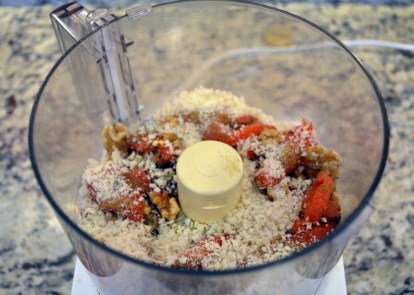
1. Blend/process all ingredients until coarsely ground. (Add a bit more panko or walnuts if too thin, or roasted red pepper liquid or molasses if too thick.)

Food processor
2. Place the dip in a serving bowl. Drizzle some olive oil over the top–or for extra tang, mix together a bit of olive oil and pomegranate molasses and drizzle that instead.

Note: This is what pomegranate molasses looks like, if helpful.

PM

Postcard from Old San Juan

27 Jan

It has been ages since I last wrote, due to a hectic few months. A dinner party this weekend will force me to cook something a little more interesting than the usual fare, and may result in a food-related blog post if the heavens align, granting me enough time and light to take a photo or two. In the meantime, here is a brief look at a brief stop in San Juan, Puerto Rico, a place that truly merits more time than we had. What we had was just enough of a taste to know we would like to go back for a fuller meal, if ever possible. These photos are from the historic, colonial part of town, and looking at them makes us wistful for sunnier, warmer climes….


Patriotic graffiti

  
Colorful buildings, and a gorgeous sea-side cemetery


View of El Campo del Morro

  
Cobblestone streets and colorful wall tiles


Street-side mofongo: mashed fried plantains, topped with a ground beef stew

  
Piraguas: delicious Puerto Rican snow cones

And a fine set of pigeon toes

Breakfast in Old Delhi

9 Nov

It has been said that  one of the best ways of getting to a culture’s heart  is through its stomach. Sweet words for travelers who go from meal to meal with at least as much joy as they have in going from sight to sight. What a treat to learn things about other cultures (and about ourselves), bite after bite. And so it was that during a recent work trip to New Delhi, India, I had the delightful opportunity to savor Old Delhi’s breakfast culture for a few hours, weaving through narrow streets, dodging people, cars, carts, bicycles, auto-rickshaws, motorcycles, dogs, and the occasional cattle, to find culinary gems–both Hindu and Muslim (the walled city being home to Jama Masjid, the best-known mosque in India)–as the neighborhood awoke. An Indian friend, who knows me so well, arranged this gastronomic tour via Delhi Food Walks. We placed our stomachs in the capable hands of our guide, and dug in.

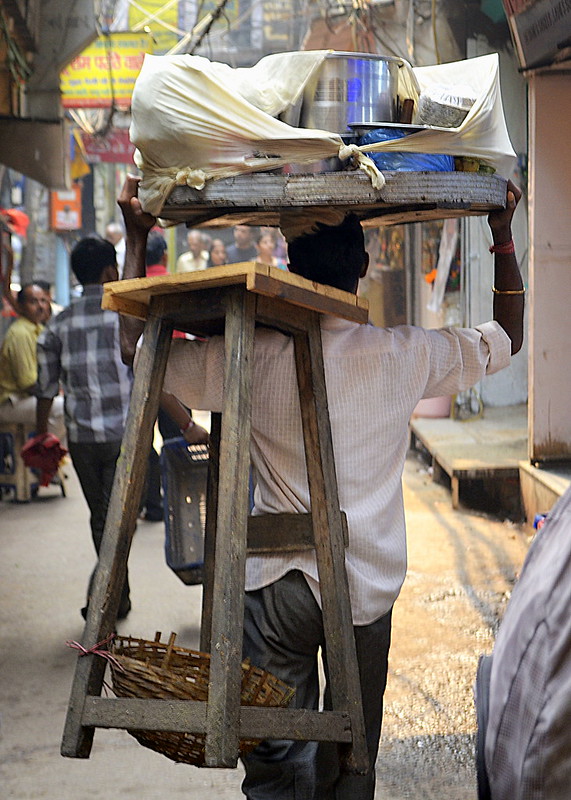
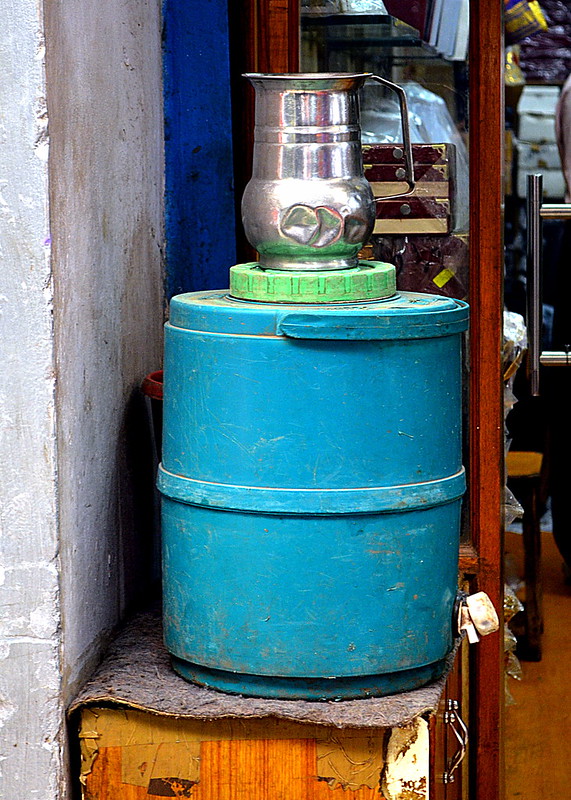
First, some scenes to set the stage (l-r, top-bottom): a food vendor carrying his wares to a special spot (#1), a renowned Old Delhi chef stirring one of his pots (#2), spices and tea for sale (#3), a dented pitcher atop one of the ubiquitous water containers found throughout the neighborhood (#4), and the very first things we tried for breakfast (#5)–a classic savory-sweet combination: Aloo sabzi (potato curry) in the foreground, eaten with  Bedmi poori (hot and fresh in photo #6 below), and Nagori halwa in the background (small crispy semolina poori served with sweet porridge).


After a stop at Karim’s for Nahari Mutton (morning mutton), we then went in search of a famous chickpea dish redolent of coriander, ginger, and tamarind: Lotan ke Chole Kulche (#7). The vendor of this rich specialty had set up shop in a protected nook down a narrow street, where he doled out the dish to throngs of hopefuls waiting with packets of butter in hand. The salty Amul brand butter–available for purchase just up the street from another vendor–added a perfect salty silkiness to the chickpeas, all the better to dip the accompanying bread into. After a brief pit stop to sample some biryani (#8), and then some parathas (#9) at Pundit Gaya Prasad Shiv Charan, it was all about the sweets, starting with sev pak, or sev burfi at Chaina Ram (#10)-a golden treat made with vermicelli, milk cheese, and lots of sugar. I was so inspired by this particular sweet, that I am experimenting with recreating it at home (update on that to follow).


At this stage, it was definitely time to start expanding our stomachs to make room for the other sugary confections on the menu, a task I was more than willing to undertake since I have the world’s worst (or best?) sweet tooth. And judging by their sweets, so do most Indians–except, amazingly, for my Indian friend and breakfast partner, which meant I had to step up for both of us. Below is a vendor dishing up some pudding-like rabri (#11) at Hazari Lal Jain, which also sells delicious khurchan (#12), creamy layers of  “leftover” boiled sweet milk, scraped together and decorated with pistachios and silver foil (varakh). It was very hard to walk away from that khurchan, but even more delights awaited, including warm jalebi (#13 -15), which after going from a hot frying pan into a sugar-syrup bath, are about as sweet as it is possible to imagine. After that, we swore we could not ingest even the smallest morsel more, but we were wrong. One last taste awaited us: Daulat ki Chaat, or sweet milk foam from a cart (#16). Our guide assured it was like a light and airy meringue that would not take up any stomach space at all, and he was right. But after that, even I was done. But, oh, what a morning, and what a glorious taste of India.


Oh, Nuts: Chestnuts

19 Oct

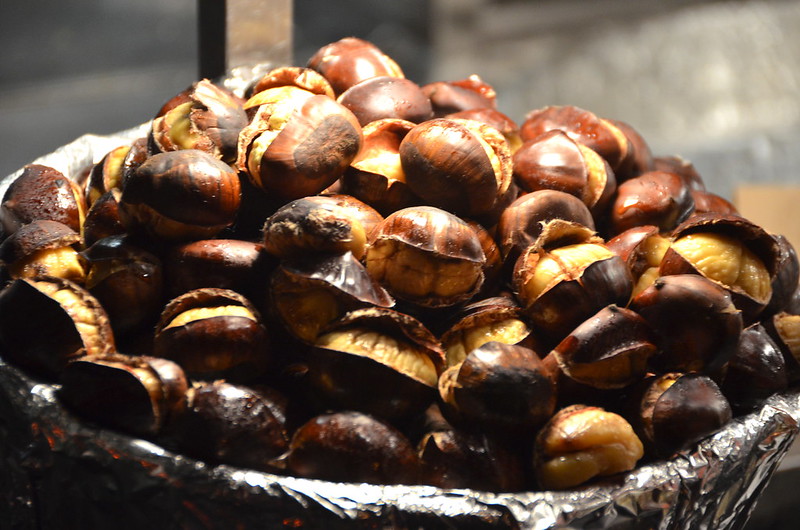
My father was a New Jersey boy who went to elementary school in Manhattan in the 1940s. He loved the smell of chestnuts roasting over open fires on city street corners, a snack available almost year round when he was young. By the time I was a teenager, roasted chestnuts were primarily a holiday season treat, due to changing tastes and a perception that chestnuts were a poor man’s food. (Amazingly, lobster was once viewed the same way; today, the lines that form in front of the lobster roll truck by my office at lunchtime are a sight to behold). Here is a photo of chestnuts roasting in NYC, courtesy of a fellow Flickr user:

Photo credit: Adam Fagen, Flickr

Chestnuts–which are chewier and starchier than, say, walnuts–have been a staple food in southern Europe and parts of Asia for millennia. They can be boiled, candied, eaten raw, mashed, roasted, sautéed, steamed, or ground into flour–and have long been a favored ingredient in stuffing, vegetables dishes, casseroles, porridge, and desserts. They have less calories than other nuts and are the only nut to contain significant amounts of Vitamin C. So, as often happens when nutritious traditional foods are “rediscovered,” chestnuts and the naturally gluten-free chestnut flour are making a comeback, especially in upscale U.S. restaurants and specialty stores. Demand for chestnuts in the United States outstrips supply.

There are four main species of chestnuts: European, Chinese, Japanese, and American. The American chestnut (Castanea dentata)–known as the sequoia of the east because of its height–was almost completely wiped out by blight in the first half of the twentieth century, right around the time my father was enjoying the roasted (and probably Italian) versions near his school in New York City. Four billion trees died. Before tragedy struck, American chestnut trees were highly valued not just for their nuts, which fed both people and animals, but also for their wood. Nowadays, most of the chestnuts we eat in the United States are imported, but efforts are underway by organizations such as the American Chestnut Foundation and others to breed blight-resistant American chestnuts and reintroduce them into the forests of the American east.

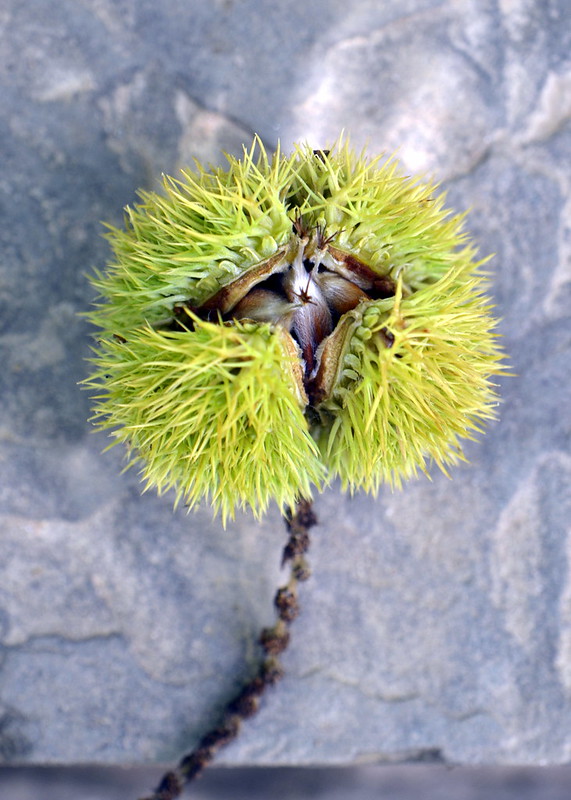
In the meantime, the most commonly seen chestnut trees in the United States are Chinese Chestnut trees (Castanaea mollisisma), which are resistant to blight. On a recent visit to the Audubon Naturalist Society’s Woodend Nature Sanctuary, Castanea mollisima burs carpeted the ground. Here are two burs (and boy, are they prickly and sharp), one of which is beginning to open.

  
Chestnuts are harvested once the burs have fallen from the tree. Typically, there are up to three nuts inside each bur; here is a photo with one nut inside a more mature (and browner) bur. The nuts are covered by two “skins”: a dark brown, hard seed coat (or husk) and a papery under layer.

Itsy Bitsy Spider

11 Oct

This is the story of a small spider in my garden. It being a cloudy and rainy morning, I grabbed my camera and headed for the yard. When it’s wet outside, colors pop and raindrops pearl on flowers and foliage—a gorgeous sight. But I only got as far as the sole remaining bloom on a Hybrid Tea Rose “Perfume Delight,” because I discovered that a small but industrious spider had established a new home there.


For perspective, see the lone bloom below (amid some Montauk Daisies), and a close-up of the spider on it.

Rose 1  
It’s hard to see, but for a good part of the morning, that spider was busy making silk threads; the first photo below shows a thread at top left, and the other is a not-very good photo of the spider spinning  (I managed to focus on the thread and a few rain drops, but alas, not on the spider…).

    spider4
That rose bloom wasn’t there a couple weeks ago. The spider could only have happened upon it recently, not knowing it had chosen an ever-evolving and ultimately doomed home. Even in the few hours between this morning and this afternoon, the rose bloom unfurled a bit more, breaking some of the spider’s newly spun threads. In a couple weeks, the bloom won’t be there at all. And yet, the spider remains, a Don Quixote in disguise.