Starting Over: The Joys of a New Garden

3 Sep

When we moved back to the U.S. three years ago, we bought a house with a big grassy backyard, sloping down to a wooden fence along the property line. It was a great backyard, but other than a small flower bed off the (old) deck, there wasn’t much active “gardening” space. There was a walkway border garden out front and a few roses scattered around there, too, but that was it. After living in apartments in Rome for five years, we wanted to enjoy the outside — and I really wanted to garden again. Luckily, the spaces around our new house had great potential to become places of joy not just for us, but also for the local bees, butterflies, and birds. I won’t dwell on the chipmunks, squirrels–and for a short while, rabbits–who have also found great joy here, too. Who knew squirrels could climb up giant sunflowers and take the heads right off? I didn’t. Lesson learned, though; no giant sunflowers next year.

But I digress. The hope we had for our outdoor spaces–which we thought about for a year before getting started–included flower beds, an herb garden, a vegetable garden, and a couple patios to provide more gathering space. As they say, beware what you wish for, because what followed took three years and a LOT of work. But it kept us busy during COVID and beyond, when we were glad to have something productive to do during the weekends.

Original sale photo of the backyard, taken Summer 2019, six months before we bought the house.

Today we have 12 separate garden beds, including a pollinator garden that looks like a wild English border garden, an herb garden, a vegetable garden, a rose garden, and new areas for all the plants we moved around, plus many new ones. This required completely redoing the backyard, rethinking a lot of the front yard, and lots of digging, weeding, transplanting/planting, weeding, seed starting, weeding, and finger crossing that everything we shifted around (often more than once) would survive.

We started Phase 1 by taking out most of the grass in the back and terracing the sloping plot, with help–as we could not move tons of soil on our own, nor could we install all the hardscaping alone. We toyed with the idea of laying down the patios ourselves (as we’ve done in the past), but knew we did not have the skills to build retaining walls, nor the necessary time, seeing as we both have actual other jobs requiring our daily attention. And this was not a weekend task.

Once all soil was out and the hardscaping was in, our work began: filling it all in. But it was early September (autumn) by then, so mostly we transplanted things from around the front, back, and side yards, and made a list of the new plants that would go in next spring. The top bed in the first photo below would be the future Pollinator Garden (I had saved plants from the old flower bed before we redid the yard, so got a head start by putting those back into the new bed). The second level would become the Herb Garden (ready to be planted with some perennial herbs I had grown in fabric bags during the summer), and the bottom level (barely visible) would be the Vegetable Garden. These were the first three of the 12 garden beds we would put in (or redo) around the house!

Note the missing deck section in the first photo above; we replaced the old deck entirely in Phase 2–with help from our children, family, and friends; but mostly done solo by my husband all through Fall 2021.

Finished deck and hardscaping, early Spring 2022

Backyard terrace beds: Top = Pollinator Garden, Middle = Herb Garden, Bottom = Vegetable Garden

In the two top beds above were the “skeleton plants” we had in Spring 2021. I added other plants to fill out the Pollinator and Herb Gardens, and grew some veggies from seed for the vegetable garden, though I also bought some more mature plants to jump start the process a bit. Here’s how the terraced garden beds evolved:

And here are some photos of the front yard garden beds, which were part of Phase 3:

Below is what the front Walkway Garden looked like before (first photo taken while house was being painted). The bed was filled with yellow daylilies and magenta Campion Rose flowers, and I wanted to redo it from Day One. First, I am not fond of magenta and yellow as a color combination. As part of a riot of bold colors, yes, but not by themselves. Secondly, Campion Rose spreads everywhere. I needed to isolate it to a very small section of the yard. Thirdly, and most importantly, the Walkway Garden is in view of the Rose Garden, and I wanted to plant it with flowers that complemented the colors of the roses.

Here are some of the transplanted flowers that are happy in their new spots: 1) Spiky Giant Hyssop now along the southernmost part of the new deck, popping above the railings and attracting bees far and wide (though they are very friendly bees; I stick my head among the flowers to tie them up periodically, and the bees pay me no mind at all). 2) Panicle Hydrangea turning a dusty pink from its initial white, now in its third and final resting place, and 3) the yellow daylilies from the front yard, now in the back along with some Spiderwort ( a much more pleasing combination in my very biased opinion!).

Some of the many newcomers to the garden: Hollyhock, Allium Schubertii, Astilbe, Baptisia Australis, Black-Eyed Susans (Rudbeckia hirta), Aquilegia

And finally, a few things from the garden other than flowers:

Recipe: Japchae with Chicken (Korean Stir-Fried Sweet Potato Noodles)

27 Aug

(Serves 4)

Let me start by saying that chicken is not traditional in this recipe, but it’s what I had on hand when I got the urge to make this; japchae takes a bit of effort and I didn’t have time to add a grocery trip into the mix, too. Amazingly, though, I had almost all the other ingredients, and had been dreaming of this dish for a while. I’ve loved it since my college days, when there was a hole-in-the-wall Korean restaurant around the corner from where I lived (what bliss). But what made me have to make this dish, right now, was watching a K-Drama one weekend that had tantalizing views of the protagonists eating japchae…. After salivating through a few episodes, I knew what we had to have for dinner.

If you haven’t ever had japchae (jap means to mix, and chae means vegetables), you are in for a treat. The glassy, sweet potato starch noodles (dangmyeon) are slippery, chewy, savory and a bit sweet, and are tossed with so many good things.

If that weren’t enough, this dish gives you options: you can make the japchae a day or two ahead of time (quickly stir-frying before serving), and you can serve it warm or at room temperature.

I used a recipe from the incomparable Maangchi, with a few alterations:

  • First, I substituted chicken for the beef or pork. Plus, I used 1.5 times what the original recipe called for (6 oz vs 4 oz).
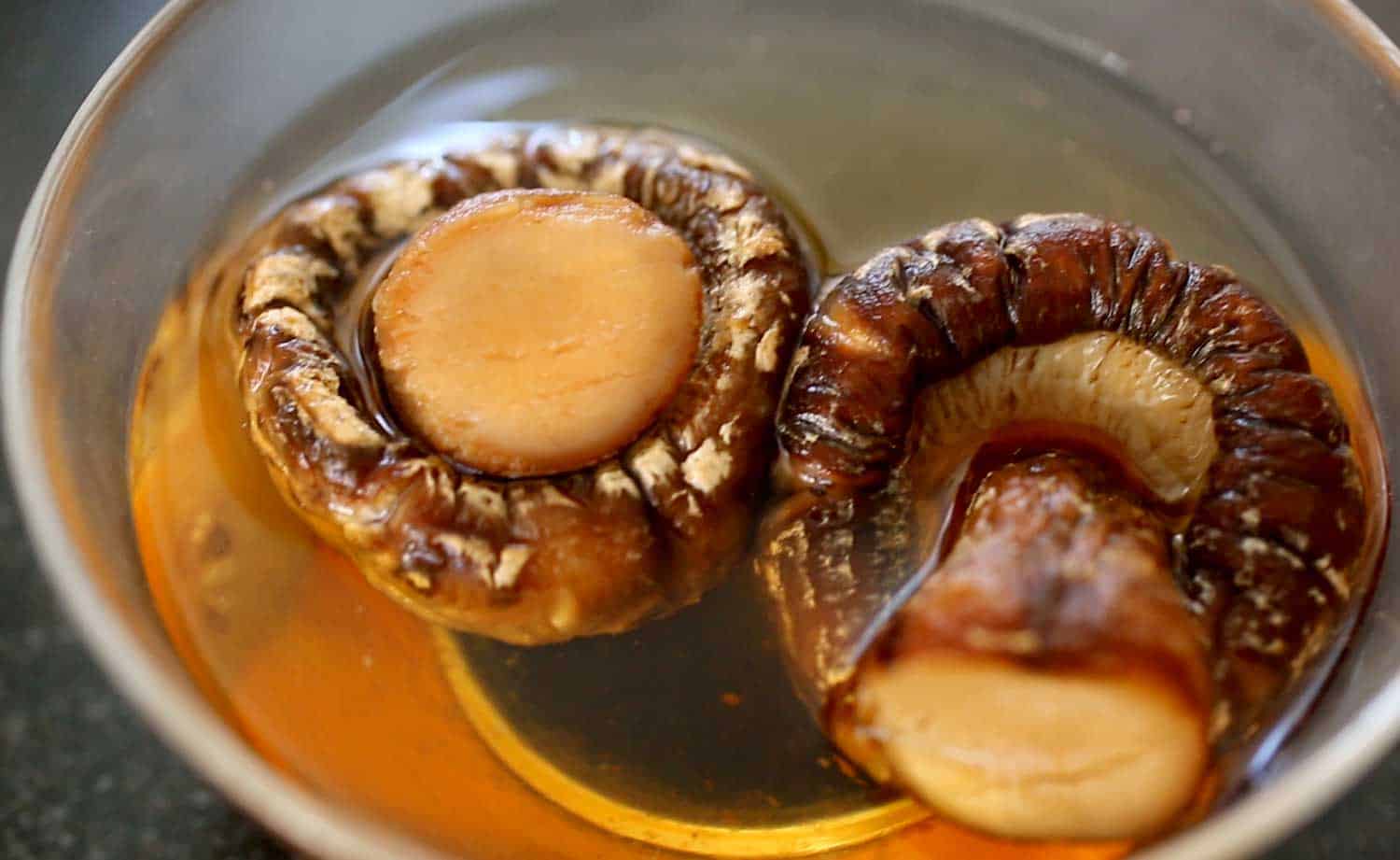
  • Then, just when I was patting myself on the back for having everything else, I realized I had dried porcini mushrooms, vs dried shitake. Still delicious in this dish.
  • Finally, I made 1.5 times the final sauce ingredients (a mixture of garlic, soy sauce, sugar, black pepper, and toasted sesame oil) as that sauce is my favorite and I had to have a little more of it. And I also drizzled a little of the strained porcini soaking liquid into the sauce, too, for extra umami.

Note: This recipe is killer. But this is not Maangchi’s easy version of japchae; this version takes commitment to cook all the veggies separately. So plan on making it when you have the time to give it the loving attention it deserves.

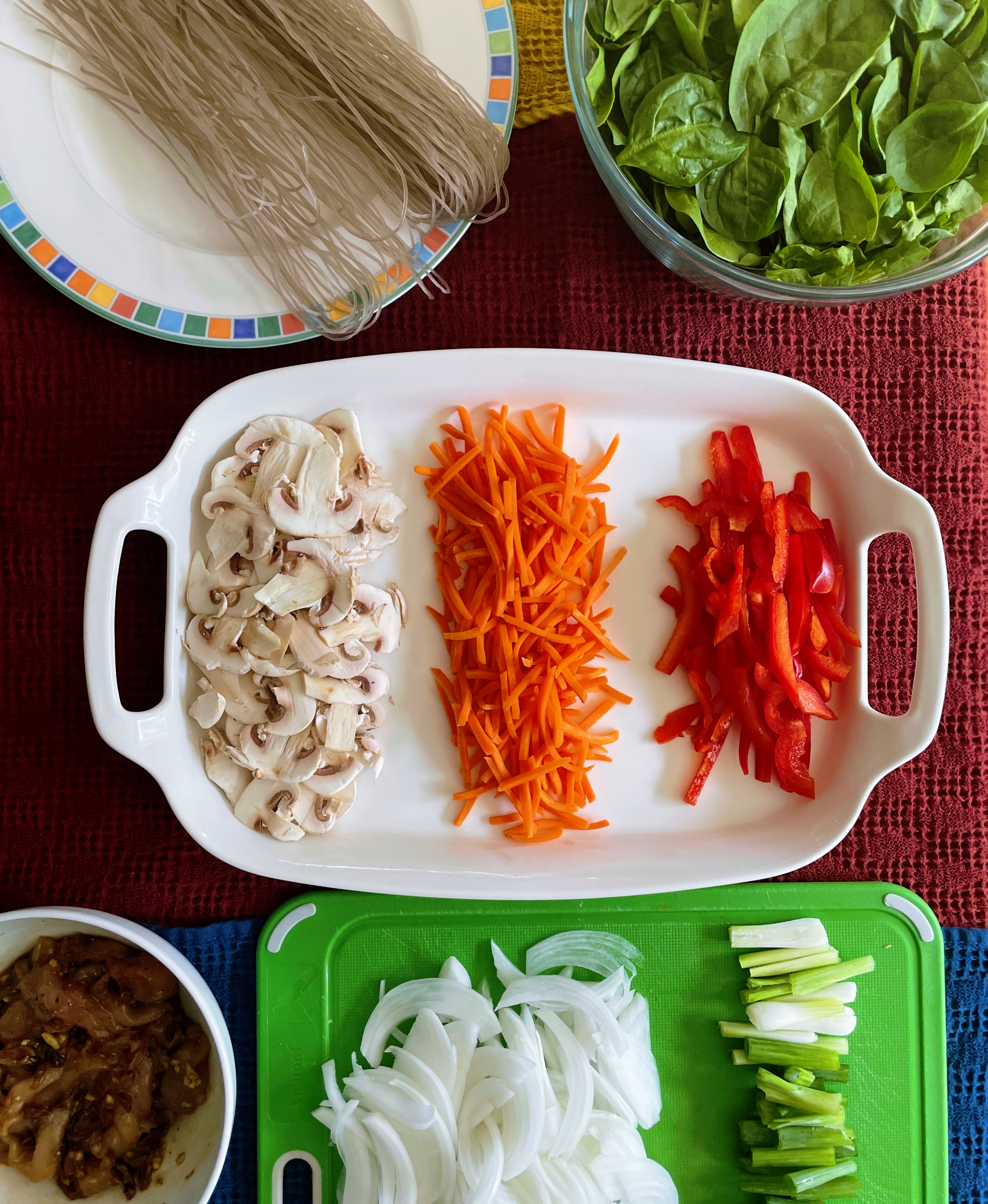
Original recipe from Maangchi as follows (with photos from Perennial Pastimes):

Ingredients

  • 4 ounces beef, filet mignon (or pork shoulder), cut into ¼ inch wide and 2½ inch long strips
  • 2 large dried shiitake mushrooms, soaked in warm water for 2 to 3 hours, cut into thin strips
  • 2 garlic cloves, minced
  • 1 tablespoons plus 2 teaspoons sugar
  • 2 tablespoons plus 1 teaspoon soy sauce
  • 2 tablespoons toasted sesame oil
  • 1 tablespoon toasted sesame seeds
  • 1 large egg
  • 4 ounces spinach, washed and drained
  • 4 ounces of dangmyeon (sweet potato starch noodles)
  • 2 to 3 green onions, cut crosswise into 2 inch long pieces
  • 1 medium onion (1 cup), sliced thinly
  • 4 to 5 white mushrooms, sliced thinly
  • 1 medium carrot (¾ cup), cut into matchsticks
  • ½ red bell pepper, cut into thin strips (optional)
  • ground black pepper
  • kosher salt
  • vegetable oil

Directions

Marinate the beef and mushrooms:

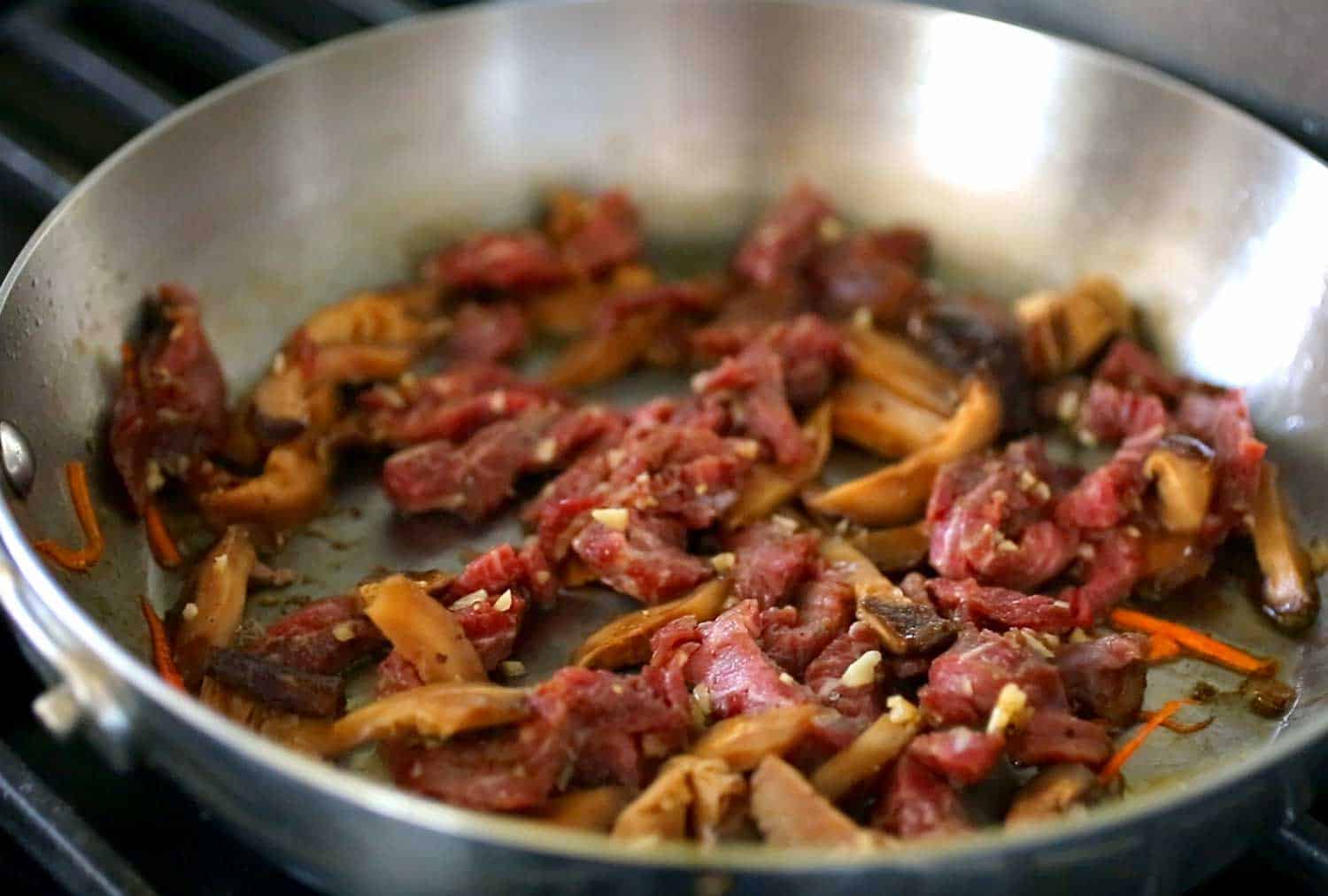
  1. Put the beef and shiitake mushrooms into a bowl and mix with 1 clove of minced garlic, 1 teaspoon sugar, ¼ teaspoon ground black pepper, 2 teaspoons soy sauce, and 1 teaspoon of toasted sesame oil with a wooden spoon or by hand. Cover and keep it in the fridge.

Make the egg garnish (jidan):

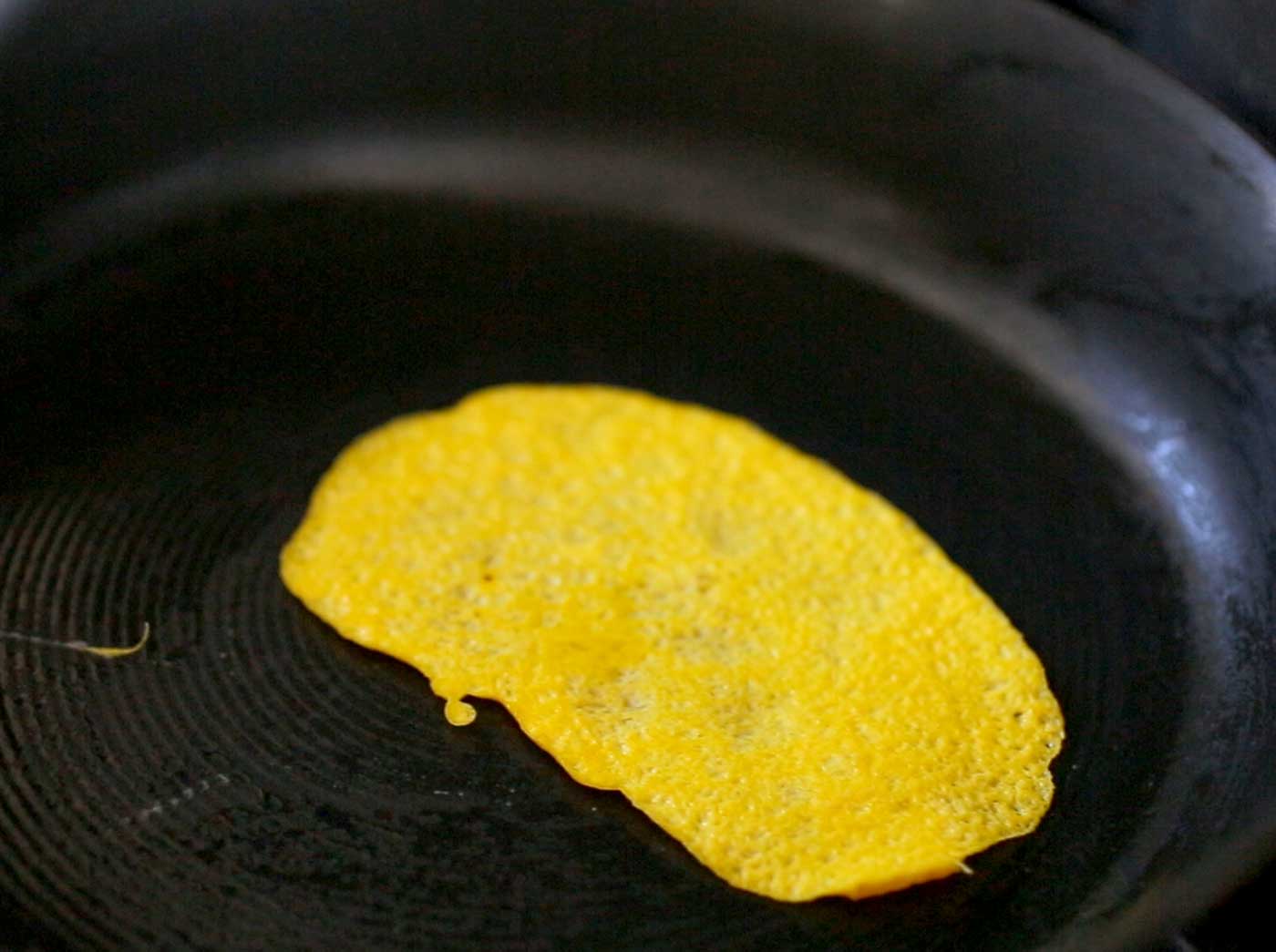
  1. Crack the egg and separate the egg yolk from the egg white. Remove the white stringy stuff (chalaza) from the yolk. Beat in a pinch of salt with a fork.
  2. Add 1 teaspoon of vegetable oil to a heated nonstick pan. Swirl the oil around so it covers the pan, and then wipe off the excess heated oil with a kitchen towel so only a thin layer remains on the pan.
  3. To keep the jidan as yellow as possible, turn off the heat and pour the egg yolk mixture into the pan. Tilt it around so the mixture spreads thinly. Let it cook using the remaining heat in the pan for about 1 minute. Flip it over and let it sit on the pan for 1 more minute.
  4. Let it cool and slice it into thin strips.

Prepare the noodles and vegetables:

  1. Bring a large pot of water to a boil. Add the spinach and blanch for 30 seconds to 1 minute, then take it out with a slotted spoon or strainer. Let the water keep boiling to cook the noodles.
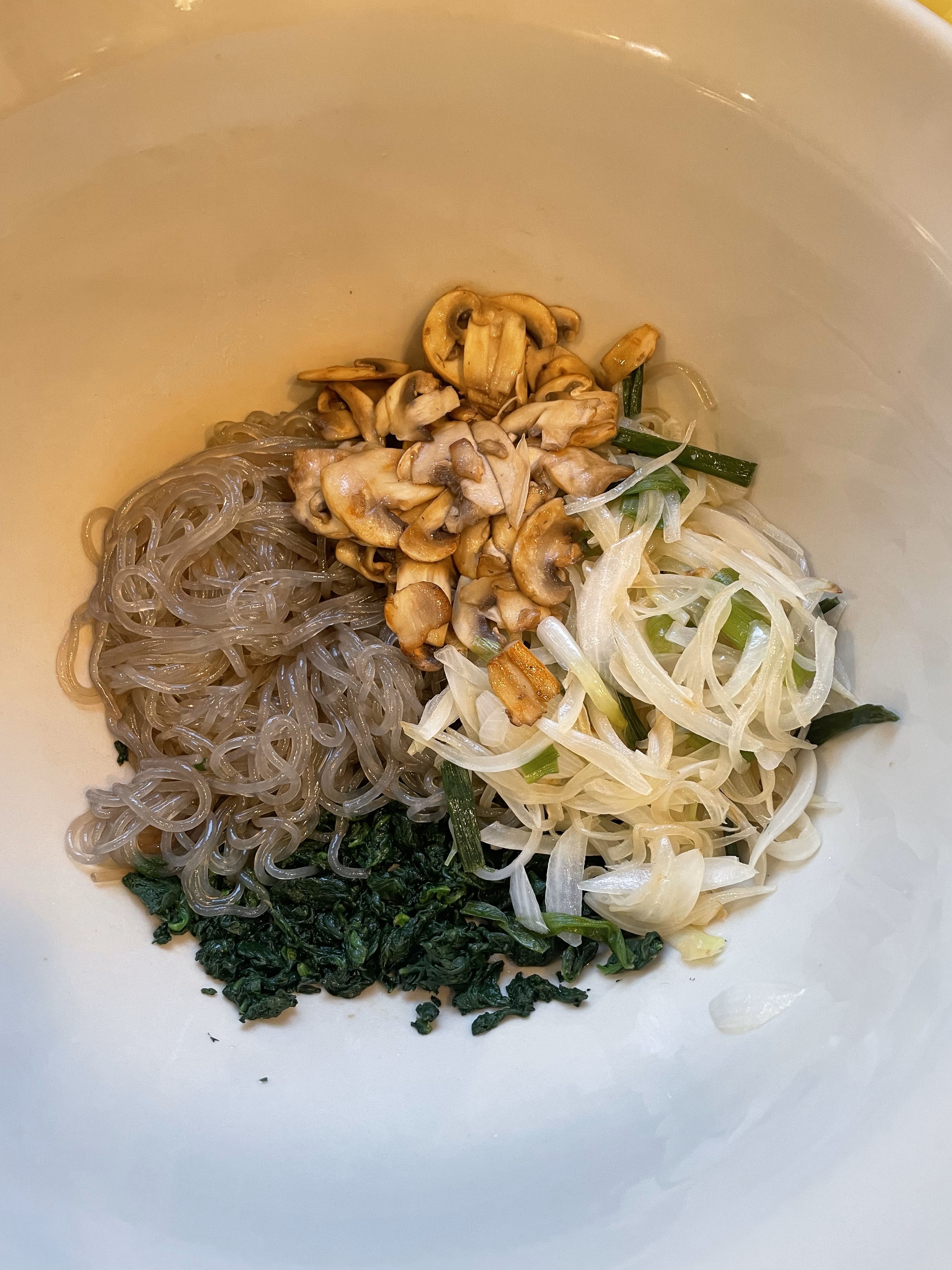
  2. Rinse the spinach in cold water to stop it from cooking. Squeeze it with your hands to remove any excess water. Cut it a few times and put it into a bowl. Mix with 1 teaspoon soy sauce and 1 teaspoon toasted sesame oil. Put it into a large mixing bowl.
  3. Put the noodles into the boiling water, cover and cook for 1 minute. Stir them with a wooden spoon so they don’t stick together. Cover and keep cooking for another 7 minutes until the noodles are soft and chewy.
  4. Strain and cut them a few times with kitchen scissors. Put the noodles into the large bowl next to the spinach. Add 2 teaspoons toasted sesame oil, 1 teaspoon soy sauce, and 1 teaspoon sugar. Mix well by hand or a wooden spoon. This process will season the noodles and also keep the noodles from sticking to each other.
  5. Heat up a skillet over medium high heat. Add 2 teaspoons vegetable oil with the onion, the green onion, and a pinch of salt. Stir-fry about 2 minutes until the onion looks a little translucent. Transfer to the noodle bowl.
  6. Heat up the skillet again and add 2 teaspoons vegetable oil. Add the white mushrooms and a pinch of salt. Stir-fry for 2 minutes until softened and a little juicy. Transfer to the noodle bowl.
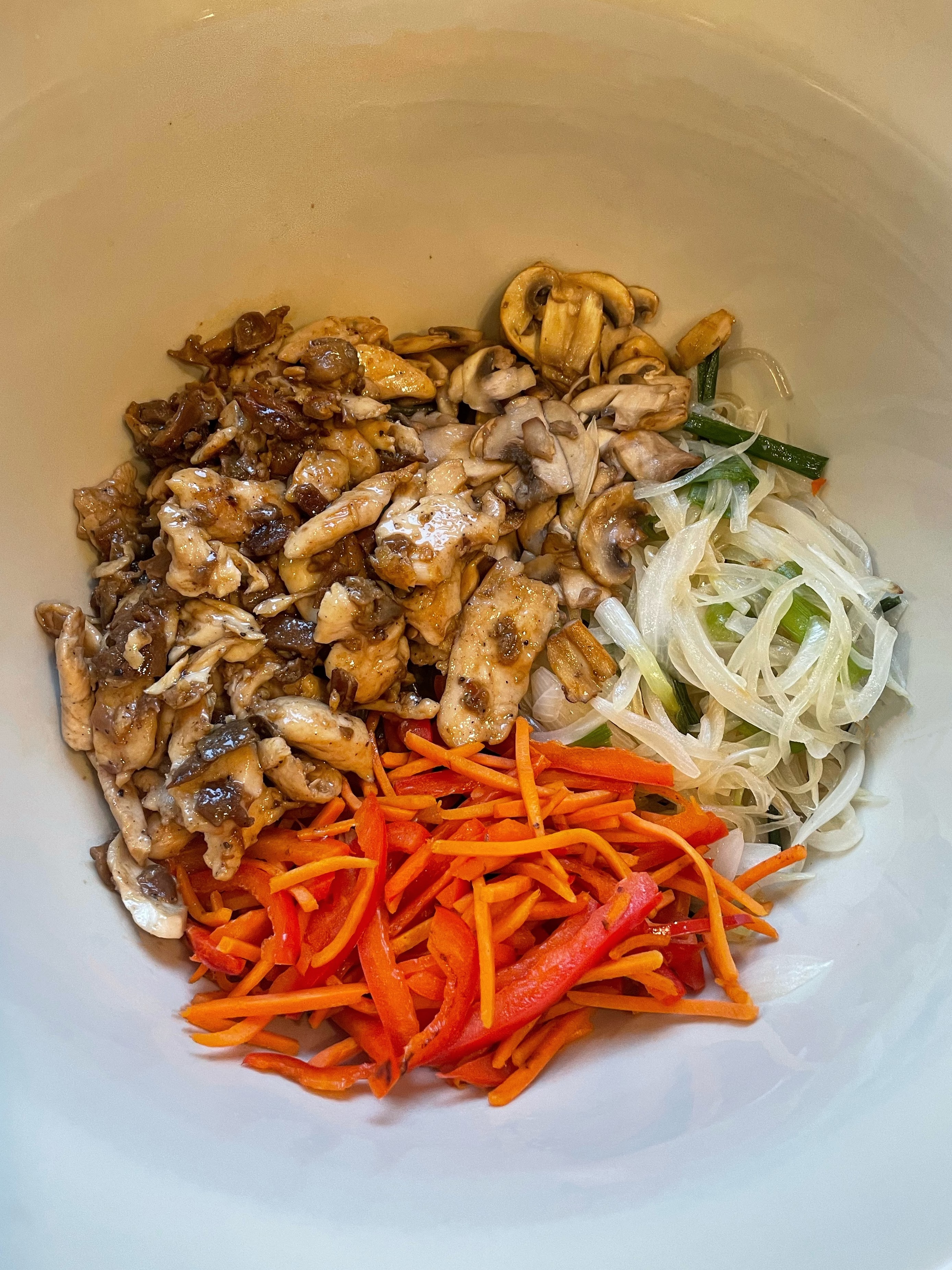
  7. Heat up the skillet and add 1 teaspoon vegetable oil. Add the carrot and stir-fry for 20 seconds. Add the red bell pepper strips and stir-fry another 20 seconds. Transfer to the noodle bowl.
  8. Heat up the skillet and add 2 teaspoons vegetable oil. Add the beef and mushroom mixture and stir fry for a few minutes until the beef is no longer pink and the mushrooms are softened and shiny. Transfer to the noodle bowl.

Mix and serve:

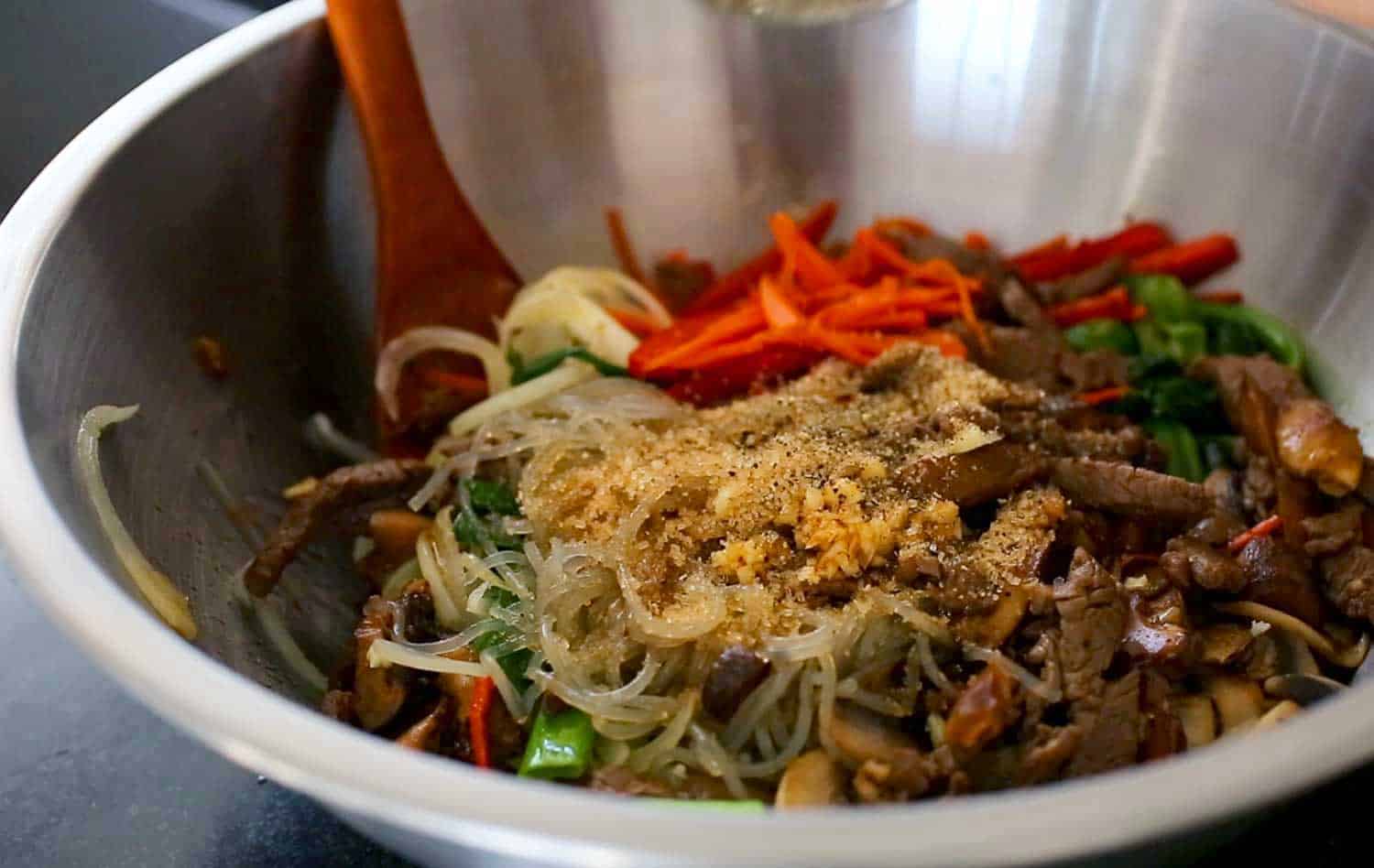
  1. Add 1 minced garlic clove, 1 tablespoon soy sauce, 1 tablespoon sugar, ½ teaspoon ground black pepper, and 2 teaspoons of toasted sesame oil to the mixing bowl full of ingredients. Mix all together by hand.
  2. Add the egg garnish and 1 tablespoon sesame seeds. Mix it and transfer it to a large plate and serve.

Two Etruscan Cities of the Dead: Cerveteri and Tarquinia

20 Aug

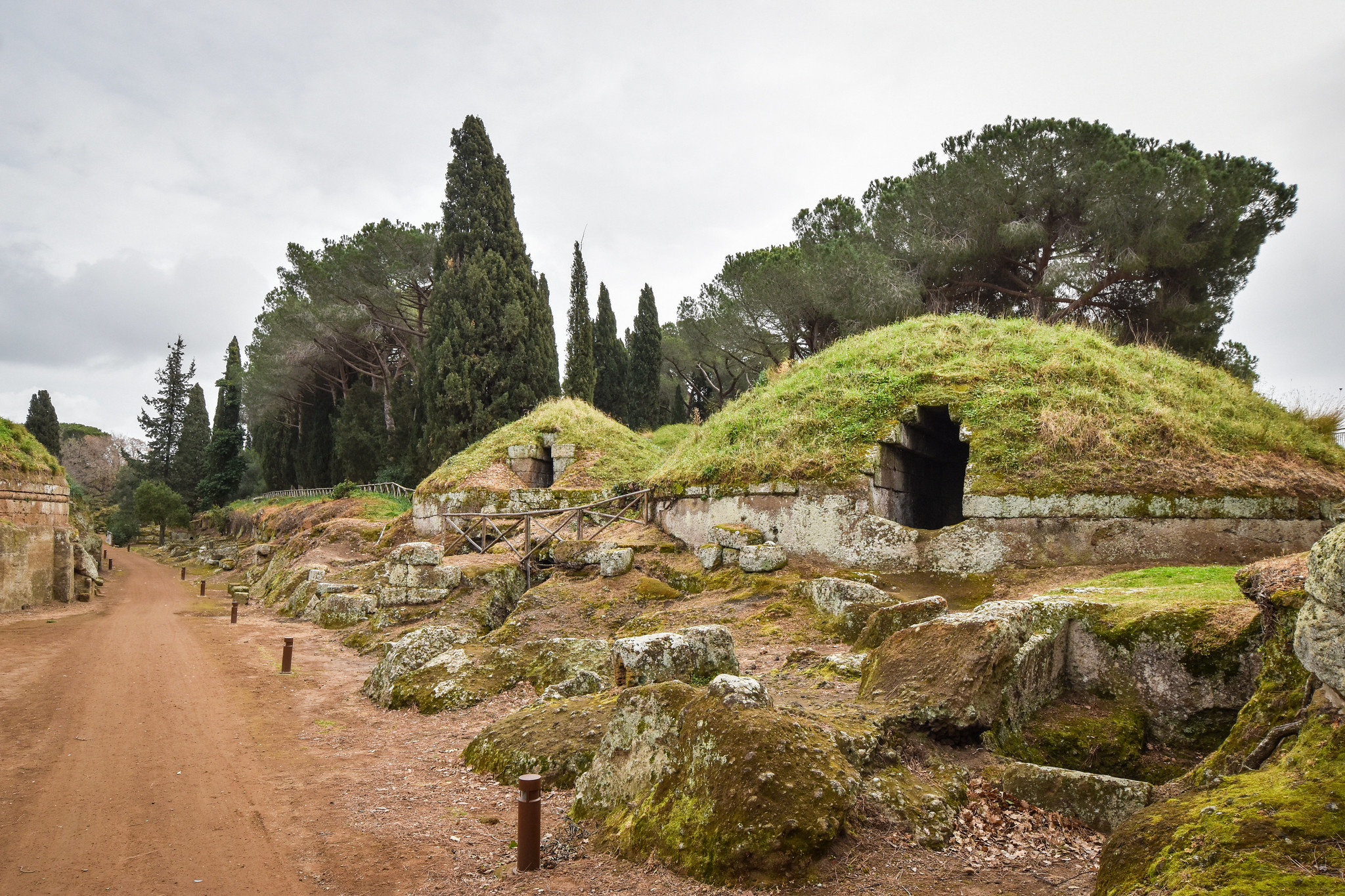
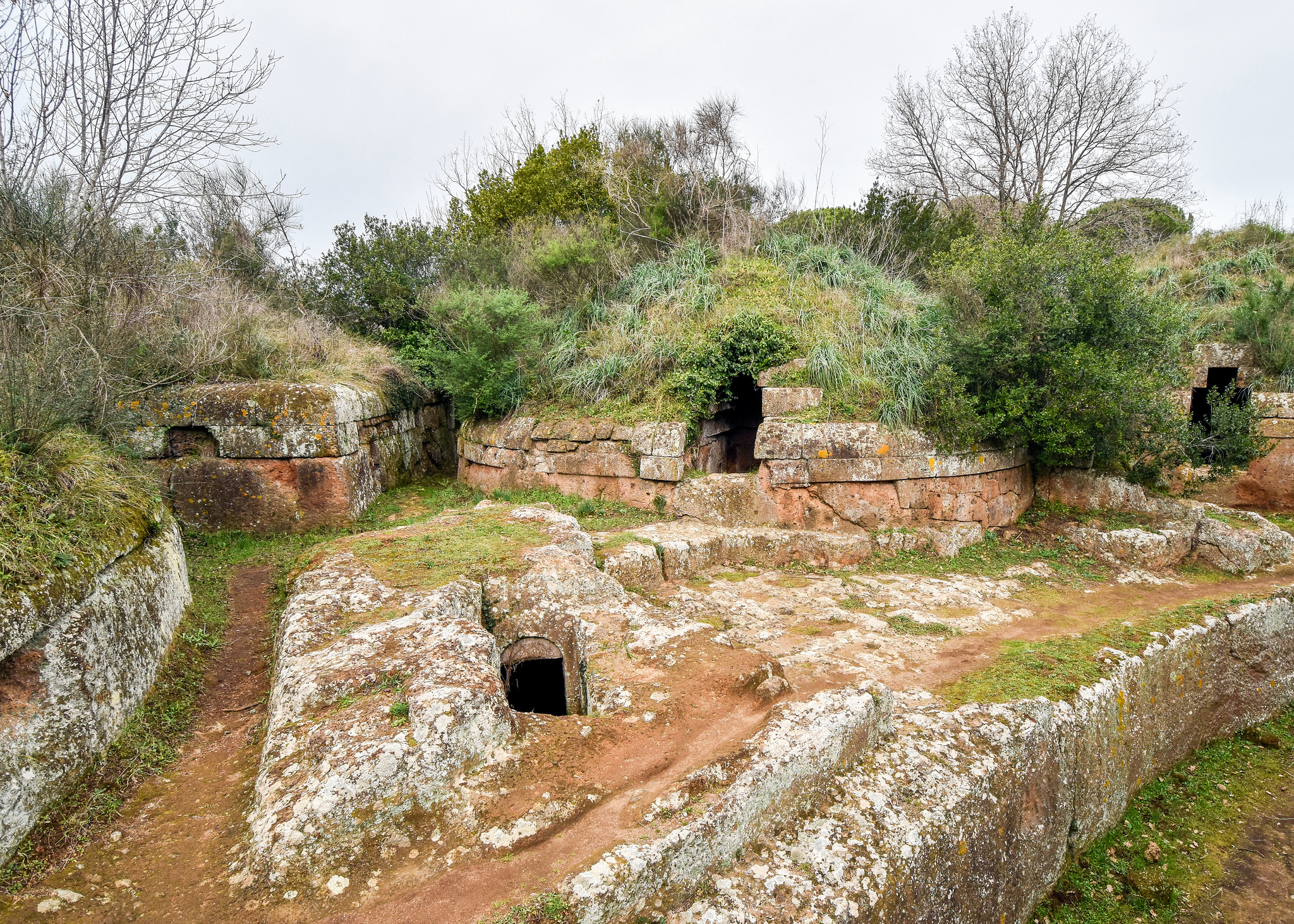
If you are in Rome and fancy a day trip to a place unlike any other you will see in Italy, then you should visit the Etruscan burial complex known as Necropoli della Banditaccia. It is about 45 km (28 miles) from Rome, along the western central coast. If you happen to be lucky enough to go when no one else is there, you will experience an almost Indiana Jones-like feeling as you walk among, and into, tombs that are even older than Rome. (The tombs date from the ninth to the third centuries BC, when the Etruscans were conquered and then assimilated by the Romans.)

The necropolis at Cerveteri is quiet, thick with vegetation, and full of thousands of ancient tombs–many of which are underground. The complex itself is organized like a city, with streets, open areas, and even neighborhoods; it was meant to emulate how the Etruscans lived in life. But as you walk around, you feel it was always a city of the dead.

Ancient road rutted by wagon wheels, Necropoli della Banditaccia, Cerveteri

Both the Necropoli della Banditaccia and another Etruscan burial complex in Tarquinia (about 45km further northwest than Cerveteri) are UNESCO World Heritage sites, and each is worth a visit. The landscape and setting of each necropolis is stunning…

… and the tombs themselves are fascinating, reflecting different burial practices over the centuries. The earliest (and simplest) tombs were just small pits where the ashes of the dead were kept; over time, the tombs evolved into circular burial mounds known as tumuli, which are carved out of the volcanic rock (tufa):

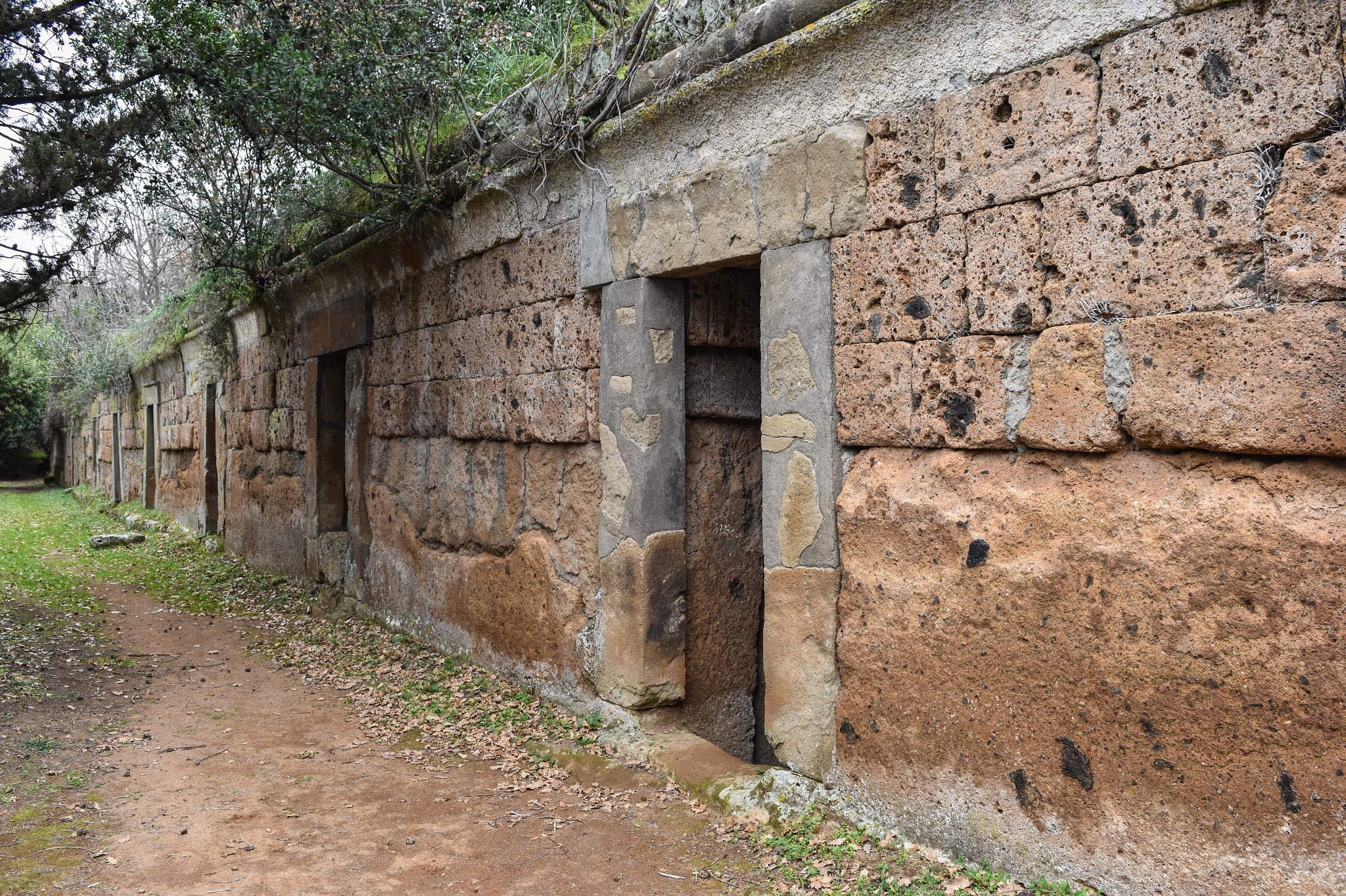
As the complex grew and more streets appeared, “square tombs” were built in long rows along the ancient roads:

Square tombs along Via dei Monti Ceriti, Necropolis of the Banditaccia, Cerveteri

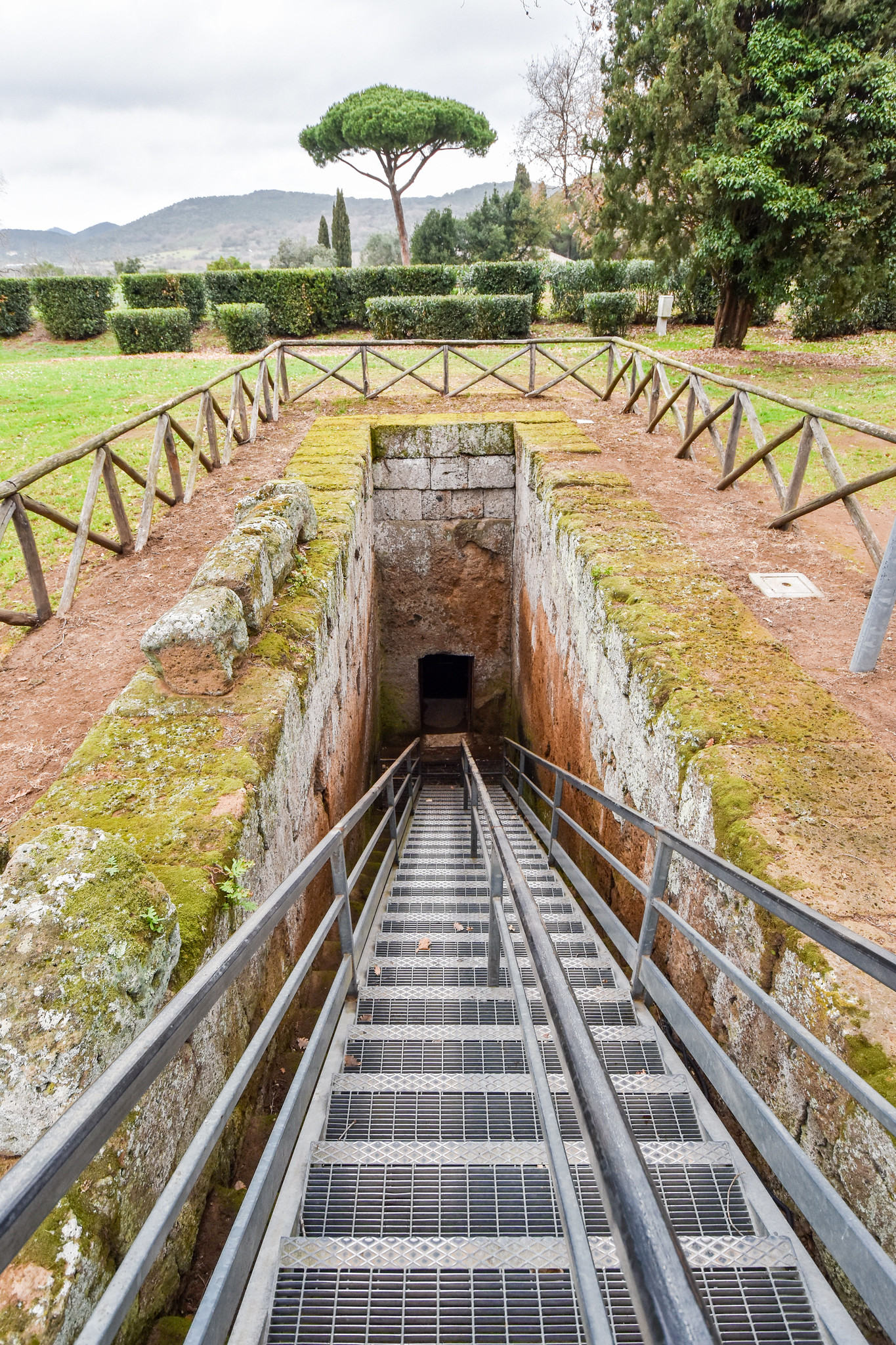
Other tombs were fully underground:

The Tarquinia site is also particularly known for its painted tombs:

As well as its group of funerary urns, which are believed to have housed the cremated remains of a pre-Etruscan, Early Iron Age community dating from 1020 to 750 BC:

If you visit the Tarquinia site, make time to also go into town and also see the National Archeological Museum, with some spectacular works of art:

30-Plant Challenge

14 Aug

Last week, I finally got around to doing the 30-Plant Challenge, which is pretty simple: Eat 30 different fruits, vegetables, grains, nuts, and seeds per week. (Herbs and spices contribute to the total, too, as do garlic and coffee, but I decided to count those only in emergencies.) Essentially, the more diverse range of plant foods you can add to your diet, the better for your gut microbiome. The better your gut microbiome, the better your overall health.

I’m not vegetarian and I have a wicked sweet tooth, but I’ve convinced myself I eat pretty healthily otherwise. However, I am all for good microbiomes, and I wanted to do the challenge to see if it would be a challenge. I started on Sunday with a breakfast smoothie (spinach, banana, blueberries, cinnamon), followed by a curried chicken salad for lunch (made with celery, carrots, currants, red grapes, and almonds), with some cherries on the side. For dinner, it was pasta with cherry tomatoes, red onion, garlic, basil, and mascarpone, along with a salad made with mixed greens, pear, walnut, and goat cheese. Total for Sunday: 14 plant foods, not counting herbs, spices, or garlic. Or the coffee in the affogato I had after dinner, which was delicious. It’s too bad ice cream is not a plant food….

I thought, “This will be easy; I ate almost half of the total in one day!” For the next five days, I added new plant foods to my list if I happened to eat any, but I wasn’t really planning meals around new foods. I did notice that I repeated a lot of the plants on my list throughout the week, making it harder to find new things the farther along I got. Plus, I didn’t eat pure vegetables and fruits at every meal. At one breakfast, it was just coffee and a cinnamon roll; not a plant that I could count in sight.

By Friday, I was at 24 plants, so had to make a concerted effort to add 6 new items by end-of-day Saturday. Luckily, I made it. But I learned I need to plan a bit more, and have a few more things easily on hand (like pre-cooked lentils, more seeds and nuts, etc). I also learned I should incorporate more beans, legumes, and grains into my meal planning, and that I can’t have very many cinnamon-roll-only breakfasts without risking failing the challenge. 😦

Here was my total list from last week (in mostly chronological order):

  1. Banana
  2. Spinach
  3. Blueberries
  4. Celery
  5. Carrot
  6. Red grapes
  7. Currants
  8. Almonds
  9. Cherries
  10. Cherry tomatoes
  11. Red onion
  12. Lettuce
  13. Pear
  14. Walnuts
  15. Avocado
  16. Black beans
  17. Pineapple
  18. Cucumber
  19. Red bell pepper
  20. Green bell pepper (different colors of same thing count separately)
  21. Zucchini
  22. White mushrooms
  23. Broccoli rabe
  24. Potatoes
  25. Red cabbage
  26. Mango
  27. Quinoa
  28. Grapefruit
  29. Lentils
  30. Yellow tomatoes

In addition to the meals mentioned above, others included:

–Burrito with beef, black beans, avocado, lettuce, tomato; sliced pineapple
–Creamy chicken, zucchini, and mushroom pastry puffs; garden salad
–Roasted red pepper bruschetta, pork chops, mashed potatoes, broccoli rabe
–Egg salad on whole wheat, with lentil salad and sliced mangoes
–Other salads

Echinacea or Rudbeckia hirta? The Clues I Failed to Notice

6 Aug

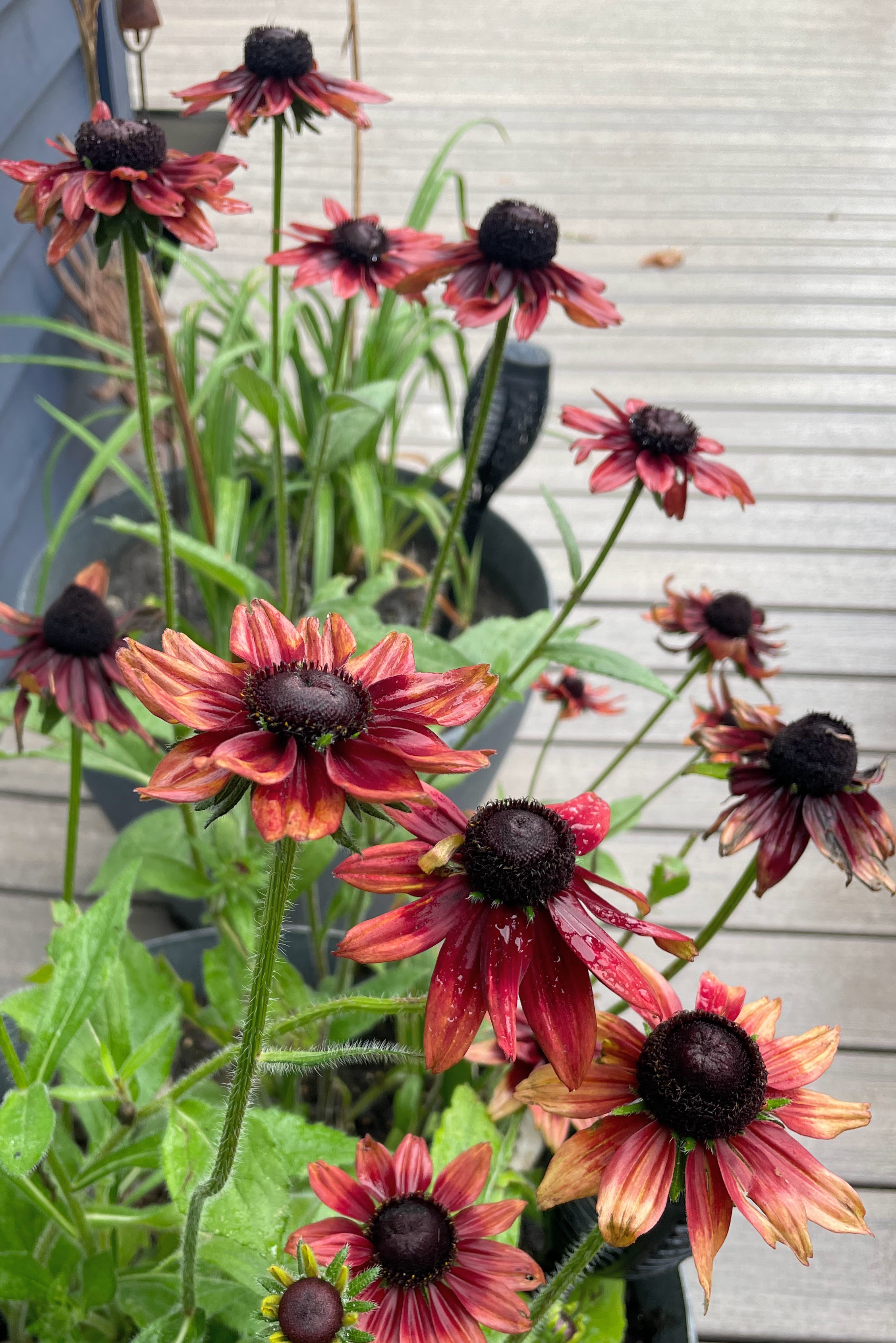
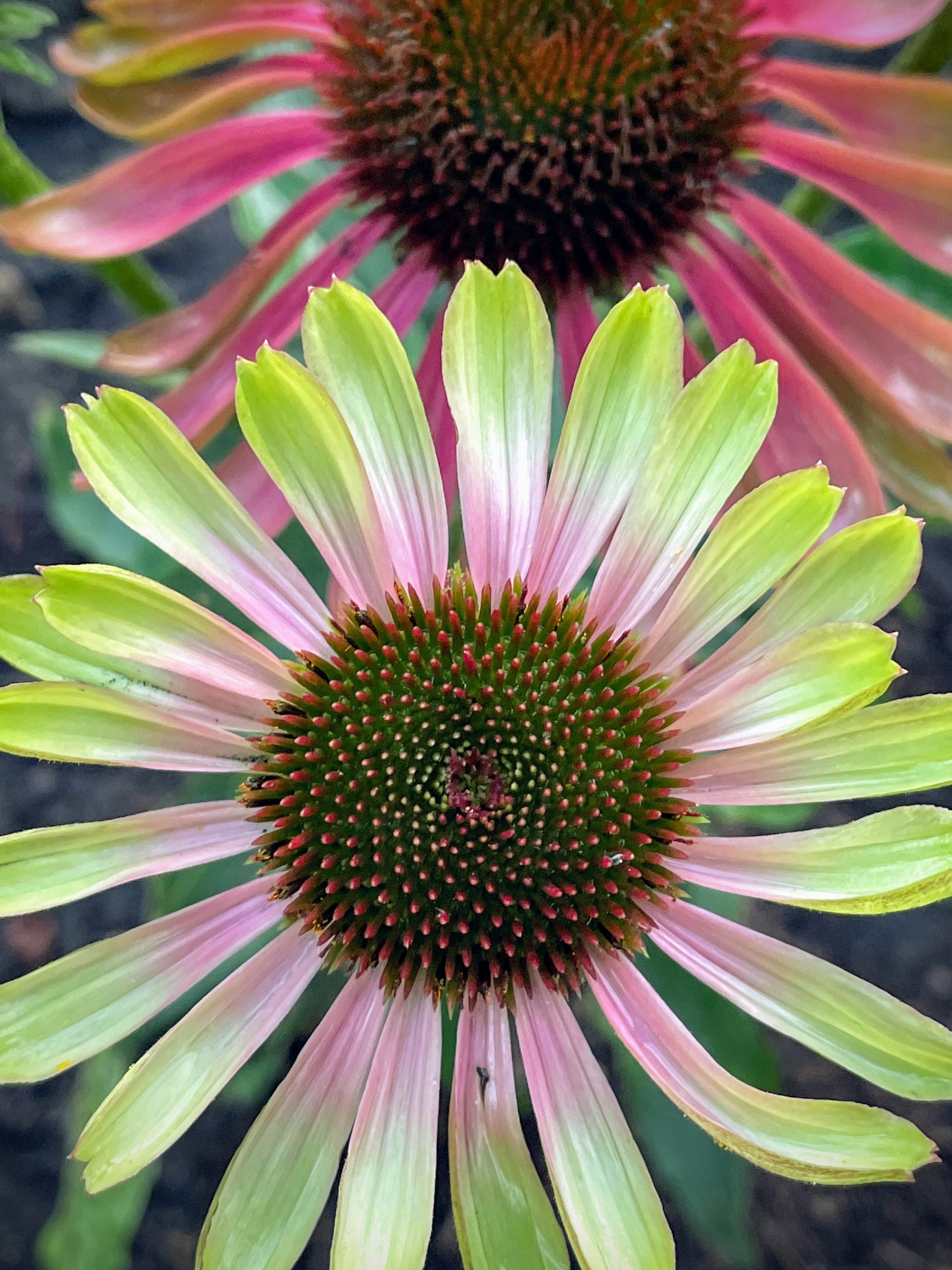
You may look at the beautiful potted flowers above and know right away what they are. When I look at them now, I also know. And forever more, I will know. But for the past couple of weeks, every time I walked by this part of the deck, I reveled in how beautiful these ‘echinacea’ were, and what an unusual color, too. I would then glance over to a different part of the garden and marvel at how many other beautiful varieties of echinacea existed:

But I was wrong about the potted flowers in the first photo, despite abundant evidence. My disregard for the facts started when I forgot what was written on the original plant tags and did not feel I needed to re-check; it spiraled from there and led me to overlook the obvious.

Mostly, it was hubris; I thought I knew, so I failed to observe properly, or fact check. What clues did I miss? Many. As this blogger stated, a gardener confusing a rudbeckia with an echinacea is like a farmer confusing a sheep with a goat. Ouch. In my defense, sheep and goats are very closely related genetically– as are rudbeckia and echinacea. And until a couple of weeks ago, I did not have this ‘Cherry Brandy’ rudbeckia in my garden. But I get the point, and now I can see the obvious differences between the “sheep” and “goats” in my garden.

Here’s how to tell them apart:

1. First, it’s not by how hairy one plant is, vs the other. I read that one way to tell them apart is that echinacea have hairier leaves. But both plants have hairy leaves; echinacea leaves feel rough like a cat’s tongue, while Rudbeckia hirta leaves are softer and more velvety (see photo below):

Since both plants have hairy leaves, it’s not the best test. There is a better one (in fact, the best and easiest one):

2. Examine the cones. Rudbeckia hirta cones (l) are relatively soft and usually look like black button tufts (hence the name Black-Eyed Susans), while echinacea cones (r) are harder and pricklier and more conical — and are not black, but orange or green or brown.

3. Look at the “petals” (though technically, they are ray florets, not petals): This can often help, but not always. According to this way of telling the difference between the two plants, echinacea petals tend to droop and point downward while rudbeckia petals tend to stick straight out. But in the photo below, some of the echinacea petals are drooping and some are sticking straight out. It depends on the variety and the plant’s stage of development. So use the “petal” test as a first form of evidence gathering if you like, but be sure to confirm with the cone test; it will give you the right answer.

In seeking the right answer today, I learned something new. Not just about the difference between Rudbeckia hirta and echinacea, but about assumptions and facts. And about taking the time to stop and smell the roses — and see the petals and leaves, and touch the cones.

Recipe: Lamb with Eggplant, Tomatoes, and Pine Nuts

20 Apr

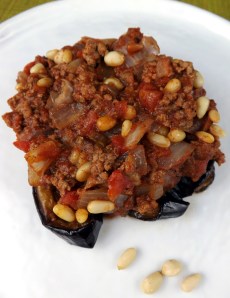
This is a Lebanese dish for saucy eggplant (and lamb) lovers. Lamb and eggplant are natural partners and frequent appear together in Middle Eastern, Turkish, Greek and Balkan dishes. There are many recipes for this as a stuffed eggplant dish but I like this deconstructed version, which layers the filling on top. As it all cooks together, the lamb and tomatoes season and soften the eggplant below, resulting in comforting, cinnamon-scented mouthfuls that are enhanced by the taste and texture of buttery pine nuts.

L

Lamb and Eggplant

Ingredients:

olive oil
3 small-medium eggplants, thinly sliced
garlic powder
salt and pepper

1 onion, diced
4 cloves garlic, minced
1 tsp. cinnamon
1/2 tsp. allspice
salt and pepper
1 lb. (450 gr.) ground lamb
1 can (14 oz./411 gr.) petite diced tomatoes
1 can (14 oz./411 gr.) tomato sauce

1/3-1/2 c. pine nuts
chopped parsley (optional; I forgot it this time around!)

Preparation

1. Cook the eggplant slices in olive oil (in a singe layer, working in batches) in a large frying pan over medium-high heat until they are golden, tending to them carefully so they don’t burn. You will likely need to add more oil to the pan with every new layer. Place the eggplant slices in the bottom of a 9×13-inch (23×33 cm) baking dish and sprinkle them with a little garlic powder, salt, and pepper as you layer them, while they are still warm. (I have a garlic salt grinder and sometimes grind that over the layers, along with some black pepper, so that’s another option.)

2. In another pan, cook the onion in about 2 tbsp. olive oil until soft. (Note: If you’d like to up the heat factor of this dish, you could also add a pinch of red-pepper/chili flakes along with the onions.) Add the minced garlic and cook a couple minutes more, then add the cinnamon and allspice and cook for another couple minutes. Remove the onions from the pan and set aside. Add the ground lamb to the pan and cook until no longer pink; drain,* then add the cooked onions, the diced tomatoes and the tomato sauce. Simmer until the liquid is slightly reduced, about 20 minutes. Check the seasonings after about 10 minutes, and add more cinnamon, allspice, salt, or pepper as needed.

3. Melt a bit of butter or olive oil in a small frying pan over medium heat and sauté the pine nuts until they start to turn golden.

4. Spoon the lamb mixture over the eggplant slices in the baking dish and sprinkle the pine nuts on top. The photo below shows this step halfway through.

LE

4. Bake at 350 degrees F (180 C) until bubbling, about 30 minutes.

5. Sprinkle chopped parsley on top and serve with vermicelli rice pilaf. I also like to eat the lamb and eggplant (and the rice) with plain full-fat yogurt on the side, too.

*In the United States, the lamb sometimes requires draining. If your lamb is leaner, you can add the ground lamb directly to the cooked onions in the pan and skip the draining part.

ROYGBIV: Orange

7 Apr

Depending on who you ask, the color orange brings to mind many things: amusement, danger, encouragement, energy, enjoyment, enthusiasm, extroversion, fascination, fire, happiness, heat, sunshine, and warmth.

It is one of my favorite colors, because it is so cheery (and because it goes so well with blue, its complementary color). I particularly like that it is associated with joy and creativity, and I love this description: “Orange oozes with delight.”

Interestingly, people did not have a good way to describe the color at first, sometimes calling it (in English) “yellow-red” or “saffron.” It wasn’t until oranges made their way around the world from their native Southeast Himalayan foothills that the color began to be associated with the ripe fruit. The first recorded use of orange as a color name in English was in 1512.

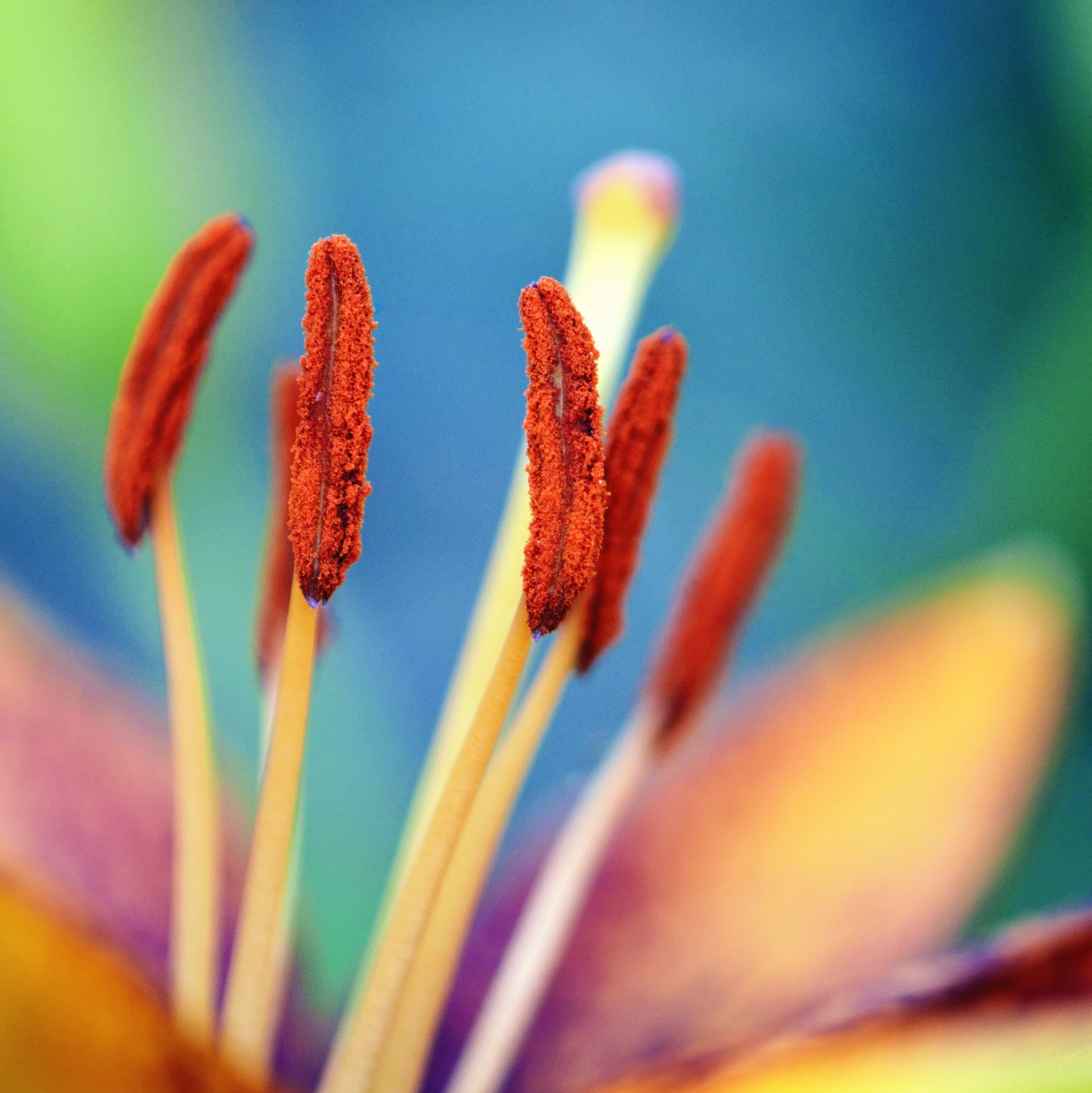
This week’s color, orange, appears on the six stamens of an Asiatic Lily ‘Tiny Sensation.’ The stamens are the male reproductive organs of flowers, consisting of anthers coated in pollen resting atop slim filaments. The female part of the flower, the pistil, can be seen rising blurrily in the back. Though not visible in the photo, the top part (the stigma) has three lobes and is sticky, to better catch the pollen.

Here is a better view of the pistil and its three-lobed stigma, surrounded by the six stamens. This photo is from a different lily, but luckily the pollen here is also orange, fitting in with this week’s theme.

Pollination occurs when bees, butterflies, and other pollinators carry the pollen from the lily’s anthers to the female parts of other lilies. Successful sexual reproduction leads to seeds that ripen in pods and are dispersed when the pods start to open in the fall. Unfortunately, I do not have any good photos of lily seed pods (though will now be on the lookout this fall), but did stumble upon iris seeds one autumn, as described here.

And of course, as lilies come from bulbs, another great way to get more lilies is via bulb division.

Triaxial Fabric Weaving: Hexagonal Tumbling Block Pattern

5 Apr

Two of the reasons I like fabric weaving are: 1) even after planning your project, you can never know exactly how it will turn out; it depends on the color, type, and number of fabric strips you use; the pattern; and how you combine everything. All of that is hard to “see” until it starts to come together. Often, you are rewarded with a beautiful surprise. But sometimes, things just don’t turn out as you imagined. If that happens, then 2) you can easily undo what you have woven and start over, combining the original strips in different ways, incorporating different fabric strips, or even choosing a different pattern.

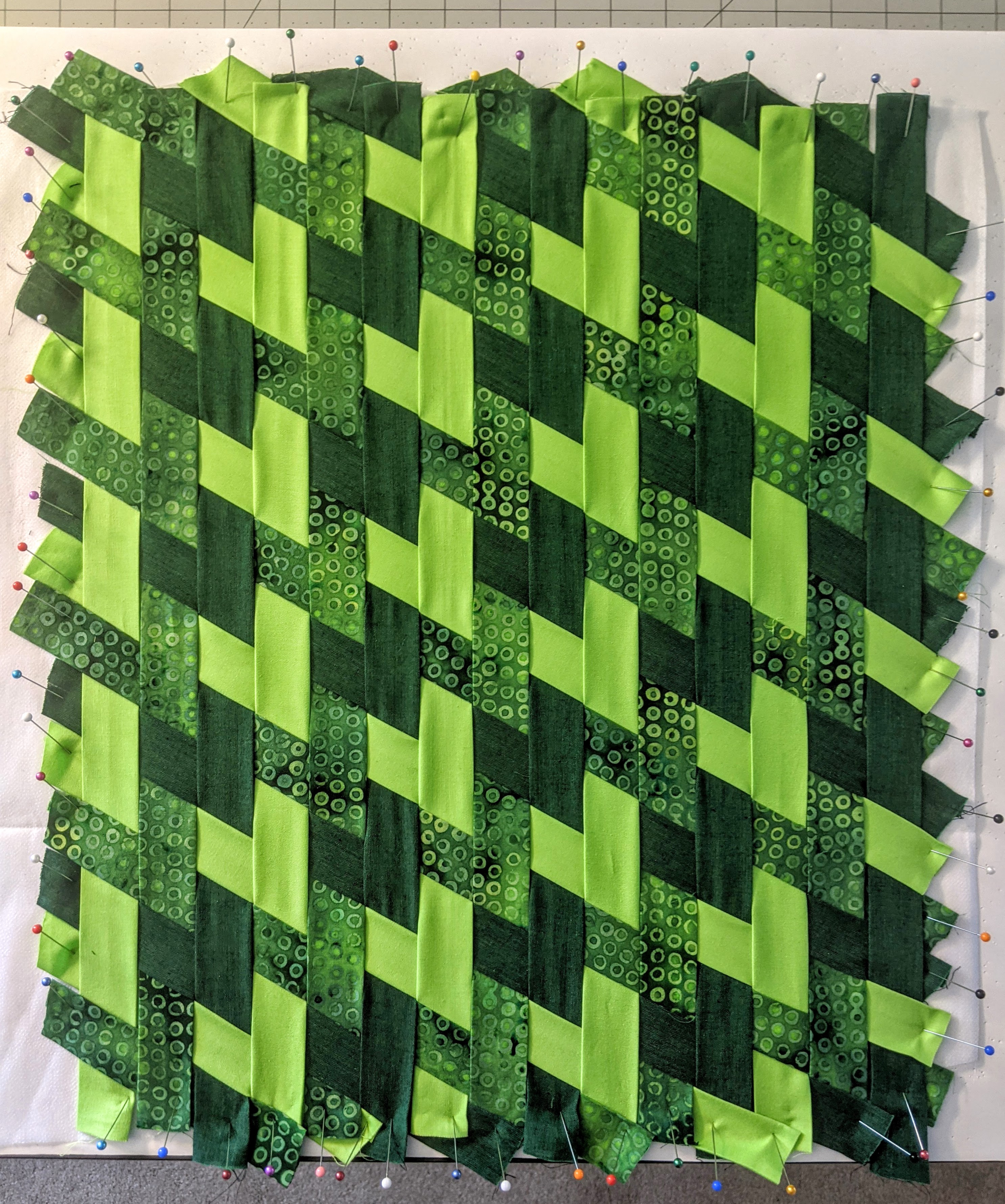
This weave is the same as the first one I wrote about–it’s a triaxial/tumbling block/madweave pattern–but the fabric strips are woven so that the colors/fabric strips come together to look like hexagons. It is a small example of the diverse results you can get, even with the same basic process.

This is a fairly simple hexagonal pattern that requires only three colors/types of fabric strips. I chose a green motif this time and cut my fabric 18 inches long x 2 inches wide, then made 1-inch strips; see my first post for more info on getting started.

Layer 1: Pin the strips vertically onto your foam board (with fusible interfacing underneath), alternating the colors (1,2,3; repeat).

Layer 2: First, find the 30-degree angle. Lay your ruler horizontally across the Layer 1 strips on your board (in the middle of the board, lined up against the right edge) so you can see how the 30-degree angle is situated. Then weave your first Layer 2 strip so that it approximates the 30-degree line, going up toward the left from the middle of the right side. Check the strip against the ruler, to make sure it is at the correct angle, adjusting it as needed until it is perfectly aligned. You may need to tug it gently into place until it is perfect (see the dark green strip below outlined in red).

The basic weave for Layer 2 is “over one, under two,” though you will need to stagger that pattern for each row/color. In my case, with 15 strips in Layer 1 and using the dark green fabric as my Strip 1, my pattern was (starting from right side and going up to the left):

  • Strip 1 (Dark Green): [Under one], over one, under two, over one, under two…
  • Strip 2 (Patterned Fabric): Under two, over one, under two, over one, under two….
  • Strip 3 (Light Green): Over one, under two, over one, under two….

The photos below show the first three strips of Layer 2 (with WEFTY and Purple Thang tools resting above the top pins), and the finished Layer 2. You can start to see two sides of the blocks/cubes/hexagons forming.

Layer 3: This layer does not have a pattern; every row is the same. Each time, you must find the “bird” or backward “Z” to weave under, making sure to choose the right fabric strip to complete the hexagons properly. With each Layer 3 strip you weave (in the photos below, the strips go from the left side up toward the right), you want to complete a row of hexagons/blocks all in the same fabric. As you weave, you want your Layer 3 strips to form the top of each hexagon/block, meaning you must weave under everything else. See this post for how to identify the “bird” or backward “Z”, and also for how to maneuver your WEFTY tool under and over. The photos below show Layer 3 in progress, and a close-up of the final hexagons.

ROYGBIV: Red

30 Mar

In recent months, I’ve thought a lot about the color wheel and the classic rainbow of colors, most recently from having to organize my fabric weaving quarters and yards in some kind of logical way, but also from repainting our new house (after pondering split-complementary and tetradic color schemes until my eyes crossed).

At the same time, I also have a LOT of photos of colorful things that have caught my eye over the years, so I thought to start posting a weekly “ROYGBIV” photo, following the red-orange-yellow-green-blue-indigo-violet sequence. But I had to ask myself, what exactly is the difference between indigo and violet? Indigo and violet are both “purple,” but indigo is a very blue-purple and violet is a red-purple. It helps if you think of the colors on a wheel: violet eventually morphs into red, and most people can distinguish red-purple.

Indigo is far more controversial, thanks to Isaac Newton. He realized white light is actually made up of a spectrum of many colors, where each color blends into the neighboring color. He designated seven colors as being in the visible color spectrum; it was he who included indigo. There are many theories as to why he chose seven colors: Was he following the pattern of sevens (seven musical notes, seven days of the week, seven planets, etc.) or did he simply observe that seven colors had large-enough wavelengths to make the list? We may never know, but what is certain is that the human eye is notoriously insensitive to indigo; it is a hard color for most people to identify. Bearing that in mind, I’ll try to keep indigo in rotation for as long as I can determine it’s not actually blue….

This week, however, I will start off with the first color normally found in the sequence: Red.

Oxheart tomatoes (Cuore Di Bue), taken at the Testaccio Market in Rome, Italy

Recipe: Cinnamon Cardamom Coffee Cake with Extra Streusel

28 Mar

If you like cardamom in baked goods, this recipe is for you. If you don’t, just omit it and you will still have a delicious cinnamon-scented coffee cake with a generous amount of streusel. Cardamom, which is native to India and Indonesia, is in the same family as ginger and turmeric and is very fragrant. Ancient Egyptians, Greeks, and Romans all used it, and the Vikings took it back to Scandinavia. Today, it is widely used in Indian, Middle Eastern, and Swedish dishes as well as some Southeast Asian ones.

In its native India, whole green cardamom frequently appears in savory dishes, and green and/or black cardamom seeds are also part of many garam masala spice mixes. Black cardamom is also very popular in Vietnam; I discovered it was a key ingredient in the long-simmered broth of my favorite Vietnamese pho in Maryland, when the owner came from the kitchen to show me a handful of the aromatic black pods.

On the sweeter side of things (a very nice side indeed), cardamom is a key ingredient in chai teas and mulled wines like Swedish glögg and German glühwein. It is also a key flavor component in Nordic baking and in Indian sweets, which often feature one of cardamom’s most delicious partners: rose water.

This recipe pays homage to my love of cardamom, my love of coffee cake, and my love of lots of streusel.

Extra Streusel Coffee Cake with Cinnamon and Cardamom

Ingredients:

STREUSEL:
2/3-3/4 cup (135-150 gr.) brown sugar (adjust depending on how sweet you like your coffee cake)
4 tablespoons (34 gr.) all-purpose flour
2 1/2 teaspoons cinnamon
1/16 teaspoon ground cardamom
heaping 1/2 cup (80 gr.) chopped pecans or walnuts
3 tablespoons (45 ml.) canola/vegetable oil

CAKE:
1 1/2 cups (about 200 gr.) cake flour or regular flour
1 1/2 teaspoons baking powder
1/2 teaspoon salt
2/3 cup (134 gr.) sugar
1 teaspoon cinnamon
1/8 teaspoon ground cardamom

1/4 cup (60 ml.) canola/vegetable oil
1 egg
3/4 cup (180 ml.) milk (oat milk also lends a nice flavor)
1 teaspoon vanilla

Preparation:

1. Preheat oven to 350 degrees F/180 degrees C.
2. Grease the bottom of an 8×8-inch (20 cm.) square baking pan (or spray with cooking/baking spray), line with parchment paper, and grease or spray the paper.
3. In a medium bowl, mix the streusel ingredients until well combined. Press down on the mixture with the back of a spoon to compact (to create a few future streusel lumps), and set aside.
4. In a large bowl, combine the flour, baking powder, salt, sugar, and spices.
5. In another medium bowl, combine the oil, egg, milk, and vanilla. Add the wet mixture to the flour mixture, stirring just enough to mix. The batter will be a bit thin.
6. Pour 1/2 of the cake batter into the prepared pan (it will seem like a very thin layer; just make sure to fully cover the bottom of the pan).


7. With a knife or spoon, score a line across the top of the streusel in the bowl, dividing the streusel in half. Using a spoon, scoop and scatter 1/2 of the streusel on top of the batter, trying to retain some streusel lumps. Evenly pour the remaining cake batter over, and then scatter the other 1/2 streusel on top.
8. Bake the coffee cake for 25-30 minutes or until a toothpick, knife, or fork inserted in the center comes out clean.

Adapted from a recipe on food.com.