Nefarious Nuthatch?

15 Aug

The Monarch caterpillars are gone. In the end, there were three in total, one plumper than the others. I am hoping that the biggest one managed to make its way to another leaf under which to pupate. But the situation looks grim for the other two. Not wanting to name any culprits, I will simply say that most birds do not eat Monarch caterpillars because the caterpillars ingest toxins from the Butterfly Weed/milkweed leaves they eat, and as a result, the caterpillars taste terrible. Thus, smart birds only make that gastronomic mistake once.

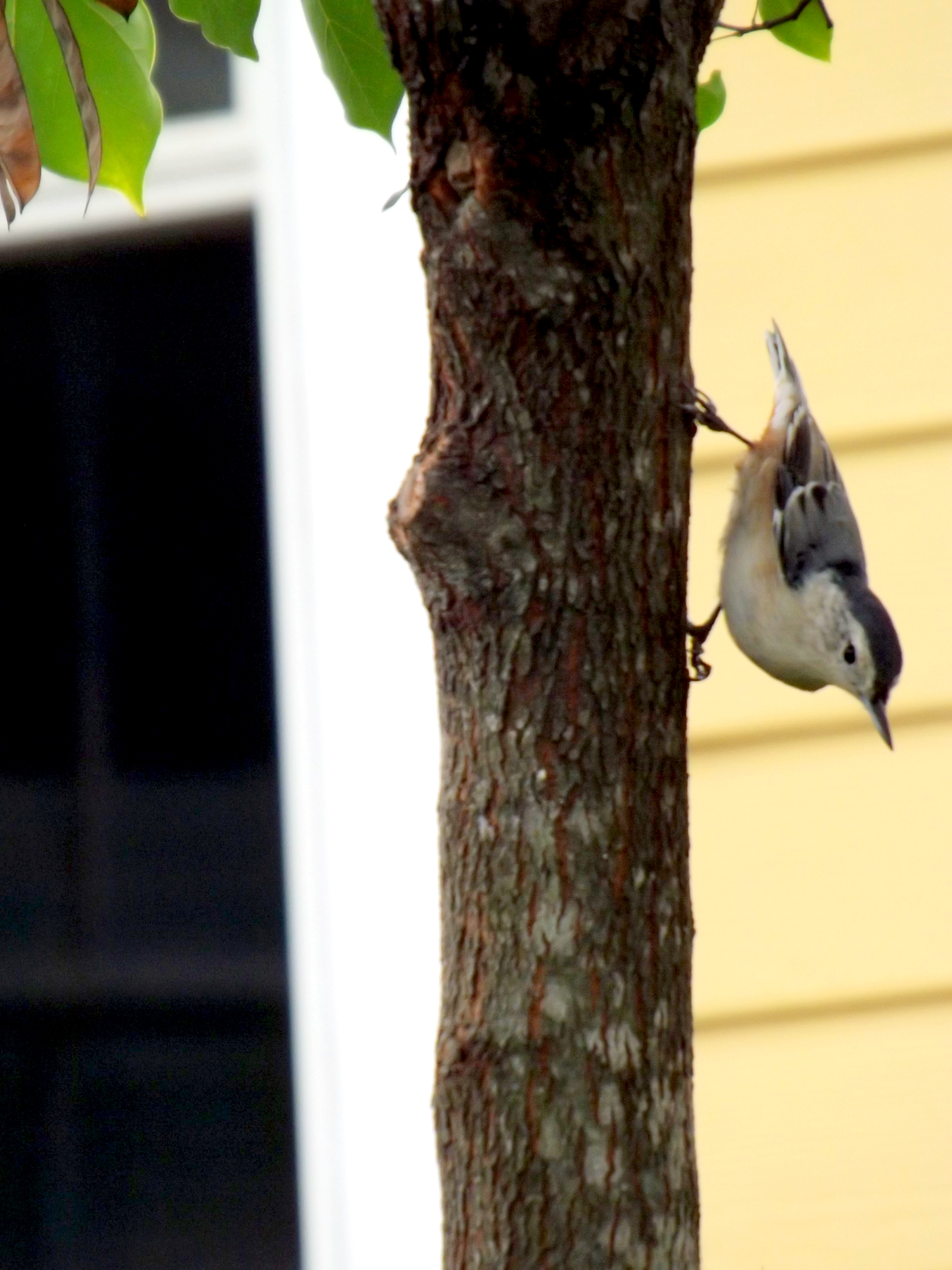
But there is a bird that likes insects for another reason: to use them as mini brooms with which to sweep the entrance to its nest cavity. That bird is called a White-Breasted Nuthatch.

Among its other eccentricities, the Nuthatch likes to hang out on trees face down.

Now, I’m not pointing fingers, but in contemplating the loss of the caterpillars, I noticed a small bird that seemed immune to the forces of gravity on the tree trunk right above the Butterfly Weed  (previously home to the caterpillars). Furthermore, it remained immobile for long stretches of time, staring straight down at the Butterfly Weed in rapt concentration.The clues were piling up.

Appearance at the scene of the crime? Check. Motive? Check. Opportunity? Check.


Conclusion (based on total conjecture): having recently swept its nest with a couple Monarch caterpillars located very conveniently under the bird feeder and tree, the Nuthatch was so pleased with its efforts that it is now looking for a few more of those excellent brooms.

Lesson: Take the caterpillars indoor next year.

Mad for Monarchs

12 Aug

Yesterday, having vowed to clean up my act (and the yard, too), I discovered that one of our Butterfly Weeds had become home to two Monarch caterpillars:


Butterfly Weed is a type of milkweed, which Monarch Butterflies love. The butterflies lay their eggs on the underside of the leaves and not long afterward, a caterpillar emerges, snacking away on the leaves until it is nice and plump, whereupon it attaches itself to a nice spot, hangs upside down in a sort of J shape, and turns into the pupa from which a new butterfly emerges, completing the cycle.

Judging by their size, the two caterpillars in our yard will pupate fairly soon. I’m hoping they stay put on the Butterfly Weed, though some caterpillars wander off and undergo their metamorphosis elsewhere. If these two are happy where they are (and if predators do not get to them), I may be able to post a pupa update in the near future. I am going to let nature takes its course this time around, but if I lose track of the caterpillars, I may consider bringing the 2013 generation indoors so they can pupate in safer quarters.

In the meantime, here is another critter that loves milkweed–the Milkweed Bug. There are two types, both of which are orange and black: the Large Milkweed Bug (Oncopeltus fasciatus) has a distinctive black band across its back, while the Small Milkweed Bug (Lygaeus kalmii) has an orange X on its back. We have both, which may not be a good thing. These bugs multiply like rabbits and can denude a Butterfly Weed very quickly; right now, there are only a few of each type hanging out on our plants, but I’ll have to monitor them to make sure they don’t reach critical mass and chomp away the leaf under which a Monarch pupa might be hanging….


Summer Sloth

11 Aug

The sad fact about gardens  is that it takes work to look good. The flowers and herbs in my garden have a great deal of natural beauty, but that beauty requires maintenance — and those poor plants have only me to provide it. So, at the moment, the garden is looking a bit sorry. I am trying to figure out where to apportion the blame for this state of affairs, and have settled on 1) intense heat, 2) mosquitoes, and 3) the Olympics, combined with a houseful of vacationing children, guests, and a couple of impromptu trips. But the reality is, I have slacked off in my gardening duties due to summer sloth.

For starters, a spectacular weed has taken up residence and is now taller than I am;  I left it in place partially out of curiosity to see just how far it would go (whereupon it proved that it can outgrow anything else in the yard, even without water) — but the truth of the matter is procrastination: I assured myself I would take care of it “next time.”  However, even I acknowledge that its time is now, though it did put on an impressive display.

But that’s not all: I need to cut down spent plants, yank out the grass that is trying to creep into the flower beds, do some more preventative edging, resuscitate the latest dog-trampled plants, undertake an emergency transplant operation, and do a lot of dead-heading: roses, gaillardia, echinacea, oregano, and basil to name just a few plants in need of a trim. Here is the flowering basil–the bees love it, but if I don’t pluck off the basil flowers soon, the plant will put its energy into the flowers rather than the leaves, and there goes our pesto.

Following on this theme of neglect, our garden has become pretty quiet. Why? Because I have failed to refill the bird feeders. I am a sad friend to the local avian community. And this slump has extended to the canine members of the family as well–Shaggy Schnauzers 2 and 1, who by now must be embarrassed to be seen by other, perfectly coiffed members of their breed. So, by the end of this weekend, I hope to have made significant headway on the garden, lured the birds back, and cornered at least one of the dogs for a buzz cut.

Recipe: Chinese Chicken Salad

7 Aug

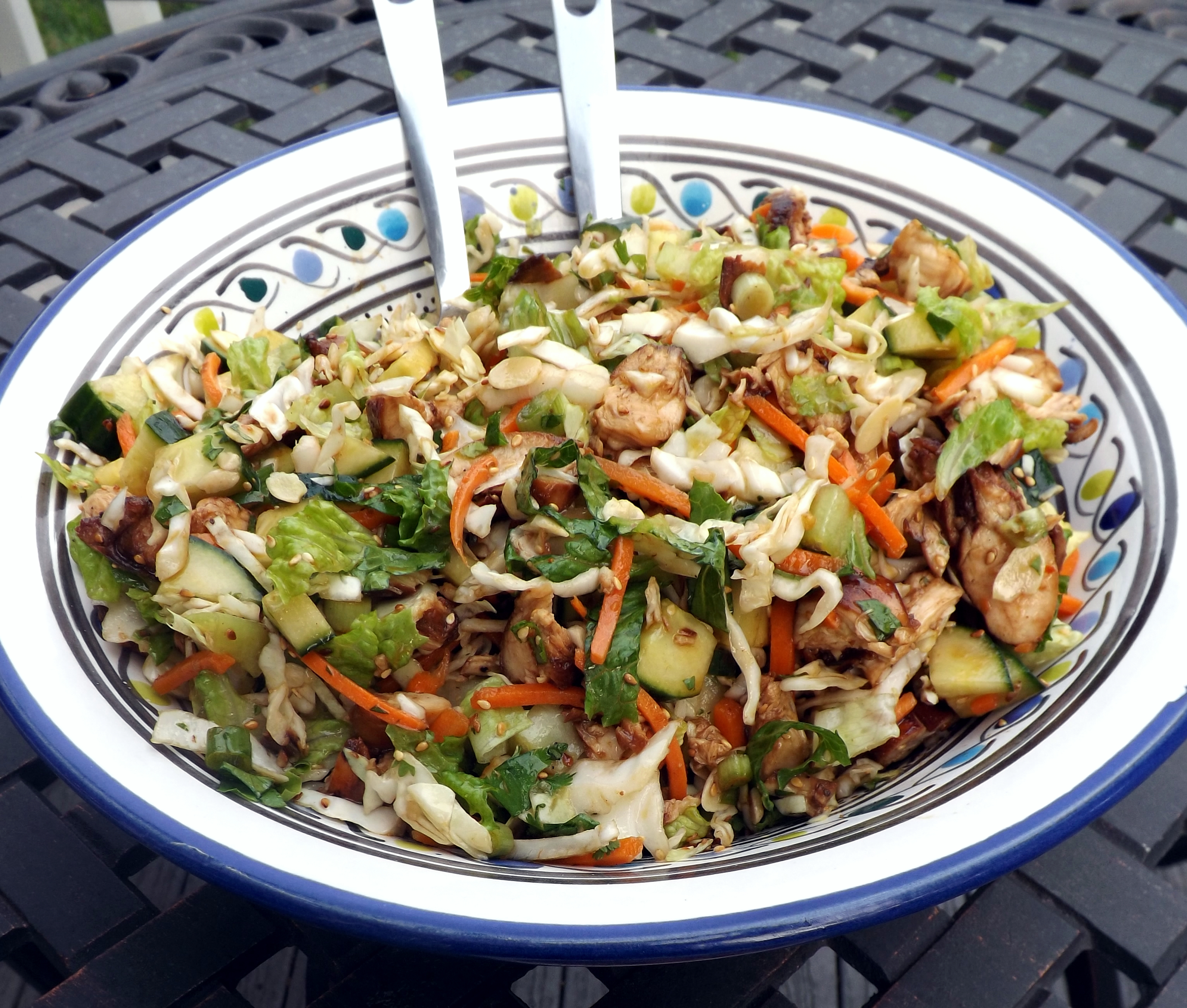
Chinese Chicken Salad has undergone many iterations since it became a popular dish in the  United States early last century. One thing is certain: none of the versions appearing on US menus originated in China, where raw vegetable salads were (and are not) a prominent part of the Chinese diet. In fact, the sesame-ginger version may have come into being in California. But the ability of a dish to be adapted according to cultural preference, taste, and availability of ingredients is a key factor in its ultimate adoption, and each new dish added to a repertoire paves the way for ones that follow. So, even if this cross-cultural creation is not  “authentic,” the  combination of garlic, ginger, sesame, scallions, and soy sauce is unmistakably Asian.

This is a light dinner-time salad that somehow satisfies even the heartiest of teenage appetites. And, if that cilantro in your herb garden is nearing its peak, you can use some of it here.

Chinese Chicken Salad
Serves 8-10

4 chicken breast halves (1.5-2 lb.), sliced in half horizontally
2 tbsp. sesame seeds

Marinade
1/4 c. reduced-sodium soy sauce
1/4 c. mirin (or dry sherry + pinch of sugar)

Salad ingredients
6 c. thinly shredded green cabbage
1/2 c. sliced scallions (about 3 scallions)
1/2 c. chopped fresh cilantro
2 carrots, grated
1 English cucumber, washed but unpeeled, diced into small pieces
1.5 thinly sliced hearts of romaine (about 6 c.)
1/2 c. toasted sliced almonds
chow mein noodles (optional)

Dressing
6 tbsp. reduced-sodium soy sauce
6 tbsp. seasoned rice vinegar
1 large clove garlic, minced
1/8 tsp. dry ground ginger, or 1/2 tsp. fresh grated ginger
1.5 tbsp. sesame oil
6 tbsp. canola oil
sprinkle chilli flakes/crushed red pepper
freshly ground black pepper, to taste

Marinate chicken in marinade for about 15-30 minutes.

Toast sesame seeds in large frying pan; remove from pan and set aside.  Add about a tablespoon of canola oil to the pan and cook chicken over high heat. Remove from pan, place on a cutting board, and let cool.

Add salad ingredients (except chow mein noodles) to large salad bowl; sprinkle with toasted sesame seeds. When chicken is cool, cut across the grain into bite-sized strips and add to salad bowl.

Whisk dressing ingredients together and pour over salad. Toss to combine and serve immediately, with chow mein noodles on the side (if desired).

A Lot to Learn About Allium

4 Aug

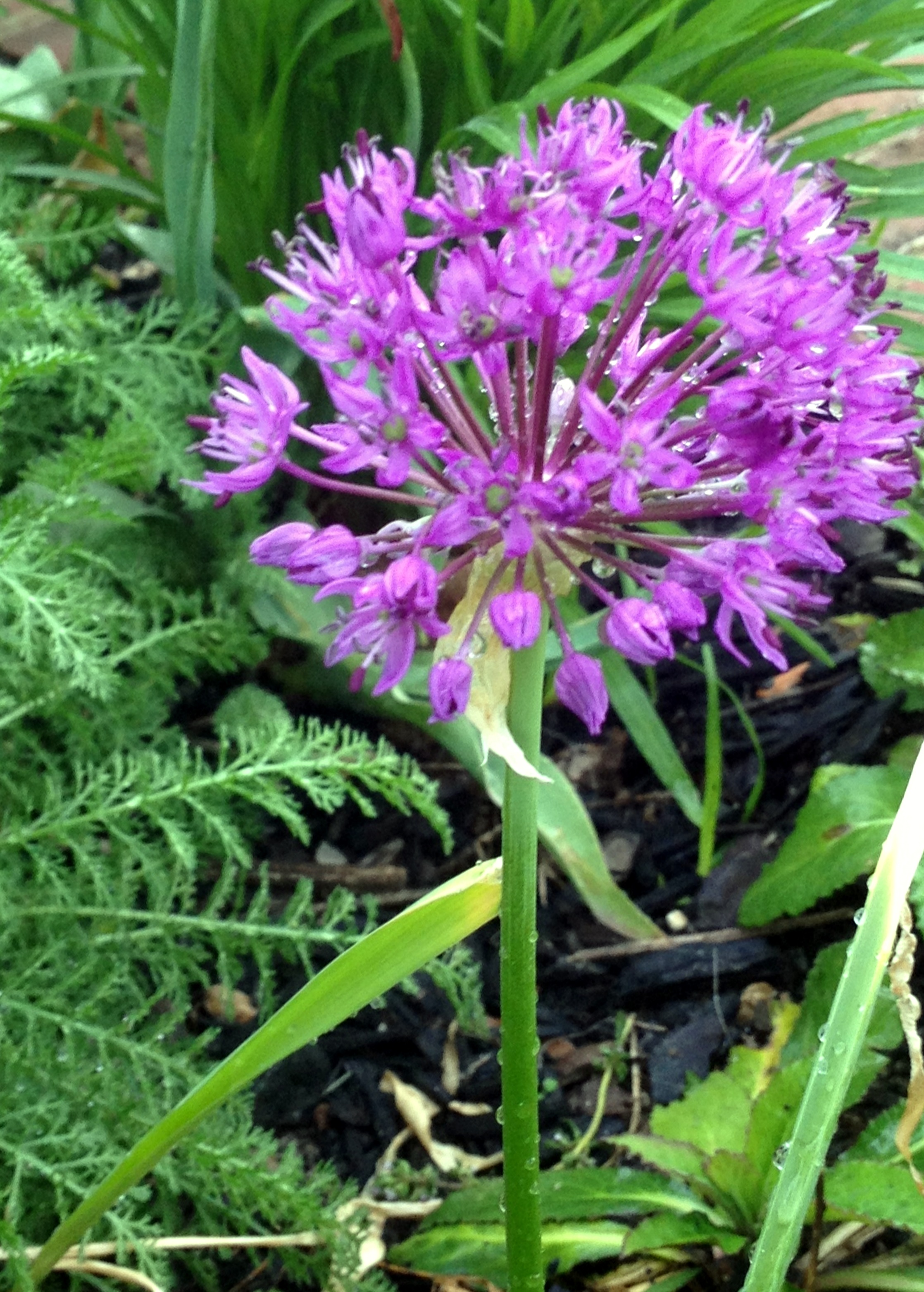
During our very brief visit to Vermont a couple of weekends ago, I was not only fortunate enough to see Beth’s asparagus forest, but I discovered that ignorance can lead to bliss.  In my case, I was admiring a clump of flowers at another friend’s house. Nan’s flowers had been battered by rain and were horizontal instead of vertical, and though they were a bit past their glory days, they still caught my eye. Maybe it was the charming way in which they were now peering over an old stone wall. Or perhaps it was because they were a color and shape I liked. Or maybe it was because unbeknownst to me, they were the same genus of plant I had in my own yard: Allium.


I like to think that had I looked more closely, I would have  known that. But when something appears so wholly out of context, it is sometimes hard to “see” it. Nan’s variety is called Drumstick Allium, and it was in bloom in July. The one I have in my garden is called Purple Sensation, and it blooms in early spring, like the few other alliums I know. The photo below shows the Purple Sensation on May 1.  In my defense, it is more open and fluffier than the Drumstick, and a different shade of purple, and upright….

What I discovered at Nan’s was that I had just spent two years thinking I could only have Allium in the spring, when in fact, it is possible for these ornamental onions to brighten any garden for almost three seasons of the year.

I am quite ready to admit that I am only an amateur gardener, which should by now be quite obvious to anyone reading this. But my ignorance led to such great delight at the discovery that I could have alliums in my garden for much longer than I thought, that I hope to never become jaded by the significant amount of gardening knowledge that awaits me.

Tis the Season for…Crape Myrtle

31 Jul

It’s that time of year. All over our neighborhood, Crape Myrtles (also known as Crepe Myrtles) are in bloom.  The long-flowering trees and shrubs originated in Asia, but made their way to the southeastern part of the United States more than 200 years ago after a pit stop in Europe. With so many different sizes and colors to choose from, there is bound to be a Crape Myrtle for almost every garden.

Our Siren Red is a relatively small variety–it will only be about 10 feet tall when fully mature, which is just right for our townhouse yard.  Of course, I also thought the Porcupine Grass was just right for our yard, but failed to adequately imagine what 8-foot tall clumps of  vibrant ornamental grass would look like at their peak; with two of them on either side of the Crape Myrtle, it is in danger of becoming the filling in a Porcupine Grass sandwich. I’m hoping the Crape Myrtle will soon outgrow the Porcupine Grass. If not, I’ll have to think of a Plan B.

I chose the Siren Red because of its size, and also because of its beautiful deep-red flowers. With crimson-colored new-growth foliage that turns green, and berry-like buds, every part of Siren Red is a pleasure to behold:


Recipe: Orange-Ginger Salmon with Ramen Cabbage Salad

30 Jul

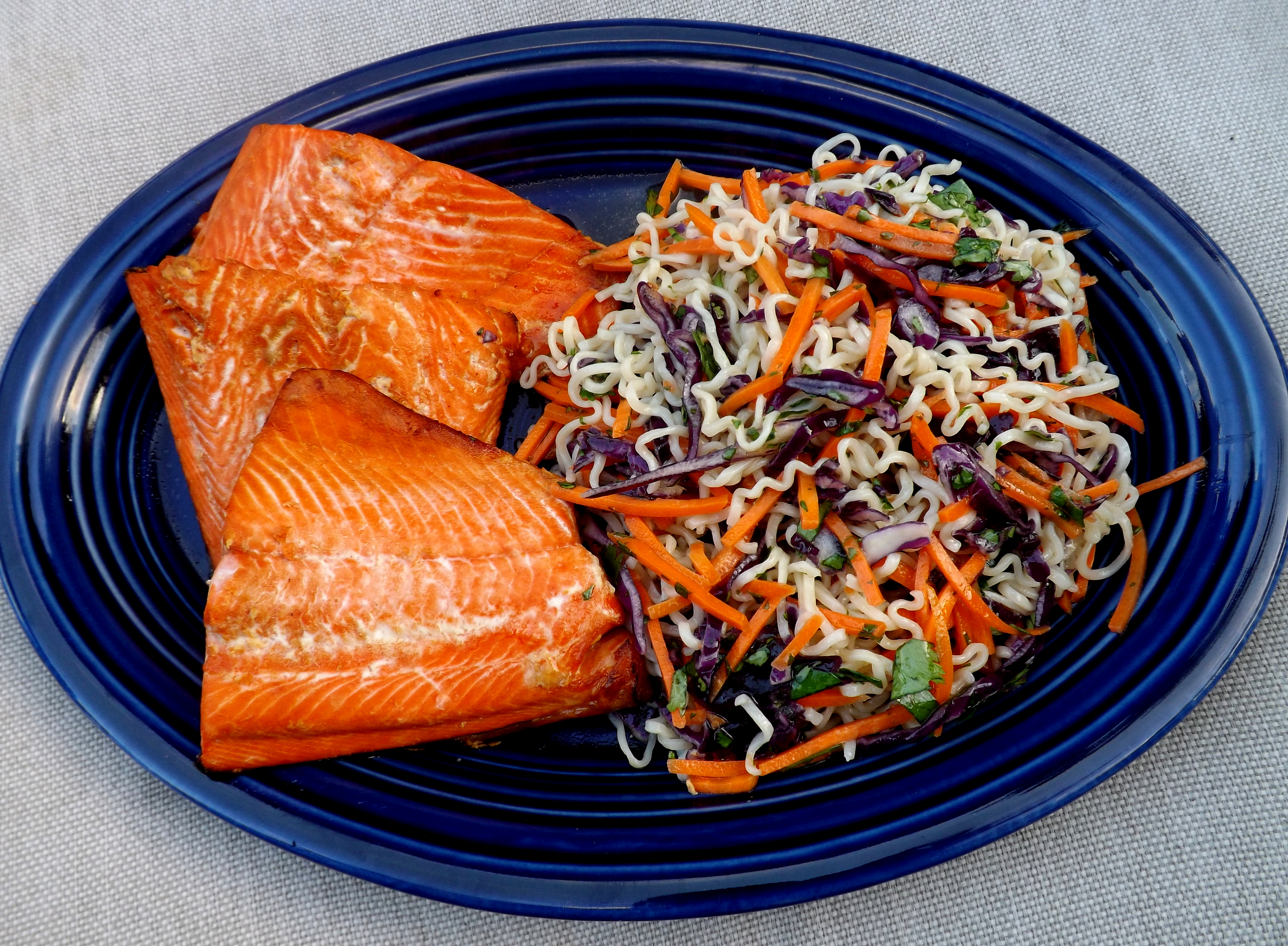
Ramen noodles don’t frequently appear on our dinner menus, but this salad is the reason my children started eating salmon.  With cooked ramen noodles, cabbage, carrots, and cilantro (from the herb garden) in a light orange-honey dressing, it has been a family favorite for years. And since I only make this salad as an accompaniment to the salmon, the kids quickly came to appreciate the whole package. It also helps that the two parts of this meal (adapted from an old Redbook magazine recipe) look so nice together.

Orange Ginger Salmon with Ramen Cabbage Salad
Serves 5-6

Marinade
1/2 c. soy sauce
1/4 c. orange juice
3 tbsp. honey
1 heaping tsp. ground ginger, or 1.5 tbsp. freshly grated ginger

2 lb. salmon fillets
3 (3-oz.) packages Oriental-flavored ramen noodles, broken into halves
1 (1o-oz.) bag grated carrots (about 4 c.)
1 (1o-oz.) bag shredded red cabbage (about 4 c.)
1/4 c. packed chopped cilantro

Dressing
3/4 c. orange juice
6 tbsp. extra virgin olive oil
1 tbsp. sesame oil
2 seasoning packets from the ramen noodles

Combine marinade ingredients in glass 9×13 baking dish. Place salmon fillets in dish and let marinate while preparing the salad, turning salmon occasionally.

Combine dressing in ingredients in a large salad bowl, mix well, and add carrots and cabbage, tossing to coat. Cook noodles in boiling, unseasoned water for two minutes, drain, and rinse thoroughly with cold water. Shake the colander to remove excess water, set aside to drain further, then add to cabbage mixture and mix well.

Remove salmon from marinade and broil (or grill) about 5 minutes per side, basting with marinade. Place on platter. Just before serving, add cilantro to salad and combine. Serve salmon with salad.

Asparagus Forest

29 Jul

Come spring, and for as long as it’s available, asparagus holds a place of honor in our house. We are especially fond of very thin stalks, tossed in olive oil, sprinkled with salt and pepper, and roasted at about 425 degrees until golden and slightly crispy at the tips. Cooked this way, asparagus never lasts more than a few minutes on our dining table and no matter how much I make, there is always at least one child looking mournfully at the empty platter. But… until this weekend, we had never seen asparagus growing, and it is as lovely to look at as it is to eat.

We made a whirlwind trip to Vermont and were lucky enough to see an old family friend, Beth, who has an asparagus forest. All it took was one look, and I decided that I absolutely have to try planting some asparagus next year, even if we will not be able to sample any of it for a while as it gets established.

Normally, the tender shoots that people eat are snapped or cut off just above ground level. But left to their own devices, the shoots grow tall and get woodier, the buds on the tips of the asparagus open and produce a wispy mass of branches and berries that turn bright red when ripe (though note that the berries should not be eaten). The little berries set against feathery foliage look ethereally festive, and when I saw the asparagus plants after a rainy afternoon, they were glistening.


The Understated Elegance of Switchgrass

23 Jul

This is the time in my garden when the show-stoppers from June have faded away and the autumn-flowering beauties have yet to burst forth.  I have not quite been able to ensure a completely steady stream of new blooms from March through October. A few troopers are still hanging in there, but this is when the ornamental grasses shine. There are two grasses in my garden: Porcupine Grass and Switchgrass  (Shenandoah). If plants can be categorized according to personality type, then there is no question as to which is the extrovert and which is the introvert.

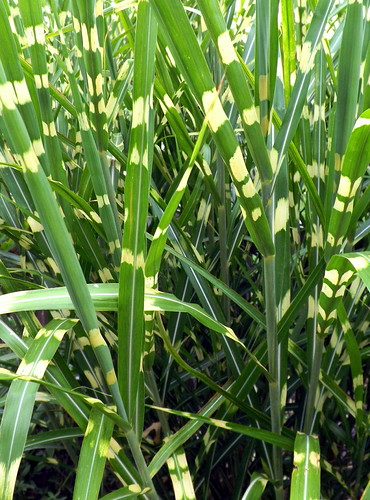
Porcupine Grass grows like mad, has beautiful stripes, and is more than 6′ tall; it rarely gets overlooked. Here is a photo of it at eye level — it is tall, lush, and spectacular, a show-off in a garden of  show-offs:

But there comes a point at which the Porcupine Grass is too much: too tall, too bold, too loud.  And it is precisely then that the slower-growing Switchgrass comes into its own. Tucked away in a far part of the garden, it rarely gets much attention. But it is a gorgeous grass, with burgundy tips and delicate spikelets (flowers)–the epitome of elegance.  Proof, again, that quieter personalities have a great deal to offer any garden.

Recipe: Pasta with Cherry Tomatoes, Fresh Mozzarella, and Basil

18 Jul

This dish has two advantages: First, it is another fantastic meal for hot summer days since the only part of it that requires cooking is the pasta. Second, it is a very nice way to use up some of that bumper crop of cherry tomatoes or basil from the herb garden.

Pasta with Cherry Tomatoes, Fresh Mozzarella, and Basil
Serves 6

1 pint (about 350 gr.) cherry tomatoes, grape tomatoes, or Roma cherry tomatoes
1 tsp. salt
freshly grated black pepper, to taste
1 7-8 oz. (200-225 gr.) container bocconcini or ciliegine (baby mozzarella balls), drained
1 large clove garlic, very thinly sliced
1/3 cup (just under 80 ml.) extra virgin olive oil
3 tbsp. finely shredded basil (about an entire .75-oz. pkg., as found in U.S. grocery stores)
1 lb. (454 gr.)  trofie, gemelli, or any spiral pasta
1/3 cup (about 40 gr.) grated Pecorino Romano or Parmesan cheese

Cut tomatoes in half and place in a medium bowl. Sprinkle with salt and pepper. Add sliced garlic and olive oil; mix well and let marinate.

Cut the mozzarella balls into quarters (bocconcini) or halves (ciliegine). Add to tomatoes, folding in gently. Stack the basil leaves, roll them up tightly lengthwise, and slice finely, starting at one end of the roll and continuing until all the basil is nicely shredded. Sprinkle the basil on top of the tomato/mozzarella mixture.

Bring a large pot of water to boil; add a sprinkle of salt and the pasta and cook according to package directions just until pasta is al dente. Shortly before pasta is ready, remove about 1/2 c. of the cooking water and set aside.

Call all guests to the table; pasta waits for no one.

Drain pasta and return to pot. Pour tomato/mozzarella/basil mixture over drained pasta in pot and mix in the Pecorino Romano (or Parmesan) cheese. If pasta seems dry, add reserved cooking water, 1/4 c. at a time. Check seasonings; add more salt/pepper if necessary.

Serve immediately.