Archive | Recipes RSS feed for this section

Recipe: Coffee Ricotta Mousse with Gianduia (Chocolate Hazelnut Spread)

19 Feb

PHOTO2
Since moving to Italy, I have become obsessed with fresh, soft ricotta. Ricotta is made from the whey left over from making other cheese (so, the second cooking–and hence the name ricotta, which means twice cooked). It can be made from cow’s milk, sheep’s milk, goat’s milk, or buffalo’s milk. Cow’s milk ricotta is more common, but I love the taste and texture of sheep’s milk ricotta (ricotta di pecora), which has a very high fat content and is a bit softer than the cow milk version.

Cow's milk ricotta  Sheep milk ricotta
Despite this slight preference, I have yet to meet a ricotta I do not like. I love it in pastas and in any savory incarnation–but I really, really love it sweet: in the ricotta cakes here in Rome, in Sicilian cannoli, in the Neopolitan sfogliatelle…the list goes on. Basically, I love sweet ricotta here, there, and everywhere. So for the past few weeks, I’ve been experimenting with making a ricotta dessert at home: mousse. It has been tough work.

This version is currently my husband’s favorite: coffee-flavored with ripples of gianduia, a dark chocolate-hazelnut spread that is a sleek, grown-up version of Nutella. The recipe is for two servings (based on 1/2 c. ricotta per person)–and can easily be multiplied. It yields a subtly flavored mousse that is not overly sweet, but the ingredients can easily be adjusted to your taste. Note: delicious as this is, it has one other thing going for it–it is a very quick dessert that can be made ahead and put in the refrigerator until later.

Coffee Ricotta Mousse with Gianduia
Two servings

Mousse
1 tsp. instant espresso powder or instant coffee granules
1 tsp. vanilla
1 c. fresh, soft ricotta (preferably sheep’s milk ricotta–but use whatever is the best ricotta you can find)
2 rounded tbsp. sugar
3 tbsp. whole milk

Filling
2 heaping tbsp. gianduia (chocolate-hazelnut spread)

Garnish
2 or more whole hazelnuts
chocolate-coated cookie sticks
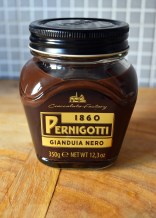
Pernigotti  Mikado
Preparation
1. Dissolve the instant espresso powder (or instant coffee granules) in the vanilla.
2. Place the remaining mousse ingredients in a bowl and mash with a fork until soft and mousse-like; add the coffee/vanilla mixture and whisk to combine, eliminating as many lumps as possible.
3. Leave with a few lumps for a more rustic mousse, or, for a finer texture, use an electric whisk (such as a whisk attachment on an immersion blender) or a hand mixer and whisk until velvety smooth.
4. Place 2 heaping tbsp. mousse in the bottom of each mousse cup, dot with about 1 heaping tsp. gianduia, and swirl slightly. Repeat, for three layers total, using up all remaining ingredients in the final layer.
5. If preparing in advance, cover each mousse cup with aluminum foil and refrigerate.
6. Just before serving, garnish each mousse with a whole hazelnut and chocolate-coated cookie stick.

Mousse1
mousse2

Recipe: Broccoletti Ripassati (Twice-Cooked Romanesco Broccoli)

12 Feb

After our visit to Sora Margherita, I found I could not get the broccoletti ripassati out of my mind. Soft, delicately sweet and nutty, redolent of roasted garlic and chilies, it was a perfect wintery comfort food, and I wanted to replicate it at home.

Broccoletti
So last week I went in search of a nice Broccolo Romanesco. It is in the Brassica oleracea family, along with broccoli, Brussels sprouts, cabbage, cauliflower, collard greens, and kale. Not to be confused with regular broccoli (Brassica oleracea Italica Group), Romanesco broccoli (Brassica oleracea Botrytis Group) is bright green and pointy and has been grown in Italy for centuries. It is most closely related to cauliflower and tastes a bit like it–though it is richer and more tender. And while it is sometimes labelled “broccoflower,” it should not be confused with the other, more common “broccoflower” that looks just like a green cauliflower. By now, I’m sure you are confused…. But rest assured, if you see a swirly, pointy, highly decorative Broccolo Romanesco, you will immediately know it is the one that is not like the others.

Romanesco broccoli
And if you do see one, grab it, take it home, and make some Broccoletti Ripassati; you won’t regret it. You can it eat it as a side dish, on its own (pictured up top as an oh-so-good, next-day lunch eaten with a spoon)–or mixed into pasta with some of the cooking liquid, as is very common in Rome.

Broccoletti Ripassati

1 head Romanesco broccoli
roughly 8 c. chicken or vegetable broth (I used water and chicken bouillon cubes at slightly less than full strength)
1/4 c. olive oil, plus extra as needed
freshly ground black pepper
1/4-1/2 tsp. chili flakes, or to taste
4 medium garlic cloves, minced–plus another 2 cloves, minced (optional)
2 tsp. red wine vinegar
salt & pepper to taste

Preparation

1. Trim the broccoli, cut it in half, cut out the core, and separate each half into florets.
2. Bring the broth to a boil and simmer the florets in the broth until they are soft enough to be pierced with a fork–it should take less than 10 minutes.
3. Drain the florets, reserving 1 c. of the cooking water.
4.  Heat the olive oil in a large, heavy skillet over medium-high heat and grind some black pepper over the top. Add the chili flakes, cook for about a minute, then add the 4 cloves of minced garlic. Cook for about 30 seconds while stirring, then add the broccoli and stir to coat it with the garlic.
5. Cook for about 15 minutes, stirring periodically and scraping up any bits from the bottom of the skillet, until parts of the broccoli turn very slightly golden. During the course of this second cooking, the broccoli will begin to disintegrate, which is perfect.
6. If the broccoli gets too dry, add some of the reserved cooking liquid and/or olive oil. You do not want the broccoli to be either too wet or too oily; you want it to be soft, moist, and almost slow roasted.
7. Sprinkle the red wine vinegar over the broccoli and cook until the vinegar has evaporated. Add the remaining 2 cloves of minced garlic, and cook for another 5 minutes (the first batch of garlic contributes to the slow-roasted taste; this batch adds a little extra kick–but it’s optional).
8. Season to taste and serve.

Recipe: Coda alla Vaccinara (Oxtail Stew) with Rigatoni

2 Dec

One of the pleasures of being in a new place is tasting local dishes and then trying to figure out how to make them. In Italy, part of the fun lies in consulting butchers, greengrocers, cheese purveyors, wine merchants, and really, any Italian who eats, because they are all happy to offer advice. As soon as the days grew cooler, I knew what I wanted to make: Coda alla Vaccinara (Oxtail Stew) served over rigatoni–an old-style dish appearing on many Roman menus.

DSC_0063
In previous times, the slaughterhouse workers of Testaccio (the vacccinari) were given offal and oxtails to pad their slim salaries. Their wives rose to the challenge and created dishes that made the most of the available ingredients. In Coda alla Vaccinara, the oxtails are braised in a sauce made with pancetta, lots of celery, onions, carrots, tomatoes, wine, and spices, though the stew is open to interpretation; everyone I asked prepares the dish in a slightly different way. Some people make it with red wine instead of white, some add water, some forego the carrot, some add raisins. Large pieces of celery are de rigueur, but in a rebellious break from tradition (and knowing I wanted to turn the entire stew into a sauce), I finely diced all the celery and survived to tell the tale.

However, I did not escape looks of shock and dismay on the faces of two Italian friends when I mentioned I had added a pinch of cinnamon to the stew. “Cinnamon? CINNAMON? No. NO.” But I say “Yes.” In addition to cloves, cinnamon very frequently appears in recipes for Coda, which is meant to have a warm-scented, delicately sweet undertone. So here is the resulting recipe, a hearty interpretation perfect for autumn and winter. And following on the advice of Alessandro Volpetti (and I’m happy to take the word of anyone at Volpetti’s), I topped the Coda with grated Ricotta Salata cheese, one of my favorites. But omit the cinnamon if you prefer, top with Parmesan or Pecorino Romano instead–this dish is yours to interpret.

DSC_0020

Rigatoni with Oxtail Sauce (con Coda alla Vaccinara)

1-2 tbsp. olive oil
2.2 lb. (1 kg.) oxtails
salt and pepper
4 oz. (about 112 grams) pancetta, cubed
1 large onion, finely chopped
1 large carrot, finely diced (or coarsely grated)
5 stalks celery, finely diced
5 cloves garlic, minced
1 bay leaf
1/8 -1/4 tsp. chili flakes
4 whole cloves (or 1/8 tsp. ground)
¼ tsp. ground cinnamon
1.5 tbsp. tomato paste
1.5 c. white wine
1 large (28 oz./800 grams) can peeled Italian tomatoes
fresh parsley and marjoram (or oregano)
tiny pinch sugar

1 lb. (500 grams) rigatoni
Ricotta salata cheese, grated

Preparation
1. Lightly season the oxtail pieces with salt and pepper. Heat the olive oil in a large Dutch oven, then brown the oxtail pieces, turning them on all sides. Remove from the pot and place in a bowl.
2. Add the pancetta to the pot and cook until mostly crispy and the fat has rendered; do not drain the fat. Add the onion, carrot, and celery and cook until soft, deglazing the pot as you go. Sprinkle the onion mixture with more black pepper, add the garlic and bay leaf, and cook for a couple of minutes. Add the chili flakes, cloves, and cinnamon and cook for a minute or two while stirring. Add the tomato paste and the wine. Simmer gently for about 5 minutes to reduce the liquid slightly.
3. With clean hands, take a peeled tomato from the can and crush it into the stew; repeat with all the tomatoes. This is a very satisfying technique—but moderation is key; if you are too enthusiastic, you may end up shooting tomato bits across the kitchen. If you prefer a slightly less visceral experience, you can cut the tomatoes while in the can, or remove them and dice, adding all the tomatoes and all the tomato sauce/juice from the can to the pot.
4. Mix in the pinch of sugar, nestle the oxtail pieces into the vegetable mixture, pour in any liquid from the bowl they were in, sprinkle with more black pepper, and then scatter some of the herbs on top.

DSC_0048
5. Cover the pot and simmer on low heat for about 3 hours, or until the meat is very tender when pierced with a fork (it may take longer depending on the oxtails). Remove the oxtails, place on a dish, let cool, then pull off as much meat from the bones as possible (this will require some patience). Return the shredded meat to the sauce; keep warm.
6. Cook the rigatoni according to package instructions until al dente, drain, return to its pot, and then mix in the Coda sauce. Scatter more fresh herbs on top and serve with the grated cheese.

DSC_0060

Recipe: Salade Nicoise with Salmon

1 Jul

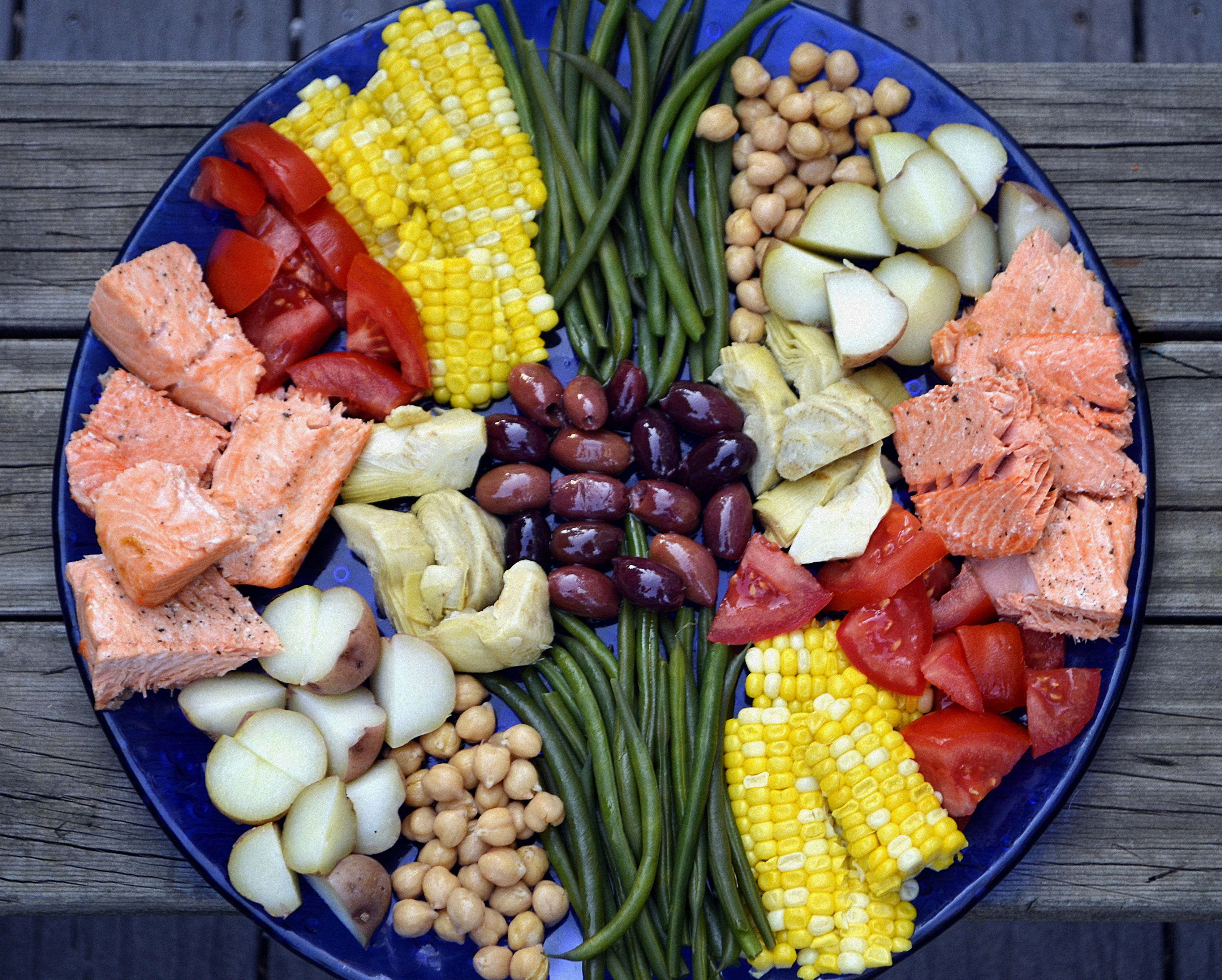
Sometimes, you just get tired of lettuce and yearn for something a bit “more.” The deconstructed Salade Nicoise meets that need. It is one of my favorite salads for that reason, and because all parts of it can be prepared in advance. Plus, salad makers with an artistic flair can have a lot of fun deciding how to present the ingredients to maximum effect. To earn the name “nicoise,” a dish must contain a few specific items: olives, garlic, French green beans, tomatoes, and anchovies (or tuna in oil). Artichokes and hard-boiled eggs are also characteristic of a salade nicoise, but just as I was assembling this one in front of a hungry audience I realized I had forgotten to boil the eggs…. So, no eggs this time around. However, the beauty of this salad is that you can improvise and make it with whatever you have on hand. I had a craving for broiled salmon, so substituted that for the tuna, and added corn off the cob and chick peas, just because. Three hungry people polished off this platter–but with some crusty bread on the side, it could feed four less ravenous eaters. The recipe below is a free-form one–the quantities of all the ingredients (and the ingredients themselves) can be adjusted as desired.

Salade Nicoise 2
Salade Nicoise with Salmon

1 filet of salmon, about 1 lb.
olive oil
salt and pepper
fresh lemon juice

2-3 ears of corn, husked, with silky threads removed
a couple handfuls of thin, French-style green beans, rinsed
6-8 small red potatoes, rinsed and scrubbed but not peeled, and cut into quarters
3 eggs (which I forgot)

1-2 ripe tomatoes, diced
nice black olives, about 1/3 c. (I had Kalamata on hand, but Nicoise or other French olives would be more traditional)
cooked chickpeas, about 1/2 c.
8-10 canned/tinned artichoke hearts

your favorite garlicky vinaigrette

Preparation

1. Set oven to broil. Pat the salmon dry and place on a rimmed cookie sheet sprayed with cooking spray. Rub the salmon with olive oil, sprinkle with salt and pepper, drizzle lightly with lemon juice, and broil a couple minutes on each side, or until cooked through. Remove from oven and let cool, then cut into chunks.
2. Meanwhile, bring a large pot of water to a boil. Drop the corn cobs and green beans into the pot, and cook 5-8 minutes or just until tender. Using a slotted spoon, remove the vegetables from the pot and place them in a colander set on a dinner plate. Take the colander to the sink, rinse the vegetables in cold water, and set them aside. Keep the water in the pot boiling.
3. Drop the quartered red potatoes into the boiling water and cook until tender; remove them from the pot with a slotted spoon and set aside to cool. Finally, gently lower the eggs into the boiling water, turn off the heat, cover the pan, and let the eggs cook for 10-12 minutes. Remove the eggs and place them in cold water to cool, then peel and quarter them.
4. Take a cooked corn cob and stand it on its end on a stable cutting board. Carefully cut the corn off the cob in vertical strips with a sharp knife. If the green beans remain wet, pat them dry.
5. Assemble the salade nicoise by placing all the ingredients (including the tomatoes, olives, chickpeas, and artichokes) in an alternating pattern on a large platter. Drizzle lightly with the vinaigrette, and serve with additional vinaigrette on the side.

How to Eat a Cherimoya (Chirimoya)

15 Apr

It’s really simple–cut it in half, and eat it with a spoon. That’s how my Bolivian grandmother (who adored this creamy Andean fruit) ate it–delicately scooping out the seeds she encountered, and then savoring small spoonfuls of the custard-like flesh. I also love cherimoyas (or as I grew up calling them: chirimoyas), though I only ever ate them in Bolivia as they were impossible to find in the United States. But that has been changing, to the point that last week, they appeared  in the “exotic” fruit section of my local grocery store. What a treat! I took some home, let them soften up a bit (they should be quite soft to the touch, but not completely mushy), and then dug in. Yum…. Mark Twain considered cherimoyas the most delicious fruit ever (having tasted them in Hawaii, after they were introduced there via Spain and Portugal)–and I’d have to agree. But don’t be tempted to bite into a seed; the insides are toxic.

This fruit is also known as a Custard Apple, and I get the “custard” part, but can’t figure out the “apple” part; perhaps it’s due to the shape? Because a cherimoya doesn’t taste anything like an apple. What it does taste like is an entire tropical fruit salad pureed into a silky, sweet, tangy custard. It’s a vitamin-rich (B6 and C) dessert in its own green cup. One day I may be tempted to make a cherimoya flan, or some cherimoya ice cream, or perhaps a cherimoya smoothie, but it’s hard to mess with perfection. Really, all you need is a spoon.


Recipe: Creamy Double Mushroom Soup with Green Onions

5 Mar

Mother Nature is really letting us have it this winter; we have been hit with yet another snow storm. The government has shut down and so has my office: today is an official snow day. Being home on a day such as this, my thoughts turned to warm and comforting things such as soup. Specifically, to an earthy soup featuring two types of mushrooms and lots of green onions–hence the name. I might have called it quadruple mushroom soup because it features mushrooms four ways: dried (and soaked) mushrooms, sautéed sliced mushrooms, fresh chopped mushrooms–and sliced raw mushrooms as a garnish. This is definitely a soup for mushroom lovers, of which I am one. But it is also a good soup for anyone needing some flexibility (that would be me, too). Not enough dried mushrooms on hand? Add more of the fresh ones. Don’t like (or have) button mushrooms? Substitute portabella or another type. Use one, two, or all three of the broths suggested below. Make it vegan, or not (see below). This is a forgiving soup perfectly suited to an unforgiving day.

Mushroom Soup

Creamy Double Mushroom Soup with Green Onions
Serves 4-6

2 oz. dried mushrooms (porcini, shitake, etc.)
2-3 tbsp. olive oil
20 oz. white button mushrooms–slice half the mushrooms, finely chop the other half (save two mushrooms to slice later for garnish)
2 bunches green onions/scallions, trimmed at both ends, rinsed clean, and thinly sliced (save one green onion to slice later for garnish)
3 cloves garlic, minced
freshly ground pepper, to taste
dash of dry sherry or splash of white wine (optional)
5 c. beef broth (or veggie broth or miso broth, or combination of broths)
1 tbsp. soy sauce (optional)
pinch of sugar (about 1/2 tsp.), to taste
1 c. heavy cream (or unsweetened coconut milk or soy creamer)

Preparation
1. Place the dried mushrooms in a bowl and pour enough boiling water over them to cover; soak for 30 minutes.
2. Meanwhile, heat half the olive oil in a soup pot over medium-high heat, add the sliced white mushrooms, and sauté until they start to turn golden; remove the mushrooms from the pot and reserve.
3. Add  the remaining olive oil to the soup pot and sauté the green onions until soft. Add the minced garlic and pepper; cook for another two minutes. Add the sherry/wine (if using) and reserved sautéed mushrooms. Turn heat to low.
4. Strain the soaked mushrooms through a fine sieve, saving the dark mushroom liquid. Rinse the mushrooms twice in a small amount of water, adding the first rinse to the dark mushroom liquid and discarding the second rinse. 5. Add the rinsed mushrooms to the soup pot. Strain the saved mushroom liquid and add it to the soup pot, along with the broth, soy sauce (if using), and sugar. Turn the heat back to medium high.
6. Using an immersion blender, blend the contents of the soup pot (or blend in batches in a blender and return to pot).
7. Add the chopped mushrooms to the soup and simmer for 20 minutes. Turn off the heat and add the heavy cream (or coconut milk/soy creamer). Check seasonings, adding more pepper, soy sauce, or sugar as desired.
8. Serve soup in individual bowls and top with a few thin mushroom slices and a sprinkle of sliced green onions.

Recipe: Blueberry Cream Cheese Coffee Cake

28 Feb

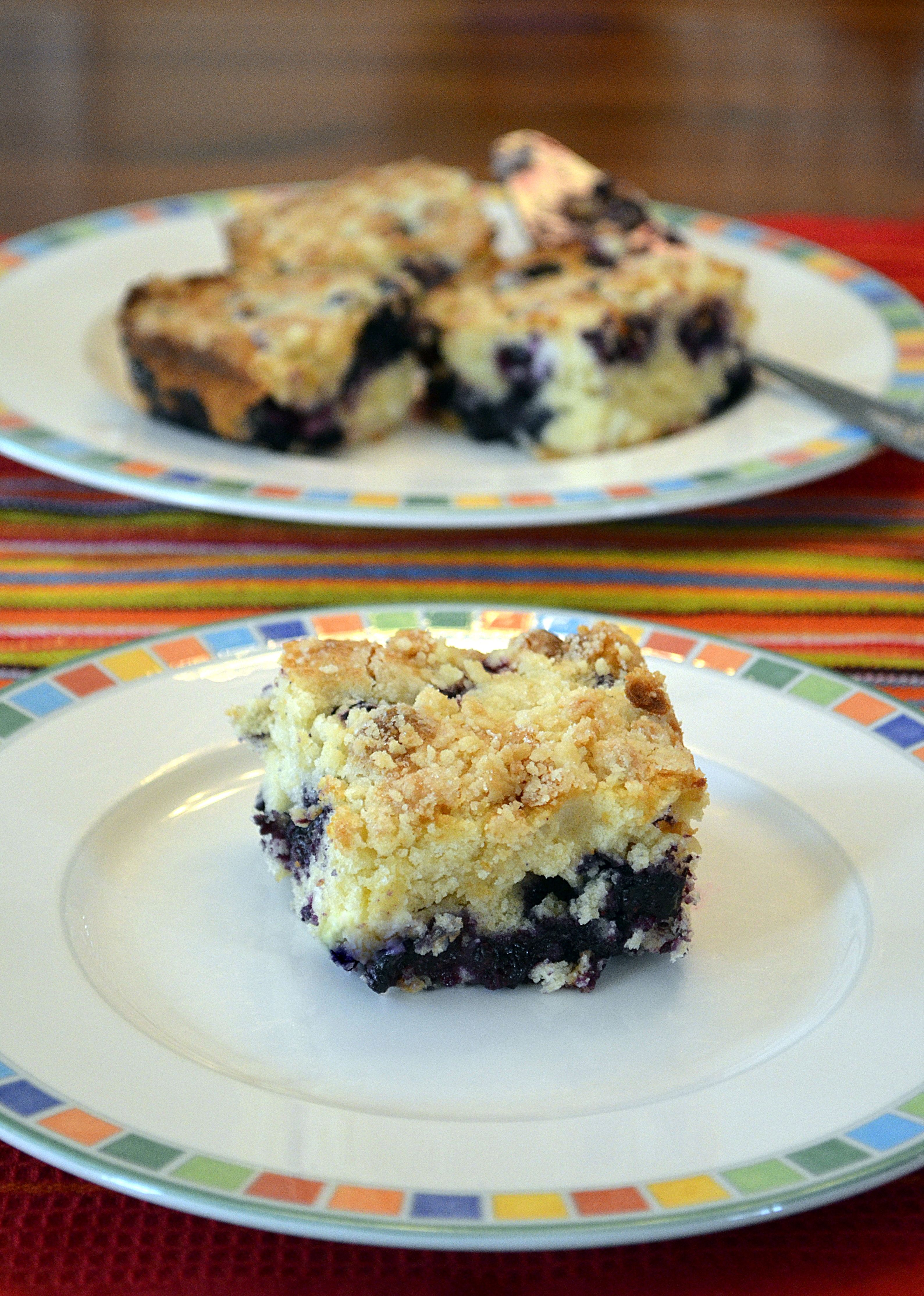
Last night, we ended up with an abundance of blueberries, due to my lack of attention to the contents of our refrigerator. I stopped at the grocery store to pick up some items for dinner and of course bought a number of other things not on my shopping list, including fresh blueberries. I was pleased with this impulse purchase since the blueberries were for my husband, who likes to sprinkle them on top of his yogurt in the morning. I was sure he would be happy to have them, and he was indeed quite happy to have blueberries–the blueberries he himself had bought the day before. Argh. How had I not noticed them? All I can say is, it was the end of a long work week and my powers of observation were obviously not  very powerful. There was only one way out of this dire situation: we would have to make blueberry coffee cake. The best thing was that my husband made the cake, which was so good I may “accidentally” buy extra blueberries more often.

BCCC3

Blueberry Cream Cheese Coffee Cake
9  servings

Cake
1/4 c. butter, softened
2/3 c. sugar
1 egg
1/2 c. all-purpose flour
1/2 c. whole wheat flour
1/2 tsp. baking powder
1/4 tsp. salt
1/2 c. milk

1 c. fresh  blueberries
2 tbsp. flour
3 oz. cream cheese, softened , and cubed

Topping
4 tbsp. all-purpose flour
4 tbsp. sugar
2 tbsp. cold butter

Preparation
1.Preheat oven to 375°. Grease an 8×8 baking pan.
2. Cake: In a large bowl, cream the butter and sugar until light and fluffy. Beat in the egg. In a medium bowl, combine the all-purpose and whole wheat flours, baking powder, and salt. Add half the flour mixture to the butter/sugar mixture; stir to combine. Add half the milk to the butter/sugar mixture; stir to combine. Repeat with remaining flour mixture and milk.
3. Toss blueberries with the 2 tbsp. flour. Stir the blueberries and cream cheese cubes into the batter (batter will be thick). Pour into the prepared baking dish.
4. Topping: In a small bowl, combine the flour and sugar. Cut in the butter until crumbly. Sprinkle the topping over the batter.
5. Bake the cake for 40-45 minutes or until a toothpick inserted in the center comes out clean.

Recipe based on a Taste of Home recipe.

Recipe: Marinated Feta

14 Feb

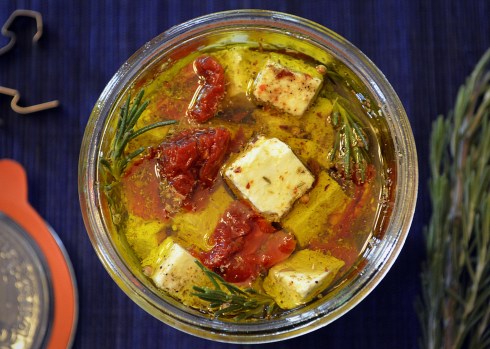
A jar of marinated feta in the fridge will more than earn its place there, especially since it takes 10 minutes–at most–to prepare it. That doesn’t count marinating time, but once you’ve introduced all the ingredients to each other, you can step back and let the magic happen on its own. Marinated feta is good with bread and crackers, in sandwiches and salads (including pasta salads), and as that little something extra in many other dishes. And the leftover olive oil is fantastic in a Greek salad dressing or tossed with vegetables prior to roasting. Amazing to think that a mere 10 minutes of matchmaking leads to so many happy returns.

MF2
Marinated Feta

12 oz. feta
4 oz. sun-dried tomato halves, in oil
1 tbsp. dried oregano
1 tsp. coriander seeds
1/2 tsp. chili flakes (can add more if you like extra heat)
freshly ground black pepper
3-4 sprigs fresh rosemary
extra-virgin olive oil

Preparation
1. If the feta is wet, pat it dry. Cut it into 3/4-inch cubes. Cut each sun-dried tomato half into four pieces.
2. Transfer half of the feta and half the sun-dried tomato pieces to a canning jar or glass bowl with a tight-fitting lid. Sprinkle the feta and tomatoes with half of the oregano, coriander seeds, chili flakes, and ample black pepper. If using a canning jar, place the rosemary sprigs upright around the edges of the jar; otherwise, scatter them about. Add the remaining feta and tomatoes and sprinkle with the remaining spices. Pour the oil from the sun-dried tomatoes over top, then add enough extra olive oil to cover the feta.
3. Tightly cover/seal the jar or bowl, and refrigerate the feta for at least a couple days (and ideally, for one week) to let the flavors marry–if you can wait that long. The olive oil will solidify, which is normal — it will return to liquid form at room temperature (allow the feta to reach room temperature before serving).

MF1

Recipe: Baklava

8 Feb

I have a thing for baklava. But I’m particular about it–though I’ve seen (and tasted) many, many versions of it, this recipe has always been my absolute favorite: made with walnuts instead of pistachios and with rose-scented sugar syrup (known as atr) instead of honey. Baklava is a bit labor-intensive, but in the past I had eager young assistants to help cover and uncover the filo dough, and to watch this sweet, crispy, buttery, nutty confection unfold–and then, to help eat it in no time at all. This time, I lacked the assistants but had guests willing to do the honors, so the baklava disappeared just as quickly. Unfortunately, I realized far too late that I had not taken any photos of just one piece of baklava on a plate.  I hope the other photos can do it some justice in conveying its deliciousness. The recipe is adapted from Lebanese Cuisine by Madelain Farah.

B9

Baklava

Sugar Syrup
2 c. sugar
1 c. water
squeeze fresh lemon juice
1 tsp. rose water

Baklava
1 pkg. filo dough, thawed
2 c. chopped walnuts
1/3 c. sugar
1 tbsp. rose water
3 sticks butter, melted

Preparation

Syrup
1. Combine sugar, water, and lemon juice in sauce pan. Boil over medium heat for about 10-15 minutes, or until slightly viscous. Add rose water, remove from heat, and let cool completely. When cool, put in the refrigerator. The syrup must be cold when used later.

B1

Baklava
1. Combine nuts, sugar, and rose water; set aside.

B2

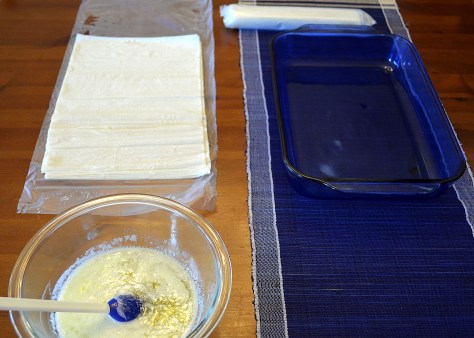
2. Preheat the oven to 300 degrees. Spray a 9×13 (or 10x 14) baking pan with cooking spray. Unwrap the filo sheets (seen below split into in two packages), keeping unwrapped filo covered with a piece of plastic wrap and a slightly damp kitchen towel. Have melted butter ready. (Note: some recipes call for clarified butter, but this one does not–and the results are equally delicious.)

B3

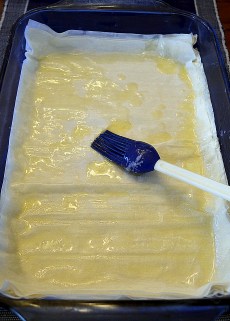
3. Remove two filo sheets from the stack, place in baking pan, and brush with melted butter. Repeat with more filo sheets, until you have used half of them. Do not brush the top two sheets with butter. Spread walnut filling on top of the unbuttered filo sheets, in an even layer.

B4  B5

4. Continue topping with remaining filo sheets, brushing every two sheets with butter, except the last two. Using a very sharp knife,  trim any bits of filo that hang over the edges of the pan, then carefully cut the top of the baklava into a diamond pattern, going only as deep as the walnut layer, not all the way down. Brush butter into the cuts, and across the baklava pieces. This will require a steady hand.

B6

5. Bake the baklava until golden brown–about one hour. Immediately upon removing from oven, spoon cold sugar syrup all over baklava. It’s important to use cold syrup, or the baklava will get soggy. Let cool completely before serving, then cut pieces all the way through and serve.

B7

Recipe: Walnut-Pomegranate Dip (Muhammara)

31 Jan

In the world of dips, hummus reigns supreme–but there is another Middle Eastern dip that also has lots of protein and lots of tang, and is equally easy to make. Although, now that I think of it, I realize it’s been a while since I made my own hummus; my local grocery store now devotes entire refrigerator sections to it and I have gotten lazy. This is a sad state of affairs–because hummus is really incredibly easy to make…. But back to the Muhammara. It gets its protein from the walnuts and its tang from pomegranate molasses, which you can find in Middle Eastern and Indian grocery stories and at a certain national, upscale grocery-store chain that shall not be named. Roasted red peppers also add to the slightly sweet undertones of this dip, which deserves a spot on any appetizer palette. This recipe comes from Bon Appetit magazine.

Muhammara
Walnut-Pomegranate Dip (Muhammara)

1 c. walnuts
½ c. roasted red bell peppers from a jar, drained (reserve the liquid)
1/3 c. panko (Japanese bread crumbs)
2 tbsp. extra-virgin olive oil
1 tbsp. pomegranate molasses
1 tsp. cumin
1/2 tsp. dried crushed red pepper

Preparation
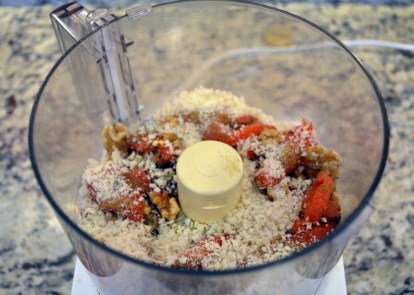
1. Blend/process all ingredients until coarsely ground. (Add a bit more panko or walnuts if too thin, or roasted red pepper liquid or molasses if too thick.)

Food processor
2. Place the dip in a serving bowl. Drizzle some olive oil over the top–or for extra tang, mix together a bit of olive oil and pomegranate molasses and drizzle that instead.

Note: This is what pomegranate molasses looks like, if helpful.

PM