Recipe: Dulce de Leche Pastry Cake (Torta Chilena)

26 Nov

When I was in college,  I sampled an exquisite confection that has forever remained seared on my memory: Torta Chilena. It was a cake with eight crispy layers filled with dulce de leche (caramelized sweet milk).  I immediately requested the recipe from the Costa Rican lady who made it, and it has since followed me across continents and years to be pulled out on special occasions.

Torta Chilena is a beloved Costa Rican dessert. So why, you may ask, is it called a “Chilean Cake”?  In Chile, a very similar dessert is called Torta Mil Hojas (“Thousand-Layer Cake”), which is itself a variation on the mille-feuille theme. But instead of being filled with custard, as the French versions are, the Latin American versions are filled with dulce de leche.  Latin Americans love dulce de leche, so it is a natural adaptation. I surmise that a Chilean with a fondness for sweets settled in Costa Rica, made the dessert to great acclaim, and helped start the national craze for Torta Chilena. However this cake originated, I am deeply grateful.

Note: One popular way to make dulce de leche is to cook unopened cans of sweetened condensed milk in boiling water for 2-3 hours. The problem with this method is that the occasional can explodes. So, I’ve always preferred making it in the oven in a bain-marie (water bath, also known as a baño maría in Spanish).

Torta Chilena
[Updated 12-15-12]

Pastry
2 c. flour (250 gr.)
1 tbsp. sugar
½ lb. butter (2 sticks, 227 gr.)
¼ + 1/8 c. white wine (90 ml.)

Dulce de Leche Filling
2 cans (14 oz./400 gr. each) sweetened condensed milk

powdered sugar

Preparation
1. Dulce de Leche filling: Heat oven to 425ºF/220ºC. Spray a glass casserole dish with cooking spray, pour both cans of condensed milk into it, cover the dish, and then set it in a deep roasting pan filled with enough water to rise slightly above the level of the condensed milk in the casserole dish. Bake covered for about 3 hours until golden brown (stirring vigorously 2-3 times during the latter part of the cooking process to avoid lumps). Set aside. This is the dulce de leche; you can make it ahead of time, but if you are not using immediately, refrigerate it and bring to room temperature before using.


2. Pastry: Put flour and sugar in a large bowl, cut in butter, then add ¼ c. (60 ml.) wine, mix thoroughly, then add remaining 1/8 c. wine (30 ml.). Mix thoroughly. Turn dough out onto well-floured surface, shape into a log and cut into 8 equal pieces. Roll each piece into a ball. Draw 9-inch (23 cm.) circles on baking/parchment paper (I used a  plate and traced around it). Turn sheets of paper over so dough doesn’t come into contact with pen/pencil marks, then place 1 ball of dough in center of the circle, and use fingers to spread out to edges. Dough will be very thin.

3. Preheat oven to 300ºF/150ºC.  Bake pastry circles until slightly golden (exact time will depend on your oven; start checking at about 8-10 minutes–the circles should look “cooked,” but not brown). When cool, very carefully remove each pastry circle from paper; circles will be wafer-like and fragile. Place a small dab of dulce de leche on a round platter, then gently position the first pastry circle on top. Press carefully to stabilize the circle on the platter, then spread with roughly 1/7 of the dulce de leche (doing so as lightly as possible). Put the next cooked pastry circle on top, spread with dulce de leche, and repeat with all the layers except the top one – sift powdered sugar on top of that one. Some layers may crack; press the pieces onto the dulce de leche base, and try to reserve the best layer for the top.
4. Enjoy.

*For another cake that features dulce de leche, see this recipe.
Recipe: Mushroom Gravy

24 Nov

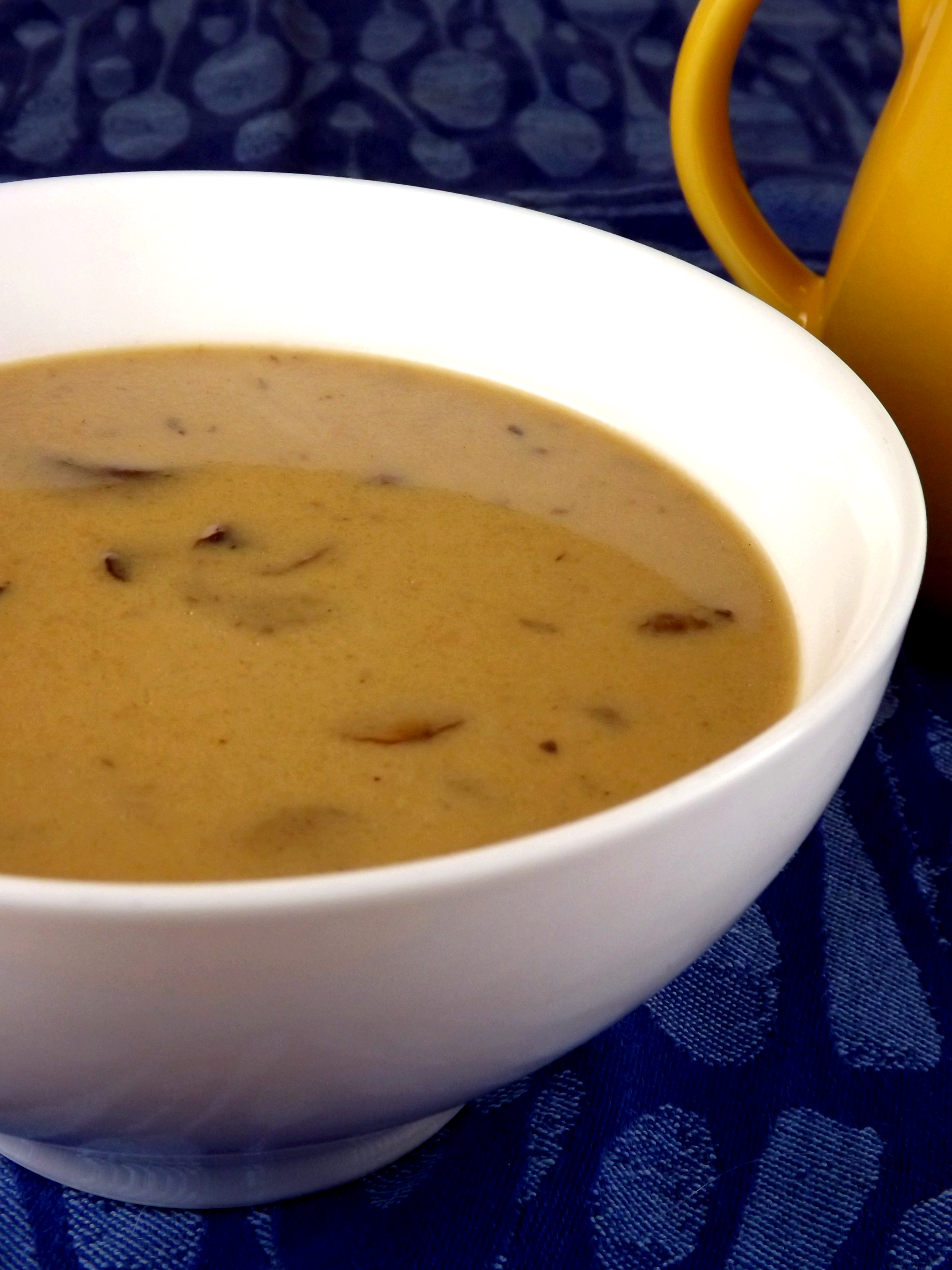
This gravy is one that has earned a permanent spot on our competitive Thanksgiving line up. It is so easy to make, I don’t know why I don’t think of it at other times of the year. Perhaps some dishes are worth waiting 364 days to taste.

Among its many desirable qualities is the fact that this recipe is versatile; although the original version requires pan juices from a roast turkey, I have successfully made a vegan version, too (see note below). And going back to the carnivorous end of the spectrum, I bet it would be good with the drippings from a chicken roast, or from a beef roast (using beef broth instead of chicken broth, and perhaps a bit of soy sauce and Worcestershire sauce for added flavor). Have now made a note to try that iteration….

Mushroom Gravy

pan juices from roast turkey
roughly 2 c. low-sodium chicken broth
1 lb. mushrooms, thinly sliced
½ c. heavy cream
2 tbsp. cornstarch
salt and pepper

Preparation
1. Just after the turkey is done and while it is resting, begin making the gravy.

2. Pour any pan juices there may be into a large (4 c.) measuring cup. Spoon off fat, putting 2 tbsp. into a large skillet. Add enough broth to pan juices in measuring cup to measure 3 ½ c. total.

3. Heat the 2 tbsp. turkey drippings in the skillet, add the mushrooms, and sauté until brown and tender, about 15 minutes.

4. Add the 3 ½ c. pan juice mixture and the cream to the mushrooms. Simmer 8 minutes to blend flavors. Mix cornstarch and ¼ c. broth in small bowl. Mix into gravy. Continue to simmer until gravy thickens, about 1 min.; season with salt and pepper.

Note: For vegan version, use olive oil for the mushrooms, 3 1/2 c. vegetable broth, and plain soy milk (or other non-dairy milk) as a substitute for the cream. Make sure that the plain non-dairy milk you use does not contain any cane juice or other sweetener. I learned the hard way just before Thanksgiving dinner one year that many plain soy creamers are sweet–do not use them in this recipe!)

Source of original recipe made with turkey drippings:  Bon Appetit magazine.

Recipe: Meatballs for Spaghetti

21 Nov

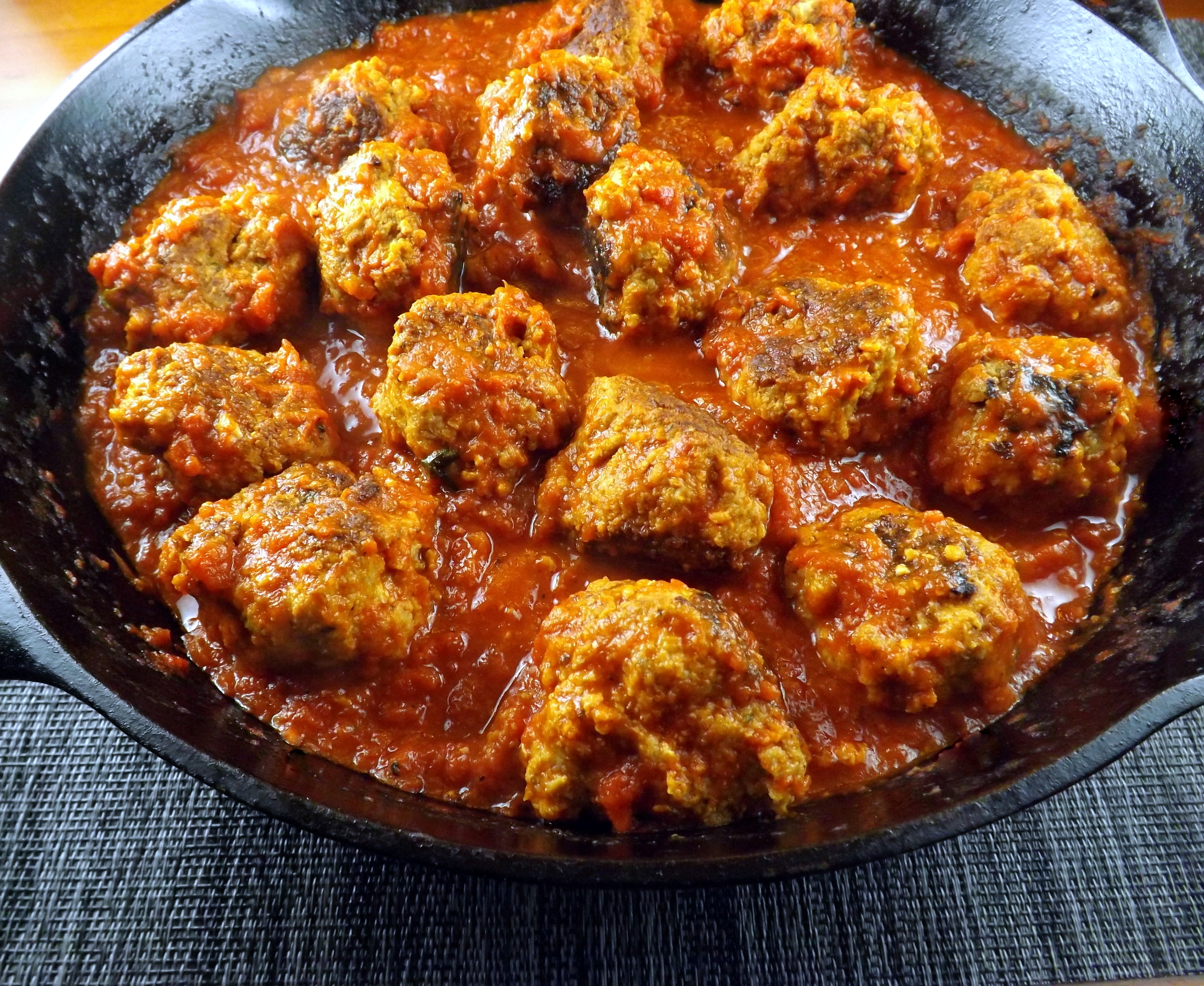
On Thanksgiving and by long tradition, 15+ family and friends join us to eat an almost equivalent number of dishes. This means that on Thanksgiving Eve, things can get a bit nutty. I usually have various items scattered about in various stages of preparation,  and it’s hard to think of what to make for dinner–or muster up much enthusiasm for cooking it on top of everything else. Enter one great husband, who this year chose and prepared a classic Italian dish far removed from the traditional Thanksgiving offerings: Spaghetti and Meatballs.

Except Spaghetti and Meatballs isn’t a classic Italian dish, since most Italians would never eat meatballs with pasta. In fact, we have Italian friends who would rather stab themselves with a fork than contemplate such a gastronomic travesty.  But those friends weren’t at our house this evening, so we were free to enjoy what is for many Americans a match made in heaven–one made even more heavenly by the fact that I had no hand in preparing it on this night of all nights. These fresh-tasting meatballs are adapted from the timeless New York Times Cookbook, by Craig Claiborne.

Meatballs for Spaghetti
Serves 8

Meatballs
1.5 lb. ground turkey
1 c. dry breadcrumbs (seasoned breadcrumbs are nice)
2 eggs, beaten
2 tbsp. half-and-half, or cream
4 tbsp. grated Parmesan or Romano cheese
4 tsp. minced garlic
1/2 c. finely chopped fresh parsley
1/2 c. finely chopped fresh basil
1 tsp. freshly grated lemon rind
salt and pepper to taste

olive oil
spaghetti sauce
1 lb. spaghetti

Preparation
1. Mix all the meatball ingredients and blend well. Shape into about 24 meatballs.
2. Heat oil in a large skillet and brown meatballs, making sure not to crowd them (if necessary, cook in batches). Add sauce to skillet, and cook meatballs in sauce for about 15 minutes. (Or put sauce in a large saucepan, and add the meatballs to the sauce.)
3. Prepare spaghetti al dente, according to directions on package.
4. Serve meatballs with spaghetti and more Parmesan or Romano cheese.

Recipe: Persimmon Cranberry Crisp

18 Nov

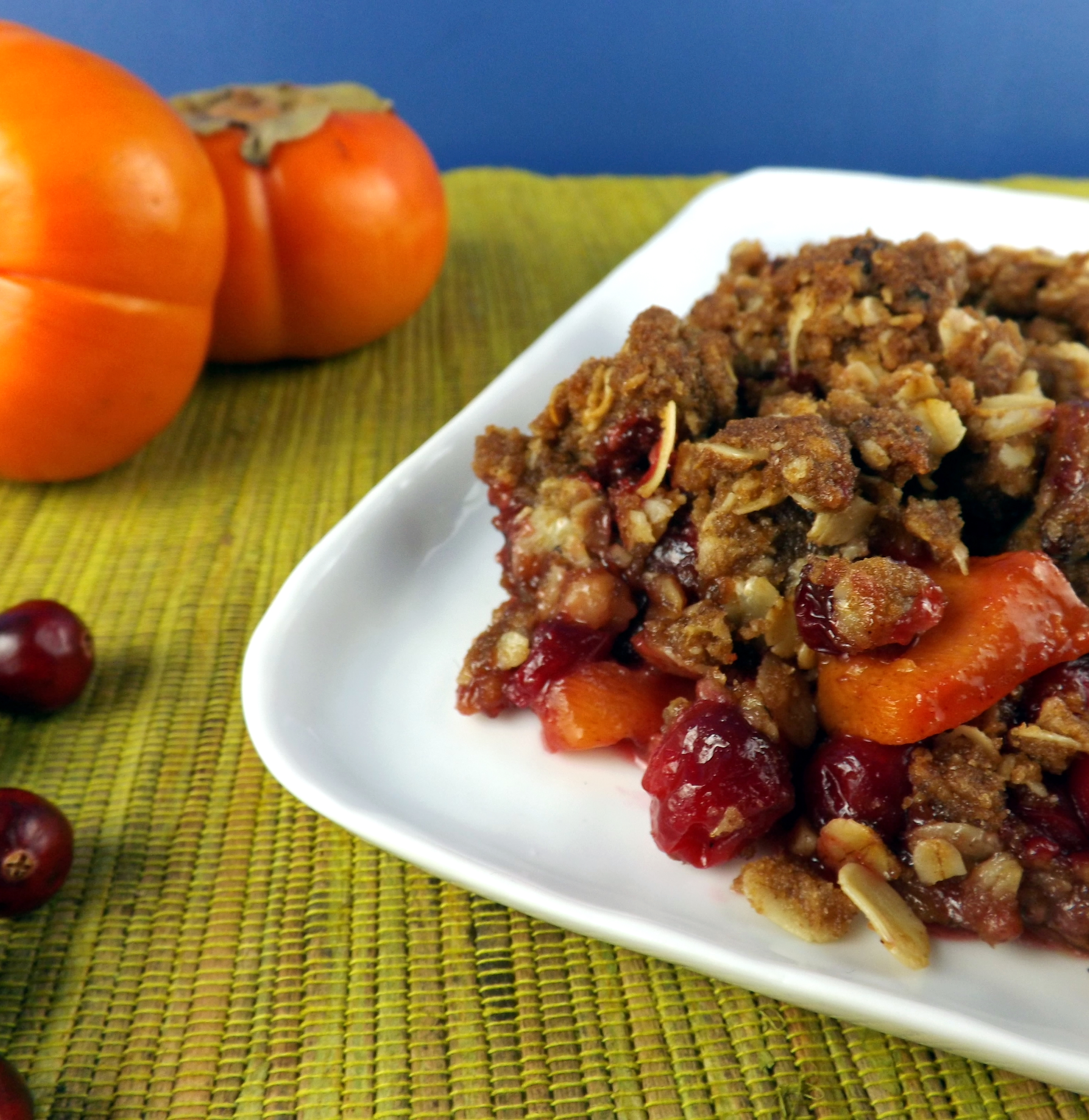
In the past, the closest I have come to persimmons was drinking a cool, delicate dessert drink at Korean restaurants. Soo Jeung Gwa (many different spellings) is a sweet, jewel-colored palate refresher, and I was intrigued to learn that it is made from dried persimmons. But still,  I did not encounter any actual, fresh persimmons until recently, when I saw some  Fuyu persimmons at the grocery store and impulsively bought them because they were so pretty:

But what to do with them? At first, nothing, since they were not ripe and I had heard horror stories about people biting into unripe Hachiya persimmons. Even though this isn’t a problem with Fuyus, I decided to wait just to be safe–and also to think about what to make with them. I settled upon a Persimmon Cranberry crisp, since in the United States, November is a cranberry time of year. Plus, I thought the two colors–orange and red–would look nice together. And finally, who doesn’t like a nice warm crisp, with vanilla ice cream at the ready?

The topping is one I have long used for fruit crisps: a very generous amount that is enough to top 6 c. of any type of fruit that you may fancy. It’s also vegan or omnivore friendly, depending on your preference. Note: I’m used to making big batches, but this recipe can easily be halved and made in an 8×8 or 9×9 pan.

Persimmon Cranberry Crisp
Serves 12-15

Orange-Wine Syrup
1/4 c. red wine (whatever is on hand)
1 tsp. orange zest
1/4 c. fresh orange juice
1 star anise
2/3 c. sugar

Fruit
4 c. fresh cranberries (float in a large bowl of cold water, carefully pick through and remove any that are soft, but make sure you end up with 4 c.)
1 tsp. cornstarch
1 tbsp. fresh orange juice
5 Fuyu persimmons, diced (cut out leafy core at top, slice in half, peel, and then dice)

Topping
1 c. whole wheat flour
1 1/2 c. oats (can be old-fashioned or quick oats, or a mix)
1/3 c. chopped walnuts
1 c. dark brown sugar
1 tsp. cinnamon
1/2 c. non-hydrogenated margarine (or butter)
1/2 c. canola oil

Preparation
1. Heat oven to 350 degrees, and lightly spray (or grease) a 9×13 baking pan.
2. In a medium saucepan, combine wine, zest, orange juice, star anise, and sugar. Stirring occasionally, bring to a boil then reduce heat to low and simmer for 5 minutes. Remove from heat; discard the star anise.
3. Add the cranberries to the syrup in the saucepan. Combine the cornstarch with the 1 tbsp. orange juice, pour over cranberries, and mix well. Fold in diced persimmons, then pour fruit mixture into prepared pan.
4. For topping, combine first five ingredients in a large bowl. Mix in margarine/butter and canola oil until evenly distributed and topping becomes clumpy.
5. Using very clean hands, take a small handful of topping and squeeze it together. Break it into a couple pieces and begin placing strategically on top of fruit mixture in prepared pan. (The objective is to have some topping chunks, rather than just crumbs.) Repeat with all the topping, filling in gaps with more topping pieces/crumbs.
6. Bake for about 45 minutes, or until crisp looks golden and bubbly. Let cool for about 10-15 minutes, then serve with vanilla ice cream.

Recipe: Carnitas and Poblanos with Cream

13 Nov

My daughter informed me that the one thing she really looks forward to every evening, amid the many hours of homework she puts in, is dinner. A really good dinner has the power to make everything else — mounds of homework, the day’s worries — fade away. In this, she is her mother’s daughter.

This is one of her favorite dishes. It is a bit involved, but well worth the effort. Carnitas means “little meat” in Spanish; it is pork that has been cooked twice.  The pork in this version is braised, shredded, and then lightly fried. I have always served it with another dish, Poblanos with Cream (also known as Rajas) because the combination is so nice.  Poblanos are chili peppers–darker, smaller, pointier, and just a tiny bit hotter than green bell peppers (capsicums). Though most recipes for Rajas do not include mushrooms, mushrooms and cream have an affinity for each other, and I simply had to add them. With black beans and some chopped tomato as finishing touches, this is a meal for all the senses. Pile everything into a warm tortilla, roll it up, and enjoy.

Note: When cutting the raw poblanos, protect your hands. Poblanos are not a very hot chili pepper, but you do not want to cut them with bare hands and then accidentally rub your eyes. You will not be happy.  Since I do not have kitchen gloves lying around, I pop a plastic sandwich bag on each hand, and then proceed. Not the most elegant solution, but necessity is the mother of invention.

Carnitas  and Poblanos with Cream
Serves 6-8

Carnitas
3 – 3.5 lb. pork  (shouldn’t be super lean; boneless country-style ribs or non-loin boneless pork chops are good, as is cubed pork for stew)
4 bay leaves
2 tsp. black peppercorns

1/4-1/2 c. canola oil, divided
1 large onion, diced
1 tbsp. (or to taste) chicken bouillon powder, preferably a brand without MSG
freshly ground pepper
1 bunch cilantro leaves, chopped (I cut off the top of the bunch of cilantro at the point where leaves end and stems begin, discard any sub-par leaves and big bits of stem, then chop everything else)

Preparation

Pork
1. Place the pork, bay leaves, and peppercorns in a large stockpot, add water to cover by about 2 inches, bring to a boil, then reduce heat and simmer for 1 to 1.5 hours, or until pork is tender. Add water if needed. Let pork cool in broth, if possible. If you are short on time, remove pork with tongs and place on a rimmed baking sheet until cool. With very clean hands,  shred pork, discarding any fat that may be on the meat. There should be about 6 c. total. If not, adjust amount of bouillon powder accordingly.

2. Heat 1/4 c. oil over medium heat in a large skillet, add onions, and cook until soft and slightly golden. Mix in shredded pork, taking care to distribute onions and oil as evenly as possible. Let pork cook without stirring for a few minutes until bottom layer is golden and getting crispy, then scrape up browned pork from bottom of skillet, and let new layer of pork on bottom of skillet get crispy. Repeat several times, until pork is golden and there are ample crispy bits throughout. Add up to 1/4 c. more oil as needed to keep pork from sticking and drying out too much.

3. When pork is just about done, add bouillon powder and pepper, and mix in very well. Cook for a few more minutes, check seasonings, and turn off heat. Add chopped cilantro and mix through.

4. Serve with flour tortillas, Poblanos in Cream, black beans, and chopped tomato.

Poblanos with Cream

5 large poblano chilies
2 tbsp. olive oil
8 oz.  mushrooms, sliced
1 c. cream
salt and freshly ground pepper

1. Cut poblanos in half lengthwise, and cut out the white membrane, including all seeds. Place the poblanos skin up on a baking sheet and broil until skin is bubbly and black, checking frequently. Immediately place poblanos in a glass container with lid, and put on the lid. Leave for 15 minutes, then remove the poblanos, peel the skin off, and slice into strips. Reserve.

2. Heat oil  in skillet, then add mushrooms and sauté until liquid has been released and mushrooms are soft; add poblano strips and sauté for a few more minutes. Add cream, and simmer gently until heated through. Sprinkle with salt and pepper to taste.

Recipe: Cinnamon Chip Scones

11 Nov

One of our sons works at an eatery near his university that is known for its cinnamon chip scones.  Those scones are fantastic, but deadly; I looked up the nutritional content once and had to repress the memory (and steer clear of the scones). But then, when I was in the grocery store recently, I spotted a bag of cinnamon baking chips and succumbed to the temptation–though I vowed to make a batch of scones I would feel slightly better about eating and serving.

These are the result. They are by no means a health food, but since they are made with skim milk and a bit of whole wheat flour, perhaps they are just a tiny, tiny bit better for you than the ones found in certain well-known eateries and cafes. Nutritional content aside, these scones were gone in a flash–consumed by taste testers eager to have one (or two) with coffee and tea.

If you can’t find cinnamon baking chips, these would still be nice with white chocolate chips  (or a mix of white and dark chocolate chips) as a substitute.

Cinnamon Chip Scones

1 tbsp. white vinegar
almost 1 c. skim milk
2-1/4 c. all-purpose flour
1 c. whole wheat flour
1/3 c. dark brown sugar
2 tsp. cinnamon
2-1/2 tsp. baking powder
1/2 tsp. baking soda
1/2 tsp. salt
3/4 c. cold butter, cubed
1 (10-oz.) pkg. cinnamon baking chips
2 tbsp. white sugar
2 tbsp. butter, melted

Preparation

1. Spray a large baking sheet (or 2 smaller ones) with baking spray — or lightly grease and flour the sheet(s).

2. Put the tablespoon of vinegar into a 2-cup measuring cup, then add enough skim milk to the vinegar to yield 1 cup total. Set the mixture aside. This is the equivalent of do-it-yourself buttermilk. (If you have buttermilk at hand, however, feel free to use 1 c. buttermilk instead.)

3. In a large bowl, combine the flours, brown sugar, cinnamon, baking powder, baking soda, and salt. Add the butter and cut in with a knife or pastry blender (or, with very clean hands, pinch the cubes of butter/margarine quickly between your fingers, incorporating into flour mixture until the mixture resembles coarse crumbs). Stir in vinegar/milk mixture just until moistened. Fold in chips.

4. Knead the dough gently in the bowl until it is no longer sticky. Divide the dough in half and shape each half into a ball. On a lightly floured surface, gently pat each ball into a 1.5 or 2-inch-thick circle. Cut each circle into 6 wedges, separate the wedges, and place them on the baking sheet(s), with sufficient space between them for expansion. Brush the wedges with melted butter and sprinkle with the 2 tbsp. white sugar.

5. Bake at 425° for 10-15 minutes or until lightly browned. The scones are great warm, but I love them at room temperature, when the cinnamon chips regain their texture.

Adapted from a Taste of Home recipe.

Fall Foliage

10 Nov

Flowers are fantastic, but foliage can add interest to any garden long after the flowers are gone. Admittedly, my gardening philosophy is very, very basic (roughly on par with my gardening skills), but one element of that philosophy is that every garden needs a diverse range of foliage: different colors, patterns, shapes, and textures. And if you can find a perennial with foliage that changes color in the autumn (or presents you with some other dramatic display, such as plumes), that’s an added bonus.

Here are two plants that have been putting on a show in recent weeks:  Porcupine Grass, with plumes shooting at least 8 feet in the sky  (plus close-up of the plumes) — and Crape Myrtle (Siren Red), whose foliage appears to change color depending on the time of day:


Recipe: Curried Lentils with a Twist

7 Nov

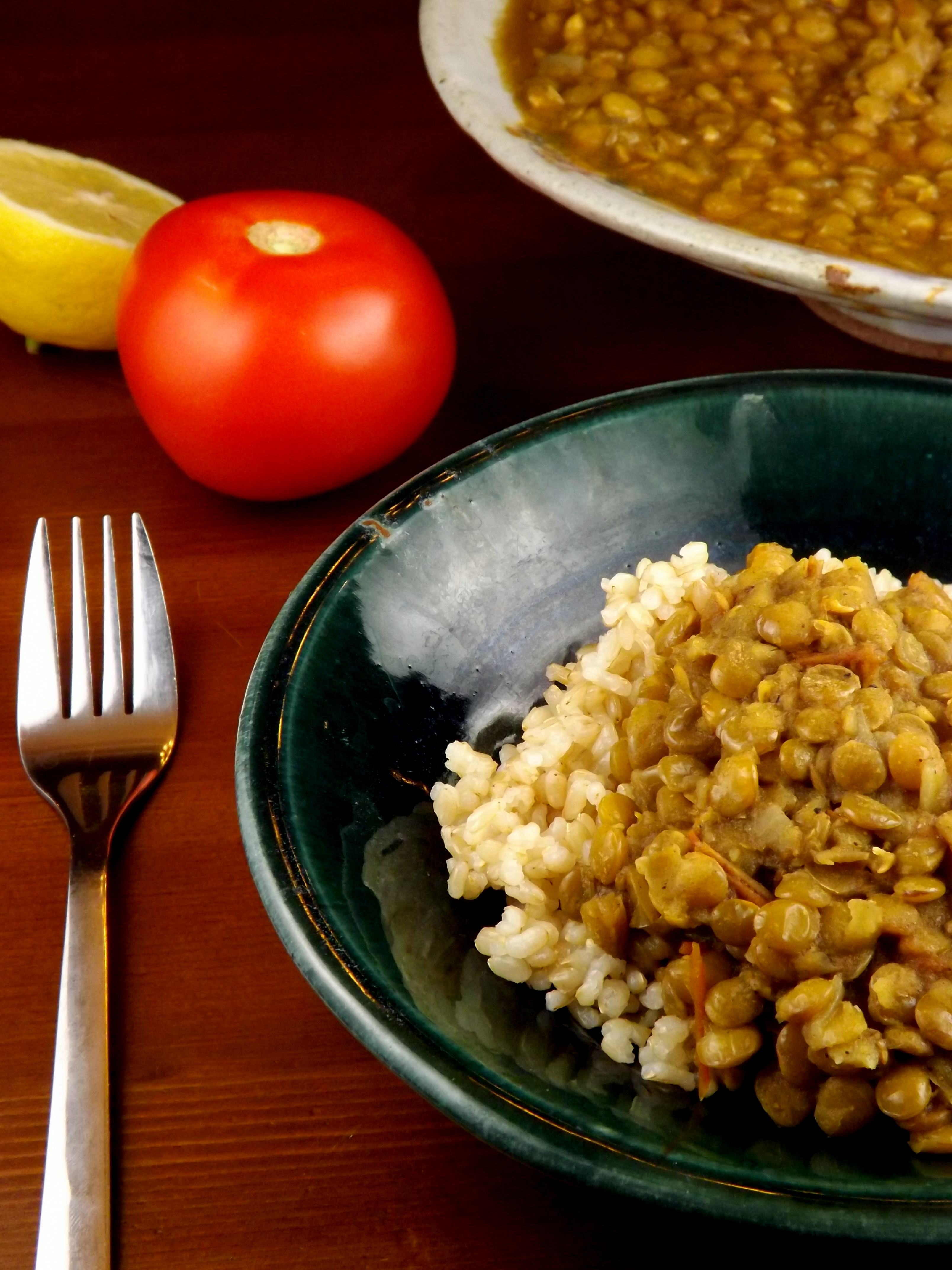
People either love lentils, or they don’t. I fall in the former camp, and luckily, so do most of my family members. One of my sons can eat his weight in these lentils–ok, half his weight in the actual lentils and rice, and the other half in the extremely hot lime pickle he slathers on top. I’m not sure how he has any taste buds left.

This dish is actually a hybrid (hence “the twist”). It is mostly Indian, but with a few Spanish and Latin American hints. There is some degree of overlap between the cuisines, which I capitalized upon here: the lentils, onions, garlic, tomatoes, cumin, coriander, and lemon. But the turmeric and garam masala tip the balance toward a more pronounced Indian flavor, while the use of bouillon powder is typically Latin American. Either way, the result is a testament to fusion food, and like so many recipes that stand the test of time, it is one you can adapt almost any which way.

Curried Lentils with a Twist
Serves 8-10

3 tbsp. extra-virgin olive oil
1 lg. onion, diced
3 tsp. whole coriander seeds
4-5 cloves garlic, crushed
2 tomatoes, diced (after dicing, remove as many of the white core parts as possible, without worrying too much)
2 tsp. ground coriander
2 tsp. ground cumin
1/2 tsp. ground turmeric
1 (16-oz.) bag lentils (about 2 heaping cups), picked over and rinsed
6.5 c. water, divided
4 tsp. chicken or vegetable bouillon powder (or equivalent cubes to make 4 c. bouillon)
salt to taste (if needed)
2 tsp. garam masala
juice of 1/2 lemon

Preparation

1. Sauté onion and coriander seeds in olive oil in a medium saucepan until onion is soft; add garlic and cook for a couple minutes more. Add tomatoes and cook until soft, mashing them with a large slotted spoon to break them up. Add ground coriander, cumin, and turmeric, stir, and cook for a a minute or two. Add lentils, 5 c. water, and bouillon powder/cubes.

2. Bring to a boil, cover saucepan, then simmer lentils until soft, usually about 30-45 minutes. Note: Stir lentils every 10 minutes or so, adding remaining 1.5 c. water as needed if the lentils start getting too dry. Depending on the lentils, they may absorb a lot of liquid, so it’s important to check periodically. Ultimately, the lentils should be soupy and almost stew like–not too thin, not too thick.

3. Add garam masala and lemon juice and check seasonings.

4. Serve with rice (short-grain brown rice is great) and chutney or Indian pickle (such as lime pickle for those who like it hot).

A Bird’s-Eye View

4 Nov

We were very lucky in that we emerged relatively unscathed from Hurricane Sandy. Heartfelt thoughts to all those who are still coping with the aftermath, especially in Haiti, Jamaica, Cuba, New York, and New Jersey.

One small bright spot, at least in our area, is that after the rains came the birds. They were everywhere after the hurricane, flapping their wings, puffing up their feathers, and trying to dry out. But birds like water, so it was a cheerful exercise. As they hopped, skipped, and flew here and there looking for worms, berries, and seeds, they were an optimistic sight.

There were cardinals, finches, mourning doves, nuthatches, robins, sparrows, woodpeckers, and a tiny grey/yellow bird I hadn’t seen before: a Goldcrest, who hopped on shrubs to get the seeds that had fallen from the bird feeders above. There were other birds, too, whose names I do not yet know. I consider it a significant step that I can now recognize a sparrow well enough to deduce that it must be either a House Sparrow or Field Sparrow–beyond that, they are all brown/grey and fluffy to me. But known or unknown, the avian visitors to our yard are a joy to watch.

      
Female Cardinal                                               Male Cardinal

  
Goldcrest                                              Sparrow (House or…Field or…?)


Robin

Recipe: Potato Leek Soup

2 Nov

When it is cold, wet, and blustery outside, my thoughts turn to soups and stews–hearty, satisfying dishes that lift any spirits. And when a delicious soup can be made with only four ingredients (ground pepper doesn’t count…), what’s not to love?

This recipe came about by accident. Most potato leek soup recipes call for cream. But I forgot to add it once, and have never added it since–and no one has ever missed it. As an added bonus, this accident made the soup vegan friendly, too, and I like having delicious vegan dishes that everyone loves in my repertoire.

After experimenting with various toppings, fried onions were the clear winner. The crispy texture not only balances the smooth soup, but also adds another layer of onion flavor. My favorite places to buy the fried onions are 1) by the bag at Indian grocery stores, or 2) in small round cartons in the grocery section at IKEA (Swedish fried onions are very nice!). I like both those versions much better than the ones at our chain grocery store, but have used those in a pinch, too.

Potato Leek Soup
12 servings

4-6 leeks, ends trimmed, white and palest green parts only (use 4 leeks if they are large with long white sections; 6 otherwise)
2-3 tbsp. extra-virgin olive oil
5 lb. potatoes, peeled  and cut into chunks (Yukon Gold imparts a nice color)
10 c.  vegetable broth (or 10 c. water + sufficient vegetable bouillon cubes; Knorr brand is nice)
ground pepper

Preparation
1. Cut each leek in half lengthwise, then slice the halves into 1″-thick half circles. Put in a bowl of cold water and swish around to remove any dirt that may have gotten trapped between the layers. Drain and shake dry; I sometimes pat the leeks dry with paper towels (as much as possible without stressing over it).

2. Heat the oil over medium heat in a large Dutch Oven (enameled cast iron pot, or any other heavy bottom pot), add the leeks and cook until soft, stirring occasionally.

3. Add the broth (or water and bouillon cubes) and the potatoes, and stir once or twice.

4. Simmer until potatoes are tender, then blend with an immersion blender (or carefully blend in a regular blender or food processor, in batches, then return to pot). If soup seems too thick, add more broth. Season liberally with freshly ground pepper, and serve with fried onions.


Note: When heating up leftover soup the next day, you may need to thin with a bit more broth, or even water. It is a soup that keeps on giving.