Archive | Vegan/Adaptable RSS feed for this section

Recipe: Red Lentils with Coriander and Cumin (Masoor Dal)

27 Feb

The first time I ever cooked red lentils, they promptly turned yellow and fell apart–which is what they are meant to do, only I didn’t know it then. Red lentils are lentils with the hulls removed; in addition, they are also usually split in half, so they cook (and disintegrate) fairly quickly. I look forward to this transformation, because the resulting golden, buttery, and aromatic stew-like dish is the ultimate comfort food served on top of rice, or even eaten on its own.

Most dal recipes call for spices cooked in oil (a tadka) to be added to the lentils at the end of the cooking time. This recipe also calls for cooked onions, garlic, and spices to be added at the beginning, too. Mmm good. And even better because my husband made the version shown below (pictured with brown rice). This dal is great the second day because it thickens slightly and the flavors deepen, so it’s an excellent make-ahead dish.
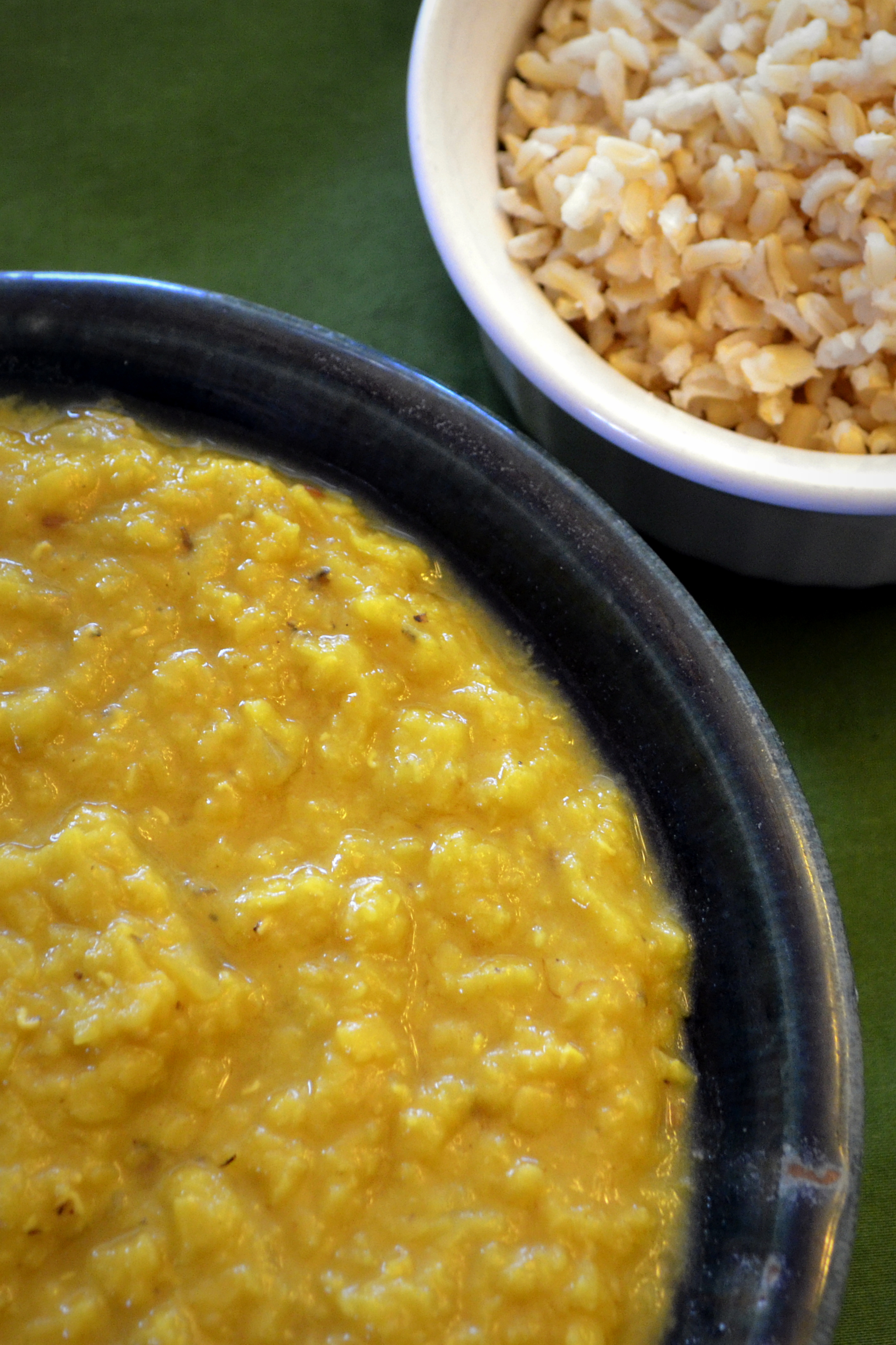
Red Lentils with Coriander and Cumin (Masoor Dal)

1 c. (200 gr.) red split lentils/masoor dal
4 c. (1 liter) water
2 tbsp. canola oil
1/2 large onion diced
3 cloves garlic
1 tsp. coriander seeds
1 tsp. ground ginger
1/2 tsp. ground turmeric
1 tsp. salt
2 tbsp. canola oil
1 tsp. whole cumin seeds
1 tsp. ground coriander
1 tbsp. butter (14 gr.), optional
finely chopped cilantro, optional
fried onions, optional

Preparation
1.  Pick over the lentils, rinse thoroughly in a fine-meshed colander, and place in a heavy-bottomed pot along with the 4 c. water. Bring to a boil over high heat and remove any foam that rises to the surface.
2. Heat the 2 tbsp. canola oil in a skillet over medium heat, add the onion and cook until it is soft and translucent. Add the garlic and cook for 2-3 minutes, stirring frequently. Add the coriander seeds, ginger, and turmeric, and cook for 1 more minute. Add this mixture to the lentils; set the skillet to one side for later use.
3. Reduce the heat to low, cover the pot, and cook for about 30 minutes or until lentils are tender. The lentils will turn yellow as they cook and will disintegrate.
4. Toward the end of the lentils’ cooking time, heat the other 2 tbsp. oil in the same skillet over medium heat and add the cumin seeds. Let sizzle for a few seconds, then add the ground coriander and salt. Cook for 1 minute, then add the spices and oil to the lentils, along with the butter (if using). Stir to mix well.
5. Before serving, garnish with chopped cilantro and/or fried onions  if desired.

Adapted from Madhur Jaffrey’s Indian Cooking.

Recipe: Citrus-Spiced Braised Red Cabbage

24 Jan

I love cabbage, that most humble of vegetables. Humble it may be, but versatile, too–and good for you, especially the red kind. With its lovely jewel tones (from a type of pigment also found in flower petals and fruits), red cabbage adds a beautiful touch of color to any meal.

This braised red cabbage is tangy and slightly sweet, featuring fresh orange juice, red wine, and  balsamic vinegar, as well as cinnamon, cloves, and caraway seed. It is a very nice accompaniment to pork or sausages, or a Thanksgiving meal–and also adds bit of zing to sandwiches. And if you are like me, you may also find yourself eating it cold, just because.


Citrus-Spiced Braised Red Cabbage

2 tbsp. olive oil
1 lg. onion, cut in half through the ends, then sliced into thin strips
3 cloves garlic, minced
1/2 tsp. caraway seeds
1/2 tsp. ground cinnamon
1/8 tsp. ground cloves
2 lb. red cabbage, any bruised outer leaves removed, cored, and sliced into strips (about 10 c.)
ground black pepper
1 c. vegetable broth
juice of one orange
3 tbsp. red wine
2 tbsp. balsamic vinegar

Preparation
1. Heat a large, heavy-bottom pot over medium-high heat and add the oil. When hot, add the onions and cook until soft and translucent. Add the garlic and spices and cook for a few more minutes, stirring frequently.
2. Add the cabbage and mix well to coat with garlic and spices. Continue cooking until the cabbage has wilted, then sprinkle with black pepper to taste, and add the broth and orange juice. With the heat on medium high, cook the cabbage for about 15 minutes, or until the liquid has reduced by at least half.
3. Add the wine and vinegar, and cook another 15 minutes. There should be some liquid at the bottom of the pot–but the cabbage should not be soupy. Turn up the heat if needed to allow any excess liquid to evaporate.
4. Serve immediately with a slotted spoon.

Recipe: Beef Barley Mushroom Soup

19 Jan

One thing to appreciate about winter is that it is soup weather. Take a steaming bowl of hearty soup, add a crusty baguette and a crisp salad, and you’re set: both body and soul will sigh in appreciation. This soup features some whole-grain goodness in the form of barley, plus that deeply satisfying umami taste from the beef and mushrooms. More flavor comes from searing the beef and bones (which results in the rich crusty drippings known as sucs, or also in the United States as fond). That is followed by deglazing the pot with aromatic vegetables and a dash of soy sauce until the vegetables are also golden and offering up their own richness, and then continuing to build the soup from there.

*See note below for how to make a vegetarian/vegan version of this soup.

Beef Barley Mushroom Soup
Serves 8

2-3 tbsp. olive oil
1 1/2 lb. beef stew meat, trimmed of fat, and cut into small cubes
1 lb. beef bones
1 lg. onion, diced
2 carrots, diced
3 celery stalks, diced
1 tbsp. soy sauce
8 oz.  mushrooms, diced
6 garlic cloves, crushed
2 bay leaves
1 tsp. dried thyme
freshly ground pepper
1 c. tomato puree
8 c. beef stock or broth (if using prepared stock/broth, find a low-fat, low-sodium brand)
2 c. water
2 beef bouillon cubes (optional, but if using, find a brand without MSG)
2/3 c. pearl barley
1 c. frozen corn kernels
1/2 c. frozen petite peas

chopped parsley as a garnish

Preparation

1. Heat a Dutch oven or other heavy-bottomed pot over high heat. Add the olive oil, and when hot, brown the meat and bones; you want to get golden-brown crusty drippings on the bottom of the pot. Remove the meat and bones and reserve.
2. Add the onions, carrots, and celery to the pot and sauté for a few minutes, stirring often to deglaze the pot (to loosen the crusty drippings), until the onions begin to soften and turn golden brown at the edges. (If the vegetable mixture gets too dry at any stage, add a tiny bit of olive oil.)
3. Add the soy sauce to the vegetables in the pot; cook for a couple minutes, then add the mushrooms. Cook until the mushrooms have released their liquid and the liquid has mostly evaporated. Add the garlic, bay leaves, and thyme, and grind a generous amount of black pepper over the vegetables; cook for three to five minutes. Add the tomato puree; mix well.
4. Return the beef and bones to the pot, add the stock/broth, the water, and the bouillon cubes (if using); bring to a boil. Lower the heat, cover the pot, and begin simmering the soup.
5. Meanwhile, toast the barley on a baking sheet in a 450-degree oven for about 10 minutes, checking every few minutes, until the barley is golden brown. Carefully add the barley to the soup; there will be a very satisfying hissing and bubbling when you do this. Note: this step is optional; you can also add the barely to the soup without having toasted it. But toasted barley adds a nice nutty flavor.
6. Continue simmering the soup for about 30 minutes to an hour  — until the beef and barley are tender (the timing will depend on the size of the beef cubes). If needed, skim the top of the soup during the simmering stage  to remove any extra oil. Add the corn and peas for the last 15 minutes or so of the cooking time.
7. Remove the bones and bay leaves from the soup, and discard. If the beef cubes are on the larger side, you may want to take them out of the soup once they are tender and shred them (as I did for the accompanying photo).
8. If the soup has gotten too thick, add additional water or stock/broth. Check seasonings, garnish with chopped parsley if desired, and serve immediately.

Note: To make this vegetarian/vegan, omit the beef and bones and begin with Step 2 (sauteing the onions, carrots, and celery in olive oil). Double the amount of mushrooms used in Step 3. In Step 4, add two diced potatoes to the pot (instead of the beef/bones) and substitute vegetable broth for the beef stock/broth and vegetable bouillon cubes (or some nutritional yeast) for the beef bouillon cubes. Total simmering time should be about 30 minutes. 

Recipe: Roasted Carrots with Balsamic Vinegar and Mint

9 Dec

This is a free-form sort of recipe because it doesn’t have specific measurements, but that shouldn’t be cause for panic. No matter how much or how little I drizzle or sprinkle or adjust the various ingredients, I’ve never gone wrong with this dish (because short of burning them, how can anyone really go wrong with roasted carrots?).

This dish is a standard part of our Thanksgiving line up, but these carrots are a nice accompaniment to any roast meal. The hot carrots absorb the balsamic vinegar, resulting in a mellow, layered flavor that is heightened by the mint. Another plus: this dish can be served at room temperature, which means you can get it ready ahead of time and move on to more urgent tasks. For Thanksgiving, I use a 5 lb. bag of carrots. If you aren’t cooking for 12+guests, use 6 large carrots and go from there.

Roasted Carrots with Balsamic Vinegar and Mint

carrots
olive oil
salt and pepper
balsamic vinegar
dried mint flakes

Preparation
1. Trim and peel carrots, cut each carrot in half horizontally, and then cut each half in half lengthwise. You should now have four carrot pieces. Cut each of those pieces lengthwise into thirds (or halves or quarters depending on the thickness of the carrot) — you want to end up with carrot sticks.
2. Preheat the oven to 350 degrees. Spray a large baking sheet with cooking spray.
3. Put the carrot sticks in a large bowl, drizzle with enough olive oil to coat the carrots well (they should be glistening), sprinkle some salt and pepper on top, toss to mix, then spread the carrots on the baking sheet in a single layer. Bake 30 minutes or so, turning once, until the carrots are soft and browned around the edges. Remove the baking sheet from the oven.
4. While the carrots are still on the baking sheet and still hot, drizzle some balsamic vinegar over the top, sprinkle with mint flakes, mix together gently, and let rest for a few minutes. Taste a carrot and adjust the seasonings as needed (you may want more salt, pepper, or a dash more vinegar.)
5. Serve warm or at room temperature. (Note: If making the day before, let carrots cool, refrigerate them, and bring to room temperature before serving.)

Adapted from Australian Gourmet magazine.

Recipe: Black-Eyed Pea Curry

29 Oct

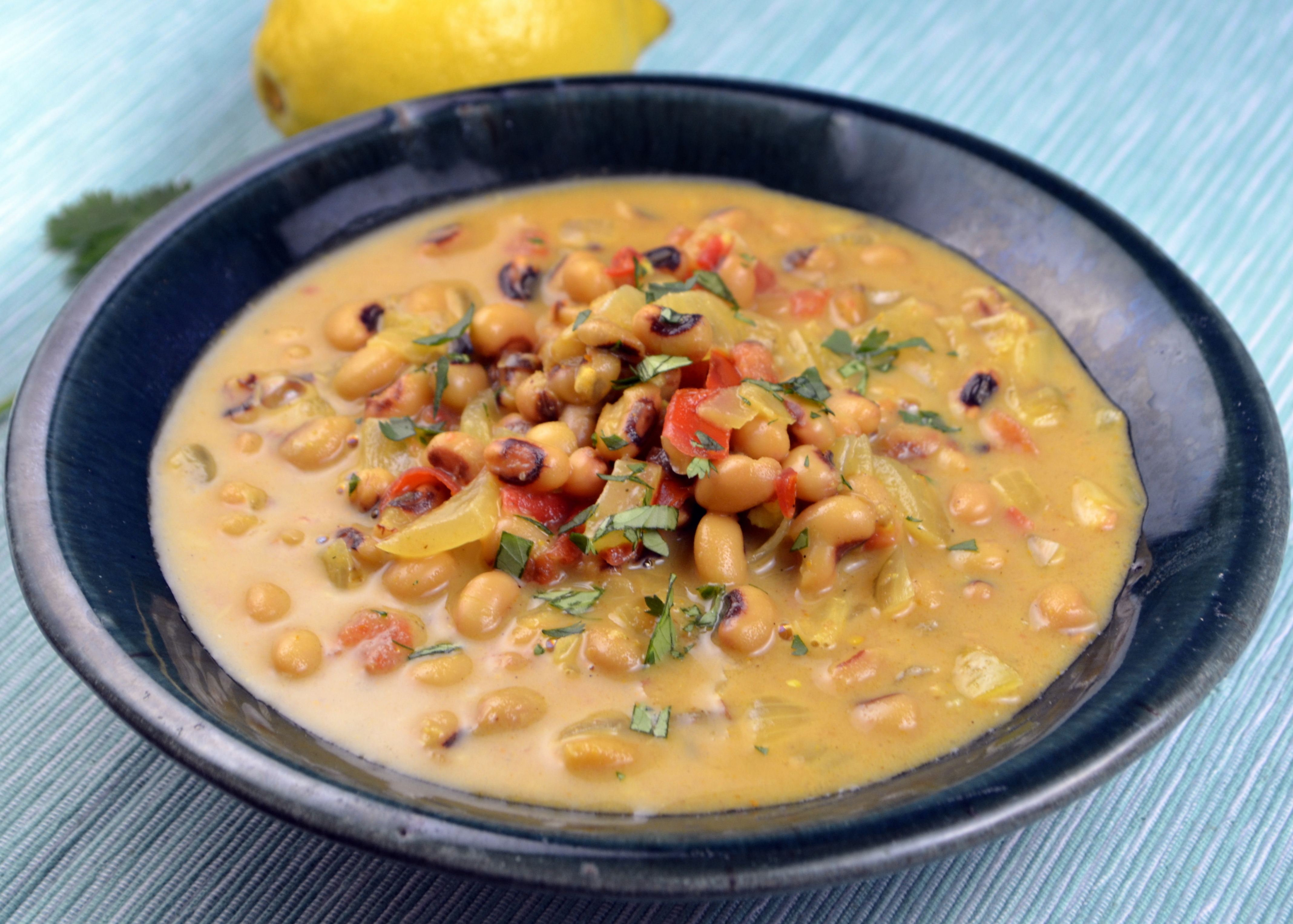
Part of the Indian meal I prepared recently for friends with divergent dietary preferences included this Black-Eyed Pea Curry. It answered a number of needs: it is vegetarian (vegan, actually) and is an excellent source of protein. And it goes nicely with drier, less saucy dishes such as the Spicy Indian Eggplant with Tomatoes. Not that dry dishes can’t be saucy in their own ways–that eggplant was quite a palate teaser. This dish, with mellow coconut milk, is a nice counterpoint.

Black-Eyed Pea Curry
Serves 4-6

2 (15-oz.) cans black-eyed peas, drained
2 tbsp. canola oil
1 large onion, chopped
3 large cloves garlic, minced
1.5 tsp. ground cumin
1.5 tsp. ground coriander
1/2 tsp. ground ginger
1/2 tsp. ground turmeric
1/4 tsp. cayenne or sprinkle of chili flakes
1 large tomato, seeded and diced
1 c. hot water
1/2 tsp. salt, or one small vegetable bouillon cube
1/2 tsp. sugar
1 c. canned coconut milk
1 tbsp. lemon juice (or to taste)
2 tbsp. minced cilantro leaves

Preparation
1. Heat the oil in a large pan over medium heat and sauté the onion until it starts turning golden brown at the edges. Add the next 6 ingredients (through the cayenne/chili flakes) and stir for 2 minutes. Add the tomatoes and cook for a couple more minutes, mashing the tomatoes with the back of a slotted spoon until they disintegrate.
2. Add the black-eyed peas, the water, the salt/bouillon cube, and the sugar. Turn heat to low, cover, and simmer for about 10 minutes. Stir in the coconut milk and simmer uncovered for another 10 minutes, or until liquid has reduced slightly.
3. Add the lemon juice, cook for one more minute, then sprinkle with the cilantro just before serving.

Recipe is adapted from 5 spices, 50 dishes by Ruta Kahate.

Recipe: Spicy Indian Eggplant with Tomatoes

27 Oct

I have always loved logic problems. You know–the kind where a man in a blue coat on a bus is sitting two seats away from a woman with red hair who is diagonally across from another woman using an iPhone and one seat away from a man with a green scarf reading the paper.  Eventually, given more clues, you’d have to say where everyone was sitting, what color hair they had, what they were wearing, and what they were doing.

Perhaps that is why I also greatly enjoy certain culinary challenges. For example, tonight we had friends over for dinner and had a lovely time with them. But having lived in Berkeley, we learned early on to ask if our guests had any dietary preferences or restrictions. This time around, several of our guests could not eat dairy, gluten, or meat (two friends are each avoiding one of those items, the other cannot have two of them–but no one friend is avoiding all three). The remaining five people at the table tonight eat anything and everything. No one was vegan.

So, what to serve? In cases such as this, I find that Indian food is perfect. There are myriad vegetarian and non-dairy options, and rice does not contain gluten. So I decided to use this opportunity to experiment by making several dishes I haven’t tried before. This eggplant dish is one of them, and one of the reasons I chose it is that it can be served at room temperature. Anything that can be made ahead of time, I like. This recipe, which family members deemed a keeper, is adapted from Madhur Jaffrey’s Indian Cooking.

Spicy Indian Eggplant with Tomatoes
Serves 6
[Updated 9 March 2021]

1 tsp. ground ginger
6 large cloves garlic, minced
1/8 c. (30 ml.) water

1 3/4 lb. (795 gr.) baby eggplant
about 1.5 c. (415 ml.) canola or vegetable oil

1 tsp. whole fennel seeds
1/2 tsp. whole cumin seeds
1 (15-oz./425 gr.) can petite diced tomatoes, drained, liquid reserved
1 tbsp. ground coriander
1/4 tsp. ground turmeric
1/8 tsp. cayenne (or chili flakes)
1 tsp. salt
1/2 tsp. sugar
1 tbsp. fresh lemon juice

Preparation

  1. Combine the ginger, garlic and water in a small bowl; set aside.
  2. Cut the eggplant lengthwise into halves, then cut each half lengthwise into four strips; cut the strips in half crosswise.
  3. Heat 1/2 c. (140 ml.) of the oil in a deep frying pan over medium-high heat; when hot, add one layer of eggplant and cook until the eggplant is golden-brown, turning pieces over as they cook. Remove eggplant and drain on a layer of paper towels.
  4. Repeat until all eggplant slices have been cooked, adding additional oil to the pan each time as needed.
  5. Once all the eggplant has been cooked, keep about 3 tbsp. of the oil in the pan, and discard the rest.
  6. Add the fennel and cumin seeds to the hot oil in the pan. Stir for a few seconds, then add the tomato, the ginger-garlic mixture, and the coriander, turmeric, cayenne, salt, and sugar.
  7. Stir and cook for 5-6 minutes, breaking up the tomato pieces with the back of a slotted spoon. Continue to cook until the mixture gets thick and paste-like.
  8. Return the eggplant to the pan and gently mix in; add the lemon juice. Cook on medium-low for about 10 minutes, adding some of the reserved tomato liquid if the eggplant looks too dry.
  9. Check the seasonings and adjust as needed (you may like to add more salt, or a pinch more sugar, or a bit more lemon juice).
  10. Serve warm or at room temperature.

Recipe: Chickpea Curry (Indian Sour Chickpeas)

30 May

Chickpeas, or garbanzo beans, are the basis for many delicious things, from hummus to brownie bites — all made much more easily (and quickly) by using canned chickpeas. This recipe, adapted from Madhur’s Jaffrey’s Indian Cooking, is one of our favorites–a light curry sprinkled with onions marinated in lemon juice and ginger (hence the lovely “sour” element).

Serve with rice and other curries for a crowd, or with a simple raita (made with yogurt, cucumbers, garlic, and a pinch of mint) for a one-dish meal.

Indian Sour Chickpeas
Serves 6

2 (15-oz./425 gr.) cans chickpeas, undrained
3 medium onions, finely chopped
1 tbsp. finely grated peeled fresh ginger (or 1 tsp. ground)
4 tbsp. fresh lemon juice
3-4 tbsp. vegetable oil
2 medium tomatoes, chopped
1 tbsp. ground coriander
1 tbsp. ground cumin
½ tsp. ground turmeric
2 tsp. garam masala
cayenne pepper (if desired)

Preparation

1. Put 3 tbsp. of the chopped onion and the ginger and lemon juice into a small cup. Mix well and set aside.
2. Heat oil over medium-high heat and add remaining onions. Fry until slightly brown at the edges, then add the tomatoes. Cook another 5-6 minutes, mashing the tomatoes with the back of slotted spoon.
3. Add the coriander, cumin, and turmeric. Stir and cook for about 30 seconds. Add the chickpeas and their liquid, the garam masala, and the cayenne (if desired). Stir to mix and bring to a simmer. Cook gently, covered, for about 20 minutes. Before serving, add onion/ginger/lemon mixture. Stir to combine.

Recipe: Eggplant with Garlic Vinaigrette

23 Apr

I love eggplant–any which way, shape, or form–and this recipe is one of my favorite ways of making it. Caveat: in addition to liking eggplant, you must really like garlic, too, and you must eat this with other garlic lovers, because this is not a subtle dish–it is very ‘aromatic.’  Nonetheless, it is a beloved dish at our house–my daughter ate almost half of this platter of eggplant by herself!

I have always pan-fried it, pouring liberal amounts of olive oil into the pan as needed–but you could also try grilling whole eggplant slices then drizzling with the vinaigrette. The eggplant is great on its own, but is lovely when combined with other things. For our Mediterranean antipasti/tapas/mezze meal this past weekend, we created mini open-faced sandwiches by slathering pieces of crusty baguette with Turkish Feta Dip with Paprika, then topping with the eggplant and some Roasted and Marinated Bell Peppers. The eggplant is great with pita and hummus, too.

Eggplant with Garlic Vinaigrette

2 eggplants
salt and pepper
olive oil

Vinaigrette:
3 cloves garlic, minced
4 tsp. red wine vinegar
2 tbsp. olive oil
sprinkle chili flakes/crushed red pepper

Preparation

1. Slice eggplant into 1/4-inch slices, sprinkle with salt, and set in colander in sink to drain for about 30 minutes.
2. In a small bowl, combine the vinaigrette ingredients.
3. Rinse eggplant with cold water and pat dry between two dish towels, then cut the slices into quarters. Sprinkle with pepper.
4. Heat a cast-iron frying pan on medium-to-high heat, add a liberal amount of olive oil, then add eggplant quarters in batches (a single layer at a time). Cook until eggplant is dark golden brown on all sides, turning eggplant over with tongs to ensure even cooking, and adding more olive oil as necessary.
5. When each batch is done, arrange on serving plate and use a small spoon to drizzle a tiny bit of the vinaigrette onto each piece of eggplant while the eggplant is still hot (try to get a bit of garlic on each piece). Continue cooking all eggplant in batches, drizzling each batch with the garlic vinaigrette. The eggplant will soak up the vinaigrette.
6. Serve at room temperature.

Adapted from Joanne Weir’s From Tapas to Meze.

Recipe: Roasted and Marinated Bell Peppers

21 Apr

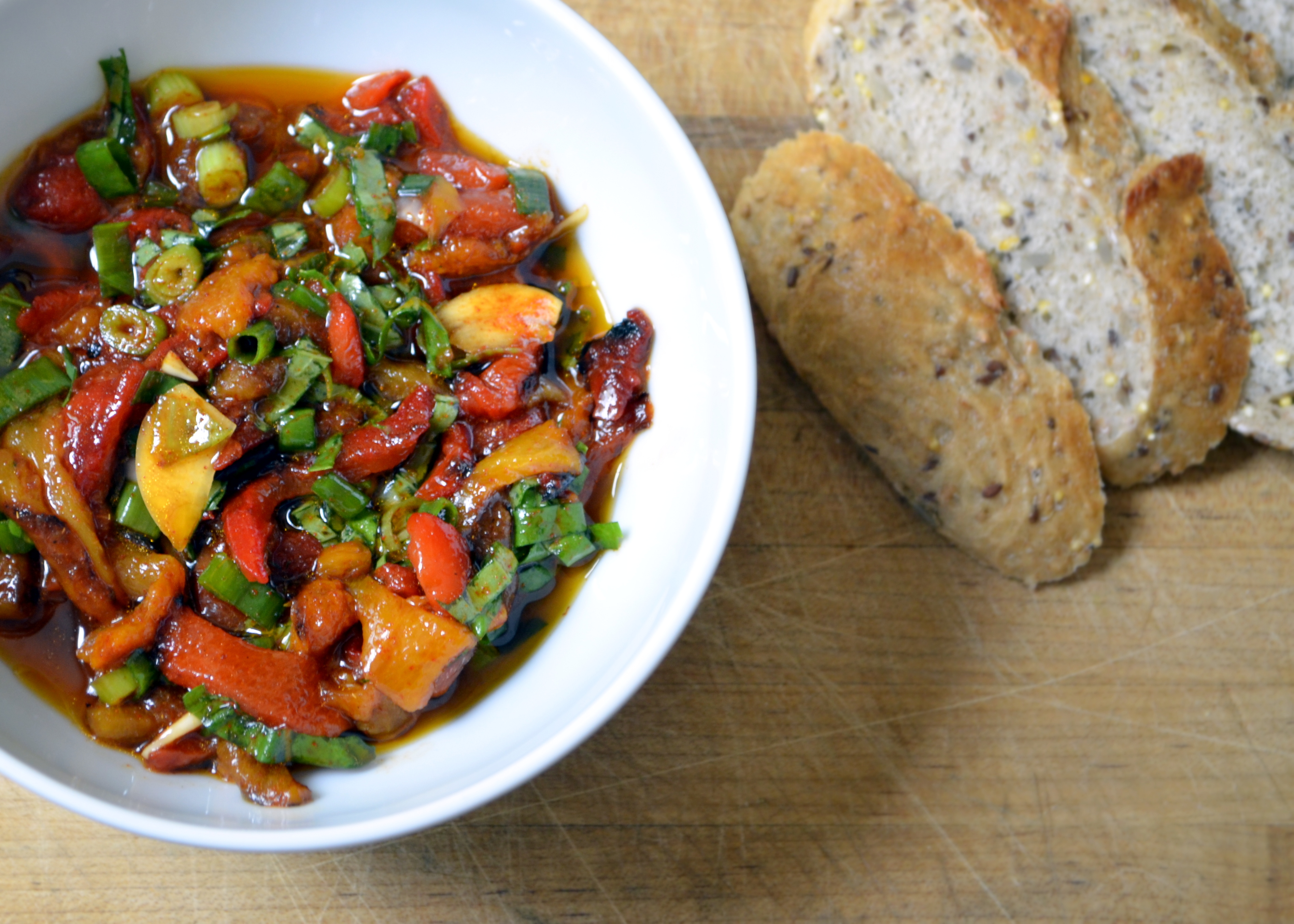
Fresh from my trip to Italy and with lots to do to get ready for the work week, I decided to prepare a Mediterranean antipasti-tapas-mezze meal made up of little dishes, simple ingredients, and nice bread. These Roasted and Marinated Bell Peppers are part of that meal, and they can be made ahead — they get better the longer they marinate. You can use all red peppers, or any combination of red, yellow, or orange that suits your fancy. In this case, I used one of each color.  I forgot the parsley before taking the photo, but will try to remember to sprinkle some on top before serving! With or without parsley, this is a nice addition to any Mediterranean multi-dish meal.

Roasted and Marinated Bell Peppers

3 large red, yellow, or orange (or combination) bell peppers
1/4 c. olive oil
2 tbsp. red wine vinegar
1 clove garlic, finely sliced
1 bay leaf
1 tsp. paprika
1 spring onion, sliced
5-6 leaves fresh basil
2 tsp. coarsely chopped parsley

Preparation

1. Turn on broiler.
2. Cut peppers into quarters; remove all seeds and membrane. Place peppers on baking sheet, skin-side up.

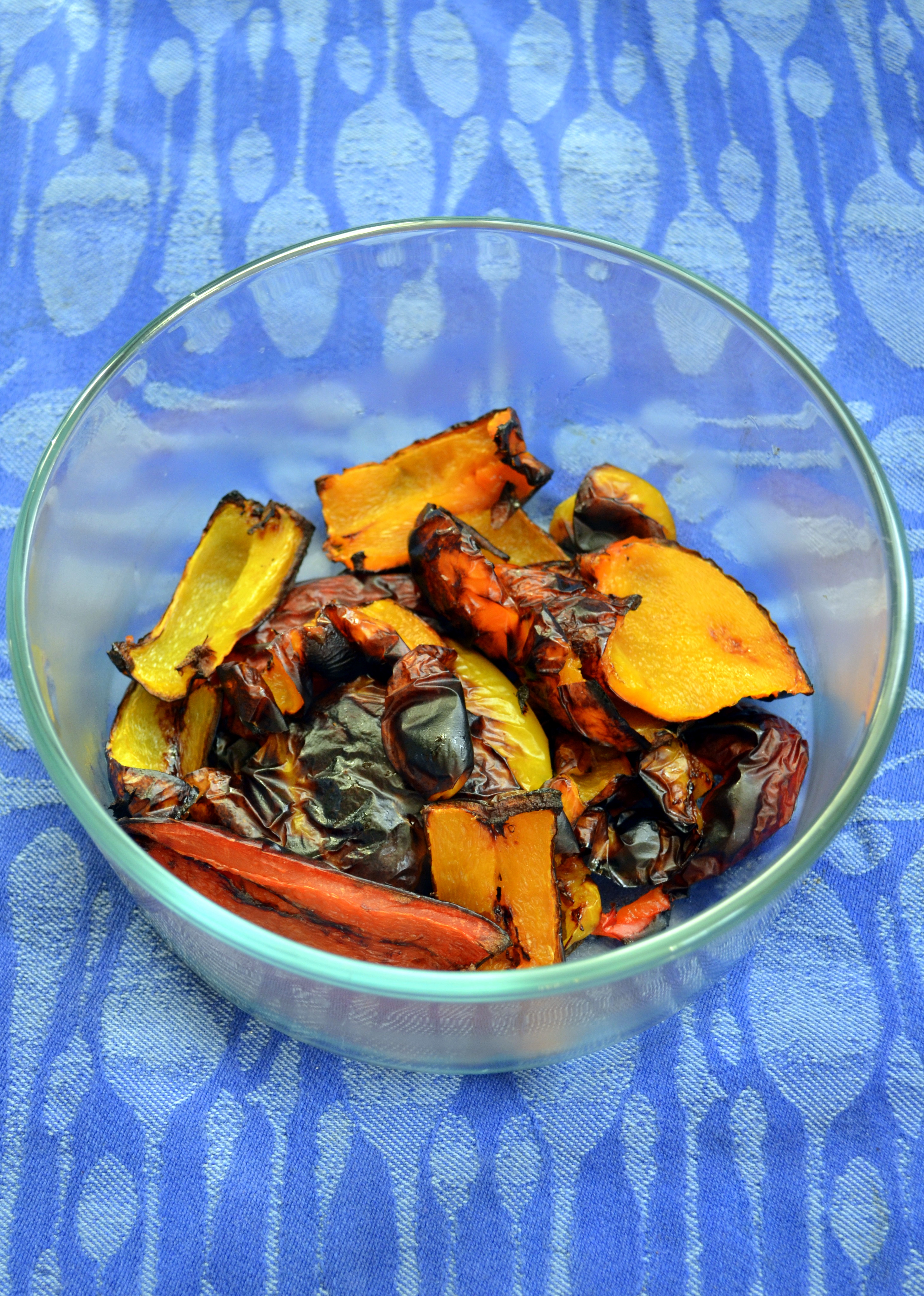
2. Broil until skin blackens, then put peppers into container with lid, cover tightly, and let cool.

3. When cool, carefully peel the skin off the peppers, and cut peppers diagonally into thin slices.

4. Add the remaining ingredients to the peppers, stir to combine, and marinate for at least 3 hours (or overnight) before serving.

Adapted from the Australian Family Circle Tapas booklet.

Recipe: Baked Sweet Potato Fries

13 Mar

In the United States, grocery stores offer both sweet potatoes and yams, which are not botanically related. Except that here, they are one and the same.  The “yams” sold in the United States are orange-fleshed sweet potatoes. Real yams are starchy and drier than sweet potatoes and have a rough and shaggy exterior. The problem is that white-fleshed sweet potatoes arrived on American shores first, so when the orange-fleshed versions put in an appearance, they were labeled as “yams” to avoid confusion. In the end, Americans have become more confused than ever.

On the plus side, the orange-fleshed sweet potato (AKA “yam” in the United States) is an excellent source of beta-carotene, which is responsible for the orange color. Beta carotene protects cells from pesky free radicals and is also converted into Vitamin A.

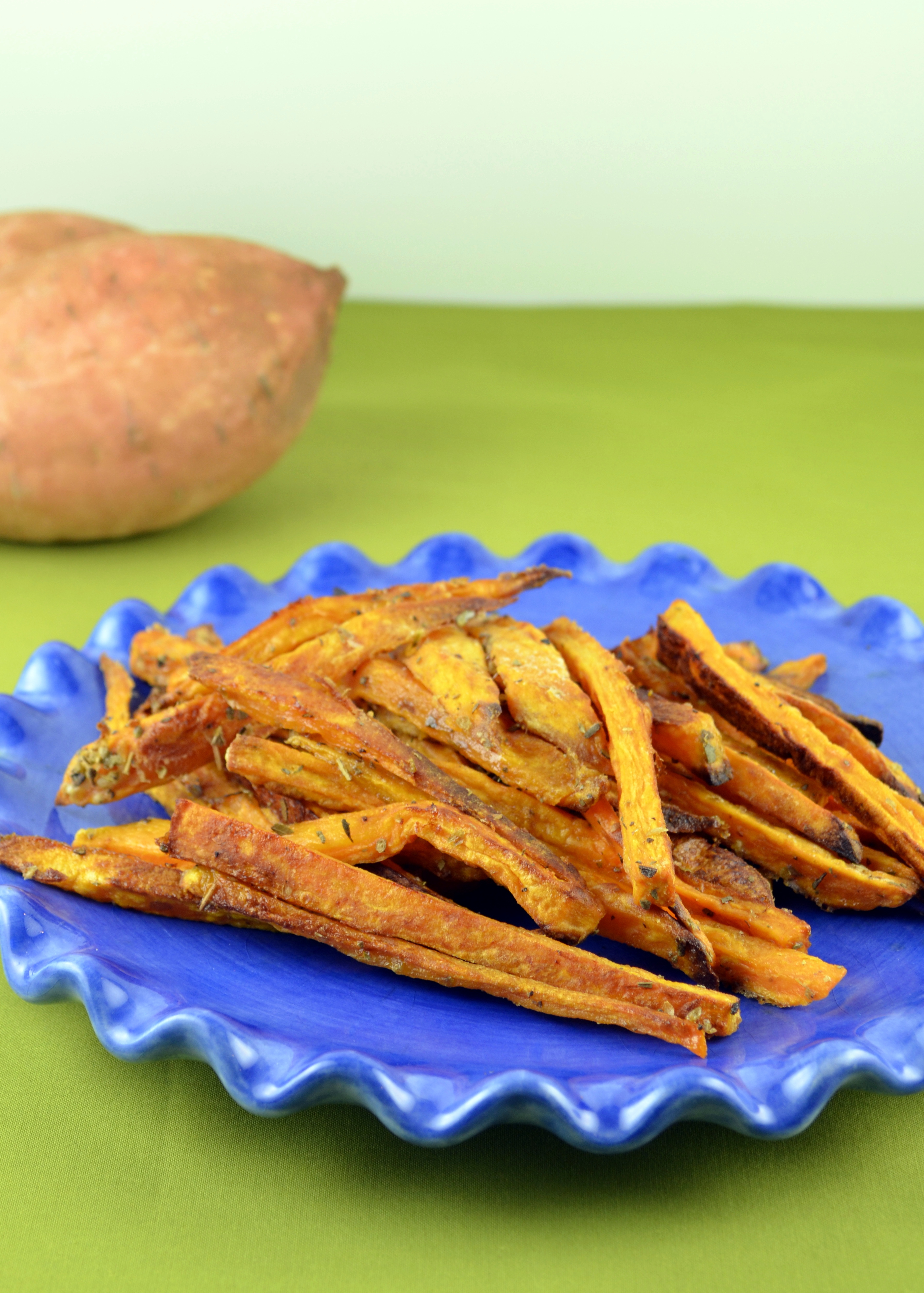
But all that aside, sweet potatoes are delicious — especially in the form of sweet potato fries, which make a regular appearance (and disappearance) at our house. These fries are crispy on the outside and soft, sweet, and rich on the inside. And since the olive oil they are tossed in enhances the absorption of the beta carotene, eating these super fries is a win-win situation all around.

Baked Sweet Potato Fries
Serves 4-6

4 sweet potatoes, peeled and sliced into thin strips
6 tbsp. olive oil
2 tbsp. cornstarch/arrowroot powder/wheat flour/rice flour
2 tsp. salt
2 tsp. dried oregano

Preparation

1. Heat oven to 450 degrees. Spray two large baking sheets with cooking spray.
2. Place sweet potato strips in large bowl; toss with olive oil.
3. Add remaining ingredients; toss well to combine.
4. Place the sweet potato strips on the baking sheets, in one layer.
5. Bake for 40-45 minutes, or until golden.
6. Enjoy!