Archive | Appetizers RSS feed for this section

Recipe: Tarte Soleil (Sun-Shaped Spinach Feta Tart)

11 May

Looking for a stunning appetizer? Or a great accompaniment to, say, soup or a salad? Look no further than this pastry, which is as good to eat as it is to look at. It requires a little more effort than other things you can do with puff pastry, but is still relatively easy (and, more importantly, fun) to make. And anything that looks this delicious is worth it.

I love the original recipe as follows below. But, as you will see in some of the photos, I’ve played around with it at times. Once, I added a base layer of tomato pesto to see what that would be like, and used finely chopped red onions instead of the scallions I forgot to buy. Another time I did not have quite enough spinach, so I made up the weight by adding extra feta and shredded mozzarella. So tweak this recipe as you desire — or don’t; it will be delicious every time no matter how you prepare it.

Tarte Soleil
(adapted from Bon Appetit)

Ingredients:
1 package (17.3-oz. /490 gr.) frozen puff pastry (= 2 sheets)
2 packages (10 oz/283 gr. each) frozen, chopped spinach — defrosted; see below
2 scallions (or about 1/4 of a white or red onion), finely chopped
2 tbsp. fresh dill, finely chopped
2½ oz. (70 gr.) feta cheese, crumbled ( = about ⅔ cup)
2 garlic cloves, crushed
1 lemon, zested
1 tsp. kosher salt, plus more
¼ tsp. freshly ground black pepper, plus more
All-purpose flour (for rolling)
1 large egg, whisked (aka egg wash)

Preparation:
1. Defrost the frozen puff pastry and the frozen spinach in the fridge for at least 8 hours or overnight. (Note: Place the spinach packages in a leak-proof container, just in case.)
2. When you are ready to make the tart, place the defrosted spinach in a fine-meshed strainer, and press/squeeze to get as much of the liquid out as possible; you want it as dry as you can get it.
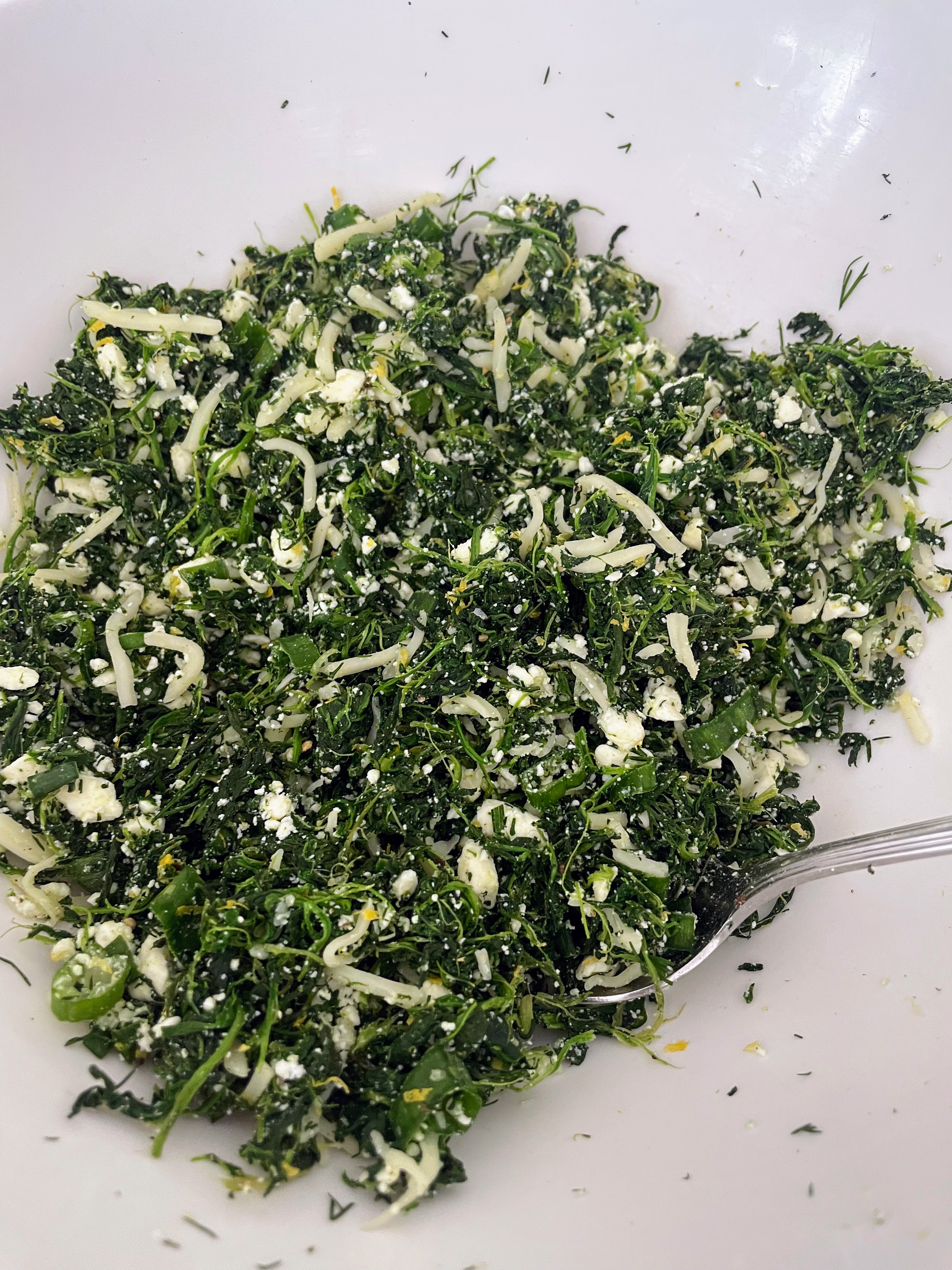
3. Add the spinach, scallions, dill, feta, garlic, lemon zest, salt, and pepper to a medium bowl. Stir to combine, making sure to break up any spinach clumps. I find it is easiest to use my (clean) hands to do this. You should have 2½ cups spinach mixture. (The photo below is from when I added mozzarella to make up for not having quite enough spinach.)
4. Find a round object that’s 10–12 inches (25-30 cm.) in diameter. I’ve used whatever I can lay my hands on, such as the lid of a Tupperware container or the lid of a large Dutch oven, each about 11 inches/28 cm. in diameter.
5. Place one of the pastry sheets on parchment paper (or on a well-floured counter if you prefer, or if you forgot you were supposed to roll it out on parchment paper…). Lightly dust the pastry with flour, both over and under. Roll it out in all directions and dust with more flour if needed, until it’s at least 1–2 inches (2.5-5 cm.) larger than your round object/lid.
6. Place the round object/lid over the pastry, press to indent, then use a sharp knife to trace the circle. Set aside the excess pastry. (Tip: You can save the excess pastry in the fridge for a couple days, tightly wrapped, then when the urge strikes you can tear it into small pieces, dust with cinnamon and sugar, and bake for a few minutes for a quick and delicious treat).

7. If you rolled your pastry directly on the counter, now is the time to 1) transfer your pastry round to some parchment paper (preferred) or to a baking mat (if you are out of parchment), and then to 2) place the whole thing on a baking sheet. Brush the egg wash all along the circumference of the pastry round; reserve remaining egg wash for later. Spread the spinach mixture over the pastry base, leaving a ½” border.
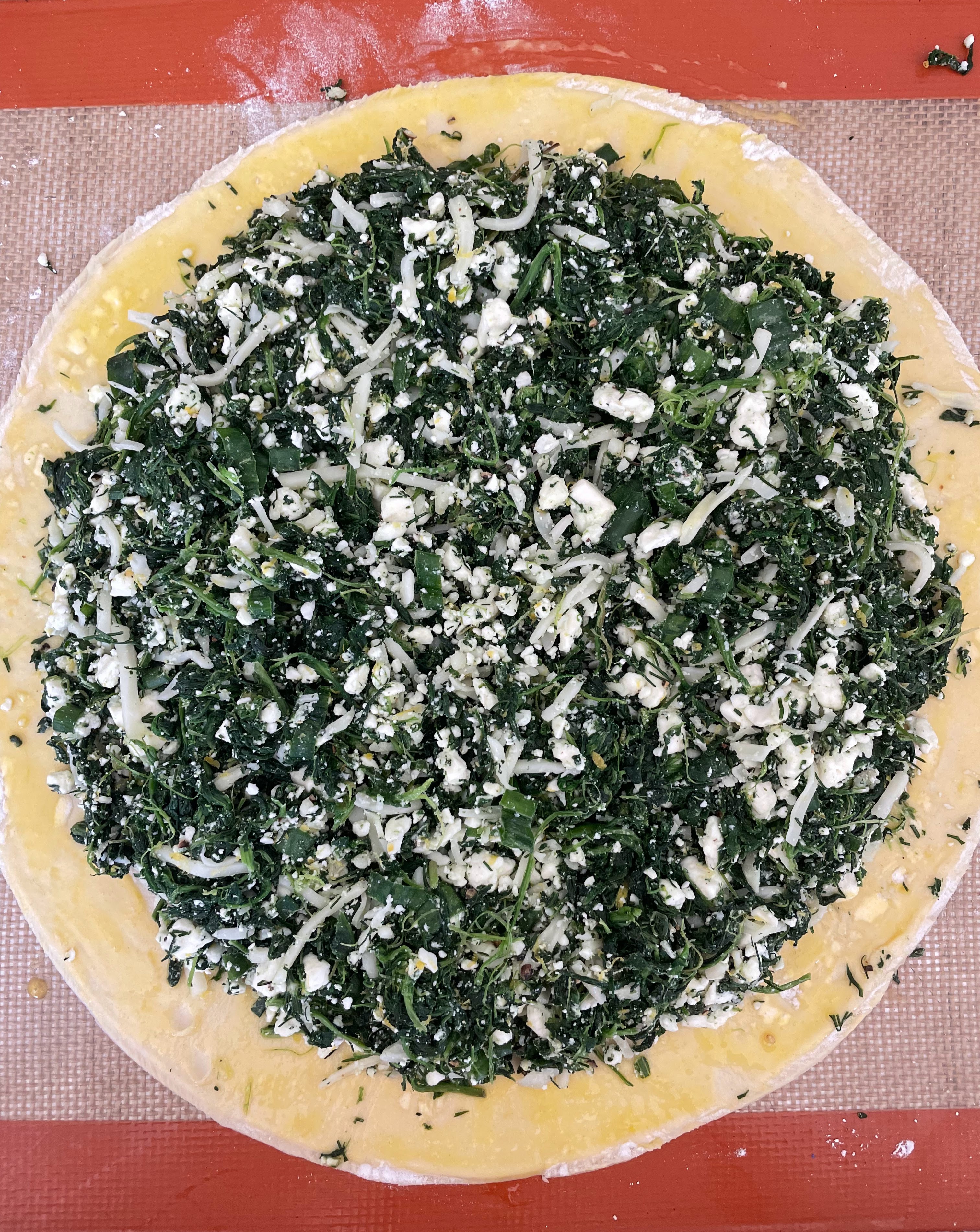
8. Cut out the second sheet of pastry, following the same directions as for the first one. Place the second round of pastry on top of the spinach mixture (if you’re having trouble moving it, fold it into quarters, then unfold it on top of the spinach) and press gently to seal. Using a small cup or shot glass (2 inches/ 5 cm. in diameter), make an indent in the very center. Your pastry might be slightly warm by now. If so, chill 10–20 minutes.

9. Once the pastry is cool, transfer the whole set-up, parchment/baking mat and all, to a work surface. With a chef’s knife, cut pastry into 4 quadrants, stopping when you reach the center circle. Cut each quadrant in half, then in half again, so that you have 16 spokes. (Note: If cutting on a baking mat, cut as gently as possible to avoid damaging the mat). Transfer the tarte with the parchment/baking mat back to sheet tray.

10. Working with one spoke at a time, pull gently away from the center (to extend the length of each piece), then twist to expose the spinach insides. Aim for three or four twists. Nudge them around to distribute evenly. it doesn’t matter if they look messy; they will all look beautiful when baked. Freeze the tarte until cold, 10–15 minutes.

11. Meanwhile, place a rack in the middle of the oven; preheat to 400°F/200°C. Brush the tarte all over with the reserved egg wash; season with salt and pepper. Bake the tarte until well browned, about 30–35 minutes.

Recipe: Easy Puff Pizza ‘al Taglio’

25 Feb

Puff pastry is a culinary lifesaver, since pretty much anything tastes better when puff pastry is involved. Also, it’s a great way to use up all sorts of things in your fridge or cupboards. This week, I defrosted a package of puff pastry for a meal I did not end up making, and I needed to use it soon. So the scavenger hunt began. Amongst other things in the fridge, I spotted two pork sausage links, some mushrooms that were not going to make it much longer, and a bit of fresh spinach that was beginning to look not so fresh. On the counter, I could see some cherry tomatoes on the cusp of wrinkling. And in the cheese drawer were wedges of Gruyere and Pecorino Romano.

These ingredients reminded me of a sausage and mushroom pizza al taglio (pizza by the slice) I loved in Rome. So the solution was clear–I would make an ‘Avoid Food Waste/Clear Out the Fridge’ puff pizza al taglio. (Ok, honestly, this can also be called a puff pastry tart….) You can cut it into larger pieces for lunch or dinner, or cut it smaller ones to serve as an appetizer.

Note: This recipe is just a suggestion; you can put all sorts of things on top of puff pastry (like this beet and feta vegetarian option) and you will end up with something delicious. I often let fate and the contents of my fridge decide. With a little bit of extra effort, you can also make puffs, but I was feeling lazy and went freeform.

Ingredients

1 pkg. puff pastry (the kind I buy has two sheets of pastry; I used both)
mushrooms, sliced (16 oz./450 gr.)
garlic salt (optional)
baby spinach, chopped (as much as desired; I only had a small handful)
2 pork sausages, casings removed
cherry tomatoes, cut in quarters (as much as desired; I had about 10 cherry tomatoes to use)
Gruyere cheese, grated (as much as desired)
Pecorino Romano cheese, grated (as much as desired)

Preparation

1. Thaw your puff pastry (ideally, overnight in the fridge).
2. Preheat oven to 375 F (190 C).
3. Cook any ingredients that are likely to wet the puff pizza too much (or not cook fully while in the oven). For me, those ingredients were the mushrooms, spinach, and sausage. In a frying pan, I quickly sauteed the mushrooms in some olive oil and tossed them with garlic salt. I placed them on a dish, then cooked the sausage in the same pan until it was no longer pink, crumbling it as it cooked. The sausage went on another plate and the little spinach I had went into the pan; it almost disappeared before my eyes, but ended up being just enough to add a spot of additional color to the puff pizza.

    4. Spray a rimmed baking sheet with olive oil cooking spray, or wipe a thin layer of oil over it.
    5. Lay the puff pastry sheets down the center of the baking sheet, pressing the seam between the two together. Score the sides of the pastry with a sharp knife. This will allow the sides to rise into a crust. (I did not score the short sides as I was able to press them up against the baking sheet rim where they formed their own crust.)

    6. Layer your prepped ingredients onto the puff pastry, taking care to not place anything past the score lines: I started with a little Gruyere, then the mushrooms, sausage, tomatoes, and spinach, ending with a bit more Gruyere and some Pecorino Romano. I tend to go lightly on the cheeses as I want the flavors of the other ingredients to shine, but feel free to add as much as you like.

    7. Bake for 25-30 minutes, or until puff pastry and cheeses are golden. Using a firm spatula, lift one edge of the pizza up and check the bottom; you want to be sure it, too, is golden.
    8. Remove, let sit for a minute or two, then cut into individual pieces. Enjoy!

    Recipe: Taralli (Italian Aperitivo Snacks)

    10 Feb

    Taralli (or tarallini) are a delicious, crispy, unleavened, ring-shaped snack from the Puglia region of Italy, though they have spread well beyond their place of origin. In Rome, you may be served savory taralli along with your aperitivo (Aperol Spritz, anyone?)–but they are also available in local grocery shops in a variety of flavors, including plain (classico), pepper (al pepe), fennel seed (al finocchio), and chili-flavored (al peperoncino). We used to keep a stash at home when we lived in Italy.

    Our kids (who, sadly, have not lived with us for while now as they are all grown) loved to have taralli when they would come visit us in Rome, and every time we returned to the U.S. to see them, we would make sure to stash several bags in our suitcases (along with vacuum-packed wedges of Pecorino Romano from Antica Caciara in Trastevere). Mmmm….

    It became much more difficult to find taralli when we moved back to the U.S., at least where we currently live. So I decided to see how hard it was to make them. If you have ever made bagels at home, then you will have no problem making taralli. The technique is similar: make the dough, shape it, boil it, let it dry, then bake it. Being much smaller than bagels, taralli get nice and crispy–a perfect snack. I would sometimes also crumble them over a bowl of pureed vegetable soup.

    This recipe is for a small batch (about 24-28) of the classic style; feel free to add any of the optional ingredients. When I made them, I added black pepper.

    Ingredients:

    1 3/4 c. (1/2 lb., 250 gr.) 00 flour
    3/4 tsp. sea salt (about 4.5 gr.)
    1/4 c. (75 ml. ) olive oil
    3.5 oz. (3/8 c., 100 ml.) white wine

    Optional (freshy ground black pepper, fennel seeds, chili flakes)

    Preparation:

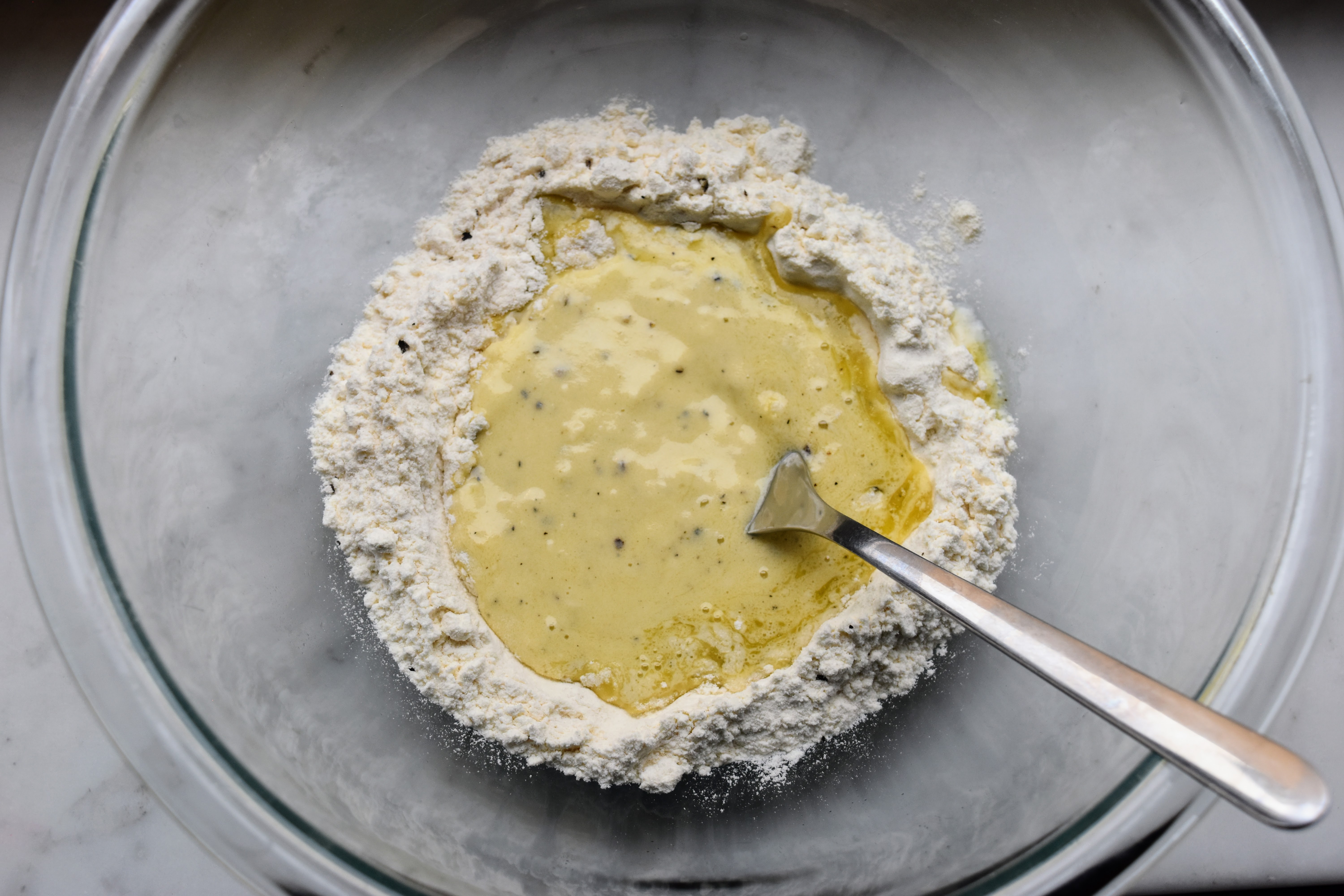
    1. In a medium bowl, combine the flour and salt (and any other optional ingredients). Make a well, and add the olive oil and wine. Using a fork, slowly stir to incorporate.

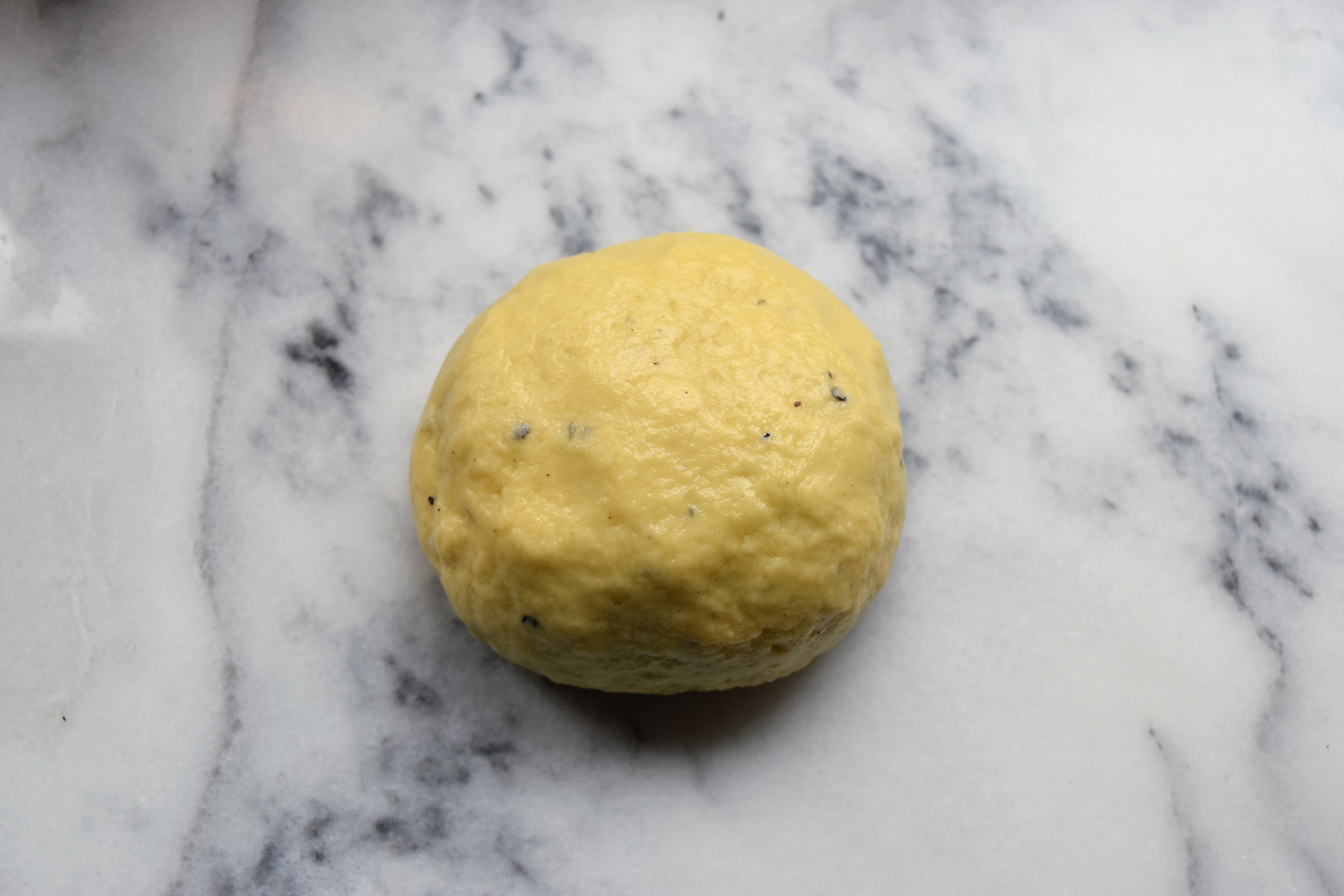
    2. Knead the dough for about 10 minutes, until smooth. Shape into a ball, then cover with plastic wrap or place in a plastic bag, and let rest for half an hour.

      3. Start a medium pot of water boiling. Add a pinch of salt to the pot. Place a clean dish towel on a baking sheet (or platter) near your stove.

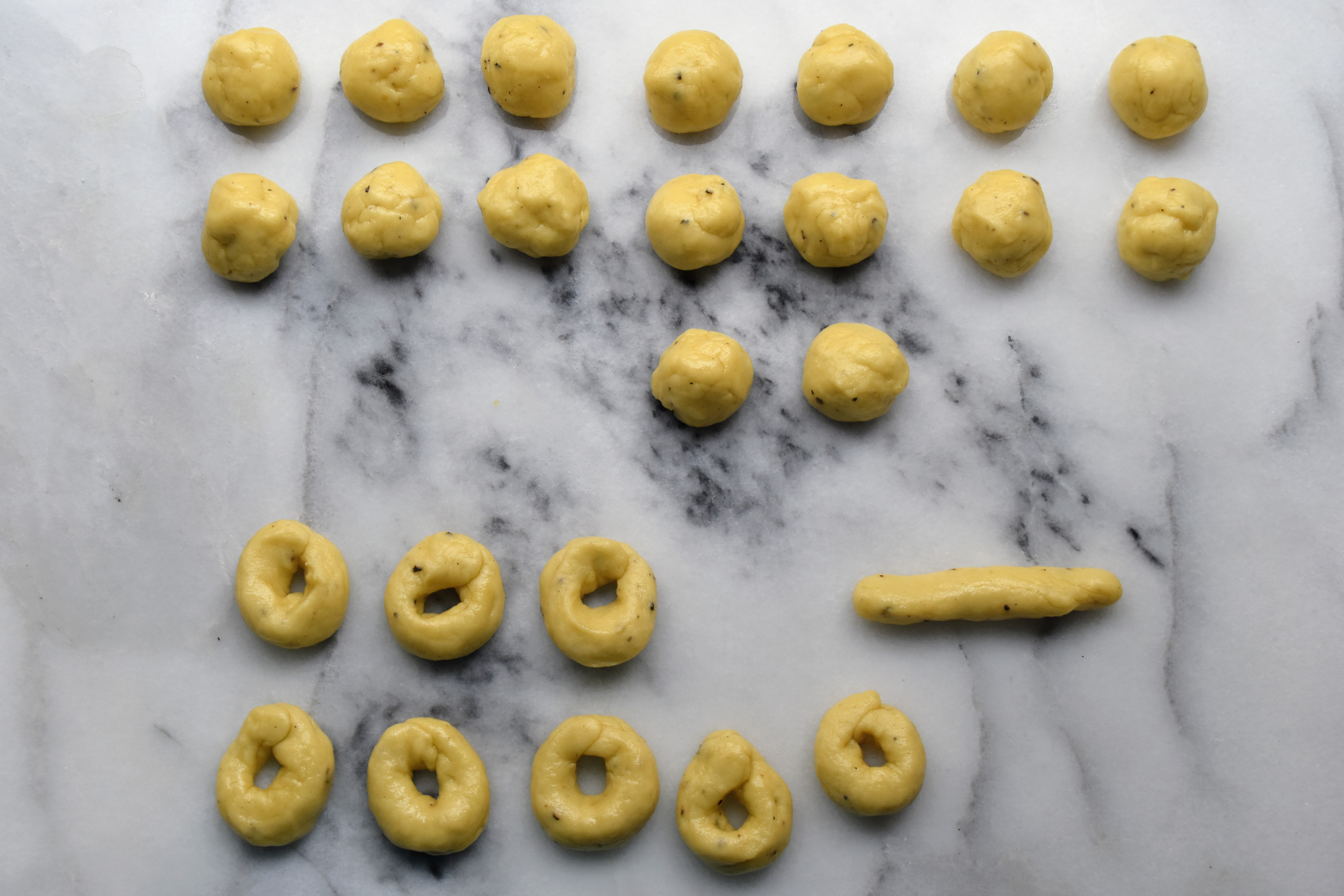
      4. Divide the taralli dough into four equal pieces and roll into four equally sized logs. Cut each log into 6 or 7 pieces and shape each piece into a little ball.

      5. Roll each little ball into a small, thin log shape. (Though, now that I think of it, I’m wondering why I made the little balls in the first place! I could have rolled each of the cut pieces into a small, thin log and skipped the ball part. I probably wanted to make sure everything was the same size… and, those little dough balls look cute. But, feel free to ignore the ball step.) Form each little log into a ring shape, pulling and pinching the ends together.

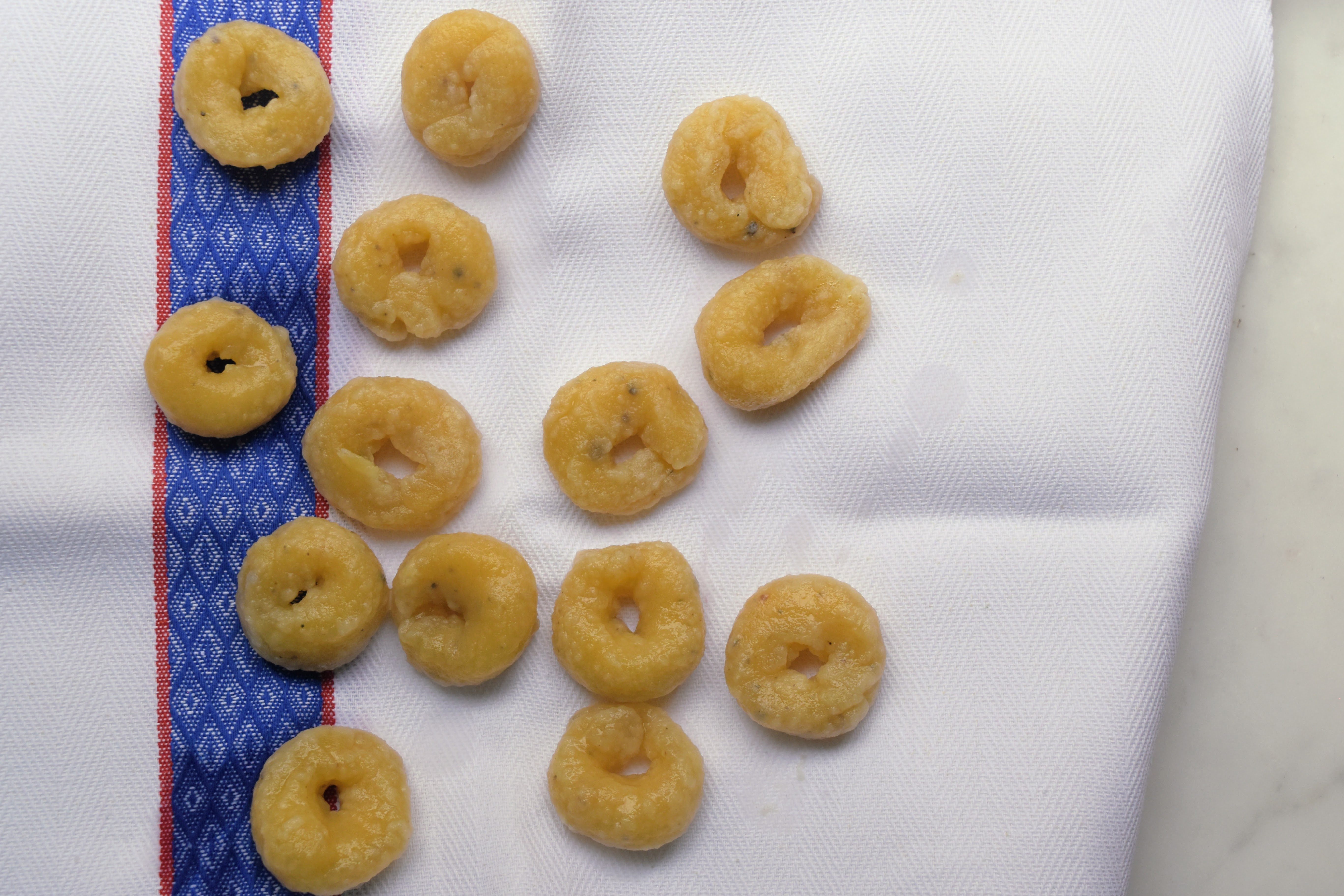
      6. Boil the taralli, maybe 5-8 at a time depending on the size of your pot, until they float. Remove with a slotted spoon or skimmer, and place them on the clean dish towel to dry. Repeat until all the taralli are done; let them dry thoroughly. (You could, at this stage, leave them out for a few hours and bake them later; the extra drying time will not hurt at all.)

      7. Preheat the oven to 400F/200C. Place the taralli on a baking sheet lined with parchment paper and bake on the center rack for about 30 minutes, or until the taralli are deeply golden brown; the longer they bake, the crispier they become. Enjoy!

      Recipe: Sausage Cheese Dip, Two Ways

      4 Nov

      I love recipes that can do double duty. This one’s dual role came about by accident when I was pondering what to make for dinner one recent busy weeknight. We first had the very delicious sausage cheese dip on a weekend while watching a football game, but had some leftovers. So, when staring at the contents of my fridge a couple days later, I thought: “Sausage and cheese? Both those things go very well with pasta…. hmmm.” And I had a zucchini that I needed to use, too. Thus, Sausage Cheese Dip Rigatoni with Zucchini was born. And it was good! Both recipes follow.

      Sausage Cheese Dip (based on a recipe from Natasha’s Kitchen)
      Note: This serves 4 without leftovers (2 with leftovers)

      Ingredients
      1/2 lb. (226 gr) mild Italian sausage, removed from casing
      2 garlic cloves, minced
      pinch onion powder
      salt and pepper to taste
      4 oz (113 gr) cream cheese, cut into cubes (no need to soften)
      10 oz (283 gr) can diced tomatoes with green chilies
      1/2 cup corn (I cut the corn off one previously cooked cob, but frozen would also work)
      4 oz (113 gr) sharp cheddar or similar cheese, shredded

      Preparation
      1. Drizzle a small amount of olive oil in a medium skillet. Brown sausage over med/high heat, breaking it apart with a wooden spoon, until browned. If the sausage generates a lot of grease, drain the grease.
      2. Add the garlic, onion powder, and some pepper, and cook over medium heat for one more minute, stirring through.
      3. Add the cream cheese cubes and stir until melted and incorporated.
      4. Add the undrained tomatoes, corn, and shredded cheddar. Cook, stirring occasionally, just until bubbly and cheese is melted. Check seasonings, and add salt or pepper as needed.
      5. Remove from heat and serve with tortilla chips. The kind that look like scoops are perfect for this dip. (Note: The photo below also includes Cumin-Scented Black Bean Salad.)

      Sausage Cheese Dip Pasta with Zucchini
      (serves 2 hungry people)

      Ingredients
      5.3 oz (150 gr) pasta of choice (I used mezzi rigatoni)
      olive oil
      1 zucchini, diced
      1 cup Sausage Cheese dip
      cream or milk (if needed)
      Pecorino Romano or Parmesan cheese, grated
      salt and pepper to taste

      Preparation
      1. Bring salted water to a boil and cook pasta as directed for al dente.
      2. While water is coming to a boil, drizzle some olive oil into a large skillet. Add diced zucchini and cook over medium-high heat until zucchini starts to get golden around the edges.
      3. Add the sausage cheese dip and stir until warm and melted. Check the consistency; add a splash of cream or milk if too thick. If too thin, add some grated Pecorino Romano or Parmesan cheese.
      4. When pasta is ready, drain, and add to sauce in skillet, along with more grated cheese. Check the seasonings, and add salt or pepper as needed.
      5. Serve immediately.

      Recipe: Baba Ghanoush

      30 Sep

      Years ago, I learned to make some Lebanese dishes from watching (and helping) college friends cook a few classics, but my main teacher was a cookbook called Lebanese Cuisine by Madelain Farah. The version I have is from 1979, meaning it predates the internet. (And no, I wasn’t in college in 1979; I bought the cookbook some years later). Despite there being so many delicious Lebanese recipes now available online, I still find myself going back to this well-loved, well-spattered, paperback cookbook for some of my favorites. It has accompanied me on many moves and is now held together with tape.

      Ms. Farah was a straightforward recipe writer; no coddling of the reader for her. In her recipe for Baba Ghanoush (which she calls Baba Ghannuj, as there are many ways to spell it), the first instruction is written this way: “Eggplant may be baked or grilled over a flame until well done.” There’s a lot of room for interpretation in those instructions…. Ms Farah was also a proponent of mashing the ingredients, either with a potato masher or a wooden mallet. I now use a food processor, which may be anathema in some quarters, but it produces a silky smooth dip.

      So, this recipe takes its inspiration from Madelain Farah’s, with a few twists: I added smoked paprika and cumin, which play on the smokiness of the eggplant and really help bring out its flavor. And I use a faster blending technique.

      Baba Ghanoush

      Ingredients:
      2 medium eggplants (2 lb/900 gr total). Note: Ms Farah called for one large eggplant, but the larger the eggplant, the more seeds there are, so I prefer using two smaller ones. (Since I grow eggplant in my garden each summer, I can pick them at just the right size!).
      olive oil

      2 cloves of garlic, minced (we like garlic in our house; you can use 1 clove as the recipe originally called for)
      1/4 c. (60 gr.) tahini
      1/4 c. (60 ml.) lemon juice, or more to taste
      1/4 tsp. smoked paprika
      1/4 tsp. cumin
      1/2 tsp. salt, to taste
      1 tbsp. (15 ml.) water (optional)

      To garnish:
      –chopped fresh flat-leaf parsley
      –smoked paprika and cumin (or, substitute the paprika and cumin with sumac, which is a more traditional topping and one Ms. Farah suggested; both options taste great)
      –olive oil

      Preparation:

      Cooking method #1: Preheat the oven to 450 degrees F (230 degrees C). Cut the eggplant(s) in half lengthwise, and brush a generous amount of olive oil on the cut sides. Place the cut sides down on a large baking sheet (use a rimmed one as the eggplant will get juicy). Bake for about 30-45 minutes until the eggplant is dark golden brown and very, very soft.

      Cooking method #2: Grill the eggplant(s) cut side down on a barbecue, until golden and soft, taking care not to completely incinerate them (some burnt bits are ok and add to the flavor, but a carbonized eggplant is a step too far; I say this from experience).

      Flip the eggplants over and let cool.

      Scoop out the eggplant pulp and place in the bowl of a food processor, carefully removing any skin that may have made its way in, too. Also, check for big clumps of seeds; individual seeds are fine and will get blended right up, but I like to take out any big clusters if I see them, to ensure a smoother dip.

      Add the remaining dip ingredients and process until nice and smooth, adjusting the ingredients to suit your taste. If the dip is too thick, you can add more lemon juice or a spoonful of water.

      Pour the dip into a serving bowl. Sprinkle with chopped parsley and more smoked paprika and cumin (or use sumac instead); drizzle with olive oil.

      Serve with pita bread, pita chips, and/or veggies — or use in a Middle Eastern wrap as a substitute for hummus. I also love putting Baba Ghanoush, lamb kafta, and some tabouli in a pita and calling it a meal.

      Recipe: Fried Zucchini Flowers and Sage Leaves

      24 Jun

      Fritti LR
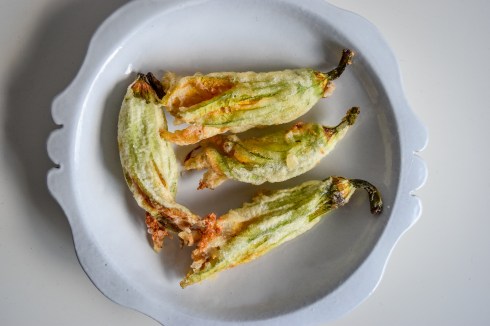
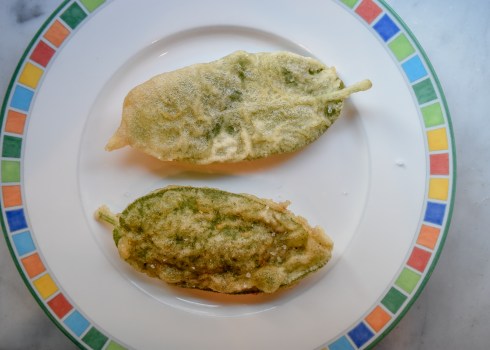
      Zucchini flowers taste as good as they look, if not better. Stuffed with fresh mozzarella, a hint of anchovy (or not),  lightly battered and fried until crisp and golden, they are summer on a plate. Fresh sage leaves–encased in the same warm, crispy shell–will turn your thoughts to autumn. But the good news is, you can have them now. Two appetizers straight from the garden.


      Fried Zucchini Flowers and Sage Leaves
      4-6 servings

      1 c. (250 ml.) water–regular or sparkling
      1 c.  flour, spooned lightly into the measuring cup (about 133 gr.)
      salt and pepper
      12-14 zucchini flowers*
      9 0z. (250 gr.) fresh mozzarella
      2-3 anchovy fillets (salt-cured, packed in olive oil)–optional
      canola or sunflower oil–enough to fill a medium sauce pan to about 2.5 inches (6 cm)
      handful of fresh, firm sage leaves

      *Use male zucchini flowers. They appear at the end of long stems, unlike female flowers, which appear at the end of the emerging zucchini.

      Preparation

      1. Prepare the batter: Put the water in a medium bowl and sift the flour over it, whisking to incorporate. Add a pinch of salt and some freshly ground pepper. The batter should be thick enough to coat the flowers, but not pasty. See the right consistency for a light batter below. Set aside the batter while prepping the flowers.

      Fritti LR-9

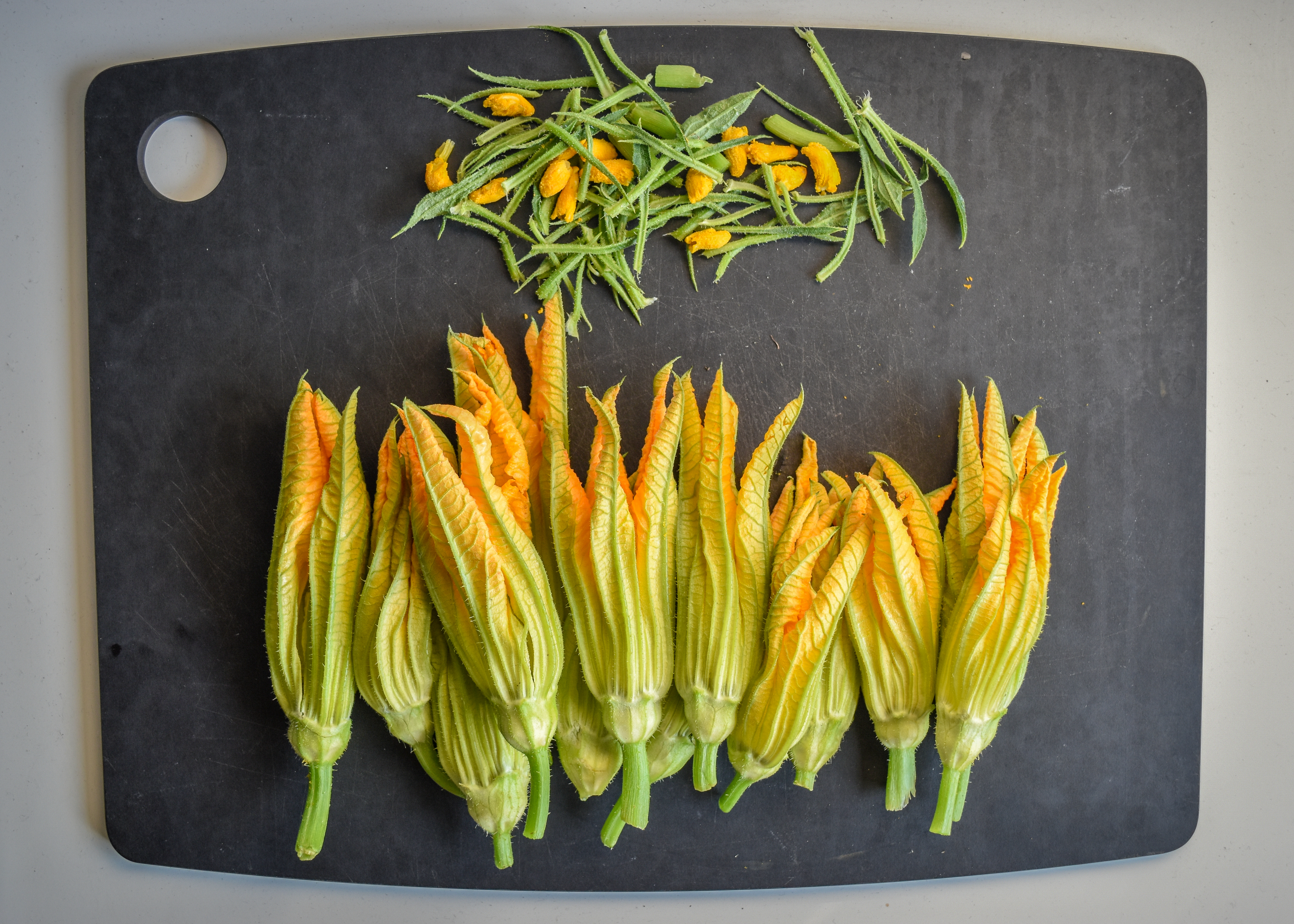
      2. Lay out all the zucchini flowers, wipe them clean, and discard any that appear bruised or past their prime (they are quite perishable). Trim the stems to about 1 inch (2.5 cm), leaving enough stem to grasp and dip. Pull off the sepals (the spiky green parts at the base of the flower). Gently work your thumb and index finger into the flower and pinch off the pollen-topped stamen. You will probably tear the flower slightly; that’s ok, but try not to tear it too much, or shred it. See the prepped flowers and discarded sepals and stamens below:

      Fritti LR-4

      3. Mozzarella and Anchovies: Cut the mozzarella into as many 2.5-inch ( 6 cm) long rectangular pieces as you have flowers–or whatever size best fits into the flowers you have. You can omit the anchovies, you can go all in and lay a nice piece of anchovy fillet on top of each piece of mozzarella before placing both in the flower, or you can take a moderate approach. That entails placing the anchovy fillets in a bowl, drizzling them with some extra olive oil, mashing them with a fork, then placing the mozzarella pieces in the anchovy oil so they get a hint of the flavor rather than a wallop. Either way, you want to place the mozzarella pieces (with or without anchovy) into the flowers, covering them up as best as you can and twisting the ends of the flowers closed to create a mini pouch.

      4. Bring the oil to high heat in a medium saucepan. Holding the stem end of a sealed zucchini flower, dip it into the batter in a twirling motion to keep it closed (sealing any open parts with your fingers and twisting the bottoms closed again if needed). When the flower is completely covered in batter, carefully lower it into the oil. Repeat for as many flowers as will fit into the saucepan in one layer without crowding; you will need to cook the flowers in batches. When one side is golden, turn the flower over (or push the flowers gently under the surface of the oil as they cook, to ensure both sides become golden).

      Fritti LR-5

      5. Drain the fried flowers on paper towels, sprinkle with a bit of salt, and eat as soon as possible!

      Fritti LR-6

      6. Now for the much-easier sage leaves: Wipe them clean, dip each one into the batter, and fry until golden. Drain on paper towels, sprinkle with a bit of salt, and…

      Fritti LR-7

      7. … enjoy!

      Fritti LR-8

      Recipe: Marinated Feta

      14 Feb

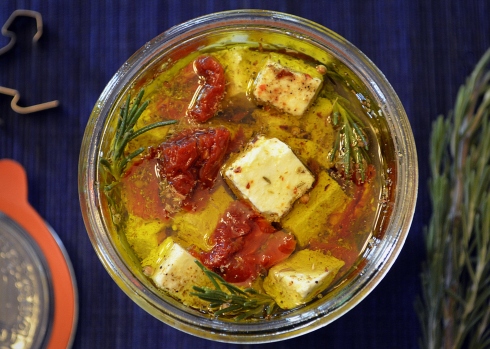
      A jar of marinated feta in the fridge will more than earn its place there, especially since it takes 10 minutes–at most–to prepare it. That doesn’t count marinating time, but once you’ve introduced all the ingredients to each other, you can step back and let the magic happen on its own. Marinated feta is good with bread and crackers, in sandwiches and salads (including pasta salads), and as that little something extra in many other dishes. And the leftover olive oil is fantastic in a Greek salad dressing or tossed with vegetables prior to roasting. Amazing to think that a mere 10 minutes of matchmaking leads to so many happy returns.

      MF2
      Marinated Feta

      12 oz. feta
      4 oz. sun-dried tomato halves, in oil
      1 tbsp. dried oregano
      1 tsp. coriander seeds
      1/2 tsp. chili flakes (can add more if you like extra heat)
      freshly ground black pepper
      3-4 sprigs fresh rosemary
      extra-virgin olive oil

      Preparation
      1. If the feta is wet, pat it dry. Cut it into 3/4-inch cubes. Cut each sun-dried tomato half into four pieces.
      2. Transfer half of the feta and half the sun-dried tomato pieces to a canning jar or glass bowl with a tight-fitting lid. Sprinkle the feta and tomatoes with half of the oregano, coriander seeds, chili flakes, and ample black pepper. If using a canning jar, place the rosemary sprigs upright around the edges of the jar; otherwise, scatter them about. Add the remaining feta and tomatoes and sprinkle with the remaining spices. Pour the oil from the sun-dried tomatoes over top, then add enough extra olive oil to cover the feta.
      3. Tightly cover/seal the jar or bowl, and refrigerate the feta for at least a couple days (and ideally, for one week) to let the flavors marry–if you can wait that long. The olive oil will solidify, which is normal — it will return to liquid form at room temperature (allow the feta to reach room temperature before serving).

      MF1

      Recipe: Walnut-Pomegranate Dip (Muhammara)

      31 Jan

      In the world of dips, hummus reigns supreme–but there is another Middle Eastern dip that also has lots of protein and lots of tang, and is equally easy to make. Although, now that I think of it, I realize it’s been a while since I made my own hummus; my local grocery store now devotes entire refrigerator sections to it and I have gotten lazy. This is a sad state of affairs–because hummus is really incredibly easy to make…. But back to the Muhammara. It gets its protein from the walnuts and its tang from pomegranate molasses, which you can find in Middle Eastern and Indian grocery stories and at a certain national, upscale grocery-store chain that shall not be named. Roasted red peppers also add to the slightly sweet undertones of this dip, which deserves a spot on any appetizer palette. This recipe comes from Bon Appetit magazine.

      Muhammara
      Walnut-Pomegranate Dip (Muhammara)

      1 c. walnuts
      ½ c. roasted red bell peppers from a jar, drained (reserve the liquid)
      1/3 c. panko (Japanese bread crumbs)
      2 tbsp. extra-virgin olive oil
      1 tbsp. pomegranate molasses
      1 tsp. cumin
      1/2 tsp. dried crushed red pepper

      Preparation
      1. Blend/process all ingredients until coarsely ground. (Add a bit more panko or walnuts if too thin, or roasted red pepper liquid or molasses if too thick.)

      Food processor
      2. Place the dip in a serving bowl. Drizzle some olive oil over the top–or for extra tang, mix together a bit of olive oil and pomegranate molasses and drizzle that instead.

      Note: This is what pomegranate molasses looks like, if helpful.

      PM

      Recipe: Easy Lahm bi Ajin (Lebanese Lamb Pizza)

      5 Oct

      In Arabic, lahm means “meat,” and ajin means dough or pastry. Many cultures pair meat with pastry, and while I like just about every iteration of that theme, this Lebanese version is one of my favorites. This recipe is slightly easier and quicker to make than some traditional versions because it uses a pita-bread base instead of one requiring home-made dough. These Lahm bi Ajin are pretty hearty, and go quite nicely with Tabouli or other salads.

      lahm bi Ajin3
      Lahm bi Ajin
      Serves 4

      1 lb. (454 gr.) ground lamb
      3 tbsp. olive oil
      1 large onion, finely chopped
      5 cloves garlic, crushed
      1/2 tsp. cinnamon
      1/4 tsp. allspice
      1/8 tsp. chili flakes
      1/3 c. (85 gr.) tomato paste
      1 tbsp. pomegranate molasses, or juice of 1/2 a small lemon
      1/4 c. (61 gr.) yogurt
      salt and pepper to taste

      1/4 c. (34 gr.) pine nuts, optional
      extra 2 tbsp. olive oil
      4 medium-sized pitas, unopened
      1 tbsp. each of chopped fresh mint and parsley, or 1/2 tsp. dried mint and dried parsley

      Preparation
      1. Heat a heavy-bottomed skillet over medium-high heat, drizzle with a bit of olive oil, and cook the lamb until it is no longer pink, breaking it up as finely as possible. Remove the lamb from the pan, drain in a colander, and set aside.
      2. Wipe the skillet, add the 3 tbsp. of olive oil, and when hot, add the onion and cook until translucent and slightly golden.
      3. Add the garlic and spices, and cook for a few more minutes. Return the lamb to the pan along with the tomato paste and the pomegranate molasses/lemon juice; mix well to combine. Cook the lamb mixture for 5 minutes over low heat, mashing periodically with the back of a wooden spoon.
      4. Turn off the heat, and add the yogurt to the lamb mixture in two batches, incorporating well after each batch. Season with salt and pepper to taste. Set the lamb mixture aside.
      5. Heat the oven to 400 degrees. Take out one large (or two medium) rimmed baking sheets–to accommodate the four pitas.
      6. Toast the pine nuts in a small skillet until they start to turn golden; remove from skillet.
      7. To assemble: pour the extra 2 tbsp. olive oil into a very small bowl; brush the top of each unopened pita with the olive oil. Place the pitas on the baking sheet(s).
      8. Divide the lamb mixture among the four pitas, patting it down and spreading it to the edge of each pita. Sprinkle each pita with the mint, parsley, and pine nuts, pressing the pine nuts into the lamb mixture. Drizzle the pitas with any remaining olive oil from the small bowl.
      9. Bake in the oven until the edges of the pitas start to get crisp and the lamb topping begins to brown, about 15 minutes.
      10. Eat immediately.

      Recipe: Crackers with Cheddar and Fig

      24 Sep

      The pairing of sharp cheddar and sweet fig is another match made in gastronomic heaven. This recipe–though it hardly deserves to be called that–is an embarrassingly simple way to bring the two together. Take out a few crackers or crispy flatbreads (or cut a few slices off a baguette), top with a small wedge of cheddar, and add a dollop of fig spread or jam* for a delicious snack. Or, put some of the fig spread in a tiny bowl and place it on a larger cheese board, along with the cheddar.

      For a Spanish variation on the theme, pair Manchego cheese with membrillo, a lovely fruit paste made with quince.

      *  I can get fig spread at my local store, and now always keep a jar in the fridge; if you make your own spread or jam, even better!