Tag Archives: brunch

Recipe: Kouign-Amann Pastries

27 Jan

Like many others, I first learned about Kouign-Amann from watching the Great British Bake Off (Great British Baking Show), marveling at the complexity and apparent deliciousness of this pastry from Brittany. Then I tasted some in San Francisco and Berkeley while visiting my son, daughter-in-law, and daughter — and became a convert. Kouign-Amann is a crispy, buttery, salty/sweet confection that is worth every moment of a weekend day (or two) to make — especially when, as is currently the case for me, there are no such pastries to be had nearby. I start thinking about them in winter when it is harder to be out and about and when the weather lends itself to baking. These pastries are perfect with a cup of coffee or tea as you settle into a cozy inside spot while reading one of the Brittany-based Commissaire Dupin mysteries.

This excellent recipe is from Brown Eyed Baker, though I reduced the sugar slightly and included cinnamon and chocolate chips as optional ingredients. Neither of those are traditional, but each lends something to the pastries. The original version is absolutely delicious, too. Finally, these kouign-amann are individual sized, whereas in Brittany the pastry is more traditionally made in the shape of a caramelized, crispy cake that is meant to be sliced.

Kouign-Amann
Makes 12

For the Dough:
1 c. (240 ml.) water, at room temperature
2 tsp. (3.2 gr.) instant yeast
2.5 c. (355 gr.) all-purpose flour
1 tsp. sea salt

For the Butter Block:
8 oz. (227 gr.) salted butter, chilled and cubed

For the Pastries:
1 1/3 cup (267 gr.) granulated white sugar, divided
1 tsp. (2.6 gr.) cinnamon (optional)
dark chocolate chips (optional)

Directions

Make the Dough:
Combine the water and yeast in the bowl of a stand mixer (or a mixing bowl, if kneading by hand). Add the flour and the salt. Stir with a wooden spoon until a shaggy dough is formed.

Fit the mixer with a dough hook attachment and knead the dough at low speed until the dough is slightly tacky but smooth, 3 to 5 minutes. If the dough sticks to the sides of the bowl, add 1 tablespoon of flour at a time and knead until the dough is smooth. If the dough feels very stiff and dry, add 1 tablespoon of water at a time and knead until the dough is smooth.

Transfer the dough to a clean bowl that has been lightly greased with butter, turning the dough to coat it with butter. Cover the mixing bowl with plastic wrap and let the dough rise until doubled in size, about 1 hour. Once the dough has doubled in size, place it in the refrigerator for at least 30 minutes.
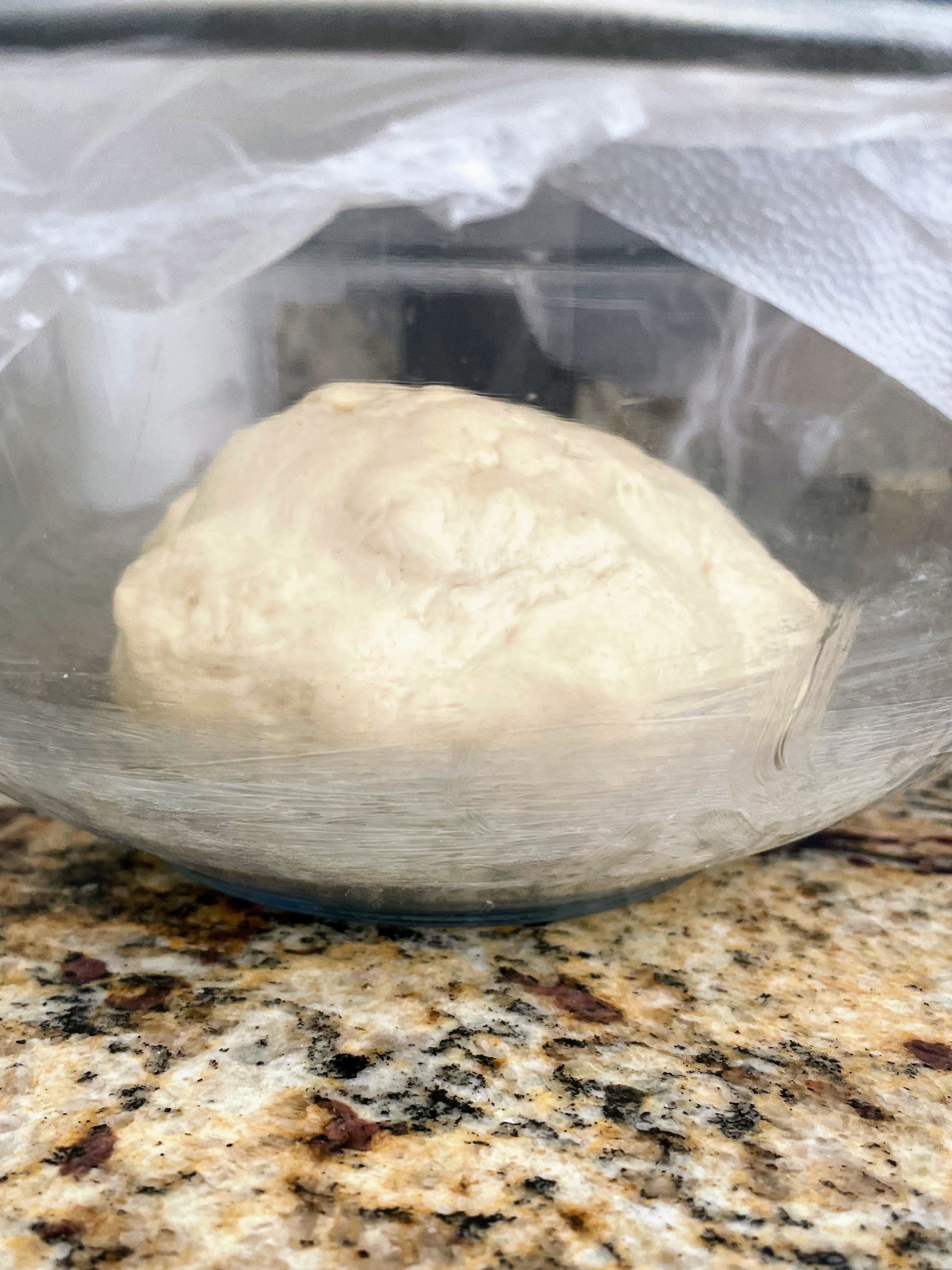
MAKE-AHEAD NOTE 1: At this point, you can refrigerate the dough overnight, then proceed with the recipe.

Make the Butter Block:
Beat the butter on low speed until it’s smooth, about 3 minutes, scraping the beater and bowl as needed to break up the cubes. Turn the butter out onto a piece of parchment paper and shape into a rectangle about 6 x 10 in. (15 x 25 cm.). Wrap the butter in the parchment paper, pressing out any air. Gently roll a rolling pin over the butter packet, pushing the butter into the corners to create a perfect rectangle with even thickness. Refrigerate until firm yet still pliable, about 25 to 30 minutes.

Roll out the Dough:
Place the chilled dough onto a floured work surface and roll into a rectangle 12 in. wide x 20 in. long (30 x 50 cm.). Remove the butter from the refrigerator and place it in the middle of the dough. Fold one half of the dough over the butter, then fold the other half on top, like folding a letter. Roll it out slightly to press the layers together, then fold it again into thirds like a letter.

–Turn #1: Rotate the dough so that the open, narrower edge is facing you. Roll the dough out to a rectangle 12 in. wide x 20 in. long (30 x 50 cm.). Fold the top third down and bottom third up, again like folding a letter. Place the packet of dough on a baking sheet, cover with plastic wrap, and refrigerate for 30 minutes (but not longer as the butter will get too hard).

–Turn #2: Place the unwrapped packet of dough on a floured surface with the open, narrower edge facing you. Roll the dough out to a rectangle 12 in. wide x 20 in. long (30 x 50 cm.). Fold the top third down and bottom third up, again like folding a letter. Place the packet of dough on a baking sheet, cover with plastic wrap, and refrigerate for 30 minutes.

MAKE-AHEAD NOTE 2: At this point, you can wrap the dough in plastic wrap, place in a freezer-safe bag and freeze for up to 2 months. Thaw in the refrigerator overnight, then proceed with the recipe. **If you would only like to make a half batch now (ie, 6 pastries), cut the dough in half, wrap and freeze one half, and proceed with the recipe using the other half. This is my preferred option, as we no longer have a full house of eaters who could polish off 12 pastries in a weekend!

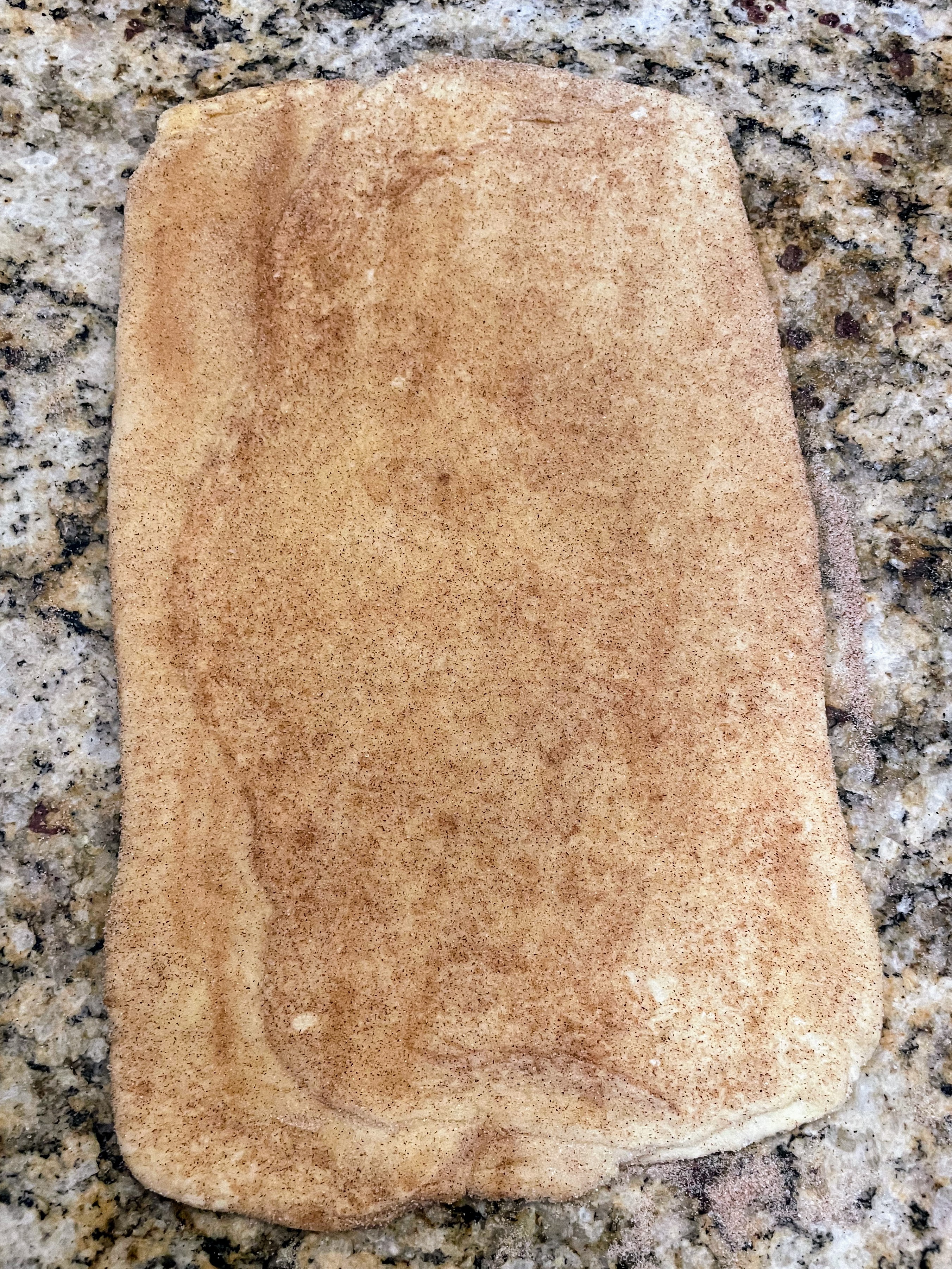
–Turn #3: Place the unwrapped packet of dough on a floured surface with the open, narrower edge facing you. Roll the dough out to a rectangle 12 in. wide x 20 in. long (30 x 50 cm.) [If making half a batch, roll the dough out to 6 x 10 in. (15 x 25 cm.); pinch cut edge closed before rolling]. Sprinkle the entire surface of the dough with 2/3 c. sugar [1/3 c. sugar for half batch], then press lightly to help it stick to the dough. Sprinkle with 1 tsp. cinnamon [1/2 tsp. for half batch], if using. Fold the top third down and bottom third up, again like folding a letter. If any sugar falls out, press it back into the folds. Place the packet of dough on a baking sheet, cover with plastic wrap, and refrigerate for 30 minutes.

–Turn #4: Place the unwrapped packet of dough on a floured surface with the open, narrower edge facing you. Roll the dough out to a rectangle 12 in. wide x 20 in. long (30 x 50 cm.) [If making half a batch, roll the dough out to 6 x 10 in. (15 x 25 cm.)]. Sprinkle the entire surface of the dough with 2/3 c. sugar [1/3 c. sugar for half batch], then press lightly to help it stick to the dough. Sprinkle with 1 tsp. cinnamon [1/2 tsp. for half batch], if using. Fold the top third down and bottom third up, again like folding a letter. If any sugar falls out, press it back into the folds. Place the packet of dough on a baking sheet, cover with plastic wrap, and refrigerate for 30 minutes.

Prepare the Muffin Tin:
Generously grease the insides of a standard 12-cup muffin pan (or 6-cup muffin pan if making a half batch) with butter. Set aside.

Shape the Kouign-Amann:
Remove the dough from the refrigerator and transfer it to the counter. Sprinkle a little extra sugar (and cinnamon, if desired) over the top of the dough; pat to press it in. Roll the dough out to a rectangle 8 in. wide by 24 in. long (20 x 60 cm.) [If making half a batch, roll the dough out to 8 x 12 in. (20 x 30 cm.).] Slice the dough down the long side to form two strips that are 4 in. wide. Cut each strip into 4 x 4-in. squares (10 x 10 cm.) to create 12 squares (or 6 squares if making a half batch).

If you are adding chocolate chips, arrange chocolate chips on each square. Note: You want to taste the buttery, salty, sweet pastry, so err on the side of fewer chocolate chips vs more. Fold the corners of each square toward the center. Pick up each pastry and tuck it firmly into the buttered muffin pan.

MAKE-AHEAD NOTE 3: At this point, you can cover the muffin pan with plastic wrap and refrigerate overnight. The next day, allow the pastries to come to room temperature and rise for 1 hour before baking.

Otherwise, cover the pan loosely with plastic wrap and let the pastries rise until slightly puffy, 30 to 40 minutes. Meanwhile, preheat the oven to 400 degrees F (200 C).

Bake the Kouign-Amann:
Set the muffin pan on a rimmed baking sheet, place in the oven and immediately reduce the heat to 350 degrees F (180 C). Bake until the pastries are deep golden brown and tips are very dark brown, 40 to 45 minutes, rotating the pan halfway through baking.

Transfer the pan to a cooling rack and let the pastries stand until they are just cool enough to handle, about 5 minutes. Gently remove them from the muffin pan and set them on the cooling rack to finish cooling completely. The kouign-amann can be served warm or at room temperature.

Final note: The pastries are best served the same day they are made, but you can store them at room temperature in an air-tight container and they will be good for one more day; after that they will get soft. You can also freeze the baked pastries by letting them cool completely, wrapping them individually in plastic wrap, and placing them in a freezer-safe bag; freeze for up to 3 months. Thaw at room temperature or place in a 325-degree F (163 C) oven for 10 minutes.

Recipe: Crostata Ricotta e Visciole (Sweet Ricotta Tart with Cherry Preserves)

17 Dec

Recently, my husband pointed out that we had TWO jars of cherry preserves, TWO jars of fig jam, and an unruly assortment of other jams, jellies, and preserves in the fridge. I was accused of jam overpopulation. I admitted to accidently opening a new jar of cherry preserves (my favorite) without realizing we already had one in the fridge, but I still maintain the other jars were not my fault…. However, in the spirit of providing a solution to this problem, I offered to make a ricotta crostata with what was left in one of the jars of cherry preserves. One less jar in the fridge, and attention diverted to dessert. A win-win.

Actually, a ricotta crostata is always a win-win; the sweet ricotta is beautifully creamy and you can use any preserves or jam of your liking, though the most traditional way of preparing this Italian sweet is with cherry preserves. Second, the dough for this crostata comes together in a food processor, adding speed and ease to the recipe’s many virtues. And finally, a crostata not only makes a great dessert, but a tasty breakfast as well — and a good accompaniment to afternoon tea or coffee.

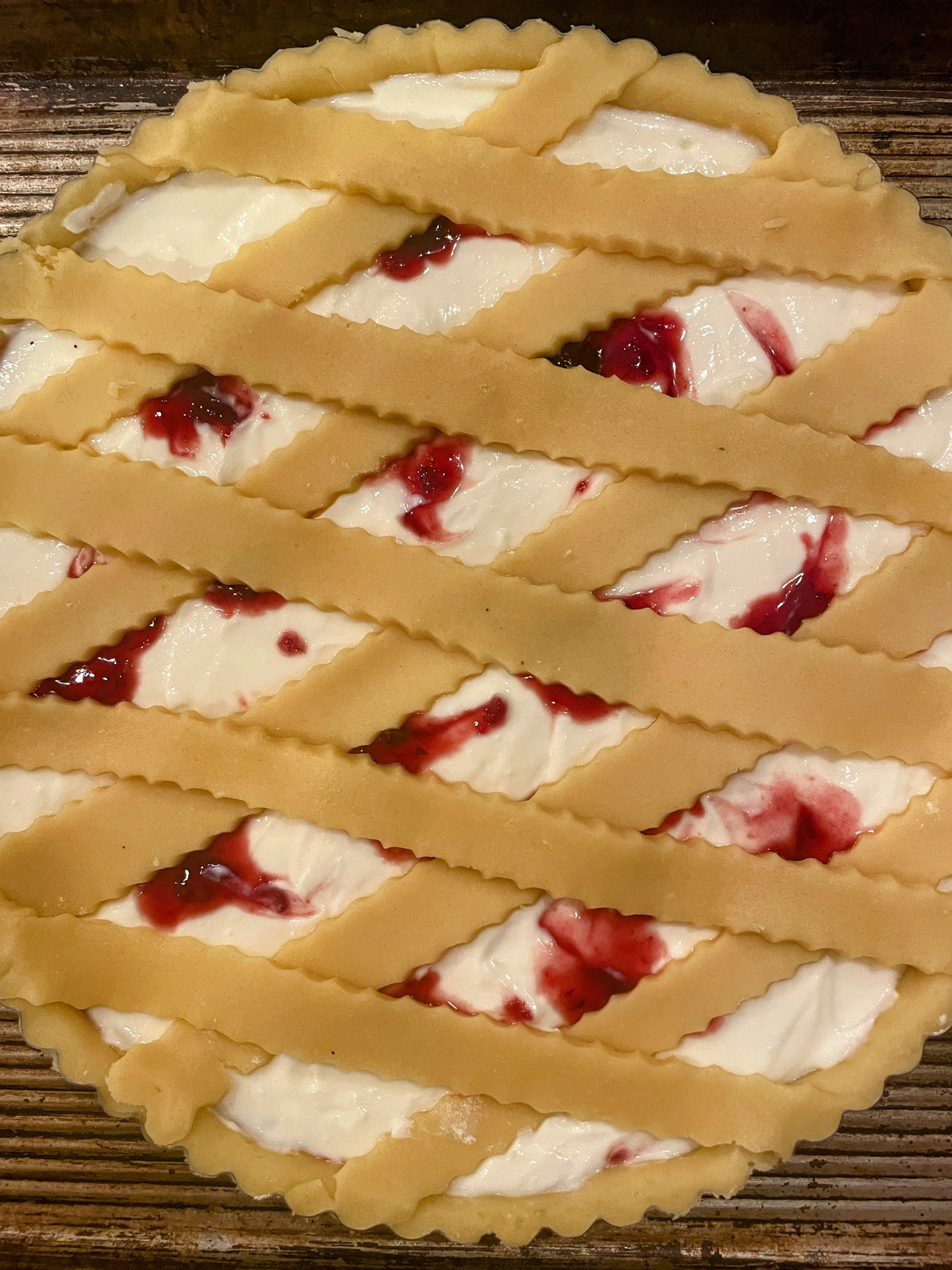
You can also let your creative side loose on the top crust; I made a very simple (unwoven) lattice with scalloped strips this time around.

Crostata Ricotta e Visciole
Recipe inspired by (and translated from) Antonio Romano Runchef
Note: This recipe is best made using a kitchen scale to weigh the ingredients.

Tart Dough:
225 gr. sugar (about 1 1/8 c.)
grated zest of one lemon
250 gr. butter (2 sticks + 1 tbsp)
120 gr. eggs (I used 3 yolks + 2 whole eggs, carefully adding the white of the last egg until I got to 120 gr.)
1 tsp. vanilla
pinch of salt
500 gr. flour (I used all-purpose; you can also use 00)

Filling:
450-500 gr. ricotta (16-oz. container); I try to find ricotta that is not super wet. Here in the U.S., I like Bel Gioioso Ricotta con Latte. I pour out any little liquid that may have collected in the container and dab the top with a paper towel to remove any extra moisture.
100 gr. sugar

250 gr. cherry preserves (about 3/4 c.)

Directions:
1. Place the sugar and lemon zest in a food processor and pulse until combined.
2. Cut the butter into cubes. (Note: An easy way to cut butter into cubes is to use a bench scraper; cut the sticks lengthwise into quarters, then chop into cubes. ) Add the butter cubes to the sugar in the food processor and continue to pulse until incorporated; the butter will look grainy. Add the eggs and vanilla and process until well combined.
3. Add the flour and sprinkle the pinch of salt over. Process just until a smooth dough forms.

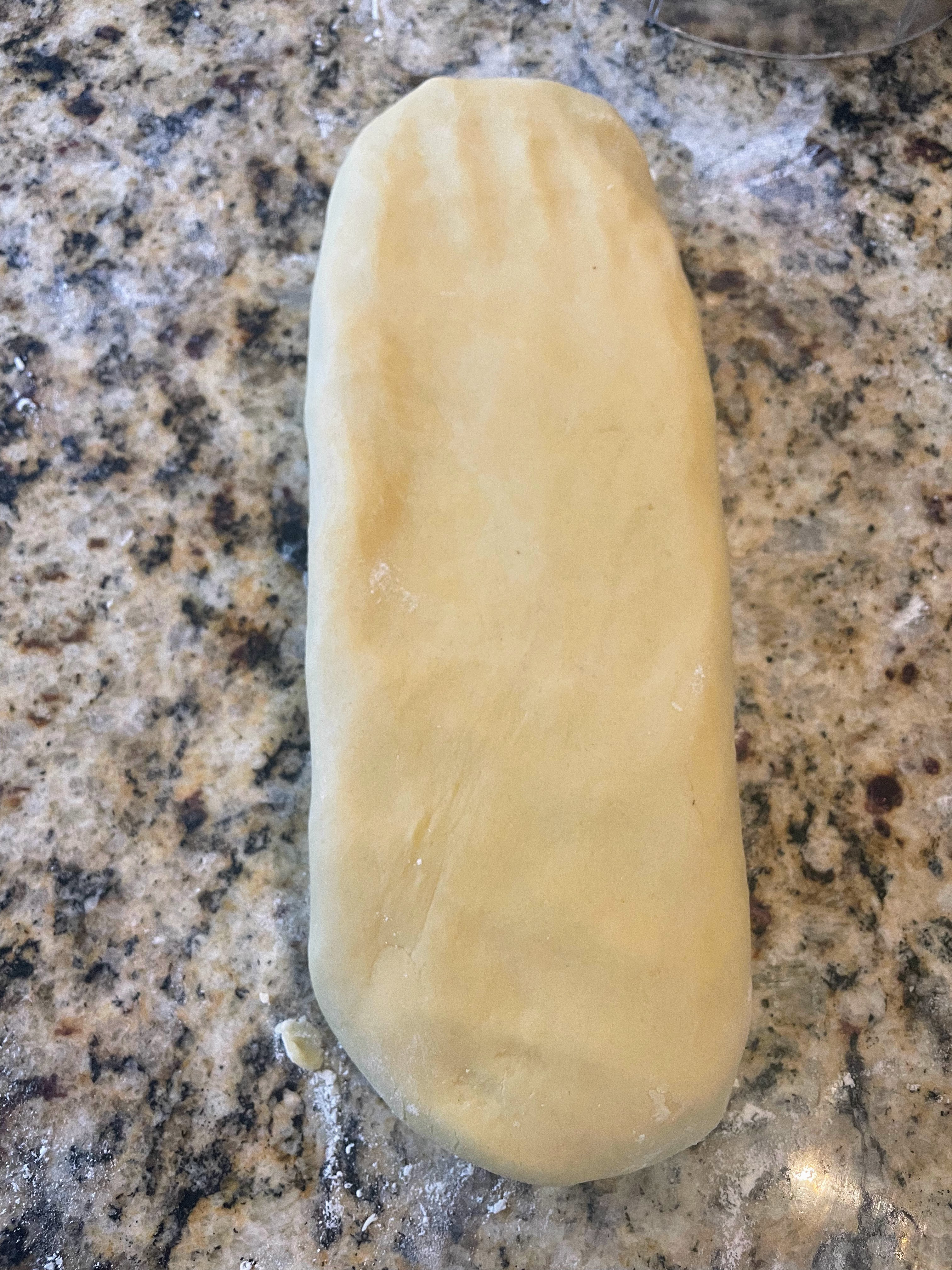
4. Turn the dough onto a floured countertop and roll into a thick log. Pat into a rectangle, wrap in plastic film (or put in a sealable bag) and refrigerate for 2 hours.
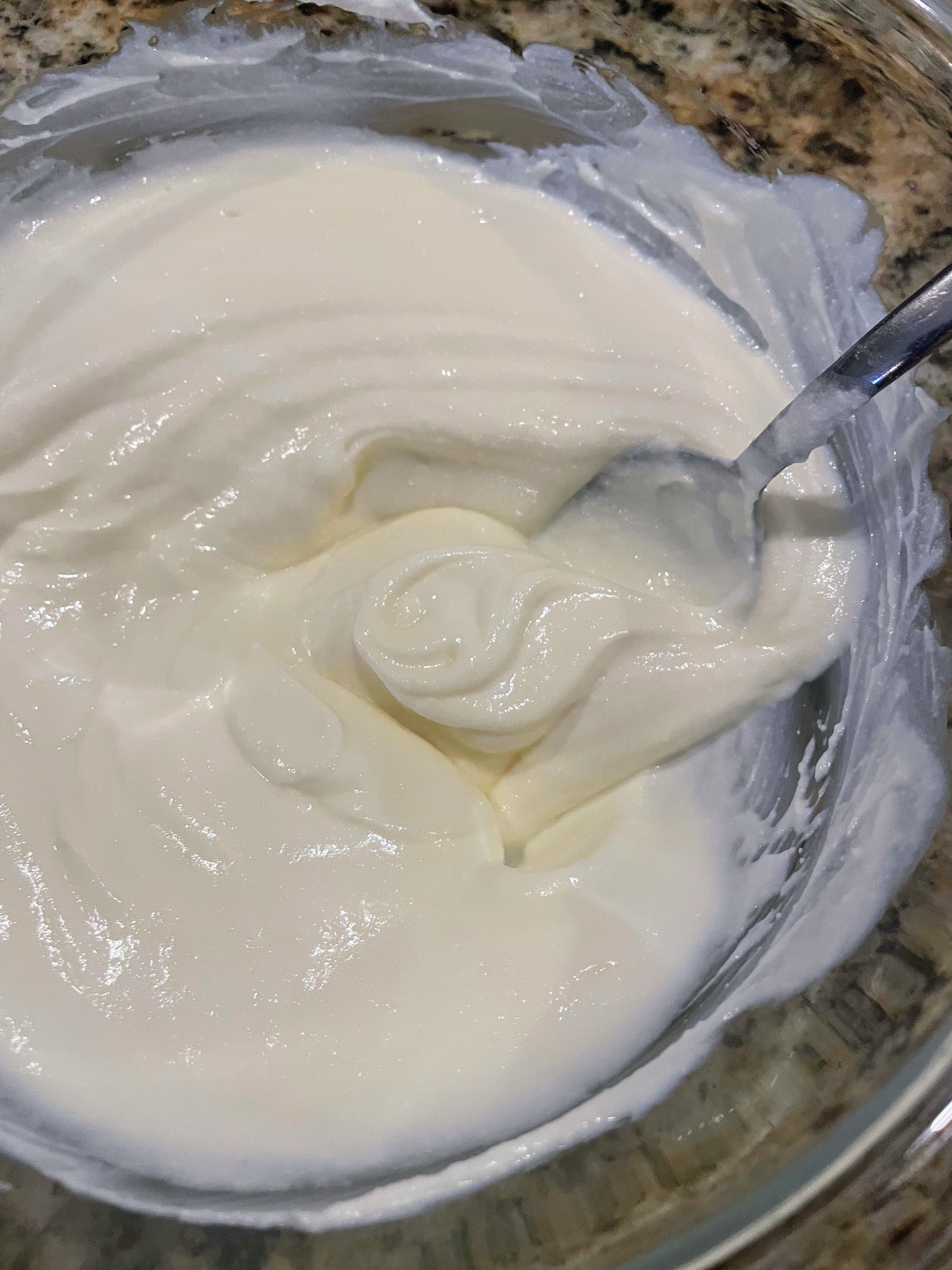
5. Meanwhile, butter a tart pan. Make the ricotta filling by mixing the ricotta and sugar together; let it sit, stirring occasionally, until the sugar is fully incorporated.

6. Cut the dough into a 2/3 piece and a 1/3 piece. Return the 1/3 piece to the refrigerator. Roll the 2/3 piece into a circle about 3 inches wider than your tart pan. Carefully drape the dough over the pan, lifting it gently to tuck it into the inner diameter of the pan. If any dough overlaps the edge, press on it to crimp it off. Save the extra dough.
7. Spoon 2/3 of the preserves ( 1/2 c.) over the base of the tart. Carefully add the ricotta mixture, smoothing the top as best as possible. Dollop the remaining preserves across the top of the ricotta mixture and gently swirl.

8. Roll the remaining 1/3 piece of dough into a rectangle at least as long as the diameter of your tart pan. Cut into 10 strips, and lay the strips in a diamond pattern across the top of the tart. (You can also re-use any extra dough you have leftover from lining the tart pan, to make the 10 strips.)

9. Bake the crostata at 170C/340F for about 35 minutes, or until the lattice is golden. Let cool and then serve.

Recipe: Nutella Hazelnut Palmiers

19 Apr

By family decree, certain elements of our Easter Brunch can never be altered: the Breakfast Pizzas; the Pesto-Roasted Tomatoes, Red Onion, and Garlic with Pine Nuts; and the Fruit Salad with Honey Lime Dressing. The ham comes and goes and the potatoes occasionally vary (Hashbrown Casserole has been a favorite for many years, but to the dismay of one of our sons, is being edged out this year by Country-Fried Potatoes with Bacon and Green Onions). Other dishes enter and exit as the urge strikes: this year, one of those “other” items will be Stuffed Mushrooms with Merguez Sausage and Spinach, which I realized I hadn’t made in a while.

The one area of Easter Brunch where more experimentation is allowed is the sweet section, which consists of 2-3 items chosen at whim. Today, I made these Nutella Hazelnut Palmiers while everyone was out hiking; I’ll need to hide them pretty soon, lest the returning teenagers and 20-somethings demolish them before tomorrow’s brunch. And before I “taste test” any more of them myself….

Palmiers

Nutella Hazelnut Palmiers
Makes about 30

1 (17.65 oz. ) pkg. puff pastry dough sheets, thawed
2 tbsp. raw sugar, divided in half
1 c. Nutella (chocolate hazelnut spread), divided in half*
1/2 c. chopped hazelnuts, divided in half

Preparation

1. Lightly flour a clean, 12 x 12-inch spot on your counter. Sprinkle the spot with 1 tbsp. raw sugar.
2. The puff pastry dough package should contain two sheets. Unfold one of the sheets and place it on top of the  flour/sugar. Gently roll out the dough to the left and to the right until it is about 15-inches long (don’t worry about the width); you mostly want to embed the sugar into the underside of the dough.
3. Spread 1/2 c. Nutella onto the puff pastry sheet; sprinkle 1/4 c. chopped hazelnuts over the top.
4. Starting at the top long end, roll the dough toward you until you get to the middle of the pastry sheet. Now roll from the bottom end up to the middle. Bring the two rolls together, and place the log of dough seam-side down on a baking sheet lined with parchment paper.
5. Repeat with the second puff pastry sheet. Sprinkle the counter with more flour and the remaining tbsp. of sugar, top with the second pastry sheet, and gently roll the dough out. Spread with the remaining Nutella and sprinkle the remaining hazelnuts on top; roll up as indicated in Step 4. Place the second log of dough on the baking sheet, too, and then put the baking sheet in the freezer for about 10 minutes to firm up the dough.
6. Preheat oven to 350 degrees.
7. Working with one  log of dough at a time, place on a cutting board and slice into 3/4-inch thick slices (or as close as you can get) with a serrated knife. Lay the palmiers flat side down on the parchment paper-lined baking sheet, with ample room between palmiers since they will expand.  You will need multiple baking sheets, or will need to bake in batches.
8. Bake for 30 minutes or so, until the palmiers are golden. (Keep an eye on them; baking time will depend on the thickness of the palmiers.)
9. Let them cool on the baking sheet for a couple of minutes, then remove to a rack to cool completely.
10. Enjoy!

* Can add up to 1/2 c. more Nutella ( 1/4 c. on each sheet) for sweeter but slightly messier palmiers.

Recipe: Chocolate Waffles

11 May

Because I’m leaving on a work trip tomorrow, I was treated to an early Mother’s Day breakfast of my choosing. But really, I didn’t have to think about it at all — I asked for the same thing I  always ask for: Chocolate Waffles. My 16-year-old daughter made them this year, and they looked absolutely gorgeous:


They tasted fantastic, too, with some whipped cream, maple syrup, and a sprinkle of cinnamon. A heavenly combination. And long after breakfast or brunch, you can grab a plain waffle and break off pieces to eat along with a nice cup of coffee or tea.

Chocolate Waffles
Makes 8-12 waffles
2 oz. unsweetened chocolate
1 1/2 c. flour
2 tsp. baking powder
1/4 tsp. salt
1/2 tsp. cinnamon
1/2 c. canola oil
1 c. sugar
2 eggs
1 tsp. vanilla
1/2 c. milk

Preparation

1. Melt chocolate, let cool.
2. Preheat waffle iron.
3. Sift dry ingredients together over medium bowl.
4. Mix oil and sugar together, then beat in eggs until well blended. Add vanilla and melted chocolate.
5. Add sifted ingredients to wet ingredients in three batches, alternating with milk.
6. Spray waffle iron with cooking spray. Pour batter onto iron and cook according to manufacturer’s directions. (Our waffle iron makes 4 waffles–we pour about 1 c. batter into the center of the iron, close, and wait for the waffle iron to beep.)
7. For these waffles, it’s important to spray the waffle iron each time you make a set of waffles.
8. Serve with whipped cream and maple syrup.

Adapted from Joy of Cooking.

Recipe: Scrambled Eggs with Spinach and Feta

22 Jan

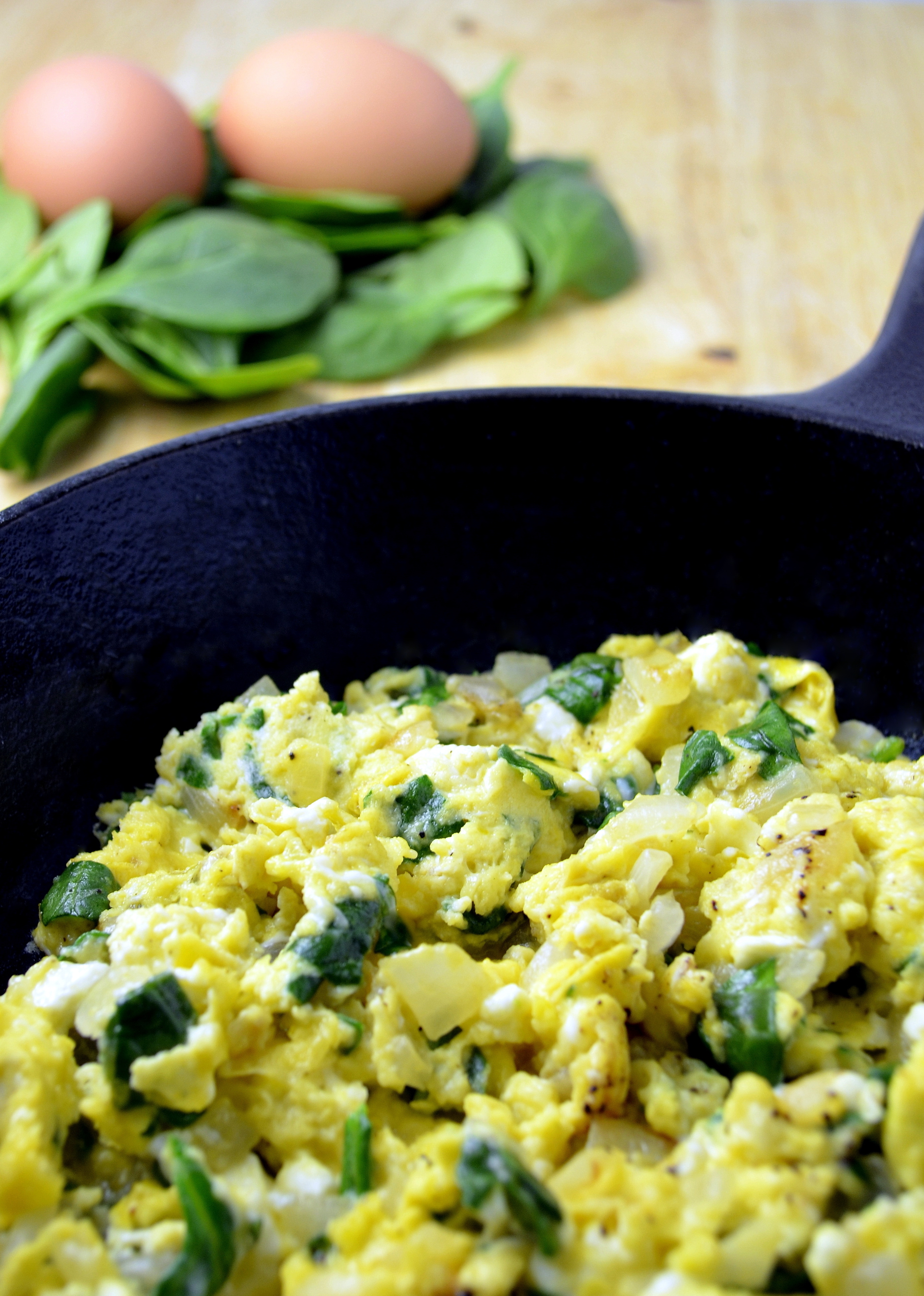
Eggs are a miracle food in many ways, but what I most appreciate about them is that they make for a quick, nutritious meal any time of the day. These scrambled eggs are great for breakfast, brunch,  lunch, and even as an after-school snack for ravenous teenagers. And if I am ever on my own for dinner, these scrambled eggs often make an appearance.

Scrambled Eggs with Spinach and Feta
Serves 2

4 eggs
pinch salt, freshly ground pepper
1 tbsp. olive oil
1/4 onion, diced
1/2 c. chopped fresh spinach
1/4 c. crumbled feta

Preparation
1. In a small bowl, whisk the eggs with a fork. Add a pinch of salt, and freshly ground pepper.
2. In a small skillet, heat the olive oil, add the onions, and cook over high heat until soft and beginning to turn golden at the edges.
3. Reduce heat to medium and layer the spinach on top of the onions. Pour in the eggs, top with the crumbled feta, and gently scramble until set.
4. Serve immediately.