Being Fed at Sora Margherita

28 Jan

On a recent blustery Saturday, after a long appetite-inducing walk (past our local 2,000-year-old Pyramid, up the Aventine Hill to look through the famous keyhole, down to the Circo Massimo for a required stop at the Mercato di Campagna Amica farmers’ market, past the church of Santa Maria in Cosmedin and the Boca della Verita, onward to the ancient Teatro di Marcello, and into the Jewish Quarter),  my husband, a friend, and I made a spur-of-the moment decision to see if Sora Margherita was open for lunch. It was, and miraculously, one last table was available. Though we went there to eat, I ended up being fed. And what a joy that was.

Sora Margherita is a tiny, no-nonsense place that is perennially packed. We settled in, careful not to knock elbows with our neighbors, and were eventually given water, a basket of bread, and then a single hand-written menu.

Sor Margherita, Ghetto  IMG_5137
We were deep into the difficult task of deciding which of the renowned house specialties to order when our busy waitress, Tiziana, finally came to a halt beside our table. “Well?” she asked. It can be perilous to send Italian waitstaff away, because they may not come back for a while. Tiziana was a woman on the move and we were starving, so I employed my favorite tactic–I asked her to advise us. Whereupon she took away the menu and said, “I will decide.” And so she did.

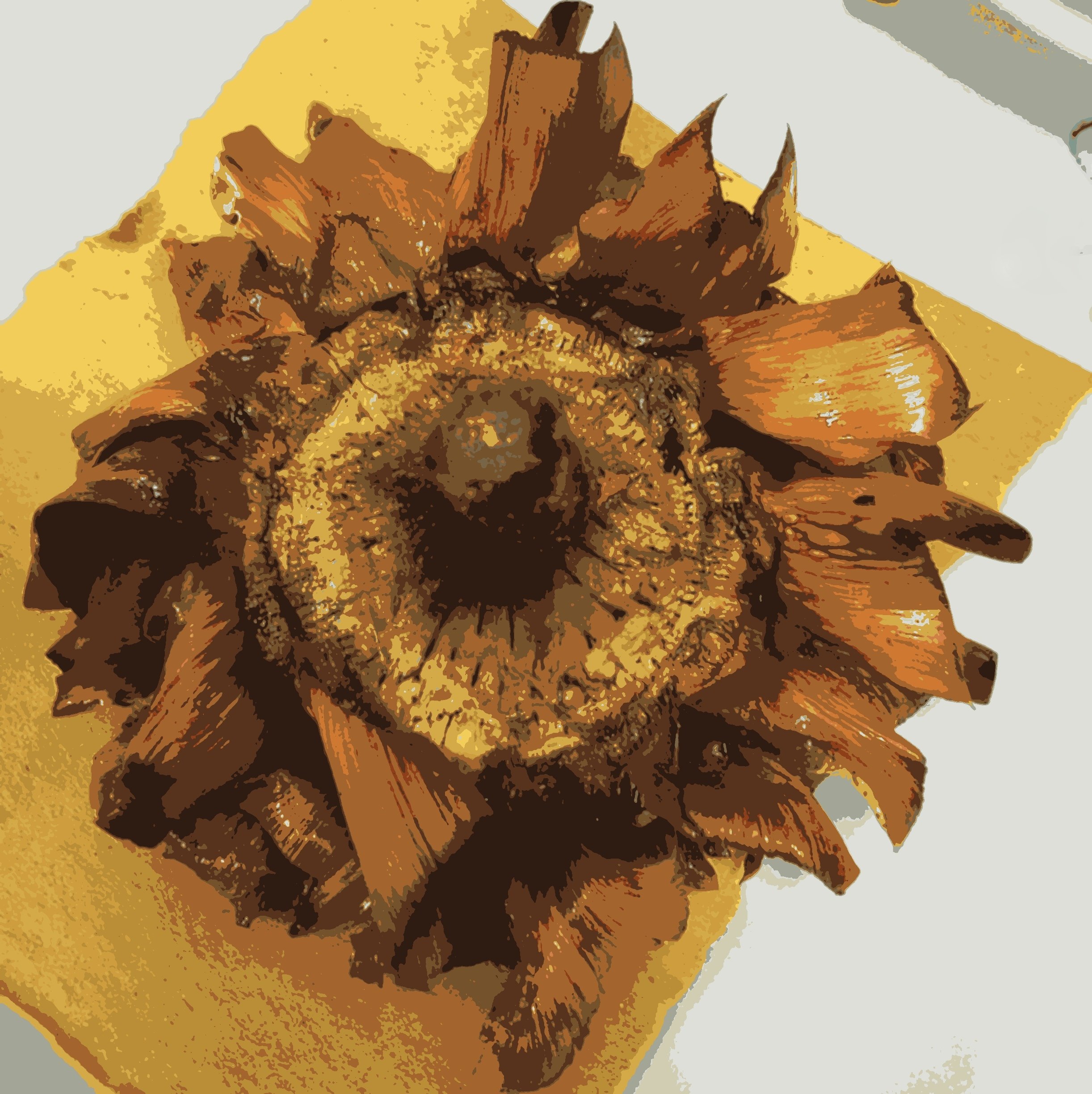
In short order, the dishes began to appear. First out, two traditional favorites: Carciofo alla Romana, a tender whole artichoke braised in white wine and olive oil (Roman style)—and Carciofo alla Giudia, a crispy, deep-fried version (Jewish style). Tiziana wrongly feared we might not know the proper technique for eating the crispy version, so she leaned over the table, pulled off an artichoke leaf, and held it to my mouth. I opened up and ate; I dared not refuse Tiziana anything.

The artichokes were followed by broccoletti ripassati—Romanesco broccoli that is blanched, then sautéed with olive oil, garlic, and chilies until it is meltingly soft. I could have eaten the entire plate. Then came puntarelle in salsa d’acciuche—a salad made with the shredded inner stalks of a member of the chicory family, seasoned with olive oil, garlic, lemon, and anchovies. It was a crisp, piquant counterpoint to the soft broccoletti.

Having temped our palates with these appetizers and side dishes, Tiziana then began to roll out the main courses: the famous, house-made fettucine al sugo di carne (with a braised meat sauce), salsicce e spuntature al sugo (fresh sausages cooked in the same meat sauce, accompanied by a spare rib), and baccala fritto (fried cod).

IMG_5146  IMG_5148
We shared all the delicious dishes family style, but even so we struggled to finish everything. On one of her perambulations past our table, Tiziana glanced at the sausage platter and saw the lone meaty rib, bereft of its former companions. That stopped her in her tracks. She reached over, lifted the rib from its resting place, and said “This is good—eat!”  Again, the rib was aimed in my direction. When faced with a saucy offering, what can one do? I took the rib and returned the clean bone to the platter a moment later. Only then was Tiziana satisfied. We had done our proper duty by Sora Margherita’s dishes.

Almost. There was dessert to be had, and we had torta di ricotta e cioccolato—a moist ricotta cake with chocolate. Because there is always room for dessert.

The warm glow from that lunch (and the resulting food coma) lasted a long time, thanks to Tiziana and the masters in the kitchen. We’ll be back. Because the pasta cacio, peppe, e ricotta (pasta with a Pecorino Romano-black pepper sauce and dollops of ricotta) is already calling my name.
IMG_5140-003
Sora Margherita
Piazza delle Cinque Scole 30
Phone: 066874216

Recipe: Coda alla Vaccinara (Oxtail Stew) with Rigatoni

2 Dec

One of the pleasures of being in a new place is tasting local dishes and then trying to figure out how to make them. In Italy, part of the fun lies in consulting butchers, greengrocers, cheese purveyors, wine merchants, and really, any Italian who eats, because they are all happy to offer advice. As soon as the days grew cooler, I knew what I wanted to make: Coda alla Vaccinara (Oxtail Stew) served over rigatoni–an old-style dish appearing on many Roman menus.

DSC_0063
In previous times, the slaughterhouse workers of Testaccio (the vacccinari) were given offal and oxtails to pad their slim salaries. Their wives rose to the challenge and created dishes that made the most of the available ingredients. In Coda alla Vaccinara, the oxtails are braised in a sauce made with pancetta, lots of celery, onions, carrots, tomatoes, wine, and spices, though the stew is open to interpretation; everyone I asked prepares the dish in a slightly different way. Some people make it with red wine instead of white, some add water, some forego the carrot, some add raisins. Large pieces of celery are de rigueur, but in a rebellious break from tradition (and knowing I wanted to turn the entire stew into a sauce), I finely diced all the celery and survived to tell the tale.

However, I did not escape looks of shock and dismay on the faces of two Italian friends when I mentioned I had added a pinch of cinnamon to the stew. “Cinnamon? CINNAMON? No. NO.” But I say “Yes.” In addition to cloves, cinnamon very frequently appears in recipes for Coda, which is meant to have a warm-scented, delicately sweet undertone. So here is the resulting recipe, a hearty interpretation perfect for autumn and winter. And following on the advice of Alessandro Volpetti (and I’m happy to take the word of anyone at Volpetti’s), I topped the Coda with grated Ricotta Salata cheese, one of my favorites. But omit the cinnamon if you prefer, top with Parmesan or Pecorino Romano instead–this dish is yours to interpret.

DSC_0020

Rigatoni with Oxtail Sauce (con Coda alla Vaccinara)

1-2 tbsp. olive oil
2.2 lb. (1 kg.) oxtails
salt and pepper
4 oz. (about 112 grams) pancetta, cubed
1 large onion, finely chopped
1 large carrot, finely diced (or coarsely grated)
5 stalks celery, finely diced
5 cloves garlic, minced
1 bay leaf
1/8 -1/4 tsp. chili flakes
4 whole cloves (or 1/8 tsp. ground)
¼ tsp. ground cinnamon
1.5 tbsp. tomato paste
1.5 c. white wine
1 large (28 oz./800 grams) can peeled Italian tomatoes
fresh parsley and marjoram (or oregano)
tiny pinch sugar

1 lb. (500 grams) rigatoni
Ricotta salata cheese, grated

Preparation
1. Lightly season the oxtail pieces with salt and pepper. Heat the olive oil in a large Dutch oven, then brown the oxtail pieces, turning them on all sides. Remove from the pot and place in a bowl.
2. Add the pancetta to the pot and cook until mostly crispy and the fat has rendered; do not drain the fat. Add the onion, carrot, and celery and cook until soft, deglazing the pot as you go. Sprinkle the onion mixture with more black pepper, add the garlic and bay leaf, and cook for a couple of minutes. Add the chili flakes, cloves, and cinnamon and cook for a minute or two while stirring. Add the tomato paste and the wine. Simmer gently for about 5 minutes to reduce the liquid slightly.
3. With clean hands, take a peeled tomato from the can and crush it into the stew; repeat with all the tomatoes. This is a very satisfying technique—but moderation is key; if you are too enthusiastic, you may end up shooting tomato bits across the kitchen. If you prefer a slightly less visceral experience, you can cut the tomatoes while in the can, or remove them and dice, adding all the tomatoes and all the tomato sauce/juice from the can to the pot.
4. Mix in the pinch of sugar, nestle the oxtail pieces into the vegetable mixture, pour in any liquid from the bowl they were in, sprinkle with more black pepper, and then scatter some of the herbs on top.

DSC_0048
5. Cover the pot and simmer on low heat for about 3 hours, or until the meat is very tender when pierced with a fork (it may take longer depending on the oxtails). Remove the oxtails, place on a dish, let cool, then pull off as much meat from the bones as possible (this will require some patience). Return the shredded meat to the sauce; keep warm.
6. Cook the rigatoni according to package instructions until al dente, drain, return to its pot, and then mix in the Coda sauce. Scatter more fresh herbs on top and serve with the grated cheese.

DSC_0060

Truffles and Chestnuts: Two Festivals in One Day in Umbria

13 Nov

Last weekend, we took our first road trip. Destination: Umbria–specifically the Truffle Festival (Sagra del Tartufo) in Fabro. This medieval town is just under two hours away from Rome (slightly less if you can make it out of Rome without getting lost…). And its woods (below) are full of truffles.


The Festival is in the higher, older part of town and consists of about 50 stalls, many selling truffles, truffle sauces, truffled cheeses, truffled sausages, and almost anything else that can be truffled. Unfortunately, we were a day late to see (and taste) what was billed as the world’s biggest truffle omelette. But we did sample our way up and down the stalls; being equal-opportunity eaters, we devoted attention to non-truffled items, too:


I did a double take when I saw the sign below, thinking mule salame was on offer along with the wild boar and venison versions. But no–it was just salame shaped like mule testicles….

  
After visiting the festival, we stopped at a nearby restaurant for lunch (because really, the festival was just a long snack…), where we ordered truffled pasta to share and I had pheasant with a sauce made from truffles, pate, and cognac. That may sound expensive, but it wasn’t; during truffle season in Italy you can get all sort of truffle-related dishes for very reasonable prices. Of course, if you are hoping to buy a whole, hefty, wrinkled, earthy, deeply aromatic truffle–that’s an entirely different proposition. But we weren’t. I was happy with the few tastes I had. A blasphemous statement, I know–but I find that a very little truffle goes a very long way.  Now, porcini mushrooms, on the other hand….

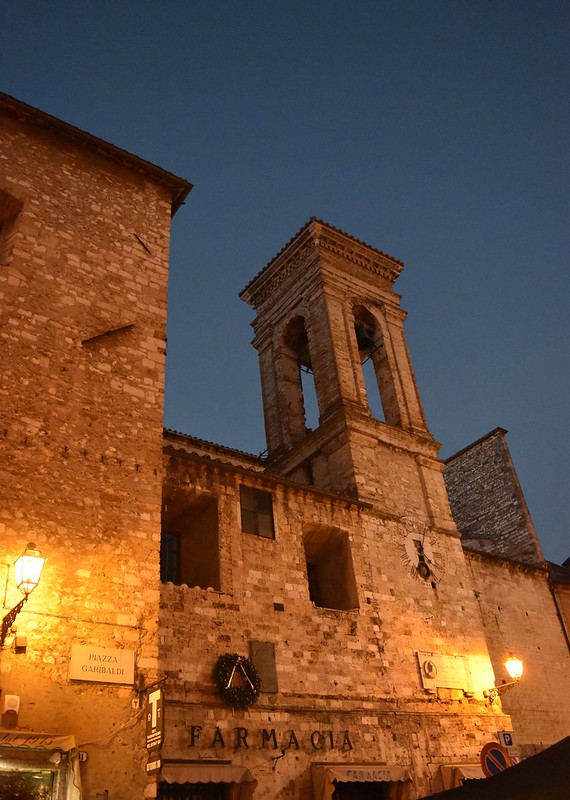
After our very late lunch, we could have gone back to Rome, but we decided to (literally and figuratively) squeeze in one more festival–the Chestnut Festival (Sagra della Castagna) in Narni. The Festival itself was very small, with not much on offer. But Narni was striking at twilight and night, and we did happen upon chestnuts roasting over an open fire:


Ode on an Italian Panino: Allesso di Scottona

24 Oct

Taking a page from Keats, who is buried in the cemetery near our apartment, this post is dedicated to a single beautiful object: not a Grecian urn, but an Italian sandwich.

The object of my affection can be found at the Testaccio Market, a wondrous place away from the usual madding crowds of Rome, a veritable feast for the senses and the stomach. Fantastic produce? Check. Meat, poultry, fish, cheese, nuts? Check. Honey, preserves, pastries, gelato, and all other delicious sweet things? Check. Coffee and wine? Check. Plus housewares, vintage clothes, flowers, and more, including the panini at Mordi e Vai (which means “Bite and Go,” or slightly less literally, “Grab and Go”).

You cannot miss the stall; the heady aromas wafting around it will help guide the way to this bastion of Roman street food. Proprietor Sergio Esposito, a proud native son, wanted to offer his customers serious Roman panini–panini with fillings born from Testaccio’s history as the city’s meat-packing district. And more, he wanted to engender an appreciation for this authentic fare. He succeeded, judging by the devout following Mordi e Vai has cultivated.

As it was my first time there, I asked Signor Esposito’s son for his recommendation. He said the most popular panino (panini is plural) is the one made with Allesso di Scottona and chicory:

Panino
Allesso
 comes from cotto a lesso, which means “boiled,” though “simmered” might be more accurate; the preparation is similar to a French pot-au-feu. A scottona is a heifer, a female bovine that has not yet had a calf and is no more than 15 or so months old. (A “cow” has had at least one calf.) Scottona meat is marbled with small flecks of fat and is very, very tender. As the meat simmers, the fat melts and gives additional flavor to the meat.

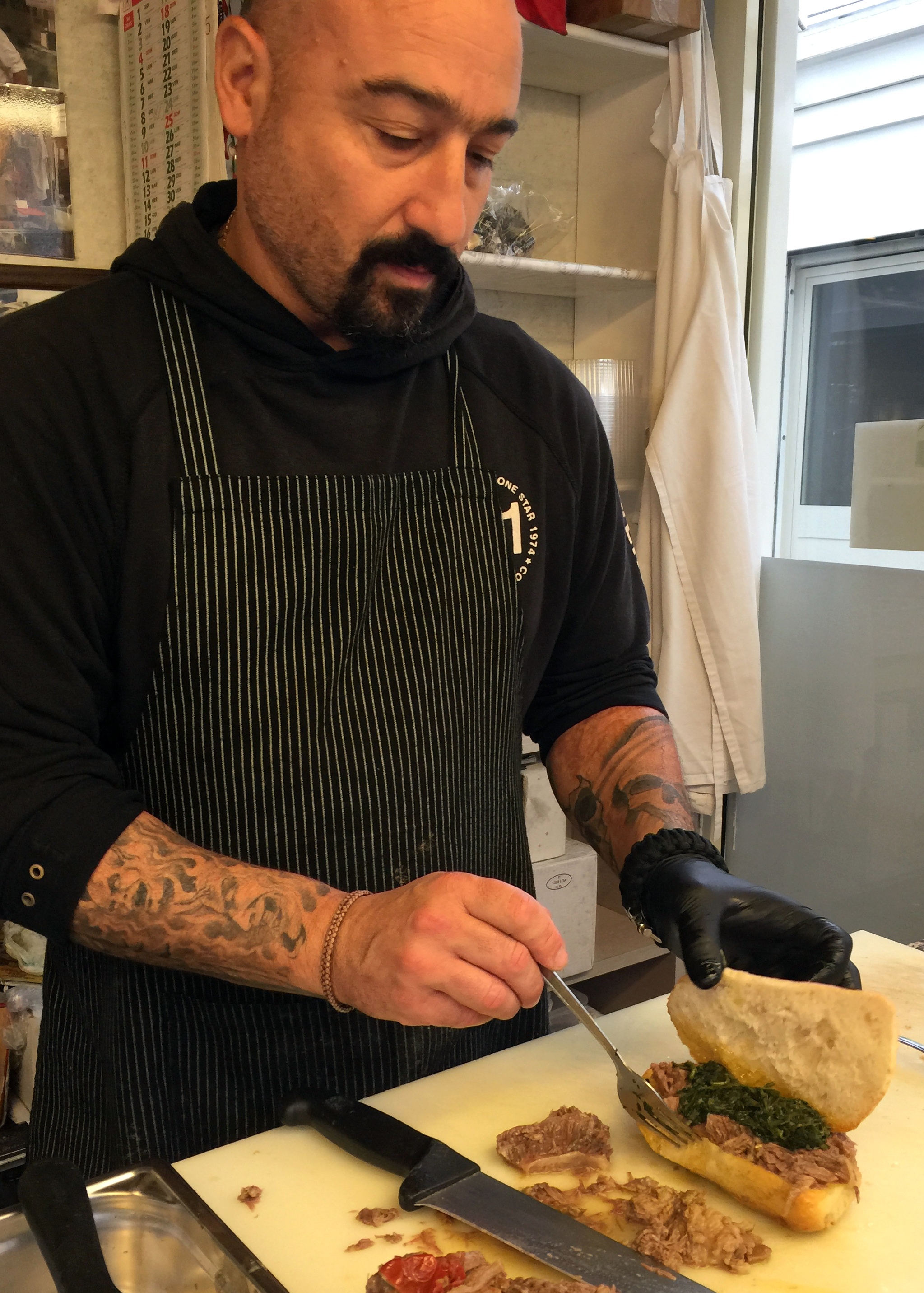
To prepare the panino, Signor Esposito’s son took a piece of the fork-tender meat from the simmering liquid and placed it on a cutting board, where he carefully (I would say almost lovingly) cut it into smaller pieces. He sliced a crusty ciabatta roll in half, dipped an open side into the simmering liquid, and then gently placed the meat on top. He followed it with some braised chicory–a somewhat bitter leafy green that is related to dandelions, endive, escarole, and radicchio. Finally, he added the other half of the bread, pressed the sandwich lightly together, wrapped it in a translucent wrapper, and handed it over. Cost: 3.5 euro.

PaninoMaker
What a triumph. The crusty bread balanced the tender savoriness of the meat while the chicory countered its richness. It was the perfect panino for a fall lunch, and the perfect introduction to Mordi e Vai’s offerings, which include panini with fillings ranging from meatballs and sausage to tripe and bits of liver, lung, and heart–as well as other fare.

If you get there early, you may be doubly lucky: you may not have to wait long for your panino and you may be able to find a table in the central courtyard of the market, where you can give this delectable Roman sandwich all the attention it deserves.

Sign
Mordi e Vai

Box 15
Testaccio Market
Open 8am-2:30pm.

My Roman Kitchen, and More

15 Oct

I have discovered I will need to imbue my cooking in Rome with a hefty dose of gratitude. When I first saw our kitchen, with its cream cabinets, red shelves and drawers, built-in refrigerator, stove with the perfect size burner for a small espresso maker (it would not be an Italian stove without one, after all) and even a dishwasher, I liked it immediately. It was light-filled, modern, and had the essentials. Plus the colors reminded me of the kitchen I just left. I did make note of the tiny oven and the lack of counter space, but I knew I could find solutions for both those things.

What I did not know was how lucky we were to have any kitchen at all. Turns out that in the world of Roman apartment rentals, “unfurnished” very often means “apartment comes with absolutely nothing but walls and doors–no appliances, no cabinets, no closets–nothing.” Friends of ours who also recently moved here saw an apartment they liked, but the kitchen belongs to the previous renters, who are willing to sell it to them for a hefty price. Otherwise, the appliances and cabinets will be removed. I didn’t ask about the kitchen sink; I’m sure it will go, too.

In the United States, kitchens usually come fully stocked, so to speak. Not in Rome. Upon seeing the kitchen in our new apartment, two different Italian friends asked 1) if we had brought it with us from the United States (ie, dismantled and reassembled from our old house), or 2) how we had managed to buy the appliances and cabinets here–and have them installed–in such a short time. They were quite surprised to discover everything came with the apartment. So whatever differences there may be between this kitchen and our previous one in the United States (and I will list some below)–I am, above all, very happy to have any kitchen at all.

Kitchen

Drying Cabinet
All of the Roman kitchens in which we have lived (four to date) have had drying cabinets, which I love. They are cabinets with internal racks, set over the sinks, and are immensely useful for a quick washing up (especially when there are just a few dishes), for items that can’t go in a dishwasher, and also for storage:

DSC_0003-001  DSC_0011-001

Aforementioned Oven
I was delusional to think I could fit half-sheet baking pans into a typical Roman oven, but I brought them anyway as they were the only ones I had. Though I knew I probably could not use them, it was still disappointing to have it confirmed: the baking sheets hit the edges of the oven, which is roughly 17.5 inches (44.5 cm) wide on the inside. But then inspiration struck and I discovered if I took out the racks, I could slide the sheets right into the grooves. It’s a tight, slightly warped fit, but it fits. I haven’t actually baked anything this way yet, but for the sake of research, will soon experiment with some cookies.

DSC_0019  DSC_0022

Garbage Disposal (or lack thereof)
Ok, I admit I do miss having a garbage disposal just a tiny bit, as I’m not super fond of fishing food out of the sink traps. But of all the things to miss, this really doesn’t rank very highly (unlike, say, Zip-Loc bags). And as I fish things out of the traps, I find myself admiring the rapidity with which calcium makes its presence known here–on the base of the faucet, even in drops of water as they dry in the sink. That is why we use bottled water in the espresso maker and tea kettle, and why I occasionally throw an anti-calcium tablet into the washing machine.

DSC_0011

Washing and Drying Clothes…
I realize this post was meant to be about kitchens, and that kitchens and washing machines don’t always go together (except that I’ve seen and lived in apartments with washing machines in kitchens). But I wanted to mention our washing machine, which is unfortunately located in a closet that is right behind a door in a small room–it’s not possible to open the door to the closet without closing the door to the room, meaning there’s a lot of banging of doors on laundry days.

First, of course, I’m grateful the washing machine came with the apartment. Second, it’s not so much the washing machine that is different (thought it is smaller), but rather, it’s the fact that there is no dryer. While hanging clothes to dry is quite common here and in many, many other parts of the world, it is less common in the United States. But I have always liked it. I don’t experience many Zen moments when it comes to housework, but hanging fresh-smelling, damp clothes to dry is one of the few tasks I actually enjoy–despite not having a yard, terrace, or balcony, and only being able to use a small clothes rack. Part of it is sensory, but part is intellectual (yes, my family thinks I have gone off the deep end): deciding how to arrange the clothes in such a way to optimize the available space while ensuring maximum airflow and minimal wrinkliness….

Perhaps part is also the novelty. This process of working out a new modus vivendi in the house and in Rome is something I quite enjoy. I know the pleasure I currently take in even the smallest of tasks may turn into something else later, but I will appreciate this time while it lasts.

DSC_0002-001  DSC_0004-001m

Botanical Garden of Rome (Orto Botanico)

29 Sep

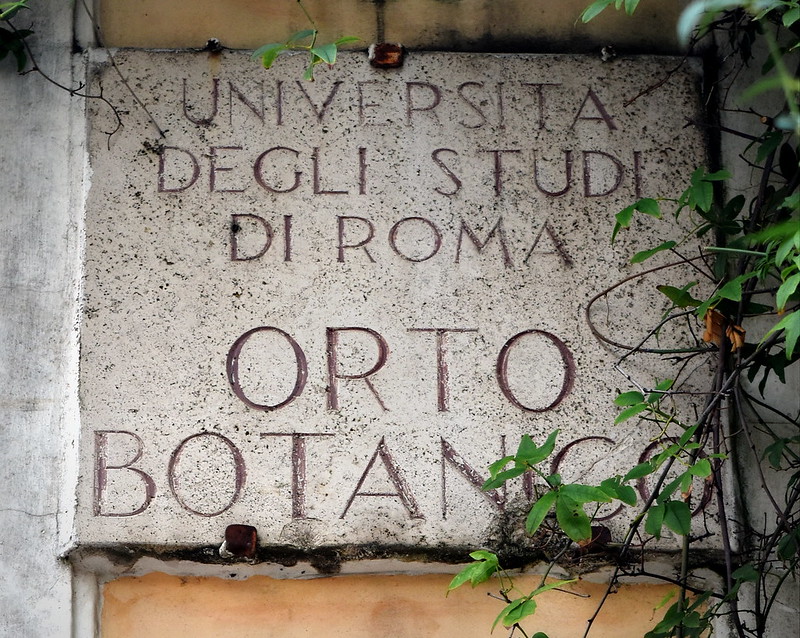
Sometimes, after a week spent dealing with the logistical and bureaucratic aspects of moving to a new country (opening a bank account in Italy and accessing online banking are not for the faint-hearted, for example), all you want is a tiny bit of peace. That can be hard to find anywhere near the usual sights of Rome. But there are two spots where it is possible if you get to each when they open: the walled-in ‘Non-Catholic” Cemetery in Testaccio (burial place of Keats, Shelley, and other luminaries), which I will write about later, and the Botanical Garden of Rome in Trastevere, which is featured in this post. Despite having lived in Rome before, we had never been to this lovely spot; beyond the horticultural appeal, it would have been a fantastic, open place to take our (then young) children and let them run around. That is why you should get there right when it opens, especially on weekends–Roman families start arriving later in the morning.

 
Entrance sign; View of fountain

 
Hybrid Tea Rose ‘Altesse;’ White Gossypium (cotton) flower

 
White water lily and its reflection; Ferocactus pilosus (cactus)

 
View from Medicinal Garden; Tropical Greenhouse

 
Giant Water Lily pad; a young pad unfurling

–More photos from the Botanical Garden of Rome here.

The Bare Necessities of Life: Stovetop Espresso

13 Sep

Upon moving to Rome two weeks ago, we were immediately faced with several daunting tasks: figuring out the Roman bus system, getting an Italian phone, finding a place to live, starting Italian lessons, etc. So what did we do on our very first weekend here? We addressed the most pressing matter of all: getting a stovetop espresso maker and the coffee to go with it. We hopped on a bus, missed our stop, ended up on a freeway, dashed across various underpasses, found another bus going back and finally made it to the mall (where, yes, we also found a new cell phone and sampled some gelato–it was a multi-purpose shopping trip). But we accomplished our main objective: purchasing a 1-cup Bialetti Moka Express for me (yield: 2 oz; it’s actually 1 shot) and a 3-cup/shot version for my husband (yield: 6.5 oz.), and some Illy coffee.

  DSC_0016
We returned home, rinsed the Bialettis, let them dry, made a maiden batch of espresso in each (which we then threw out since the first brew is meant only to season the pot, not to drink–you are actually supposed to make 2-3 such brews, but we were too impatient). Finally, we were ready to make espresso we could actually drink, by: 1) filling the bottom of the Bialetti with water* to a point just under the valve, placing the funnel inside, gently filling the receptacle with coffee grounds (without tamping down), screwing the receptacle/top on, and bringing the water in the espresso maker to a boil on the stovetop.

  DSC_0013-001
The boiling water gets pulled up through the coffee grounds and into the receptacle, and is accompanied by a wondrous gurgling sound. When that ceases, the espresso is ready; you can open the lid to check if you are not sure. Below, some freshly made espresso in the Moka Express, and the resulting cup of espresso with a dash of cream (that one was my husband’s–I usually make a home-made latte with a single shot of espresso and a lot of milk). Mmm mmm good.

DSC_0017-001 
*If you have “hard” (ie mineral-rich) water, you may want to use filtered or bottled water instead, or the minerals will build up inside the espresso maker.

This Road Leads to Rome

26 Aug

In four days, this blog and its author are moving to Rome. The logistics involved in making the move happen–selling the house, months of packing, driving Schnauzer 1 and Schnauzer 2 to their wonderful new home in Nebraska, shipping our belongings, leaving our jobs, and saying our farewells on two coasts–have left little time for blog posts of late.

However, I’ll make amends after we arrive in Rome: lots to see, do, taste, and write about there! I’ll focus on the same eclectic mix of topics: food/cooking; plants/gardening (most likely container gardening), and travel-related snippets—albeit with a more Italian/European flavor. And there will undoubtedly be some commentary on the trials and tribulations of living in the Eternal City.

I hope you’ll make the move with me.  A presto!

Recipe: Salade Nicoise with Salmon

1 Jul

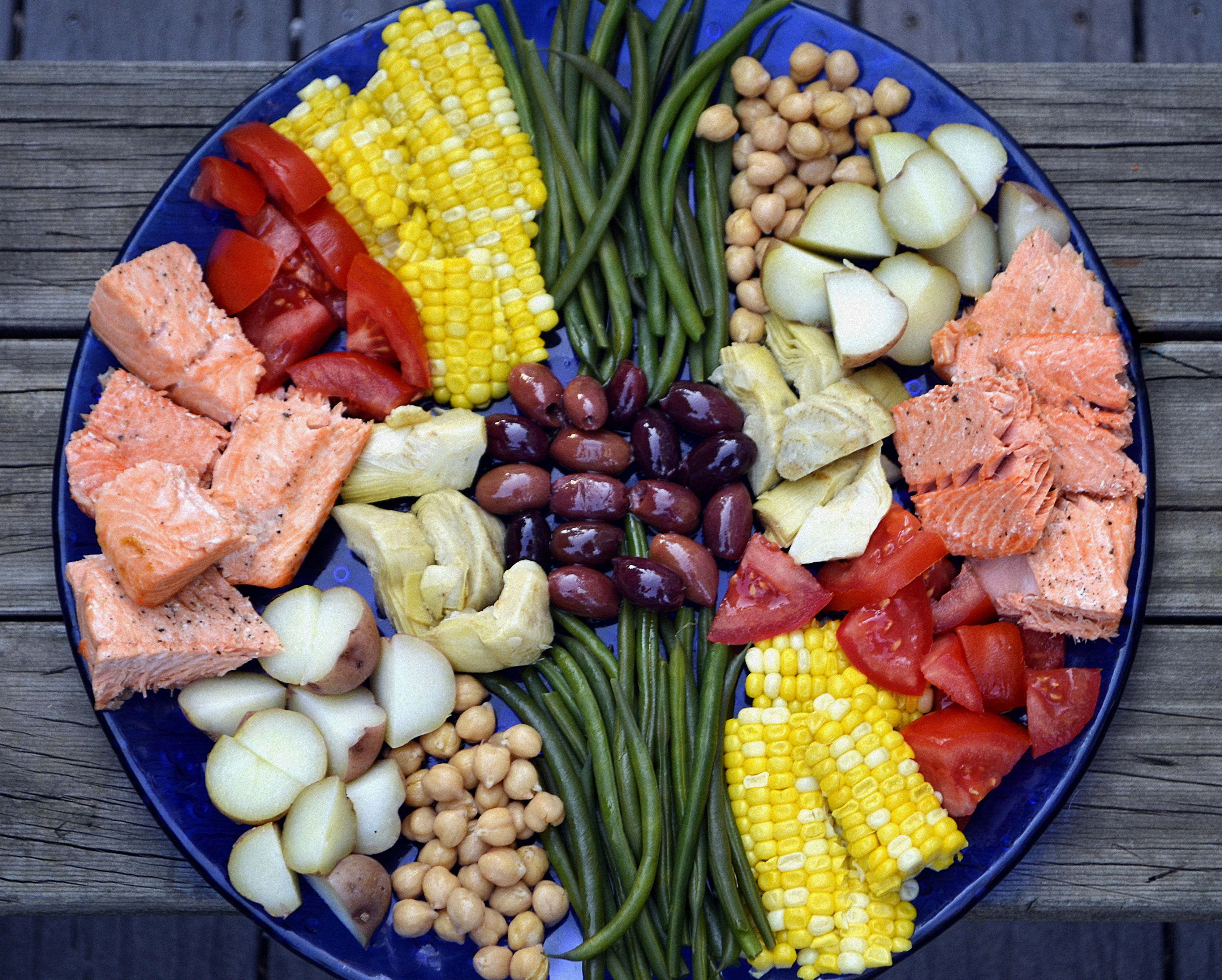
Sometimes, you just get tired of lettuce and yearn for something a bit “more.” The deconstructed Salade Nicoise meets that need. It is one of my favorite salads for that reason, and because all parts of it can be prepared in advance. Plus, salad makers with an artistic flair can have a lot of fun deciding how to present the ingredients to maximum effect. To earn the name “nicoise,” a dish must contain a few specific items: olives, garlic, French green beans, tomatoes, and anchovies (or tuna in oil). Artichokes and hard-boiled eggs are also characteristic of a salade nicoise, but just as I was assembling this one in front of a hungry audience I realized I had forgotten to boil the eggs…. So, no eggs this time around. However, the beauty of this salad is that you can improvise and make it with whatever you have on hand. I had a craving for broiled salmon, so substituted that for the tuna, and added corn off the cob and chick peas, just because. Three hungry people polished off this platter–but with some crusty bread on the side, it could feed four less ravenous eaters. The recipe below is a free-form one–the quantities of all the ingredients (and the ingredients themselves) can be adjusted as desired.

Salade Nicoise 2
Salade Nicoise with Salmon

1 filet of salmon, about 1 lb.
olive oil
salt and pepper
fresh lemon juice

2-3 ears of corn, husked, with silky threads removed
a couple handfuls of thin, French-style green beans, rinsed
6-8 small red potatoes, rinsed and scrubbed but not peeled, and cut into quarters
3 eggs (which I forgot)

1-2 ripe tomatoes, diced
nice black olives, about 1/3 c. (I had Kalamata on hand, but Nicoise or other French olives would be more traditional)
cooked chickpeas, about 1/2 c.
8-10 canned/tinned artichoke hearts

your favorite garlicky vinaigrette

Preparation

1. Set oven to broil. Pat the salmon dry and place on a rimmed cookie sheet sprayed with cooking spray. Rub the salmon with olive oil, sprinkle with salt and pepper, drizzle lightly with lemon juice, and broil a couple minutes on each side, or until cooked through. Remove from oven and let cool, then cut into chunks.
2. Meanwhile, bring a large pot of water to a boil. Drop the corn cobs and green beans into the pot, and cook 5-8 minutes or just until tender. Using a slotted spoon, remove the vegetables from the pot and place them in a colander set on a dinner plate. Take the colander to the sink, rinse the vegetables in cold water, and set them aside. Keep the water in the pot boiling.
3. Drop the quartered red potatoes into the boiling water and cook until tender; remove them from the pot with a slotted spoon and set aside to cool. Finally, gently lower the eggs into the boiling water, turn off the heat, cover the pan, and let the eggs cook for 10-12 minutes. Remove the eggs and place them in cold water to cool, then peel and quarter them.
4. Take a cooked corn cob and stand it on its end on a stable cutting board. Carefully cut the corn off the cob in vertical strips with a sharp knife. If the green beans remain wet, pat them dry.
5. Assemble the salade nicoise by placing all the ingredients (including the tomatoes, olives, chickpeas, and artichokes) in an alternating pattern on a large platter. Drizzle lightly with the vinaigrette, and serve with additional vinaigrette on the side.

Postcard from China: A Local Food Market

25 May

There are many things I like to do and see when I travel. Museums and art galleries and historical sights and picturesque landscapes rank right up there, but some of the most memorable pleasures are gastronomic. I like tasting my way through a new place–and the corollary to that is that I also like visiting food markets (and even grocery stores) to see foods whose names I may only have read about. And any chance to marvel at food artisans in action is a good one. I recently was in Beijing for meetings, and had the very nice and unexpected opportunity the following weekend to stop by a food market near Xiangheyuan Road with some of our close friends. Oh, the sights to behold! The food, the vendors, and of course, the noodle maker….

Market scene; Dried spices/teas
  
Choice cuts

Chinese yams

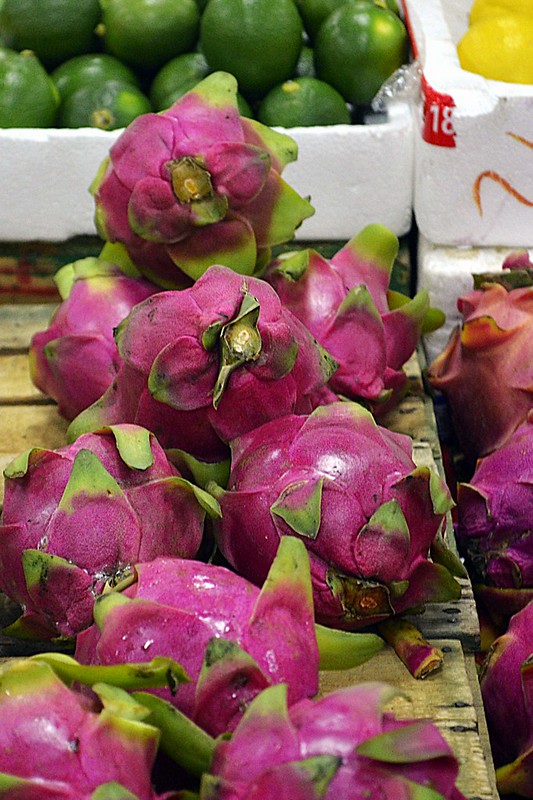
Garlic shoots; Dragon Fruit
  

Assortment of bean curd products

Prepared food vendor; Egg vendor
  

… And the noodle maker in action.