Tag Archives: Recipes

The Unusual Jaboticaba Fruit Tree

20 Apr

Ok, if you live in any of the tree’s native habitat areas in South America, the Jaboticaba and its fruit may not be so unusual to you. But for the rest of us, the tree is a sight to behold:

Jaboticaba; photo taken at the Missouri Botanical Garden in St. Louis.

The Jaboticaba (Plinia cauliflora, aka Jaboticabeira, aka Brazilian Grape Tree) is a showstopper because it exhibits an unusual botanical trait, ie, its fragrant white flowers and sweet/tangy fruits grow directly on the trunk of the tree, rather than from new growth or shoots. In botanical terms, this is called cauliflory; hence the “cauliflora” part of the Jaboticaba’s Latin name. (“Plinia” refers to a genus of flowering plants in the myrtle family, Myrtaceae, to which the Jaboticaba belongs.) Other cauliflory plants include Durian, Cacao, Jackfruit, Papaya, and the lesser-known Cannonball Tree — which, though they all share this same botanical trait of cauliflory, are not actually related to the Jaboticaba.

Cauliflory is most common in tropical areas; in the United States, the Jaboticaba can be grown in Zones 9-11. Botanists believe cauliflory evolved for a couple reasons: 1) accessibility: insects and fruit-eating animals that can’t easily get to the highest parts of trees can access the flowers and fruits on the lower parts of the trunk of a cauliflory plant, thus helping ensure the tree’s reproduction via cross-pollination and seed dispersal. Another reason for cauliflory may be due to 2) structural support: the trunks and main stems can more easily bear the weight of heavy fruits like Durians, Jackfruits, and Papayas.

Though Jaboticabas are very slow growing, once they reach maturity, they can produce up to 100 pounds of berries, which look like very large grapes and come in different varieties and colors (purply-black, red, and white). The skins are a bit thick and tannic; some people eat the berries skin and all for a nice “pop,” while others squeeze the juicy pulp into their mouths and discard the skin. The pulp is translucent and jelly-like, with a few seeds. It looks a little like the inside of a lychee or blueberry. Depending on the “jabo” variety, the berries are said to taste like Muscadine grapes, blueberries, and/or lychees — or a combo of all those flavors — with slight acidic undertones. Jaboticaba berries are also quite nutritious; they contain lots of Vitamin C and other antioxidants, as well as amino acids and nutrients such as calcium, phosphorus, and iron.

In addition to being eaten fresh, the Jaboticaba fruits can be made into juice, syrup, jam, and other usually sweet concoctions. The important thing is to use the fruit quickly after picking it, as it has a very short shelf life (which explains why those of us who cannot grow this tree also cannot find the fruit in our local supermarkets).

Recipes:
Jaboticaba Juice (video)
Jaboticaba Syrup
Jaboticaba Liqueur
Jaboticaba Jam w/Pectin
Jaboticaba Jam w/o Pectin
Jaboticaba Sorbet
Jaboticaba Cheesecake
Jaboticaba Sparkling Wine

Recipe: Crostata Ricotta e Visciole (Sweet Ricotta Tart with Cherry Preserves)

17 Dec

Recently, my husband pointed out that we had TWO jars of cherry preserves, TWO jars of fig jam, and an unruly assortment of other jams, jellies, and preserves in the fridge. I was accused of jam overpopulation. I admitted to accidently opening a new jar of cherry preserves (my favorite) without realizing we already had one in the fridge, but I still maintain the other jars were not my fault…. However, in the spirit of providing a solution to this problem, I offered to make a ricotta crostata with what was left in one of the jars of cherry preserves. One less jar in the fridge, and attention diverted to dessert. A win-win.

Actually, a ricotta crostata is always a win-win; the sweet ricotta is beautifully creamy and you can use any preserves or jam of your liking, though the most traditional way of preparing this Italian sweet is with cherry preserves. Second, the dough for this crostata comes together in a food processor, adding speed and ease to the recipe’s many virtues. And finally, a crostata not only makes a great dessert, but a tasty breakfast as well — and a good accompaniment to afternoon tea or coffee.

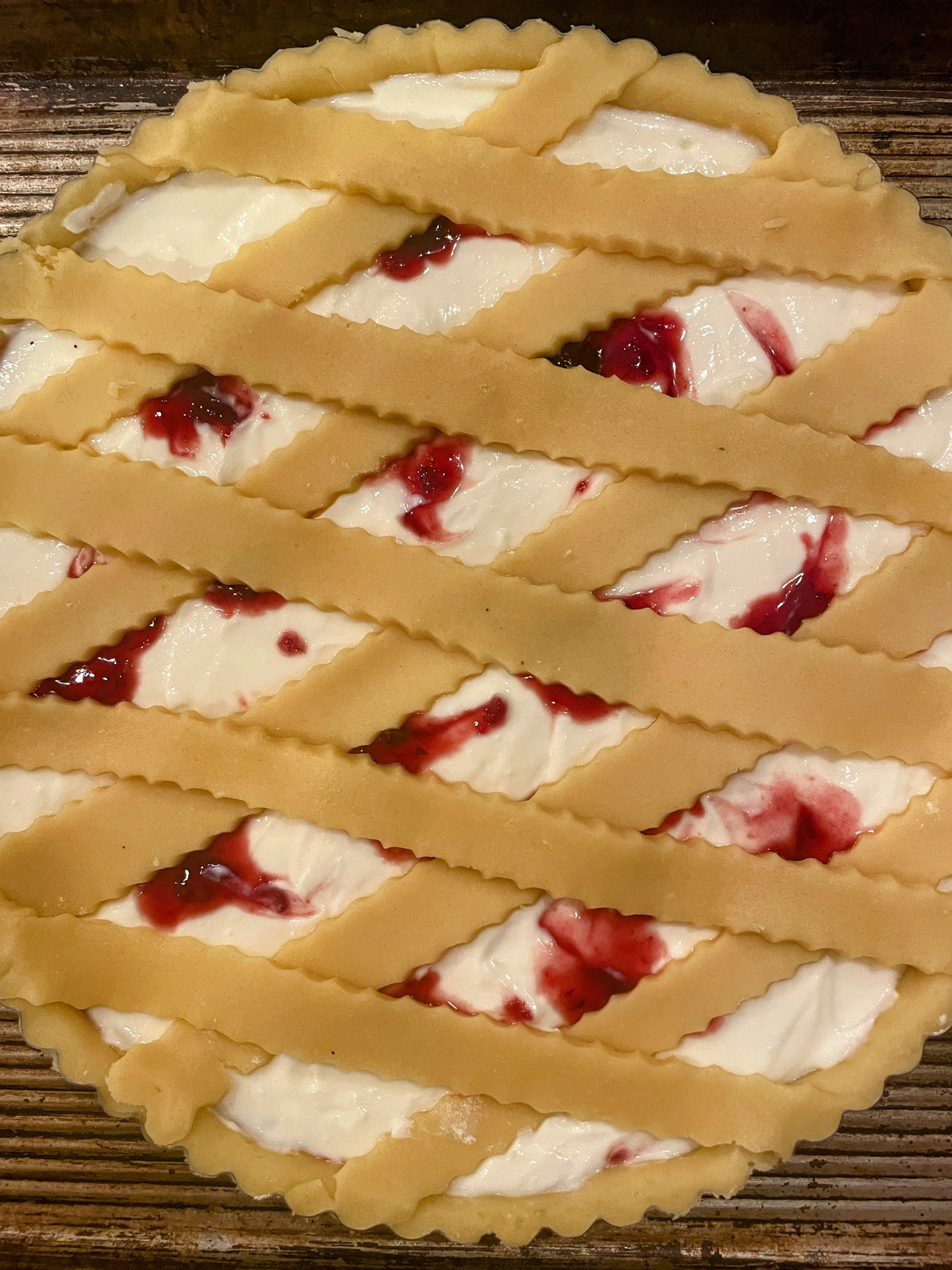
You can also let your creative side loose on the top crust; I made a very simple (unwoven) lattice with scalloped strips this time around.

Crostata Ricotta e Visciole
Recipe inspired by (and translated from) Antonio Romano Runchef
Note: This recipe is best made using a kitchen scale to weigh the ingredients.

Tart Dough:
225 gr. sugar (about 1 1/8 c.)
grated zest of one lemon
250 gr. butter (2 sticks + 1 tbsp)
120 gr. eggs (I used 3 yolks + 2 whole eggs, carefully adding the white of the last egg until I got to 120 gr.)
1 tsp. vanilla
pinch of salt
500 gr. flour (I used all-purpose; you can also use 00)

Filling:
450-500 gr. ricotta (16-oz. container); I try to find ricotta that is not super wet. Here in the U.S., I like Bel Gioioso Ricotta con Latte. I pour out any little liquid that may have collected in the container and dab the top with a paper towel to remove any extra moisture.
100 gr. sugar

250 gr. cherry preserves (about 3/4 c.)

Directions:
1. Place the sugar and lemon zest in a food processor and pulse until combined.
2. Cut the butter into cubes. (Note: An easy way to cut butter into cubes is to use a bench scraper; cut the sticks lengthwise into quarters, then chop into cubes. ) Add the butter cubes to the sugar in the food processor and continue to pulse until incorporated; the butter will look grainy. Add the eggs and vanilla and process until well combined.
3. Add the flour and sprinkle the pinch of salt over. Process just until a smooth dough forms.

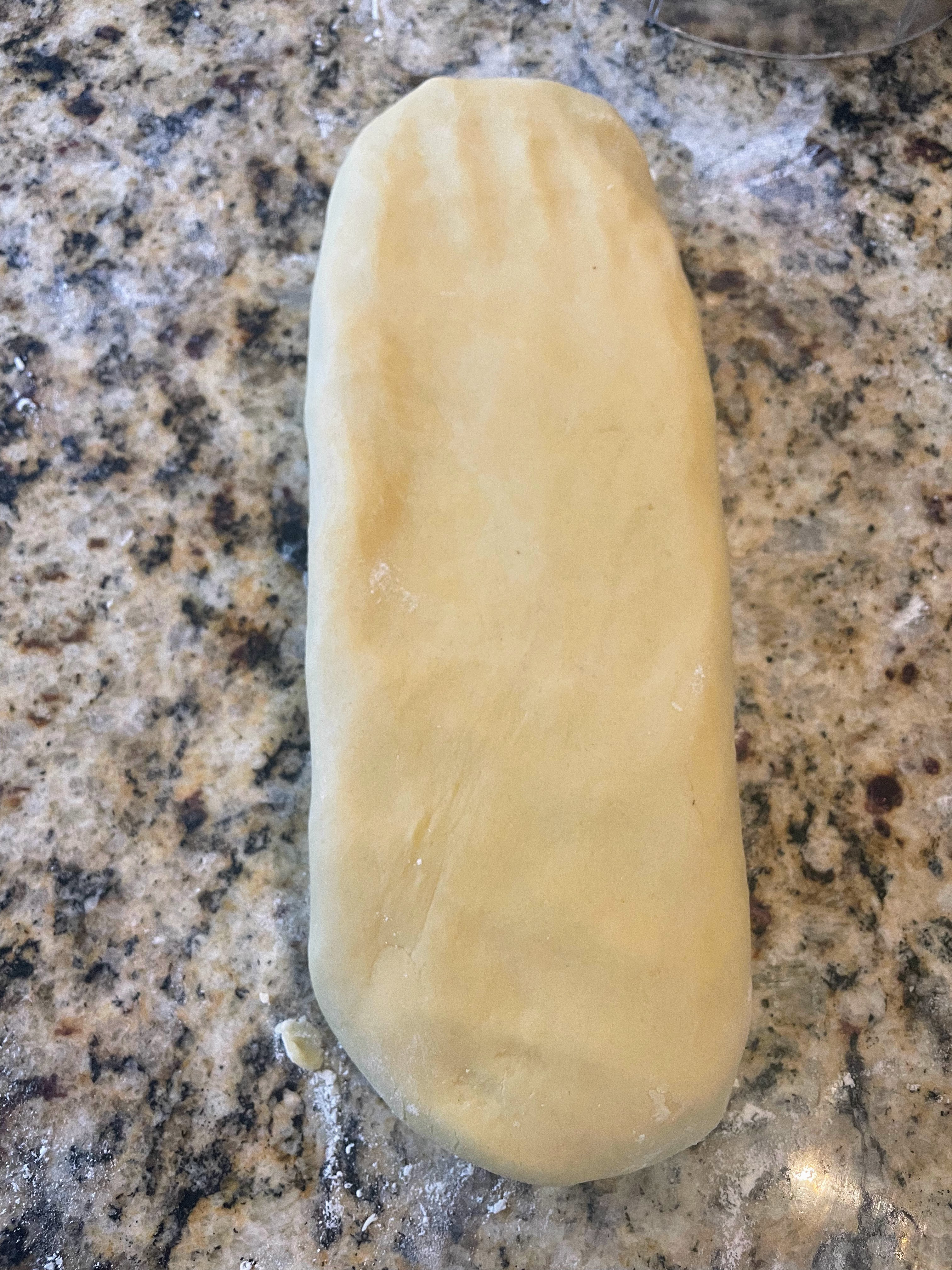
4. Turn the dough onto a floured countertop and roll into a thick log. Pat into a rectangle, wrap in plastic film (or put in a sealable bag) and refrigerate for 2 hours.
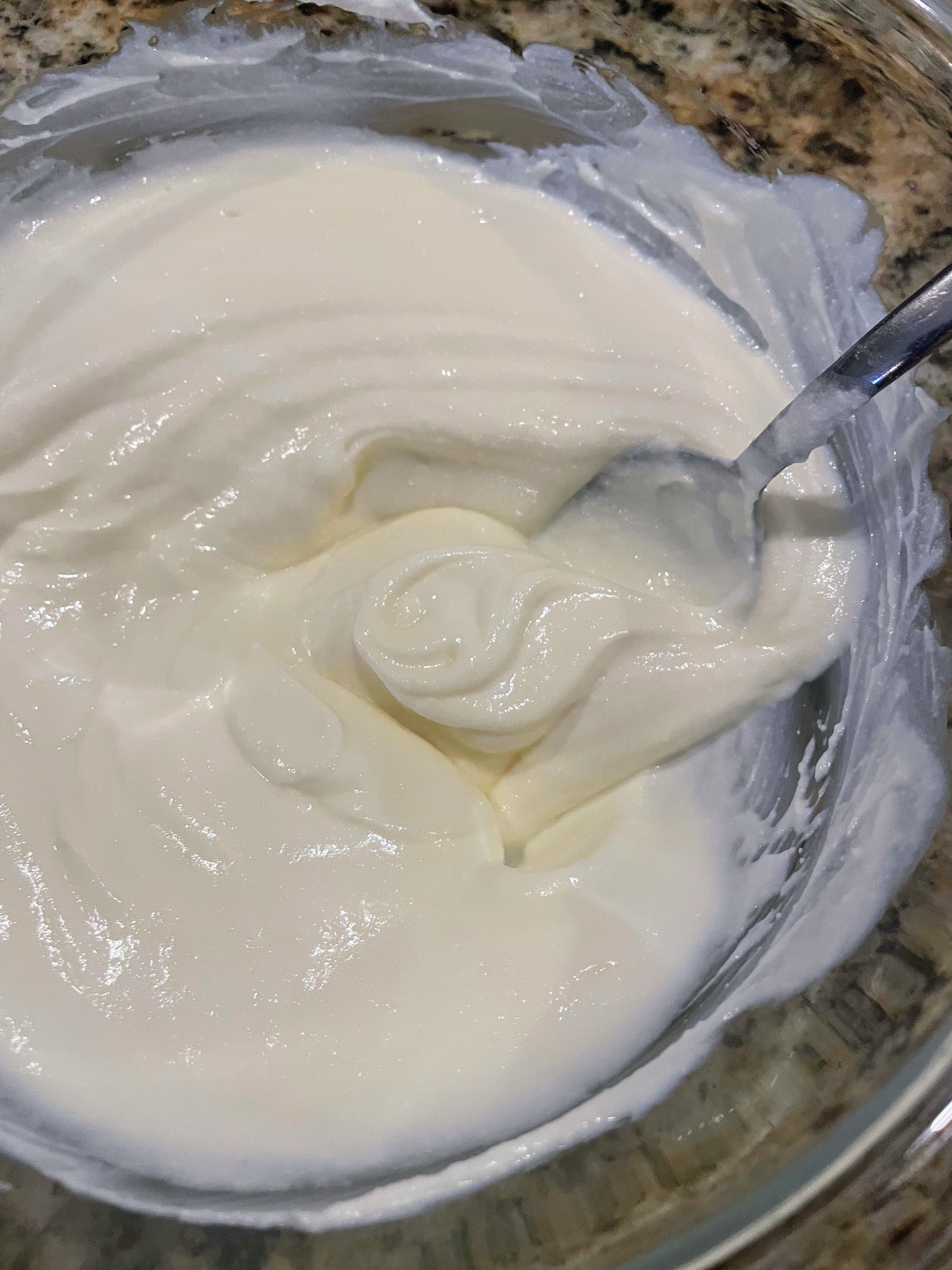
5. Meanwhile, butter a tart pan. Make the ricotta filling by mixing the ricotta and sugar together; let it sit, stirring occasionally, until the sugar is fully incorporated.

6. Cut the dough into a 2/3 piece and a 1/3 piece. Return the 1/3 piece to the refrigerator. Roll the 2/3 piece into a circle about 3 inches wider than your tart pan. Carefully drape the dough over the pan, lifting it gently to tuck it into the inner diameter of the pan. If any dough overlaps the edge, press on it to crimp it off. Save the extra dough.
7. Spoon 2/3 of the preserves ( 1/2 c.) over the base of the tart. Carefully add the ricotta mixture, smoothing the top as best as possible. Dollop the remaining preserves across the top of the ricotta mixture and gently swirl.

8. Roll the remaining 1/3 piece of dough into a rectangle at least as long as the diameter of your tart pan. Cut into 10 strips, and lay the strips in a diamond pattern across the top of the tart. (You can also re-use any extra dough you have leftover from lining the tart pan, to make the 10 strips.)

9. Bake the crostata at 170C/340F for about 35 minutes, or until the lattice is golden. Let cool and then serve.