Tag Archives: lemon

Recipe: How to Make Bright Green Pesto

5 Oct

The very last of my basil has flowered, so today I headed out and harvested all the remaining good leaves. It took a while, but the sun was warm on my back, the bees were buzzing gently by, and the smell of the basil as I plucked each leaf one by one, was intoxicating. There are worse ways to spend part of an October morning.

My aim? To make a few batches of pesto to freeze. But the end result looked (and smelled) so good, I couldn’t wait; I decided to use one batch tonight. It will get drizzled over a Sausage, Kale and Bean soup, the thought of which is already making me hungry!

This recipe calls for blanching the basil, which I find is a key way to get the greenest color. Today, I used another trick, too: I added a handful of baby spinach leaves that needed using up as spinach also amplifies the emerald factor. The addition of a few drops of lemon juice makes the pesto a bit brighter, too; I almost feel like it makes the pesto taste greener (is that possible?).

Note: When I am making pesto to freeze, I do not add the cheese or lemon juice. Instead, I add both those things later on to the thawed pesto. So the photos below are pre-cheese, and thus, represent a vegan version that would be delicious on its own, too.

Bright Green Pesto
(makes 2 cups total = 3 batches)

6 c. (slightly compressed but not packed) fresh basil leaves (about 120 gr.); can substitute up to 1 c. baby spinach leaves
3/4 c. toasted pine nuts
6 large garlic cloves
1/2 tsp. salt
1 c. extra-virgin olive oil
*1.5 c. freshly grated Pecorino Romano cheese (preferred) or Parmesan
*lemon juice, to taste

Preparation

1. Set a large pot of water to boil.
2. Pick over the basil leaves to make sure there are no blemishes (or stems). Fill a large bowl with ice water and set aside. When the water in the pot is boiling, add the basil and garlic, and push down on the basil leaves with a slotted spoon (to submerge them), just until they turn bright green. This blanching process should take less than a minute.

3. Immediately drain the basil and garlic in a colander, and then set the colander in the bowl of ice water to stop the cooking.
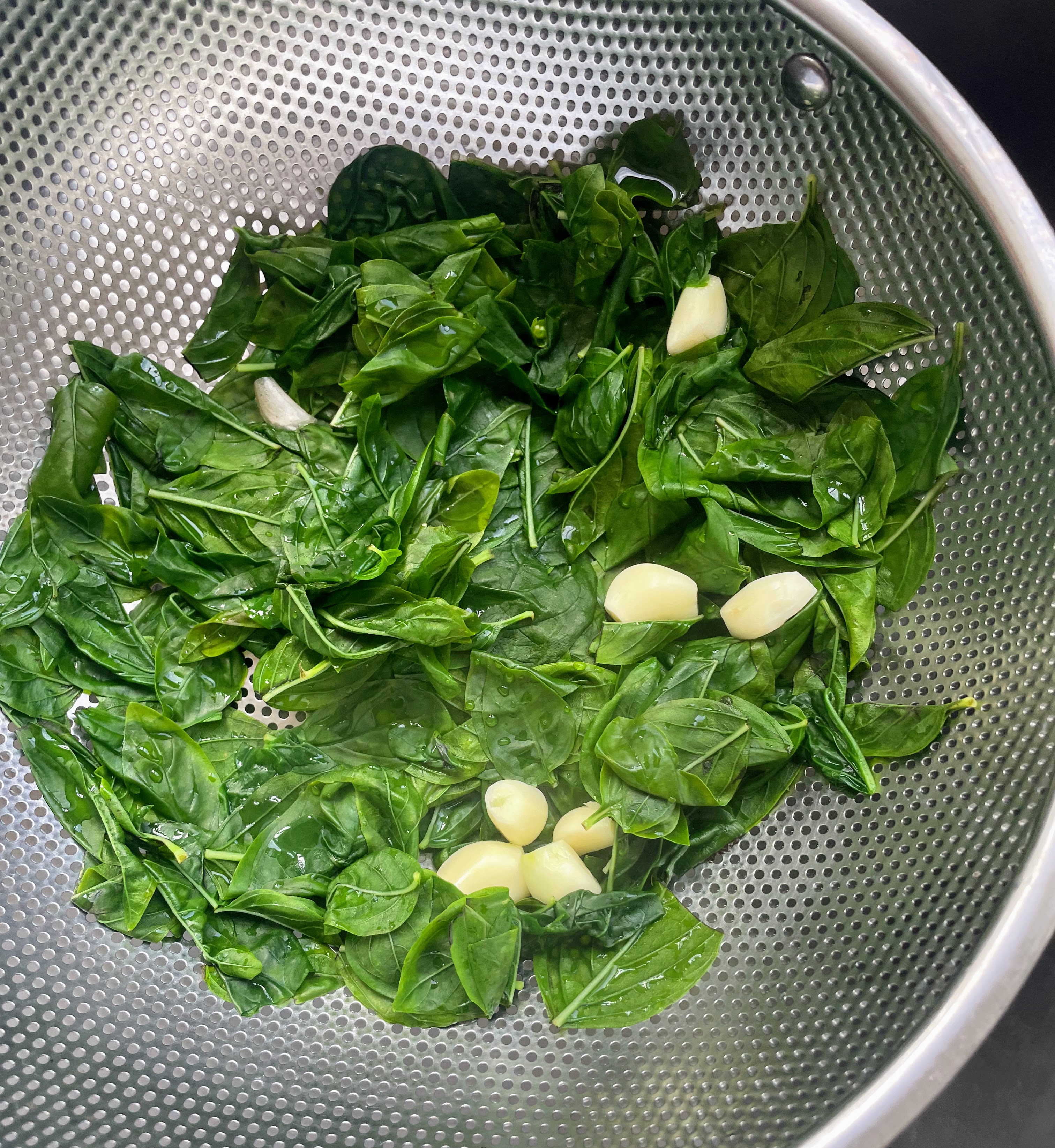
4. Once the spinach is cold, remove the colander from the bowl, set in the sink, and let the basil and garlic drain for a few minutes. Then place the basil and garlic on a clean dish towel and pat as dry as possible.

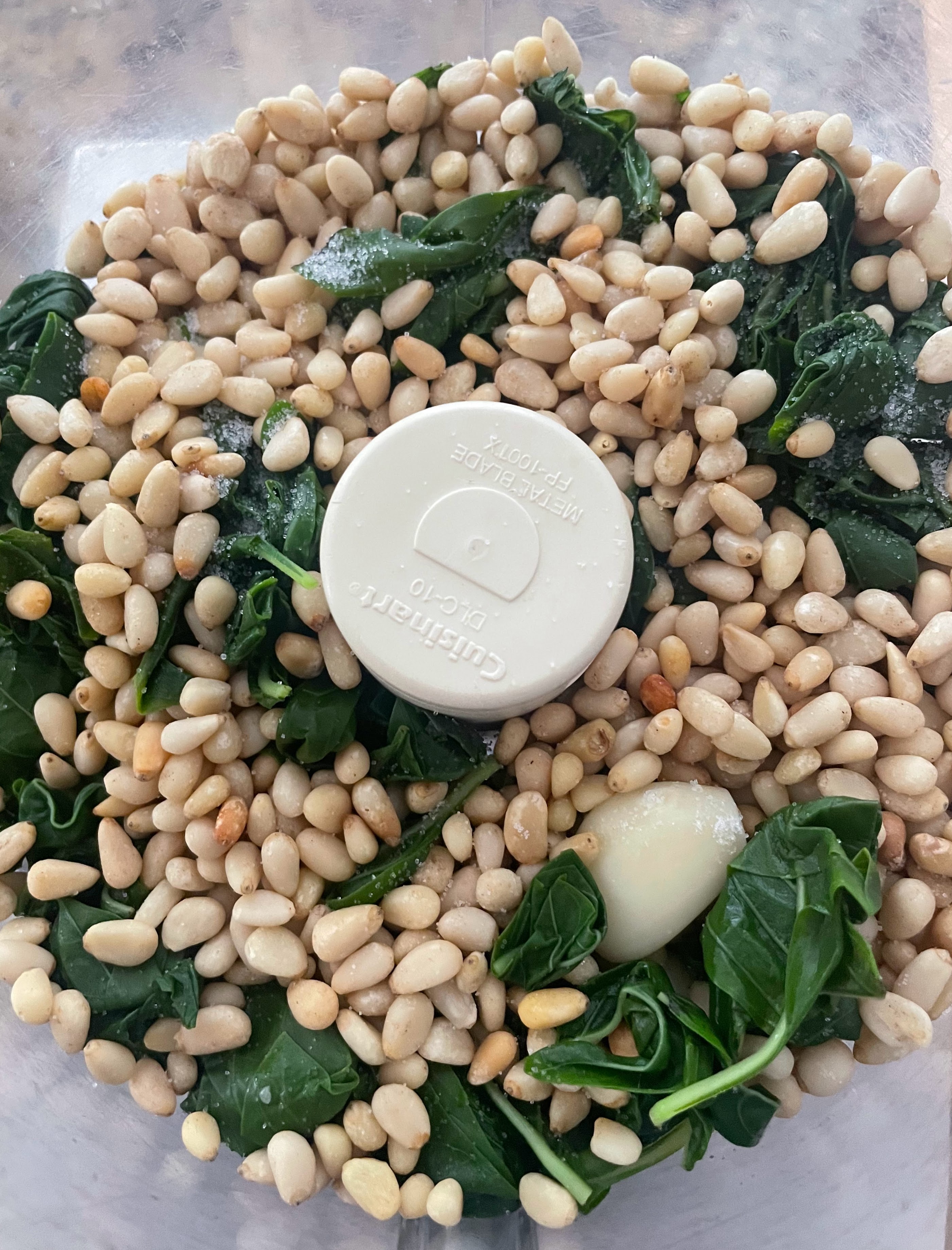
5. Put the basil and garlic in a food processor, add the pine nuts and salt, and pulse until the mixture is finely chopped and begins to come together. With the food processor still running, slowly pour in the olive oil and process until smooth.
6. If using the pesto the same day, add the cheese and lemon juice, and pulse again very briefly, just long enough to combine. Do a quick taste test to gauge lemon and salt levels; add more if needed. You can also add a bit more olive oil if the pesto seems too thick.
*7. If freezing the pesto, omit the cheese and lemon juice, divide the pesto among three freezer-proof containers, and freeze. When you want to use a batch, thaw it fully and let it come to room temperature. Prior to using, add 1/2 cup grated cheese and a few drops of lemon juice, and mix well. Do a quick taste test to gauge lemon and salt levels; add more if needed. You can also add a bit more olive oil if the pesto seems too thick.

Recipe: Zucchini Carpaccio

26 Jun

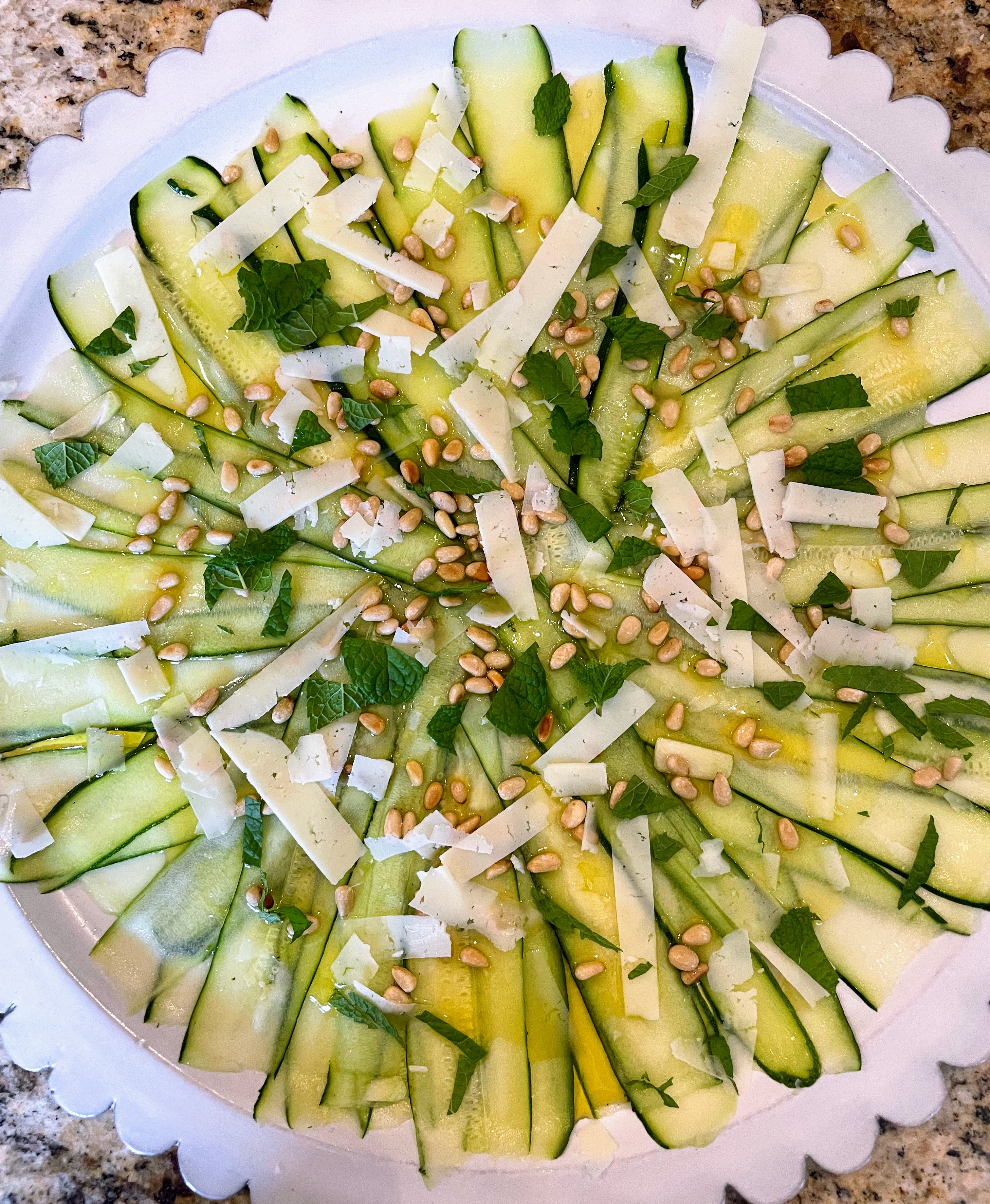
This refreshing, no-cook zucchini recipe (which I very slightly adapted from the New York Times) is just the thing when it’s hot outside, you have zucchini to use up, and you’d like to make an impression. It’s an unusual recipe in that the thinly-sliced zucchini is raw, though nicely marinated and softened in lemon juice (a bit like what happens with ceviche). Definitely worth a try.

Ingredients:
2 medium zucchini
salt
2 garlic cloves, thinly sliced
freshly squeezed juice of 1/2 lemon (or more, as needed)
2-3 tbsp. of the best olive oil you have
2 tbsp. toasted pine nuts
torn or chopped fresh mint, to taste
Optional: 1 tbsp. Parmesan (or Pecorino Romano) shavings, 1 tablespoon currants, 1 tsp. honey, and/or freshly ground black pepper

Directions:
1. Slice zucchini lengthwise with a mandoline or chef’s knife as thinly as you can, and sprinkle lightly with salt. Place in a colander for 30 minutes to remove the excess moisture, tossing occasionally.
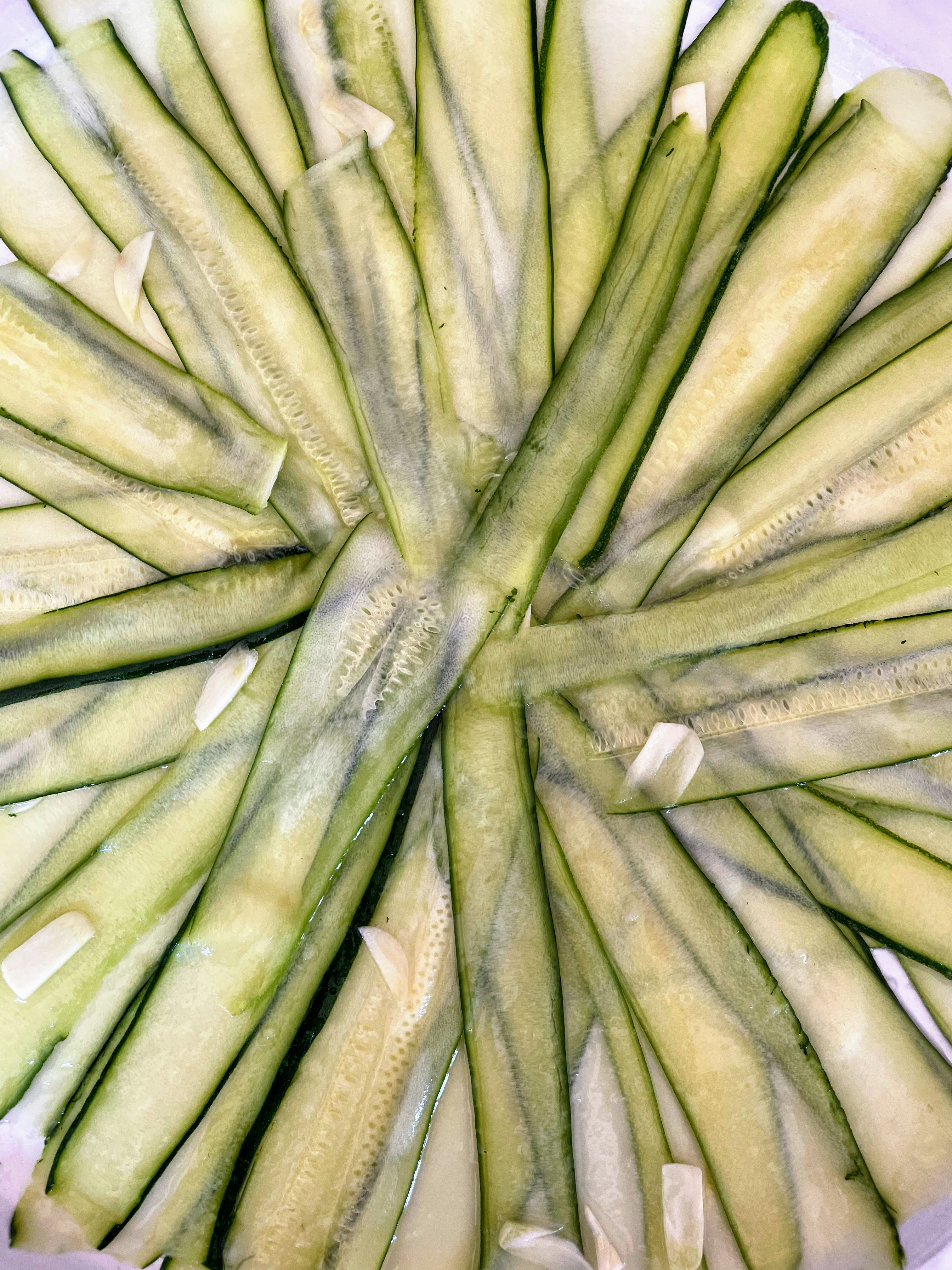
2. Dry the zucchini on paper towels and arrange the slices in layers on a shallow platter or serving dish, adding slices of garlic between the layers, and drizzling each layer with some of the lemon juice (if you run out, squeeze some juice from the other half of the lemon).

3. Marinate, refrigerated, for at least 15 minutes and up to 1 hour.
4. Drizzle olive oil over and top with pine nuts and mint (and any of the optional ingredients, if using).

Recipe: Baba Ghanoush

30 Sep

Years ago, I learned to make some Lebanese dishes from watching (and helping) college friends cook a few classics, but my main teacher was a cookbook called Lebanese Cuisine by Madelain Farah. The version I have is from 1979, meaning it predates the internet. (And no, I wasn’t in college in 1979; I bought the cookbook some years later). Despite there being so many delicious Lebanese recipes now available online, I still find myself going back to this well-loved, well-spattered, paperback cookbook for some of my favorites. It has accompanied me on many moves and is now held together with tape.

Ms. Farah was a straightforward recipe writer; no coddling of the reader for her. In her recipe for Baba Ghanoush (which she calls Baba Ghannuj, as there are many ways to spell it), the first instruction is written this way: “Eggplant may be baked or grilled over a flame until well done.” There’s a lot of room for interpretation in those instructions…. Ms Farah was also a proponent of mashing the ingredients, either with a potato masher or a wooden mallet. I now use a food processor, which may be anathema in some quarters, but it produces a silky smooth dip.

So, this recipe takes its inspiration from Madelain Farah’s, with a few twists: I added smoked paprika and cumin, which play on the smokiness of the eggplant and really help bring out its flavor. And I use a faster blending technique.

Baba Ghanoush

Ingredients:
2 medium eggplants (2 lb/900 gr total). Note: Ms Farah called for one large eggplant, but the larger the eggplant, the more seeds there are, so I prefer using two smaller ones. (Since I grow eggplant in my garden each summer, I can pick them at just the right size!).
olive oil

2 cloves of garlic, minced (we like garlic in our house; you can use 1 clove as the recipe originally called for)
1/4 c. (60 gr.) tahini
1/4 c. (60 ml.) lemon juice, or more to taste
1/4 tsp. smoked paprika
1/4 tsp. cumin
1/2 tsp. salt, to taste
1 tbsp. (15 ml.) water (optional)

To garnish:
–chopped fresh flat-leaf parsley
–smoked paprika and cumin (or, substitute the paprika and cumin with sumac, which is a more traditional topping and one Ms. Farah suggested; both options taste great)
–olive oil

Preparation:

Cooking method #1: Preheat the oven to 450 degrees F (230 degrees C). Cut the eggplant(s) in half lengthwise, and brush a generous amount of olive oil on the cut sides. Place the cut sides down on a large baking sheet (use a rimmed one as the eggplant will get juicy). Bake for about 30-45 minutes until the eggplant is dark golden brown and very, very soft.

Cooking method #2: Grill the eggplant(s) cut side down on a barbecue, until golden and soft, taking care not to completely incinerate them (some burnt bits are ok and add to the flavor, but a carbonized eggplant is a step too far; I say this from experience).

Flip the eggplants over and let cool.

Scoop out the eggplant pulp and place in the bowl of a food processor, carefully removing any skin that may have made its way in, too. Also, check for big clumps of seeds; individual seeds are fine and will get blended right up, but I like to take out any big clusters if I see them, to ensure a smoother dip.

Add the remaining dip ingredients and process until nice and smooth, adjusting the ingredients to suit your taste. If the dip is too thick, you can add more lemon juice or a spoonful of water.

Pour the dip into a serving bowl. Sprinkle with chopped parsley and more smoked paprika and cumin (or use sumac instead); drizzle with olive oil.

Serve with pita bread, pita chips, and/or veggies — or use in a Middle Eastern wrap as a substitute for hummus. I also love putting Baba Ghanoush, lamb kafta, and some tabouli in a pita and calling it a meal.

Recipe: Chickpea Curry (Indian Sour Chickpeas)

30 May

Chickpeas, or garbanzo beans, are the basis for many delicious things, from hummus to brownie bites — all made much more easily (and quickly) by using canned chickpeas. This recipe, adapted from Madhur’s Jaffrey’s Indian Cooking, is one of our favorites–a light curry sprinkled with onions marinated in lemon juice and ginger (hence the lovely “sour” element).

Serve with rice and other curries for a crowd, or with a simple raita (made with yogurt, cucumbers, garlic, and a pinch of mint) for a one-dish meal.

Indian Sour Chickpeas
Serves 6

2 (15-oz./425 gr.) cans chickpeas, undrained
3 medium onions, finely chopped
1 tbsp. finely grated peeled fresh ginger (or 1 tsp. ground)
4 tbsp. fresh lemon juice
3-4 tbsp. vegetable oil
2 medium tomatoes, chopped
1 tbsp. ground coriander
1 tbsp. ground cumin
½ tsp. ground turmeric
2 tsp. garam masala
cayenne pepper (if desired)

Preparation

1. Put 3 tbsp. of the chopped onion and the ginger and lemon juice into a small cup. Mix well and set aside.
2. Heat oil over medium-high heat and add remaining onions. Fry until slightly brown at the edges, then add the tomatoes. Cook another 5-6 minutes, mashing the tomatoes with the back of slotted spoon.
3. Add the coriander, cumin, and turmeric. Stir and cook for about 30 seconds. Add the chickpeas and their liquid, the garam masala, and the cayenne (if desired). Stir to mix and bring to a simmer. Cook gently, covered, for about 20 minutes. Before serving, add onion/ginger/lemon mixture. Stir to combine.

Recipe: Turkish Feta Dip with Paprika

27 Apr

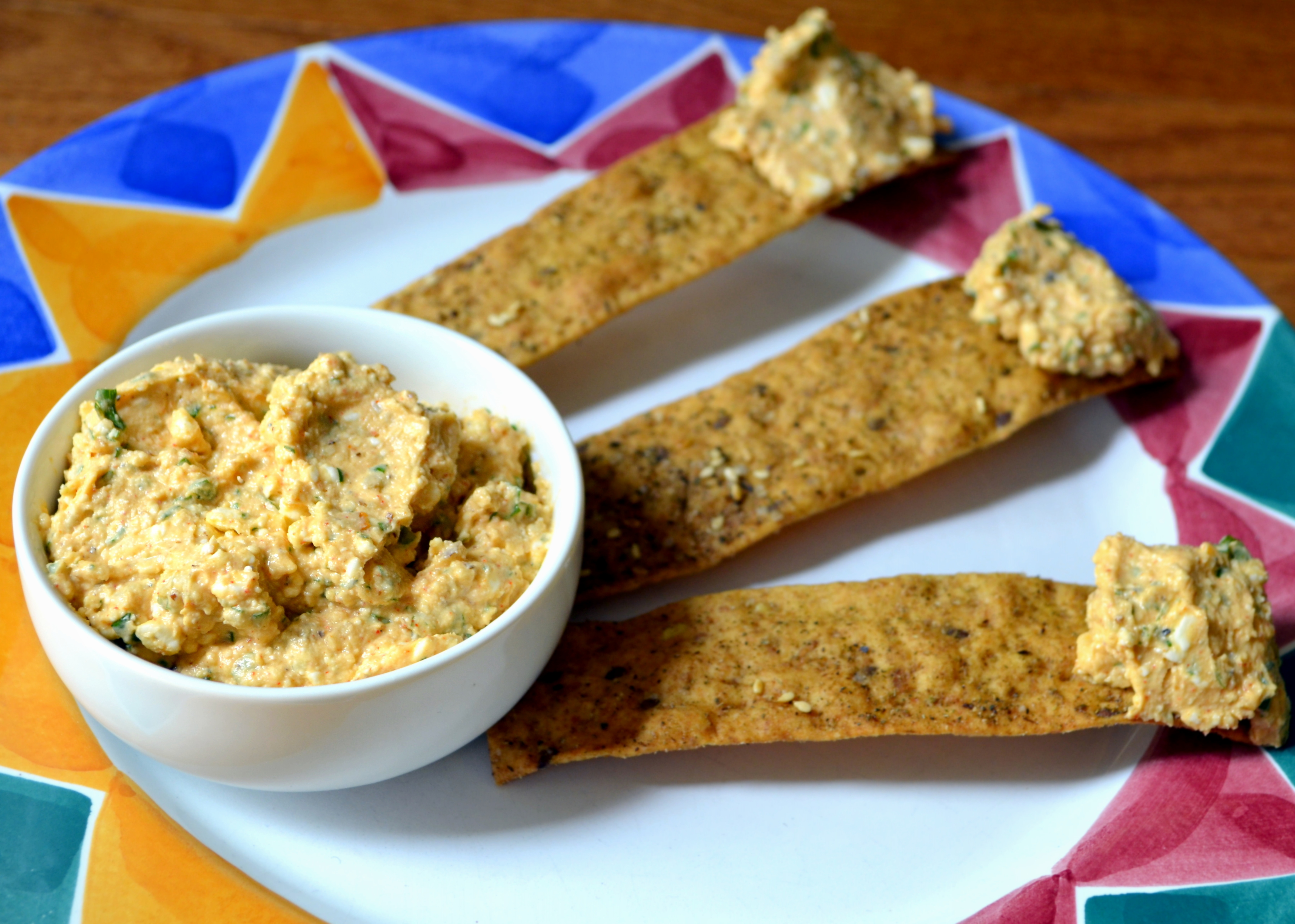
Fantastic on its own, this dip is even better as the basis for many delectable creations, from mini appetizer stacks to a range of sandwiches (try it on some crusty bread or a cracker, topped with Eggplant with Garlic Vinaigrette and some Roasted and Marinated Bell Peppers). The cheese, yogurt, and walnuts provide a protein boost, but that’s not why you’ll want to eat this. You’ll want it for the nice tang and the endless possibilities. You can adapt it any way you like: more or less garlic or chili flakes, mint instead of parsley, walnuts or no walnuts, etc. Now that I think of it, this dip would probably be nice with some chopped Kalamata olives mixed in, too.

Turkish Feta Dip with Paprika

8 oz. feta cheese, crumbled
1 tsp. paprika
1 clove garlic, minced
1/4 c. chopped walnuts
1 tbsp. olive oil
4 tbsp. plain yogurt
1 tsp. fresh lemon juice
sprinkle red chilli flakes (crushed red pepper)
1 tbsp. chopped fresh parsley (or 1 tsp. dried mint)

Preparation

1. Place the feta in a medium bowl and mask with a fork. Sprinkle with paprika and mix in garlic.
2. Toast the walnuts in a 350-degree oven for about 5 minutes. Remove and crush finely with a mortar and pestle (or in a bag using a rolling pin), then add to feta mixture in bowl.
3. Add remaining ingredients and mix well to combine. If dip appears too thick, add a bit more yogurt.
4. Optional: drizzle with olive oil before serving.
5. Serve with crusty bread, pita bread, pita chips, toasted pita with zaatar, or any other cracker.

Recipe: Stuffed Grape Leaves

13 Feb

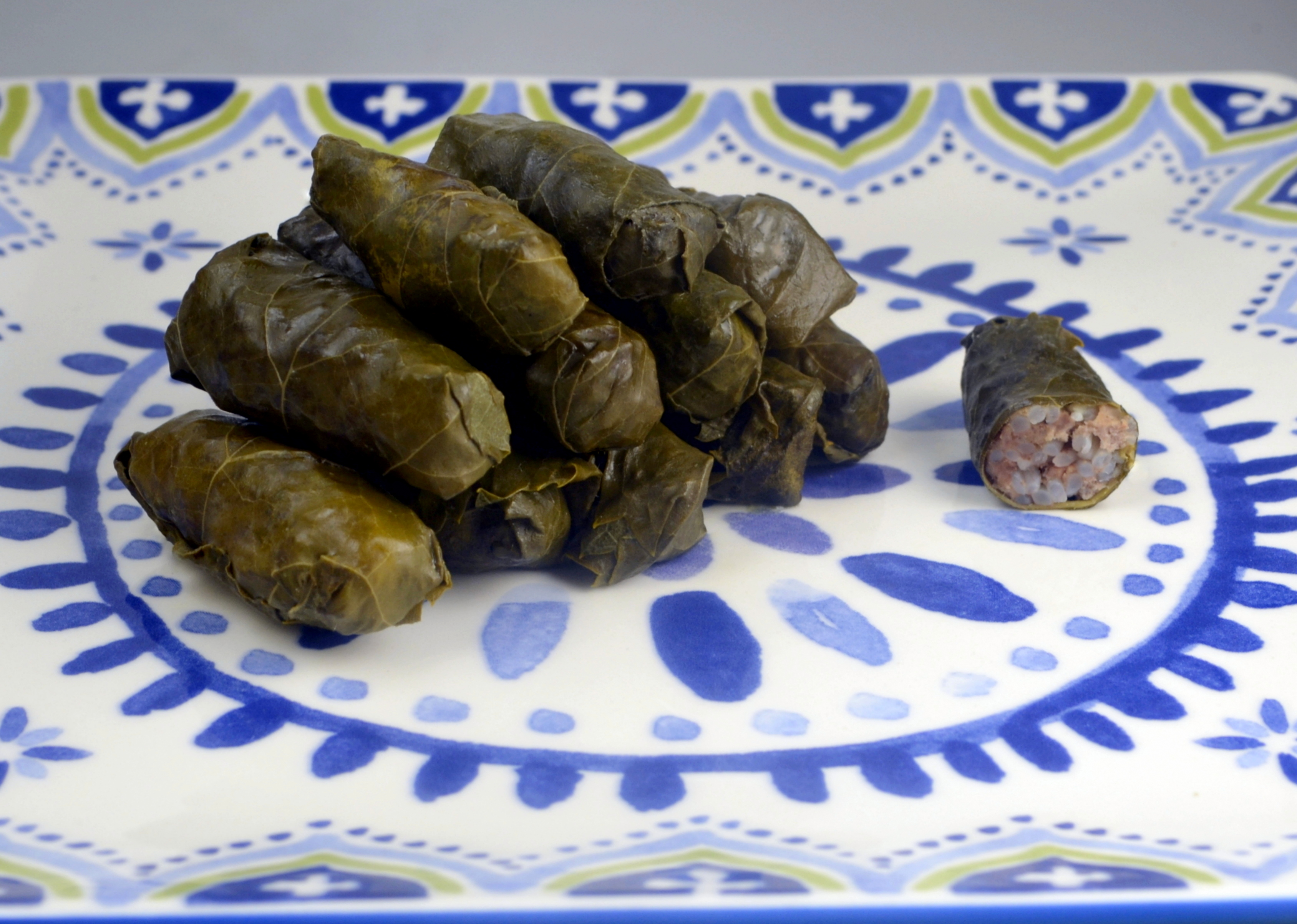
I would be hard pressed to come up with a last meal. I like so many foods, that I’d want something more along the lines of a smorgasbord. But one dish that would certainly be part of that smorgasbord would be stuffed grape leaves — the warm, simple, and oh so heavenly Lebanese version made with a lemony lamb and rice filling. In my very biased view, the versions of stuffed grape leaves that are meant to be eaten cold (usually meatless) cannot compare with their fragrant, hot-out-of the pot counterparts.

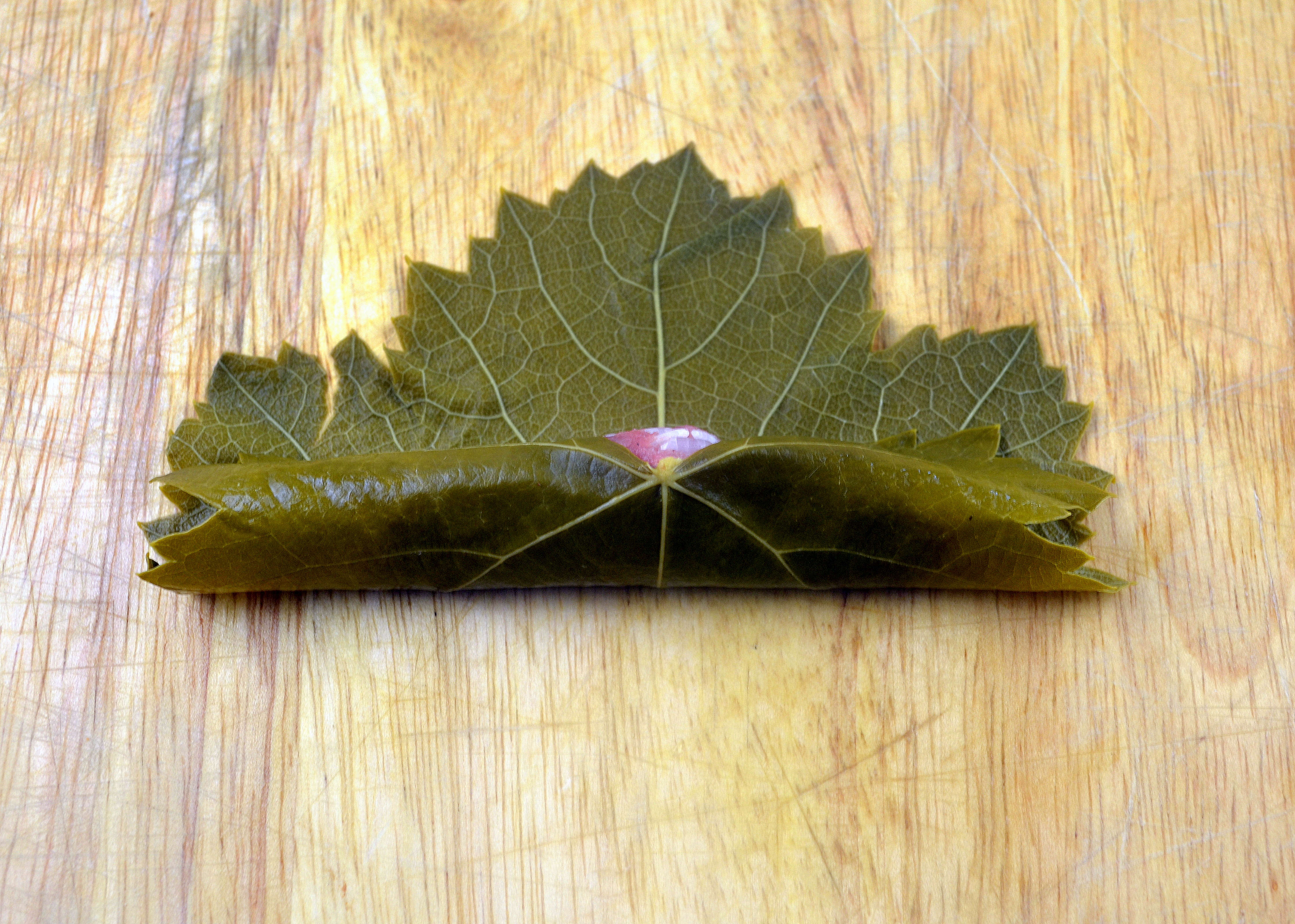
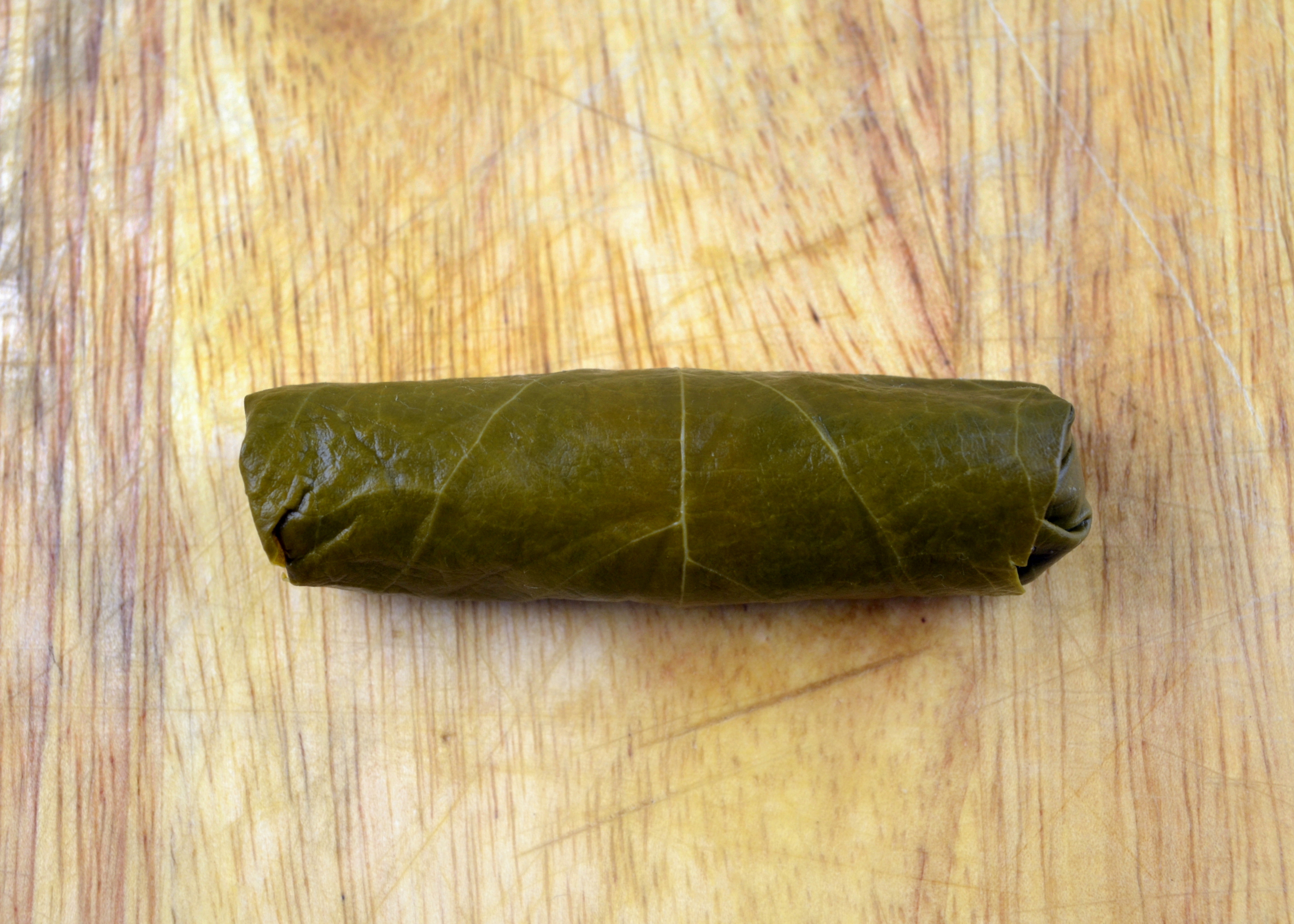
For a sublime gastronomic experience, dip these grape leaves in plain yogurt. The cool, smooth tanginess complements them perfectly. See photos below for step-by-step instructions on how to fill and roll grape leaves.

Stuffed Grape Leaves

1 (15-oz. ) jar grape leaves in vinegar brine
1 lb. ground lamb
1 c. white rice, such as jasmine
1/8 tsp. cinnamon
1/8 tsp. allspice
1 tbsp. salt
1/4 c. fresh lemon juice

Preparation

1. Open the jar of grape leaves, pour out the brine, and carefully ease the grape leaves out of the jar. (They will be tightly packed, in rolls.)
2. Put the grape leaves in warm water and let soak while making the filling.
3. For filling, combine lamb, rice, cinnamon, and allspice in a medium bowl, and mix well. Set aside.
4. Gently swish grape leaves around in the warm water, and slowly begin to separate as many as possible, taking care to not tear them. When most have come out of their rolls, drain the water.
5. Line the bottom of a medium saucepan with a layer of grape leaves (this is a good way to use any that are torn or too small).
6. Select a grape leaf and shake to remove any excess water that may be clinging to it. Place it on a cutting board glossy side down (veiny side up).  If there is a bit of stem still attached, cut it off (see photo below).

7. Take a bit of filling and shape into a small roll; lay horizontally across grape leaf, just above where the stem was.

8. Fold the bottom part of the grape leaf over the filling.

8. Tuck in each side, as if making a burrito.

9. Continue to roll the grape leaf, folding in the sides as you go.

10. Place the rolled grape leaf seam side down in the sauce pan, tucking tightly against the side of pan.

11. Repeat the process until you have run out of filling. Depending on the size of the saucepan, you should have about two layers of rolled grape leaves. Be sure to tuck them in tightly; you do not want them to unroll while cooking.
12. Sprinkle the 1 tbsp. salt on top of the grape leaves. Add enough water to the pan to just cover the grape leaves. Place an inverted heat-proof ceramic plate on top of the grape leaves (you can also use the lid of a smaller saucepan–you will need something that fits inside the main saucepan and can lay on top of the grape leaves to keep them from shifting while cooking). Cover the saucepan with a tight-fitting lid.
13.  Cook, covered, over medium heat for 15 minutes. Lift the lid, and pour in the lemon juice (you can pour it around the sides of the plate; it will seep underneath). Replace the lid, reduce heat to low/simmer, and cook for 15 more minutes, checking periodically to make sure the water has not completely dried up. Ideally, the water will be absorbed by the end of the cooking period, but you don’t want to run the risk of burning the grape leaves.
14. After 15 minutes, gently pour out any water that might remain, holding the grape leaves in place with the plate (or small lid).
15. Invert the sauce pan onto a serving platter, discard the grape leaves that lined the pan, and serve the stuffed grape leaves immediately, with plain yogurt as an accompaniment.

Adapted from Lebanese Cuisine, by Madelain Farah.

Recipe: Meatballs for Spaghetti

21 Nov

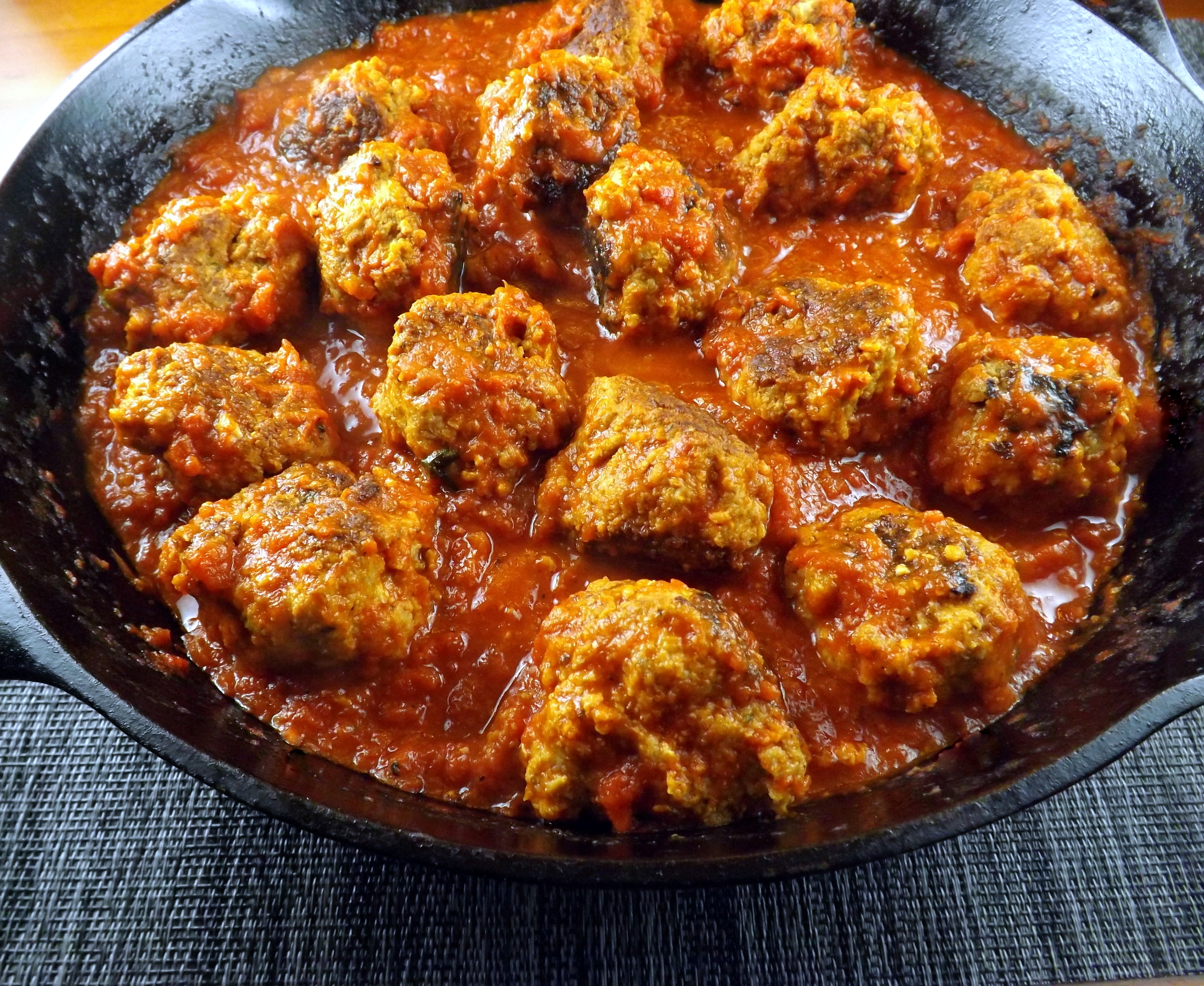
On Thanksgiving and by long tradition, 15+ family and friends join us to eat an almost equivalent number of dishes. This means that on Thanksgiving Eve, things can get a bit nutty. I usually have various items scattered about in various stages of preparation,  and it’s hard to think of what to make for dinner–or muster up much enthusiasm for cooking it on top of everything else. Enter one great husband, who this year chose and prepared a classic Italian dish far removed from the traditional Thanksgiving offerings: Spaghetti and Meatballs.

Except Spaghetti and Meatballs isn’t a classic Italian dish, since most Italians would never eat meatballs with pasta. In fact, we have Italian friends who would rather stab themselves with a fork than contemplate such a gastronomic travesty.  But those friends weren’t at our house this evening, so we were free to enjoy what is for many Americans a match made in heaven–one made even more heavenly by the fact that I had no hand in preparing it on this night of all nights. These fresh-tasting meatballs are adapted from the timeless New York Times Cookbook, by Craig Claiborne.

Meatballs for Spaghetti
Serves 8

Meatballs
1.5 lb. ground turkey
1 c. dry breadcrumbs (seasoned breadcrumbs are nice)
2 eggs, beaten
2 tbsp. half-and-half, or cream
4 tbsp. grated Parmesan or Romano cheese
4 tsp. minced garlic
1/2 c. finely chopped fresh parsley
1/2 c. finely chopped fresh basil
1 tsp. freshly grated lemon rind
salt and pepper to taste

olive oil
spaghetti sauce
1 lb. spaghetti

Preparation
1. Mix all the meatball ingredients and blend well. Shape into about 24 meatballs.
2. Heat oil in a large skillet and brown meatballs, making sure not to crowd them (if necessary, cook in batches). Add sauce to skillet, and cook meatballs in sauce for about 15 minutes. (Or put sauce in a large saucepan, and add the meatballs to the sauce.)
3. Prepare spaghetti al dente, according to directions on package.
4. Serve meatballs with spaghetti and more Parmesan or Romano cheese.