Tag Archives: baked

Recipe: Taralli (Italian Aperitivo Snacks)

10 Feb

Taralli (or tarallini) are a delicious, crispy, unleavened, ring-shaped snack from the Puglia region of Italy, though they have spread well beyond their place of origin. In Rome, you may be served savory taralli along with your aperitivo (Aperol Spritz, anyone?)–but they are also available in local grocery shops in a variety of flavors, including plain (classico), pepper (al pepe), fennel seed (al finocchio), and chili-flavored (al peperoncino). We used to keep a stash at home when we lived in Italy.

Our kids (who, sadly, have not lived with us for while now as they are all grown) loved to have taralli when they would come visit us in Rome, and every time we returned to the U.S. to see them, we would make sure to stash several bags in our suitcases (along with vacuum-packed wedges of Pecorino Romano from Antica Caciara in Trastevere). Mmmm….

It became much more difficult to find taralli when we moved back to the U.S., at least where we currently live. So I decided to see how hard it was to make them. If you have ever made bagels at home, then you will have no problem making taralli. The technique is similar: make the dough, shape it, boil it, let it dry, then bake it. Being much smaller than bagels, taralli get nice and crispy–a perfect snack. I would sometimes also crumble them over a bowl of pureed vegetable soup.

This recipe is for a small batch (about 24-28) of the classic style; feel free to add any of the optional ingredients. When I made them, I added black pepper.

Ingredients:

1 3/4 c. (1/2 lb., 250 gr.) 00 flour
3/4 tsp. sea salt (about 4.5 gr.)
1/4 c. (75 ml. ) olive oil
3.5 oz. (3/8 c., 100 ml.) white wine

Optional (freshy ground black pepper, fennel seeds, chili flakes)

Preparation:

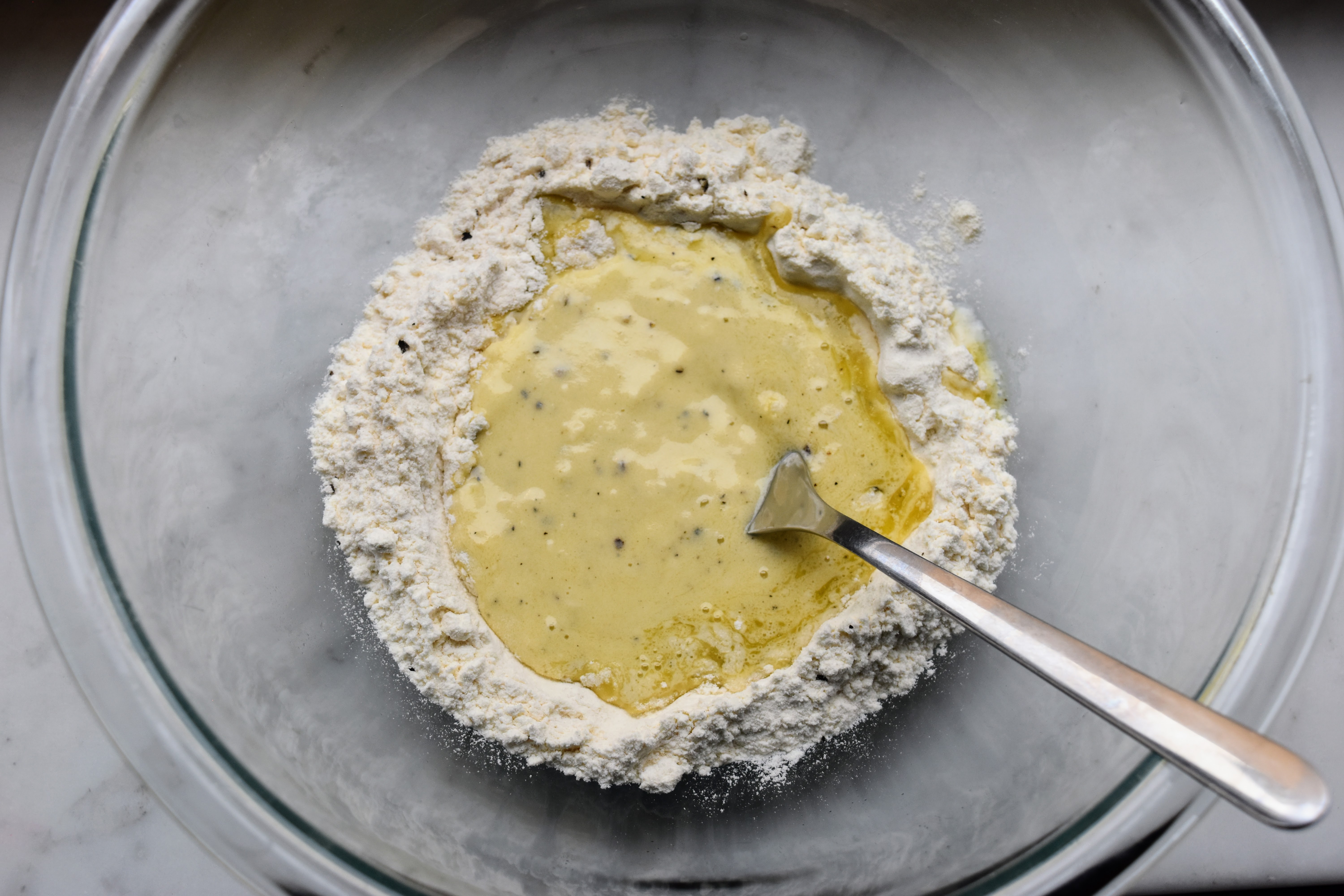
1. In a medium bowl, combine the flour and salt (and any other optional ingredients). Make a well, and add the olive oil and wine. Using a fork, slowly stir to incorporate.

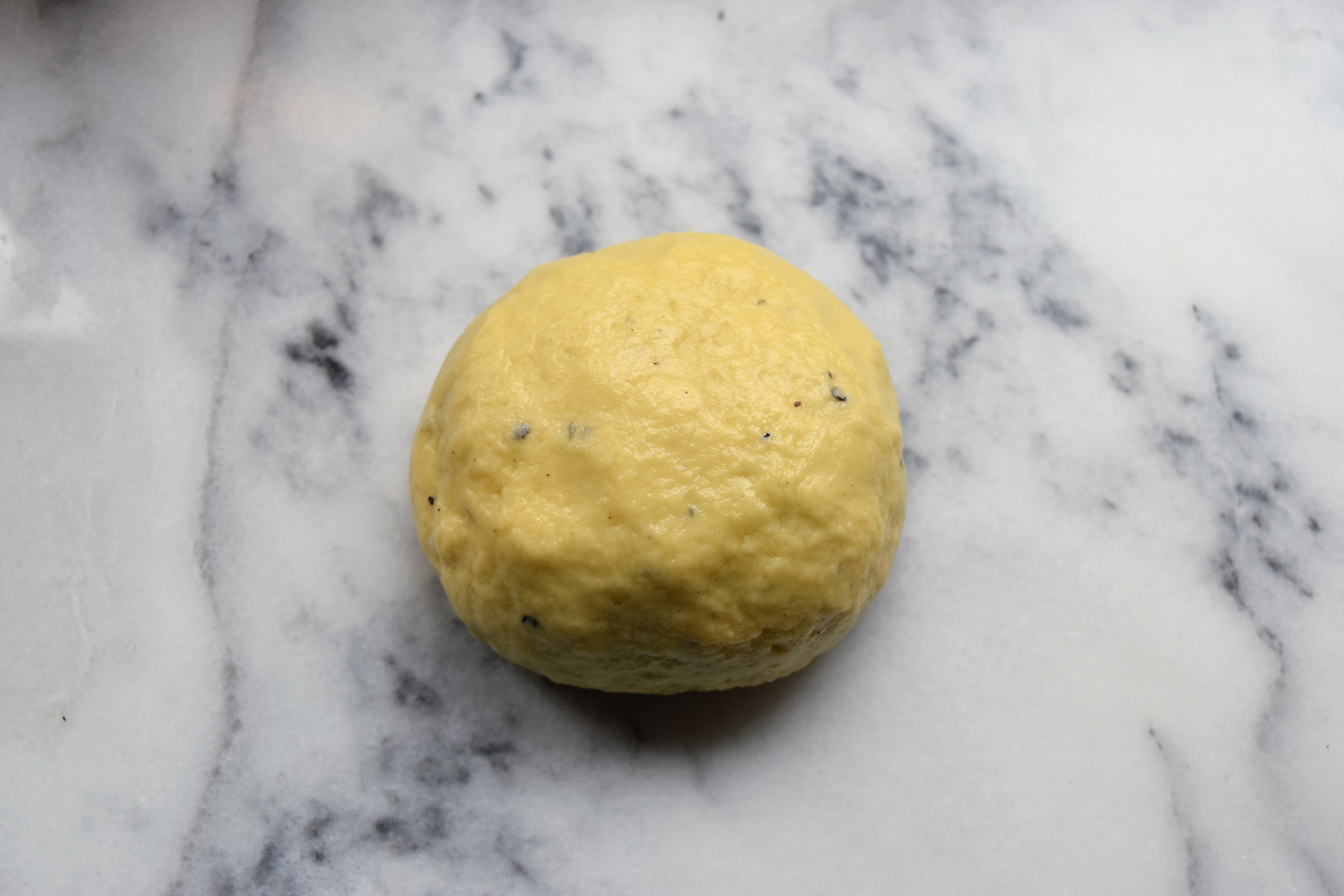
2. Knead the dough for about 10 minutes, until smooth. Shape into a ball, then cover with plastic wrap or place in a plastic bag, and let rest for half an hour.
    3. Start a medium pot of water boiling. Add a pinch of salt to the pot. Place a clean dish towel on a baking sheet (or platter) near your stove.

    4. Divide the taralli dough into four equal pieces and roll into four equally sized logs. Cut each log into 6 or 7 pieces and shape each piece into a little ball.

    5. Roll each little ball into a small, thin log shape. (Though, now that I think of it, I’m wondering why I made the little balls in the first place! I could have rolled each of the cut pieces into a small, thin log and skipped the ball part. I probably wanted to make sure everything was the same size… and, those little dough balls look cute. But, feel free to ignore the ball step.) Form each little log into a ring shape, pulling and pinching the ends together.
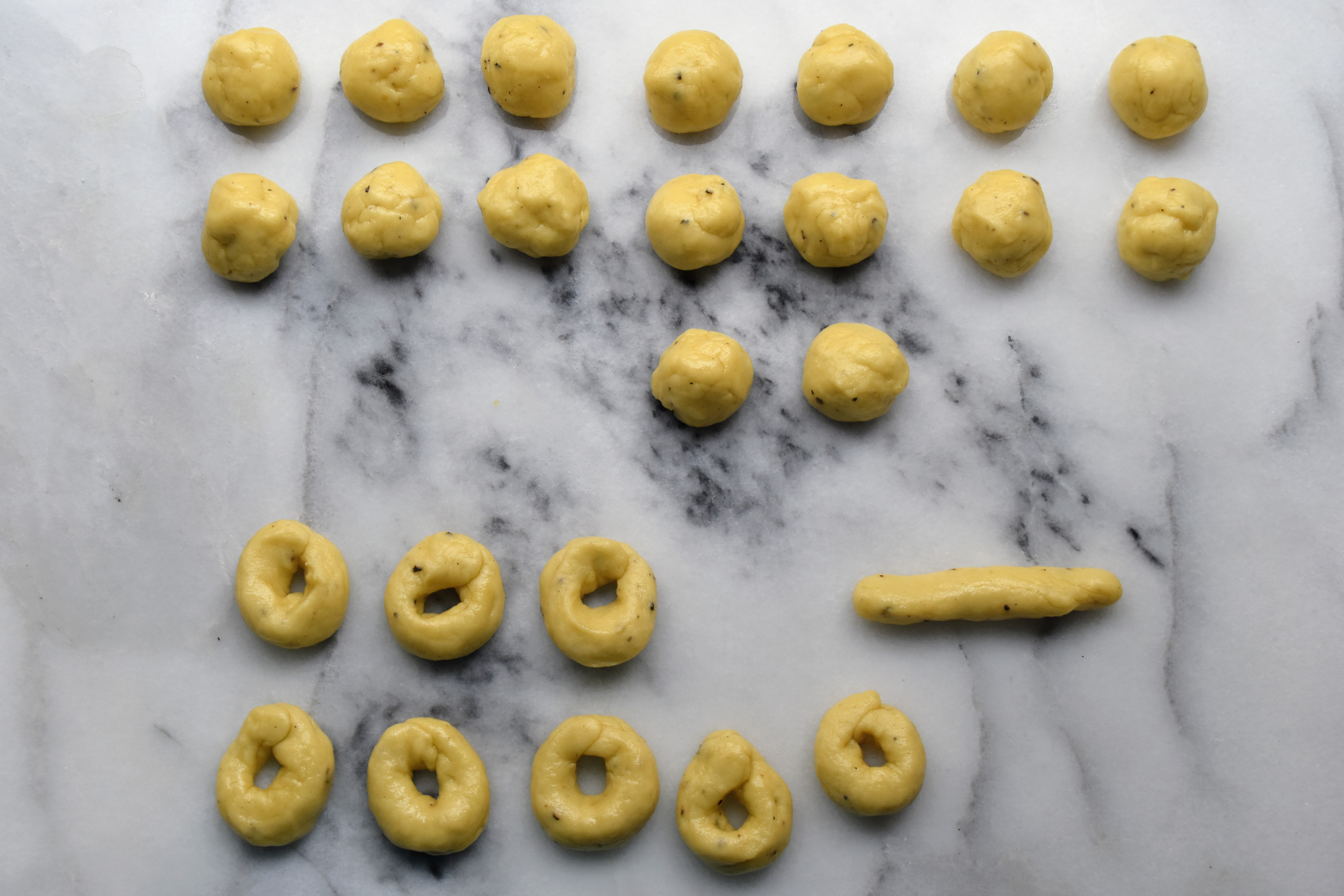
    6. Boil the taralli, maybe 5-8 at a time depending on the size of your pot, until they float. Remove with a slotted spoon or skimmer, and place them on the clean dish towel to dry. Repeat until all the taralli are done; let them dry thoroughly. (You could, at this stage, leave them out for a few hours and bake them later; the extra drying time will not hurt at all.)
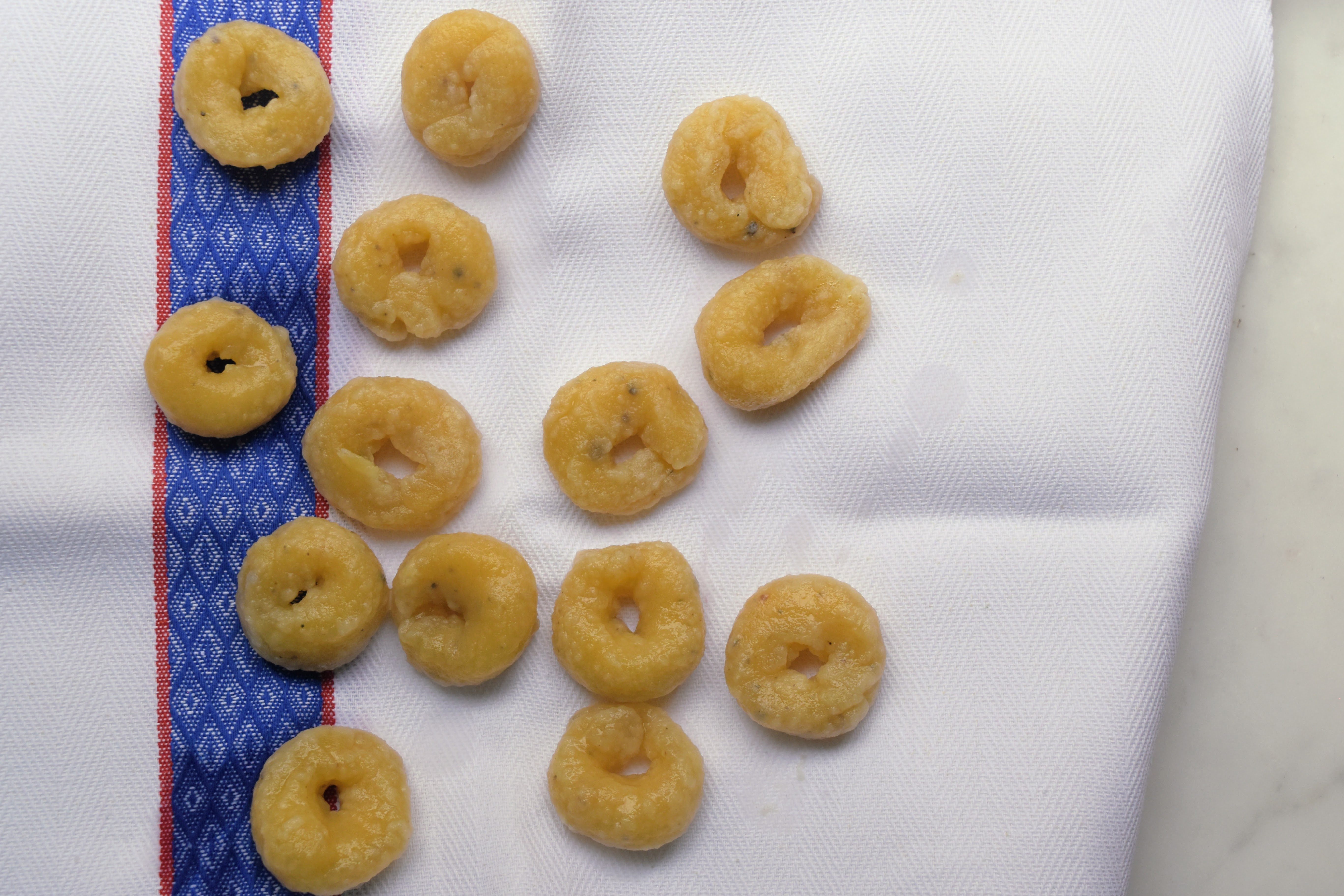
    7. Preheat the oven to 400F/200C. Place the taralli on a baking sheet lined with parchment paper and bake on the center rack for about 30 minutes, or until the taralli are deeply golden brown; the longer they bake, the crispier they become. Enjoy!

    Recipe: Lamb with Eggplant, Tomatoes, and Pine Nuts

    20 Apr

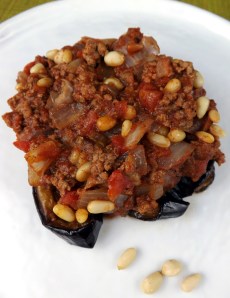
    This is a Lebanese dish for saucy eggplant (and lamb) lovers. Lamb and eggplant are natural partners and frequent appear together in Middle Eastern, Turkish, Greek and Balkan dishes. There are many recipes for this as a stuffed eggplant dish but I like this deconstructed version, which layers the filling on top. As it all cooks together, the lamb and tomatoes season and soften the eggplant below, resulting in comforting, cinnamon-scented mouthfuls that are enhanced by the taste and texture of buttery pine nuts.

    L

    Lamb and Eggplant

    Ingredients:

    olive oil
    3 small-medium eggplants, thinly sliced
    garlic powder
    salt and pepper

    1 onion, diced
    4 cloves garlic, minced
    1 tsp. cinnamon
    1/2 tsp. allspice
    salt and pepper
    1 lb. (450 gr.) ground lamb
    1 can (14 oz./411 gr.) petite diced tomatoes
    1 can (14 oz./411 gr.) tomato sauce

    1/3-1/2 c. pine nuts
    chopped parsley (optional; I forgot it this time around!)

    Preparation

    1. Cook the eggplant slices in olive oil (in a singe layer, working in batches) in a large frying pan over medium-high heat until they are golden, tending to them carefully so they don’t burn. You will likely need to add more oil to the pan with every new layer. Place the eggplant slices in the bottom of a 9×13-inch (23×33 cm) baking dish and sprinkle them with a little garlic powder, salt, and pepper as you layer them, while they are still warm. (I have a garlic salt grinder and sometimes grind that over the layers, along with some black pepper, so that’s another option.)

    2. In another pan, cook the onion in about 2 tbsp. olive oil until soft. (Note: If you’d like to up the heat factor of this dish, you could also add a pinch of red-pepper/chili flakes along with the onions.) Add the minced garlic and cook a couple minutes more, then add the cinnamon and allspice and cook for another couple minutes. Remove the onions from the pan and set aside. Add the ground lamb to the pan and cook until no longer pink; drain,* then add the cooked onions, the diced tomatoes and the tomato sauce. Simmer until the liquid is slightly reduced, about 20 minutes. Check the seasonings after about 10 minutes, and add more cinnamon, allspice, salt, or pepper as needed.

    3. Melt a bit of butter or olive oil in a small frying pan over medium heat and sauté the pine nuts until they start to turn golden.

    4. Spoon the lamb mixture over the eggplant slices in the baking dish and sprinkle the pine nuts on top. The photo below shows this step halfway through.

    LE

    4. Bake at 350 degrees F (180 C) until bubbling, about 30 minutes.

    5. Sprinkle chopped parsley on top and serve with vermicelli rice pilaf. I also like to eat the lamb and eggplant (and the rice) with plain full-fat yogurt on the side, too.

    *In the United States, the lamb sometimes requires draining. If your lamb is leaner, you can add the ground lamb directly to the cooked onions in the pan and skip the draining part.

    Recipe: Corned Beef with Honey-Mustard Glaze

    16 Mar

    St. Patrick’s Day at our house has always meant three things: 1) a visit from a  leprechaun who somehow always manages to turn all our milk green; 2) an evening meal consisting of corned beef with honey-mustard glaze, crispy roast potatoes, and cabbage sauteed in olive oil and butter ; and 3) a green dessert — usually a torte made with a zesty lime filling, courtesy of my daughter whose specialty that has become.

    However, the corned beef is without doubt the pièce de résistance, despite the fact it requires only three ingredients. It is cooked twice: first simmered until fork tender, and then glazed and finished off in the oven. It is such a beloved dish that we only make it once a year, to retain its special status. But we always make sure to have plenty of leftovers to enjoy for a day or two afterward. Most recently, we made three corned beef briskets — enough for two full meals for four hungry people, with some snacking in between.

    Corned Beef with Honey-Mustard Glaze
    Servings: 4

    1 pkg. flat-cut corned beef brisket  (3-4 lb.), with spice packet
    whole grain Dijon mustard (roughly 2.5-3 oz.)
    honey (roughly 1-2 tbsp., or to taste)

    Preparation

    1. Remove the brisket from the package; reserve the spice packet that is usually included. Note: if there is no spice packet, use 1 tbsp. pickling spice, or make your own with 1 tsp. yellow mustard seeds, 1 tsp. black peppercorns, 8 whole cloves, 8 whole juniper berries, 8 whole allspice berries, and 2 bay leaves; place the spice(s) in a small bowl and set aside.
    2. Rinse the corned beef, then place in a large pot and cover completely with water. Bring to a boil over high heat, then reduce heat to a medium simmer. After the first boil, use a large cooking spoon to remove the foam that rises to the surface (I ladle the foam into a large bowl and keep the bowl by the stove until no longer needed). Keep removing the foam every 15 minutes or so until very little is being generated.
    3. Add the contents of the spice packet (or your own reserved spices) to the corned beef in the pot, reduce heat to a low simmer (you want to see some gentle movement in the water, but do not want it at a full boil), partially cover the pot, and let the beef simmer for about 3 hours, or until fork tender. Top up with additional water as needed.
    4. Carefully lift the brisket out of the pot and place on a rimmed cookie sheet. When cool enough to handle, use the side of a fork (the outer edge of one of the tines) to gently scrape off any fat that is on the brisket. Make sure to remove all visible fat.
    5. Spray a baking dish (or another cookie sheet) with cooking spray, and place the brisket on the dish/sheet. Heat oven to 400 degrees.
    6. Put the mustard in a small bowl and mix in the honey; adjust quantities of each to suit your taste. (I usually make the glaze without measuring either ingredient; I taste test until there is just enough sweetness to the mustard.)
    7. Spoon the glaze over the corned beef, then bake until the corned beef is warm and the glaze is beginning to turn golden.
    8. When serving, slice across the grain.

    Recipe: Baked Sweet Potato Fries

    13 Mar

    In the United States, grocery stores offer both sweet potatoes and yams, which are not botanically related. Except that here, they are one and the same.  The “yams” sold in the United States are orange-fleshed sweet potatoes. Real yams are starchy and drier than sweet potatoes and have a rough and shaggy exterior. The problem is that white-fleshed sweet potatoes arrived on American shores first, so when the orange-fleshed versions put in an appearance, they were labeled as “yams” to avoid confusion. In the end, Americans have become more confused than ever.

    On the plus side, the orange-fleshed sweet potato (AKA “yam” in the United States) is an excellent source of beta-carotene, which is responsible for the orange color. Beta carotene protects cells from pesky free radicals and is also converted into Vitamin A.

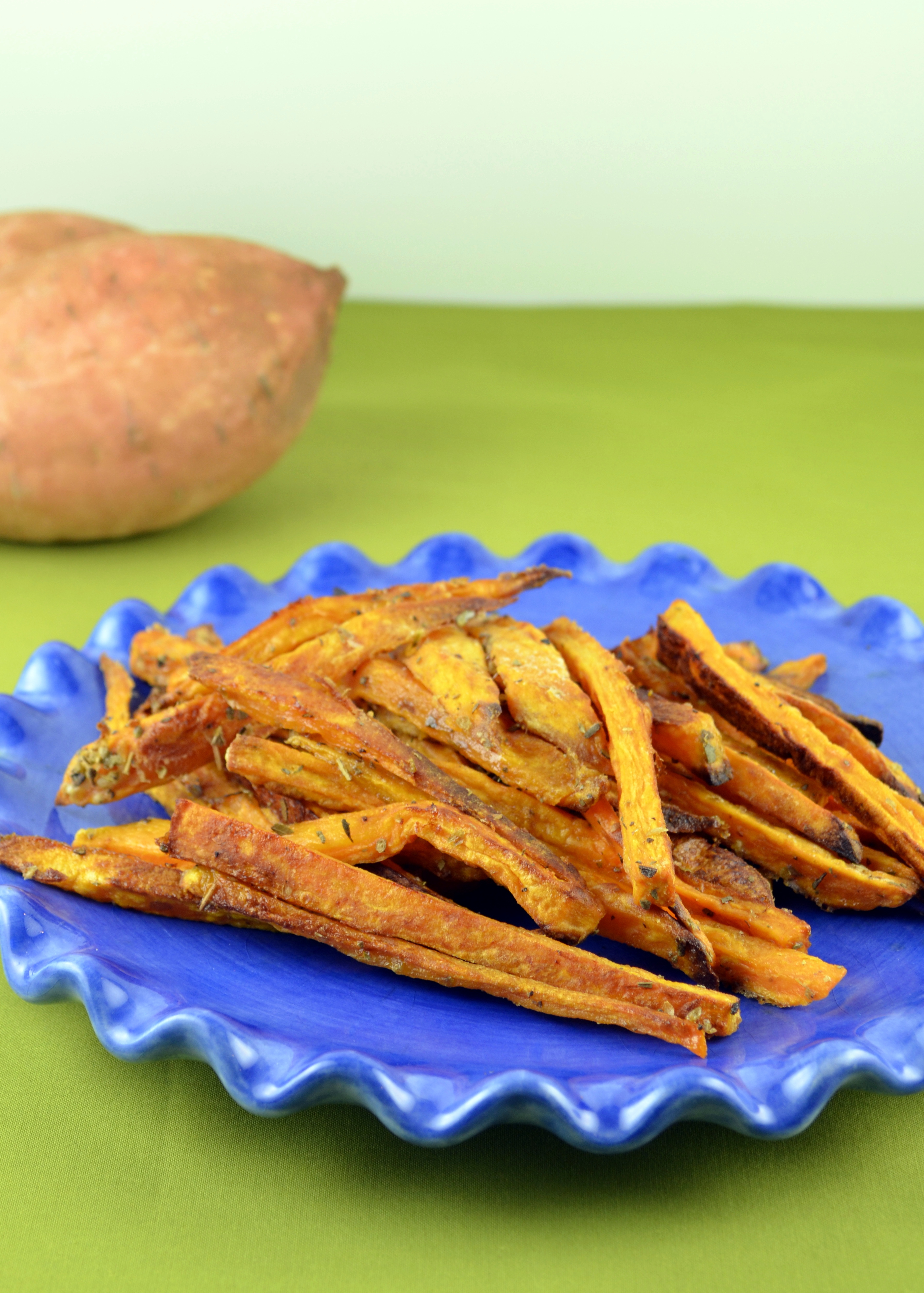
    But all that aside, sweet potatoes are delicious — especially in the form of sweet potato fries, which make a regular appearance (and disappearance) at our house. These fries are crispy on the outside and soft, sweet, and rich on the inside. And since the olive oil they are tossed in enhances the absorption of the beta carotene, eating these super fries is a win-win situation all around.

    Baked Sweet Potato Fries
    Serves 4-6

    4 sweet potatoes, peeled and sliced into thin strips
    6 tbsp. olive oil
    2 tbsp. cornstarch/arrowroot powder/wheat flour/rice flour
    2 tsp. salt
    2 tsp. dried oregano

    Preparation

    1. Heat oven to 450 degrees. Spray two large baking sheets with cooking spray.
    2. Place sweet potato strips in large bowl; toss with olive oil.
    3. Add remaining ingredients; toss well to combine.
    4. Place the sweet potato strips on the baking sheets, in one layer.
    5. Bake for 40-45 minutes, or until golden.
    6. Enjoy!