Recipe: Lamb Kafta Kabobs

8 Sep

In the United States, we tend to use cinnamon mostly in sweet dishes. But in other parts of the world, cinnamon has long been used in savory dishes, too, where it adds an extra layer of flavor and warmth. It is an ancient aromatic spice that was worth more than gold and was considered an appropriate gift for royalty.

These lamb kafta kabobs, which feature the traditional Lebanese flavor combination of cinnamon and allspice,  will make anyone who eats them feel like royalty, too. At our house, we put them in pita bread with hummus (and/or plain yogurt mixed with diced cucumber, garlic, and mint) and lettuce and tomatoes.  I usually make Tabouli as an accompaniment, and some of  us also add that to our pitas for a full flavor experience.

The traditional method of preparation involves shaping the kabobs around a skewer, but it is far easier (and faster) to make them without the skewer. If using wooden skewers, soak them in water for 30 minutes before assembling the kabobs.

Lamb Kafta Kabobs
Serves 4

1 lb. ground lamb (can use half lean ground beef if preferable)
1 small onion, finely chopped
1/2 c. finely chopped parsley
3/4-1 tsp. salt
1/4 tsp. pepper
1/4 tsp. cinnamon
1/8 tsp. allspice

Preparation
1. Mix all ingredients well.
2. Take a small handful of the meat mixture and mold into a roughly 4 ” cylindrical shape around a skewer, or just mold into cylindrical shape without the skewer.
3. Grill and enjoy.

Source: Lebanese Cuisine by Madelain Farah

Recipe: Tabouli

5 Sep

When I was in college, the original Moosewood Cookbook was one of the first cookbooks I bought on my own. Other cookbooks have since joined my collection, but the Moosewood Cookbook still holds a special place in my affection–almost entirely because of this Tabouli recipe, which is a family favorite.

Tabouli
Serves 8
Note: Needs 2-3 hours refrigeration

1 c. dry bulgur wheat (I usually use coarse grind)
1.5 c. boiling water
1.5 tsp. salt
¼ c. fresh lemon juice
3 cloves garlic, crushed
¼ c. extra virgin olive oil
1 tsp. dried mint
1/2 c. chopped scallions (including green parts: about 3-4 scallions)
2 medium tomatoes, seeded and chopped
1 cucumber, seeded and chopped
1 c. (packed) freshly chopped parsley
1 (15.5-oz.) can chickpeas, rinsed and drained (optional)

Combine bulgur, boiling water and salt in bowl. Cover and let stand 15-20 minutes, or until bulgur is chewable.

Add lemon juice, garlic, oil, and mint, and mix thoroughly. Refrigerate 2-3 hours.

Just before serving, add vegetables (and chickpeas, if using) and mix gently. Check seasonings.

High Five

3 Sep

While the asters usher in autumn, I thought I’d take a moment to give a shout out to a few plants that have kept going, and going, and going–and are still going; the ones that have added color to my garden for three or more months. It was tough, but I chose the following five to honor this time around:

1. Euphorbia (Ascot Rainbow)–with its gorgeous foliage and bubble-like flowers, it has been putting on a show since late March. This photo looks straight down into the middle of the plant.

2. Hybrid Tea Rose (Double Delight) — it has been a delight since the end of April, with  fragrant flowers and lovely new foliage


3. Gaillardia (Fanfare-left, Oranges & Lemons, right) — it has been a bee magnet since the beginning of May


4. Verbena Bonariensis (Brazilian Verbena)–a tall, gently swaying plant; also in bloom since early May

5. Gaura (Passionate Rainbow) — though it did not bloom at all this year (its first in the garden), it has been flashing its foliage since May

Recipe: Marinated Kale with Red Pepper and Garlic

1 Sep

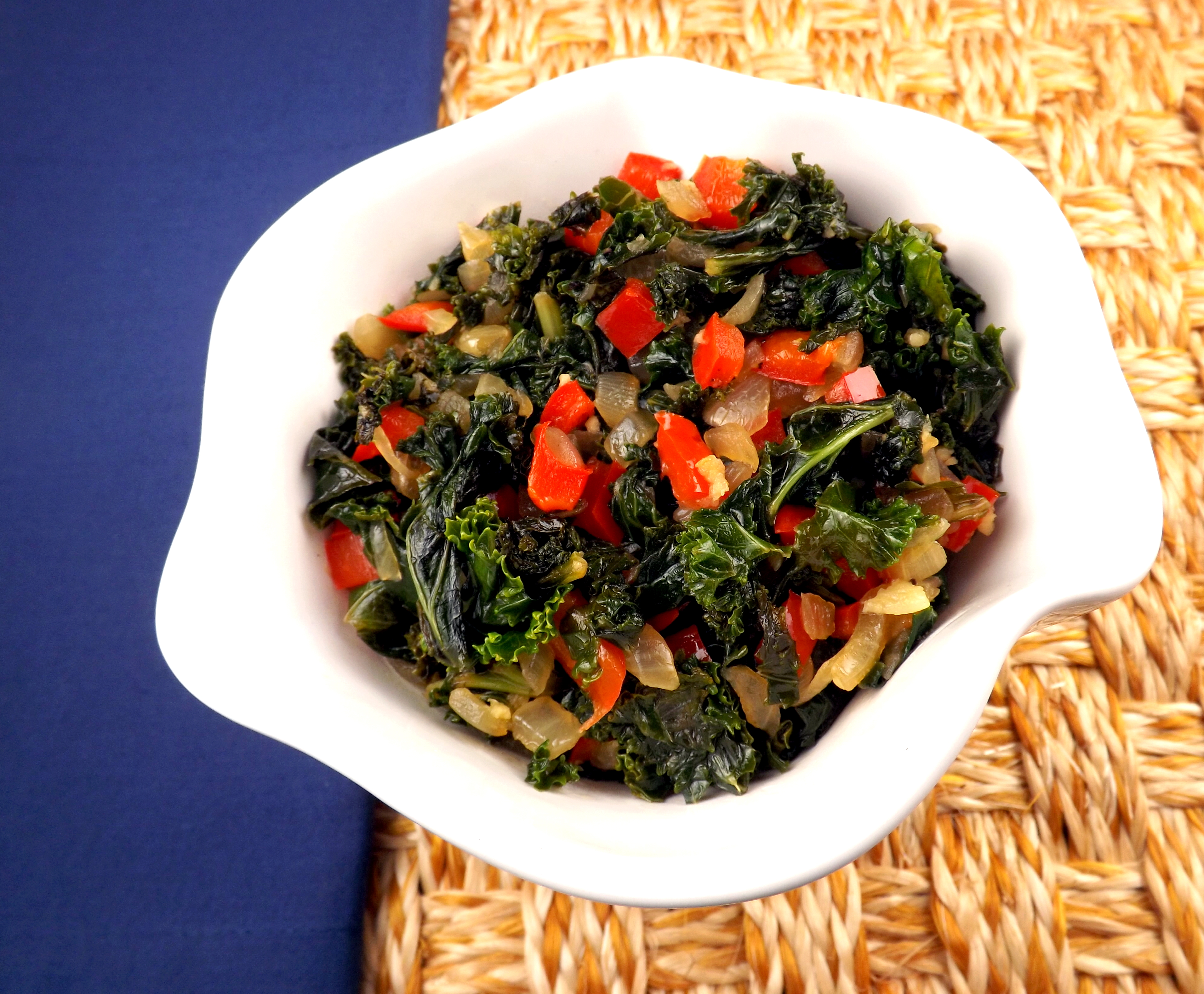
At our house, we are evenly divided between those who love kale, and those who really don’t love it very much. But even the family members in the latter camp like the taste of this side dish, which is delicious at room temperature. With garlic, olive oil, lots of ground pepper, and a hint of sweetness from the seasoned rice vinegar, it’s hard to resist.

Note:  Like other greens, an enormous amount of kale cooks down to a fraction of its former size.

Marinated Kale with Red Pepper and Garlic
Serves 4

3 tbsp. extra virgin olive oil
1/2 large white onion, finely diced
1/2 large red bell pepper, finely chopped
3-4 large cloves garlic, crushed
10 oz. cleaned, chopped kale, ribs removed (about 15 c., loosely packed)
1/2 c. vegetable broth (or chicken broth)
lots of freshly ground pepper (to taste)
1/2-1 tbsp. seasoned rice vinegar

Saute onion in olive oil in a heavy skillet on medium heat until onion is soft; add red bell pepper. When red bell pepper is soft and onion is golden at the edges, add the garlic and cook for a couple of minutes.

Add the kale, and cook until it softens and has reduced in size by at least a half. Add the vegetable broth, cover the skillet and cook kale for about 10 minutes, or until most of broth has evaporated. Uncover, and heat on high for a few minutes to eliminate any remaining liquid; stir frequently. Add ground pepper to taste, then remove kale from pan and put in a serving bowl. Sprinkle rice vinegar over top and mix in gently.

Serve warm or at room temperature.

Going Out in Style

31 Aug

Today, temperatures in my neck of the woods hit 90+ degrees Fahrenheit. It doesn’t feel like autumn just yet. It simply feels hot.

However, autumn is in the air, according to my garden. Even though many plants are still chugging along quite happily, the New England Asters (Purple Dome) are now in full bloom. When they make an appearance, I know the garden is embarking upon its last hurrah for the season.

Asters may signal a winding-down of sorts, but they are hardly a retiring type of flower. They are bold, bright, and alluring; butterflies and bees simply cannot resist them (see Cabbage White Butterfly below).  So if a garden is entering the autumn of its life, there is no better plant to usher it out in style than an aster.


Recipe: Thai-Style Quinoa Salad

26 Aug

Quinoa is an Andean super food–one that has been cultivated for thousands of years. A source of complete protein, it is used and cooked like a grain, though it is technically a seed.  Because of its “exceptional nutritional qualities, its agro-ecological adaptability, and its potential contribution in the fight against hunger and malnutrition,” quinoa has been honored by the United Nations: 2013 will be the International Year of  Quinoa.

But quinoa deserves praise for its gastronomic adaptability, too. In this case, it makes a successful appearance in a salad with flavor origins a world away from the Andes. This salad, with its strong Thai accents, is a deliciously light and crisp summer dish.

Thai-Style Quinoa Salad
Serves 8-10
1 c. quinoa, rinsed and drained
1/2 tsp. salt
1 red bell pepper, julienned
1 carrot, shredded
1 small cucumber, peeled, seeded, and sliced (if using English cucumber, no need to peel)
1/3 c. chopped fresh mint
1/2 c. chopped fresh cilantro

Dressing
6 tbsp. fresh lime juice
1 tbsp. sugar
1 tbsp. fish sauce (can substitute tamari or soy sauce)
1/2 tsp. red pepper flakes

Add quinoa, salt, and 1 1/2 c. water to a sauce pan. Bring to a boil and then reduce heat to low, cover, and cook for 12-15 minutes, until water is absorbed. Turn off heat and let quinoa sit for 5 minutes. Place in a large serving bowl and let cool completely.

When quinoa is cool, add red bell pepper, carrot, and cucumber and mix well.

To make the dressing, whisk together the lime juice and sugar in a small bowl until sugar is dissolved. Stir in the fish sauce/tamari/soy sauce and red pepper flakes. Add the dressing to the salad and toss. Gently mix in the mint and cilantro.

Source: Raising the Salad Bar, by Catherine Walthers

A Matter of Perspective

25 Aug

This morning, I came across a small, deep-blue flower in the garden. It is an Asiatic Dayflower. It blooms early in the morning, but the flowers shrivel up within a few hours; you have to catch them while you can:


Like the Black Oil Sunflower, the Asiatic Dayflower is a plant I did not introduce into my garden. Both plants produce gorgeous flowers. But I approached them differently. After one look at the Sunflower, I labeled it a “flower”–a plant worth keeping. With the Dayflower, I asked myself: Is it a flower or a weed?  I looked it up and found that by most measures, it is considered to be a weed. It spreads easily, can grow under almost any conditions except in the middle of water, and seems to be immune to most herbicides.

So now, an ethical dilemma: Will I be influenced by the fact that most people view the Dayflower as a weed, and yank it out? Would I even be contemplating this if I had discovered it was a rare flower admired and coveted by all and sundry?

This leads to a philosophical question: What is a weed? The common view, originally espoused by E. J. Salisbury, is that a weed is matter out of place; it is a plant growing where we do not want it to grow.  Ergo, it must come out. But Ralph Waldo Emerson said, “A weed is a plant whose virtues have not yet been discovered.”

In some cases, those virtues are very hard to find. But in the case of the Asiatic Dayflower, one of its virtues is obvious: its delicate beauty. And in some parts of the world, it is used as a medicinal herb and as a source of blue dye.

So its virtues have been discovered; it’s just a matter of perspective. And my perspective  is that the Dayflower is a flower that is welcome to stay in the garden… for now.


Recipe: Chicken Satays with Peanut Sauce

20 Aug

This is the dish I was beginning to prepare yesterday when I got side-tracked by my daughter’s lovely Mediterranean Wrap.

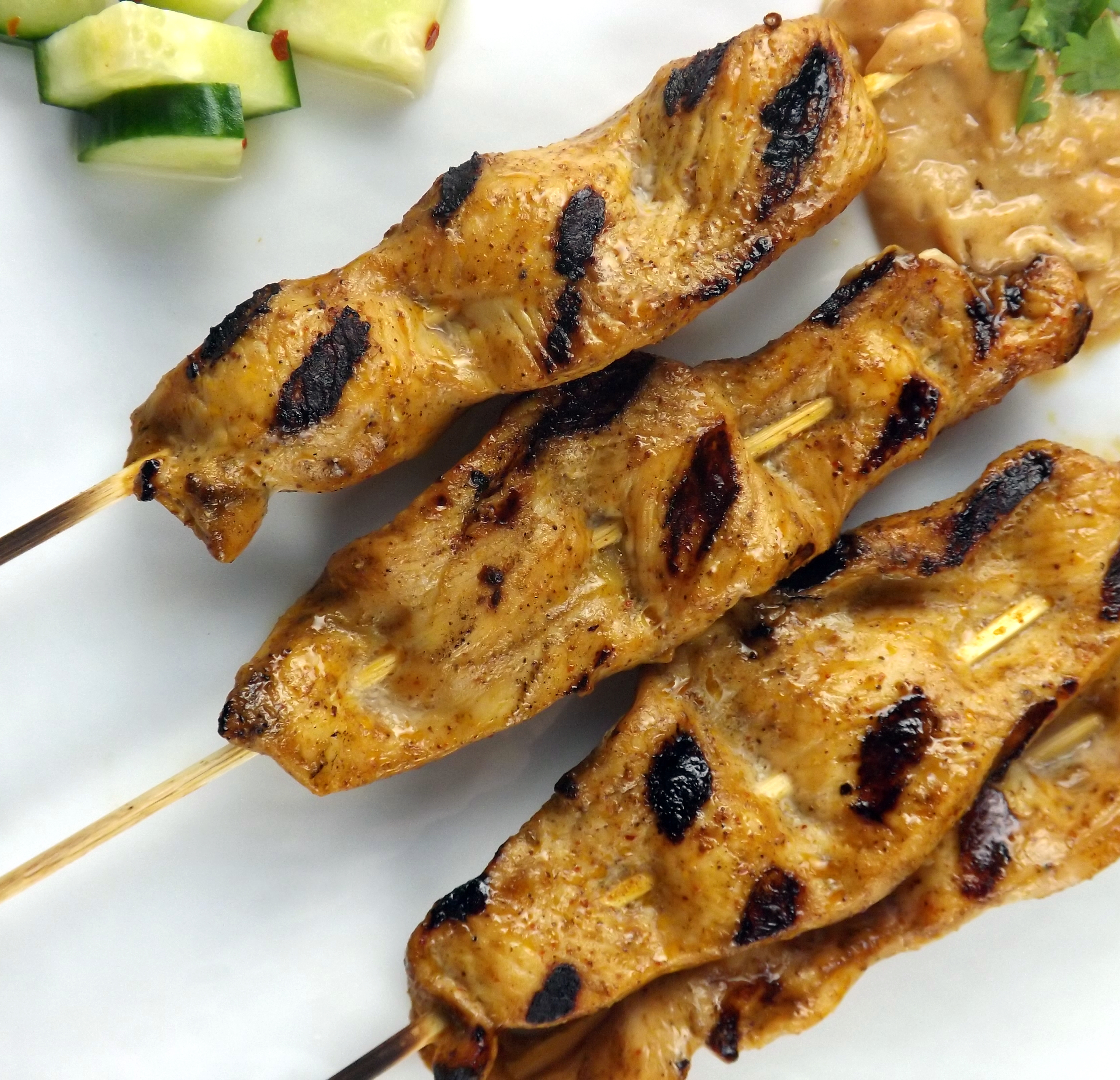
I first tasted these satays at a friend’s house when we were living in Australia. I could not get enough of the peanut sauce and I could not get over that fact that our friend had made it from scratch. Even now, I’m happy to just have the sauce on rice after the satays have all disappeared, which they will do soon after making their initial appearance. I usually serve the satays with some diced cucumber sprinkled with seasoned rice vinegar and crushed red pepper.

If  threading satays and making sauce seems like too much, just marinate boneless chicken breasts (or thighs) in the marinade and throw on the grill for a delectable dinner; the chicken by itself is also fantastic.

This recipe is originally from an Australian Women’s  Weekly cookbook. Note the time needed to marinate the chicken.

Chicken Satays with Peanut Sauce
Makes about 20+ satays

2 lb. (or about 1 kg.) chicken breast, cut in half horizontally, then cut into thin strips

Marinade
4 tsp. soy sauce
2 tsp. honey
1 tsp. chili powder
2 tsp. cumin
4 tbsp. canola oil
1.5 tsp. curry powder

Peanut Sauce
1-2 tbsp. canola oil
1 finely chopped onion
2 cloves garlic, minced
½ tsp. chili powder
1 tsp. ground ginger
4 oz. low-sodium roasted peanuts, very finely chopped (or crushed with a mortar and pestle)
1/4-1/2 cup (60-120 ml.) cider vinegar
1 tsp. salt or soy sauce
3 tbsp. creamy peanut butter
1/3 cup fruit chutney (Major Grey, mango)
¾ cup (177 ml.) lite coconut milk
1/8 cup (25 gr.) sugar; you can use brown sugar if preferred**

Marinade: Combine marinade ingredients in large bowl with lid. Add chicken, coat well, cover, and marinate in refrigerator overnight (or at least for a few hours). If you will be using wooden skewers, soak in water for at least 30 minutes before cooking the chicken.

Sauce: Cook onion and garlic in oil until onion begins to turn golden. Add spices and peanuts, and cook for 2 minutes. Add remaining ingredients and bring to boil; reduce heat and simmer slowly for 30 minutes or until mixture thickens, stirring occasionally. Cover and keep warm.

After the chicken has marinated, thread the  strips onto skewers. Grill or broil chicken. Serve satays with peanut sauce (and cucumber salad if desired) as an appetizer, or add rice to make into a meal.

** [Note Feb. 2013: I recently made the sauce and forgot to add the sugar — and discovered it tasted great without it; use the sugar if you like the sauce to be a bit sweeter.]

Recipe: Mediterranean Chicken/Vegetable Wrap

19 Aug

This is a recipe you can adapt in countless ways to suit omnivorous or vegetarian tastes. It is an excellent way to use up leftovers, though pan frying or grilling the chicken/vegetables just beforehand works, too.  The overriding theme is a Mediterranean one. Our kids rummage through the fridge, take out whatever appeals to them at the moment, cook what they need, and make killer wraps out of it all.

The open wrap pictured here is courtesy of my daughter, who waited very patiently to eat her lunch today until after I had taken the photo. She used a tomato-basil wrap, hummus,  leftover grilled chicken and eggplant (both of which she reheated in a small cast-iron skillet), Kalamata olives, lettuce, and tomatoes. The one constant is the hummus. Other ingredients that make frequent appearances include feta cheese, sun-dried tomatoes, thinly sliced red onion, other grilled vegetables, etc.  Fresh oregano or basil from the garden and a drizzle of Italian dressing or vinaigrette add the finishing touches.

Mediterranean Chicken/Vegetable Wrap
Servings: Flexible

Possible Ingredients

Wraps or tortillas
Hummus
Grilled/pan-fried chicken breast (marinated in olive oil, garlic, oregano, other herbs of your choice, and salt and pepper, then sliced or chopped after cooking)
Grilled/pan-fried eggplant or other vegetables
Kalamata olives (chopped)
Fresh tomatoes (chopped)
Sun-dried tomatoes (drained if in oil and sliced)
Lettuce (shredded)
Feta cheese (crumbled)
Red onions (thinly sliced)
Fresh/dried herbs (oregano or basil)
Italian dressing, or a vinaigrette of your preference

A New Mystery

17 Aug

In the case of the missing Monarch caterpillars, I admit I may have unfairly pinned the blame on the White-Breasted Nuthatch, which is probably far more interested in small insects on trees rather than large caterpillars on flowering plants.

It is time to accept that the caterpillar caper may never be solved. But when it comes to gardens and all the life therein, there are numerous other mysteries requiring the use of little grey cells.

Two days ago, I saw that a single yellow flower had bloomed right in front of our wrought-iron fence. It looked like a small sunflower with a speckled center.

I did not plant it and it was not there last year.  None of our neighbors have flowers that look anything like it. So, how did it end up in the garden?

And then it hit me: this flower came from the bird feeder. It was a sunflower after all–the product of a black oil sunflower seed, dispersed by bird, chipmunk, or wind from the area by the bird feeder to a new home in the garden.

Unfortunately, it may not be a permanent home, since all signs point to this being an annual sunflower, not a perennial one. Perennial sunflowers don’t bloom from seed the first year, and they appear in clumps rather than single stems. But this guest is welcome for as long as it is able to stay, a small spot of sunshine in a garden gearing up for autumn. And maybe next year, I will disperse some seeds myself.