Weekly Photo Challenge: Spring

3 May

When I think of Spring, I think of flowers and new life.  This Tulipa “Ballerina” is one the the earliest and cheeriest flowers in my garden, and a look inside the tulip reveals some essentials about plant reproduction.


This close-up focuses on the three-lobed stigma (the top-most section of the tulip’s female reproductive parts, known collectively as the pistil), which catches pollen via its sticky and fuzzy surface. The pollen then travels down the tube-like style to the ovary where  fertilization takes place (if the pollen came from a tulip plant), ultimately leading to the production of seeds. The six pollen-covered anthers (the top-most parts of the male reproductive organs, known collectively as the stamens) are blurred in the background; the stamens emanate from the base of the pistil.

Tulips are considered “perfect” flowers because they contain both male and female reproductive organs. They can self pollinate, but can also cross pollinate in the wild with the help of bees and other pollinators. Alas, most commercial tulips, including this one, are sterile hybrids. But the good thing is that tulips also reproduce via their bulbs, which allows gardeners to enjoy them anew each spring.

The Circle of Life: An Avian Point of View

30 Apr

I broke my ankle last Wednesday, but am on the mend. I was quite housebound the first couple days, and by the weekend had had enough. I slung my camera around my neck, picked up my crutches, and made it as far as the backyard. I had ordered Jon Young’s book What the Robin Knows and though it had not yet arrived, I was inspired to go outside, sit, prop my leg up, and observe the birds in our yard. Better than observing them from the sofa….

Of course, my hobbling around on crutches, dropping them, and banging them and my camera case against the picnic table greatly limited the avian activity at first, but after I settled down, the birds very slowly ventured back to inspect the bird feeders. The male cardinal was easy to spot, as was his mate; they maintained constant communication via “chip” calls, which made it easy to find them. Here is the male:

Male cardinal
Male and female cardinals remain paired for the entire season (and possibly for several seasons, or longer) and keep tabs on one another at all times. I have not yet seen our male cardinal feed his mate, which is common during the breeding season and is meant to show the male can be a good partner and father, but am hoping to have the chance. Does the female crave a certain kind of food during this time? I don’t know–but good on the male if he goes and gets it for her.

While I was outside, another flash of red caught my eye: a male House Finch. This photo isn’t the best, but that Finch was quite speedy:
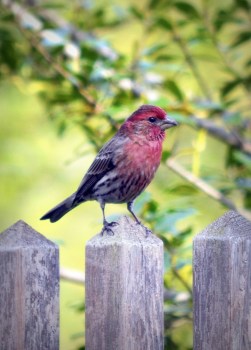
Male House Finch
Like the Cardinal, the (male) House Finch gets its red coloring from the food it eats during the molting period (specifically from carotenoid pigments, mostly in fruits). In fact, males gravitate toward redder foods during this time. Why? Because the redder their feathers, the better–as far as the ladies are concerned. For female House Finches, there is a clear link between coloration and the male’s health and nutrition. Bright red plumage signals a male who can reproduce well, defend his territory, and be a good parent.  The male House Finch in the photo looks cut out for the job.

The last bird I saw before I went back in (ok, the last bird I saw that I was able to actually take a relatively non-blurry photo of) was a Robin, the subject of the aforementioned book.

Robin
I just started reading the book last night, and will undoubtedly learn a great deal about this copper-chested visitor to our yard. But already, I know that the Robin knows far more than I do when I’m outside. It can tell the difference between dogs, cats, and lunatics on crutches who aren’t fooling anyone with their cameras. And it can communicate with the other birds. When a song- and chatter-filled interlude abruptly transitions into instant and total silence by mutual agreement of all avian parties, something is up.

As it was earlier this evening. It has been raining torrentially, but even so, there was a lot of bird activity each time the rain let up. During one of those moments, all bird sound ceased and was immediately followed by several odd but alarming squeaks that had me wondering what possible kind of bird could be making them. I looked out an upstairs window and saw a large crow in the garden, pecking at a small, young rabbit laying prostrate on the wet earth. The rabbit had made the noise. The crow saw me at the window and flew away; but as I watched, the little rabbit shuddered several times and then was absolutely still. I grabbed a crutch, hobbled down the stairs, and went outside in a futile attempt to see if there was anything I could do, but in that short (-ish) amount of time, the crow had returned and claimed its prize. I think the heavy rain had forced the rabbit out of its burrow, with tragic results.

I was sorry for the rabbit and wanted to be mad at the crow, but it was doing what it had to do. At this time of year, it, too, has mouths to feed–big  and hungry ones–and so it will catch whatever it can to ensure the survival of the one brood it produces per season. Its booty can include the eggs and young of other birds– hence the total silence in our yard at the arrival of the crow. The alarm system worked well for the birds, but not for the rabbit. But that’s the circle of life.


Recipe: Pavlova

27 Apr

We lived in Australia for four years and loved every minute of it, leaving behind dear friends and wonderful memories. One of those memories was of Pavlova, a beautifully light and sweet dessert named after the Russian prima ballerina Anna Pavlova, who toured Australia and New Zealand in the 1920s. There has been a long-standing debate based on primary and secondary sources and lots of national pride, as to whether the dessert was first created  in New Zealand or Australia. Though the scales may have now tipped toward New Zealand (with the Oxford English Dictionary crediting the first written record of the recipe to New Zealand), it is a question that may never be satisfactorily answered; in an elegant diplomatic maneuver, the OED also lists the origin of pavlova as “Austral. and N.Z.”

For our family, the answer is simple: since we first encountered Pavlova in Australia, it will for us forever remain as one of our favorite Australian desserts.

The version in the photo below is a double recipe, prepared in a rimmed 18 x 12-inch jelly roll pan–which was a mistake. There was no easy way to get the meringue out and onto a serving platter without shattering it into pieces–so we served the Pavlova straight from the pan, lifting each piece off the baking/parchment paper with a thin spatula. It was a bit messier than usual, but due to the amazing decorating job by three enthusiastic teenagers, and to the fantastic blend of flavors that has made this such a beloved recipe, no one minded. In the future, though, I’ll remember to use an unrimmed baking sheet….

pavlova

Pavlova
8 servings

6 large egg whites
pinch salt
1 1/2 c. + 1/8 c. sugar
2 tsp. cornstarch
1 tsp. white vinegar

1 1/2 c. cream
2 tsp. sugar
1 tsp. vanilla

1 large punnet strawberries, hulled and sliced
1 small punnet blackberries
1 small punnet raspberries
2 kiwis, peeled and sliced

Preparation

1. Preheat oven to 350 degrees.
2. Draw a 9″ circle on baking/parchment paper and place it on a baking sheet. Spray the paper with baking spray.
3. Combine egg whites and the pinch of salt in a very clean and completely dry large bowl, and beat until stiff peaks form (you can also use a stand mixer). Gradually add sugar, a tablespoon or two at a time, beating constantly, until the mixture is very glossy and the bowl can be held upside down without the meringue falling out. Gently whisk in the cornstarch and vinegar.
4. Using a spatula, spread the mixture onto the paper circle on the baking sheet; smooth the top with the spatula.
5. Place the baking sheet in the oven and bake the meringue for 5 minutes, then turn the heat down to 270 degrees and bake another 75 minutes, or until the outside of the meringue is crisp, but the inside is soft and chewy. Turn the oven off and leave the meringue in the oven, with the door ajar, for 15 minutes.
6. Slide the meringue, still on the baking paper, onto a rack and allow to cool completely. It will crack a bit when cooling; this is normal. Using two spatulas or a pizza peel, carefully lift the meringue off the baking paper and place on a serving platter.
7. Whip the cream with the sugar and vanilla until stiff peaks form. Try to use as little sugar in the whipped cream as your palate will allow, to offset the very sweet meringue.
8. Spread the whipped cream on the meringue and add the fruit in a decorative pattern. (The great thing about pavlovas is you can decorate them any way you like, with whatever fruit you prefer.)

Recipe adapted from Australian Table magazine.

Weekly Photo Challenge: Letters

25 Apr

For this challenge, I choose the letter “s” in the form of coal cars stopped on the railroad tracks below Hollywood Cemetery in Richmond, Virginia.

The curve of the cars mirrors the curve of the track to the right, creating a long, lazy, and unexpectedly sensual metallic double “s.” Where it will lead the viewer is a mystery.

View of Coal Cars from Hollywood Cemetery, Richmond, Virginia

Recipe: Nutella Hazelnut Palmiers

19 Apr

By family decree, certain elements of our Easter Brunch can never be altered: the Breakfast Pizzas; the Pesto-Roasted Tomatoes, Red Onion, and Garlic with Pine Nuts; and the Fruit Salad with Honey Lime Dressing. The ham comes and goes and the potatoes occasionally vary (Hashbrown Casserole has been a favorite for many years, but to the dismay of one of our sons, is being edged out this year by Country-Fried Potatoes with Bacon and Green Onions). Other dishes enter and exit as the urge strikes: this year, one of those “other” items will be Stuffed Mushrooms with Merguez Sausage and Spinach, which I realized I hadn’t made in a while.

The one area of Easter Brunch where more experimentation is allowed is the sweet section, which consists of 2-3 items chosen at whim. Today, I made these Nutella Hazelnut Palmiers while everyone was out hiking; I’ll need to hide them pretty soon, lest the returning teenagers and 20-somethings demolish them before tomorrow’s brunch. And before I “taste test” any more of them myself….

Palmiers

Nutella Hazelnut Palmiers
Makes about 30

1 (17.65 oz. ) pkg. puff pastry dough sheets, thawed
2 tbsp. raw sugar, divided in half
1 c. Nutella (chocolate hazelnut spread), divided in half*
1/2 c. chopped hazelnuts, divided in half

Preparation

1. Lightly flour a clean, 12 x 12-inch spot on your counter. Sprinkle the spot with 1 tbsp. raw sugar.
2. The puff pastry dough package should contain two sheets. Unfold one of the sheets and place it on top of the  flour/sugar. Gently roll out the dough to the left and to the right until it is about 15-inches long (don’t worry about the width); you mostly want to embed the sugar into the underside of the dough.
3. Spread 1/2 c. Nutella onto the puff pastry sheet; sprinkle 1/4 c. chopped hazelnuts over the top.
4. Starting at the top long end, roll the dough toward you until you get to the middle of the pastry sheet. Now roll from the bottom end up to the middle. Bring the two rolls together, and place the log of dough seam-side down on a baking sheet lined with parchment paper.
5. Repeat with the second puff pastry sheet. Sprinkle the counter with more flour and the remaining tbsp. of sugar, top with the second pastry sheet, and gently roll the dough out. Spread with the remaining Nutella and sprinkle the remaining hazelnuts on top; roll up as indicated in Step 4. Place the second log of dough on the baking sheet, too, and then put the baking sheet in the freezer for about 10 minutes to firm up the dough.
6. Preheat oven to 350 degrees.
7. Working with one  log of dough at a time, place on a cutting board and slice into 3/4-inch thick slices (or as close as you can get) with a serrated knife. Lay the palmiers flat side down on the parchment paper-lined baking sheet, with ample room between palmiers since they will expand.  You will need multiple baking sheets, or will need to bake in batches.
8. Bake for 30 minutes or so, until the palmiers are golden. (Keep an eye on them; baking time will depend on the thickness of the palmiers.)
9. Let them cool on the baking sheet for a couple of minutes, then remove to a rack to cool completely.
10. Enjoy!

* Can add up to 1/2 c. more Nutella ( 1/4 c. on each sheet) for sweeter but slightly messier palmiers.

Recipe: Roast Leg of Lamb with Red Wine and Herbs

17 Apr

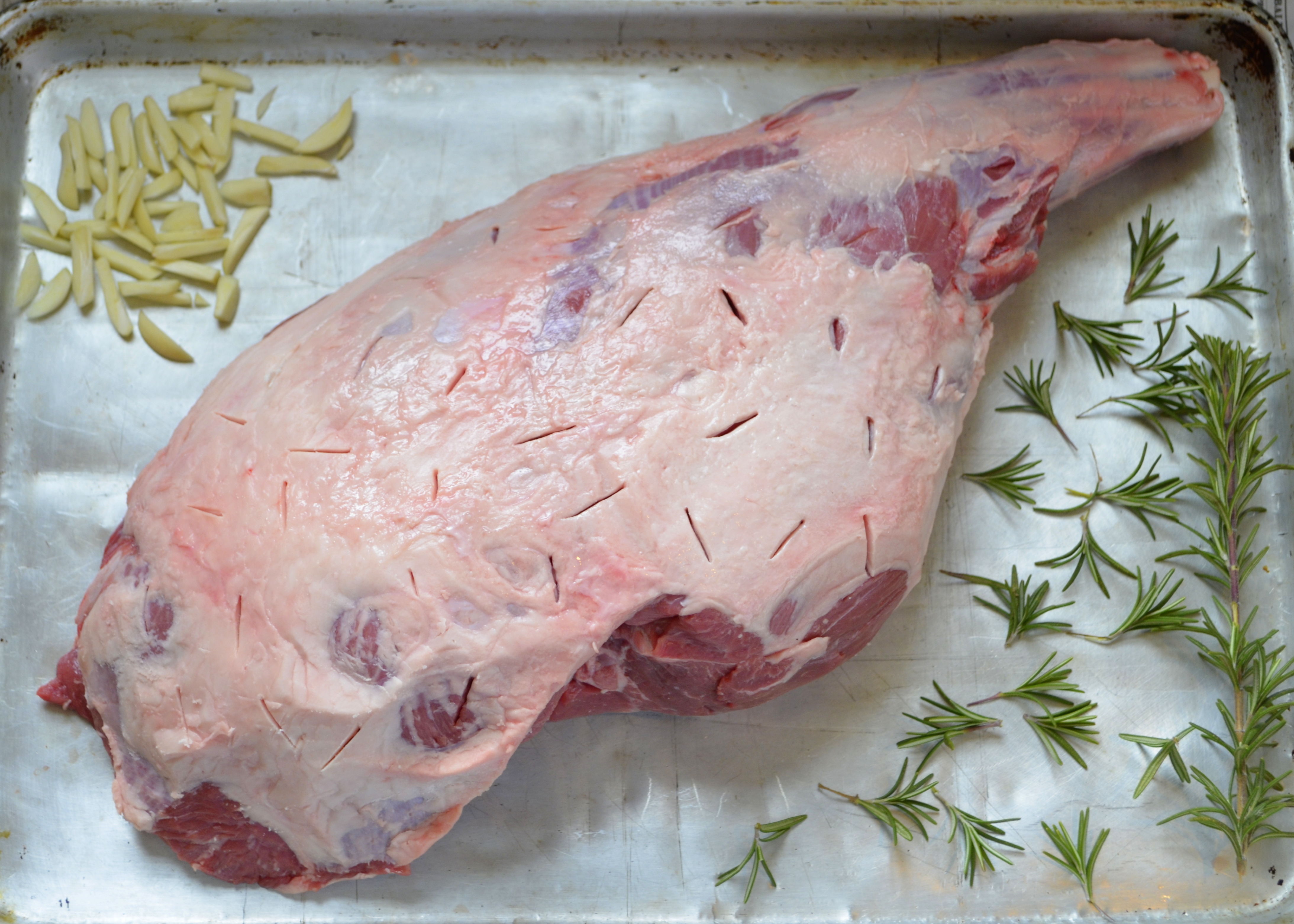
On the Thursday before Easter, we always have a leg of lamb as part of our evening meal, a tradition that started before my husband and I were married–when we were young and foolish. We bought our first leg of lamb on impulse at a butcher shop in Greenwich Village, New York, on the Wednesday before Easter (we happened to be visiting NYC). We sprinkled some herbs over it, doused it with a bottle of wine, wrapped it up, refrigerated it overnight, and then drove it to Washington, DC the next day in time to roast it for dinner. It was a slightly boozy, but very delicious lamb we ate that evening; the excess alcohol probably helped preserve it, unrefrigerated, during the 4-hour trip.

Though we have very fond memories of that lamb, I have since refined the recipe, ensuring proper food-safety techniques and (unfortunately) eliminating the need for any road trips.

Lamb6

Roast Leg of Lamb with Red Wine and Herbs
Serves 6-8
Note: This lamb needs to marinate overnight (or for at least 8 hours) prior to roasting.

1 bone-in leg of lamb (6-8 lb.)
salt and pepper
4-5 cloves garlic, cut into slivers
fresh rosemary, separated into small sprigs

Marinade:
1/3 c. olive oil
1/4 c. red wine of your preference
1 tsp. Dijon mustard
1/2 tsp. each dried basil, oregano, parsley, mint, etc.
1/2 tsp. sugar

Preparation

1. Rinse lamb and pat dry. Then, using a sharp knife, cut off  as much of the top, papery thin layer (the “fell”) as possible; it is not necessary to remove all of it. (Some cooks prefer to leave it on to help keep the lamb moist. Others remove it because they think it has a strong flavor. I remove it for aesthetic reasons; family members don’t like seeing the fell on the lamb.)
2. Trim off  excess fat, but make sure to leave a nice layer to ensure moistness and to help carry the flavor of the rosemary, garlic, and marinade.
3. Using the same sharp knife, make deep slits into the meaty portions of the leg.

L1
4. Insert one sliver of garlic and a small sprig of rosemary into each slit in the lamb. Sprinkle lamb with salt and freshly ground pepper.

L2
5. In a bowl, combine marinade ingredients.
6. Place lamb in 2-3 layers of clean, plastic grocery bags (or other large sealable bags) on a rimmed baking sheet large enough to hold the lamb. Holding the bags open, pour the marinade over the lamb, taking care to pour some of the marinade into each of the slits filled with garlic and rosemary.

Lamb
7.  Tie the plastic bags together tightly so that the marinade cannot leak out, then place the lamb (still on the baking sheet) in the refrigerator overnight (or for at least 8 hours). If you are so inclined, feel free to massage the marinade into the lamb every so often.

Lamb2
8. In the morning (or after about 4 hours), turn the lamb over so that the other side of the lamb can soak up some of the marinade.
9. Preheat oven to 450 °F. Remove the lamb from the bags (reserving the marinade), pat dry, sprinkle with a bit more salt and pepper, then place the  lamb on a rack set inside a rimmed baking sheet or pan. Insert a meat thermometer into the thickest part of the lamb, but not near the bone. Cook lamb at 450°F for 20 minutes, then reduce heat to 325 °F. Roast lamb until meat thermometer reaches between 145 °F (medium rare) and 160 °F (medium), basting periodically with leftover marinade. For a 6 lb. leg of lamb, total cooking time should be about 2 hours, depending on preferred degree of doneness.
10. Remove lamb from oven, then let rest for at least 15 minutes before carving.

Lamb7


Double, Double, Toil and Shovel

14 Apr

One good thing about gardening is that while certain things need to be done throughout the year, I believe (hope) there is significant flexibility in when those things can be done (otherwise, I’m in trouble). There is one big exception to this philosophy: Easter. It is our one and only gardening deadline–an immutable date by which the garden must receive a serious makeover in order to present its best (or at least, not its worst) side to the guests who will come to our house for Easter. It helps that this excuse forces us to give the garden a really good start to the season, in compensation for any benign neglect that may be headed its way later.

This spring-cleaning mania also applies to Schnauzer 1 and Schnauzer 2–without fail, they get nice new haircuts so that our guests do not mistakenly assume we have taken to rearing sheep. After four hours of on-and-off grooming yesterday that neither they nor I appreciated very much, they now look like leaner and more refined versions of their former selves. They also look naked, but we are all getting used to it.

The garden, too, looks simultaneously neater and more naked. The protective fall leaves have now been replaced with a tidier layer of mulch. The emerging plants are still maintaining their distance from their neighbors; at at this time of year there is only a foreshadowing of the lushness of summer. But the garden’s current low-key appearance is deceptive. I planted or transplanted more than 130 plants during the past two weekends.

This is admittedly a bit nuts. I have a tendency to move plants around before they are in their fully active growth mode,  if I can still move them easily. Sometimes it is for altruistic reasons (to save plants  in danger of being overtaken by their neighbors) and sometimes for aesthetic ones (something else may look better there, or vice versa). But in recent days, I also replaced plants that did not survive our rough winter; filled in a new, long and narrow flower bed alongside our new-ish patio (populated entirely by some of the aforementioned transplanted plants: Montauk Daisy, roses, and Switchgrass); decommissioned the rose garden and turned it into a vegetable garden; covered a sloped area with ground cover; and installed a bird bath.

The stage is now set; time for the actors to arrive.

FB2  
New (transplanted) flower bed                           Robin enjoying new bird bath

Plants: Why it Pays to Be Prickly

5 Apr
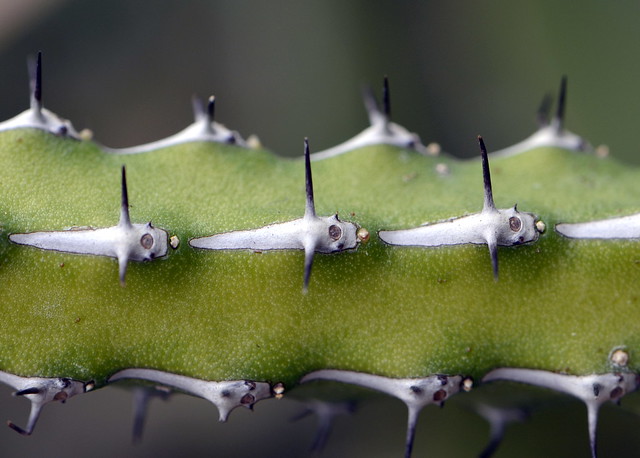
Didierea madagascariensis (Octopus Tree)

Didierea madagascariensis (Octopus Tree), close-up

While most people would bristle at the thought of being called prickly, a plant would consider it quite the compliment.

For us, prickliness has negative connotations. A prickly disposition means someone is easily irritated, a prickly sensation is one that is itchy and scratchy, and a prickly situation is one to avoid.

But for a plant, prickliness pays. It is a protective adaptation that allows the plant to survive while facing multiple challenges, the main one being herbivores hoping for a nice snack. In my garden, carnivores of the canine variety are the bigger problem; their rampages through the flower beds in pursuit of squirrels have felled less-protected plants. But even they now know not to tear through the rose garden.

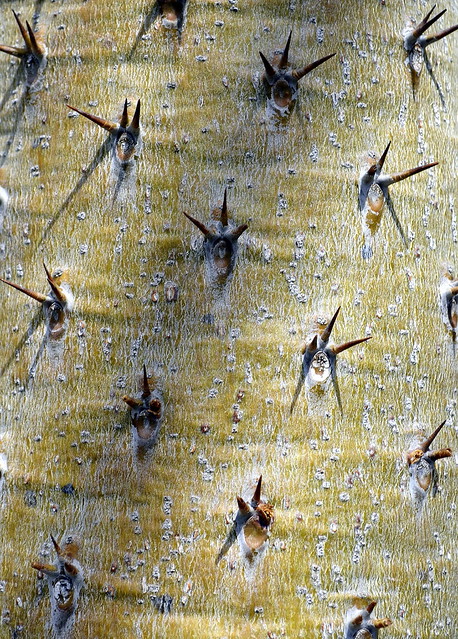
In common parlance, the terms “prickles,” “thorns,” and “spines” are often used interchangeably, but botanically speaking, they are different things: prickles come from a plant’s epidermis (the outermost cell layer) and break off quite easily, thorns are modified plant stems, and spines are modified leaves or parts of leaves. Rose “thorns” are actually prickles.

In this post, I’ll focus on spines. Why? Because it still boggles my mind that spines are ….  (modified) leaves.

   
Didierea madagascariensis                                       Pachypodium lamerei

Aside from being a source of protection, spines serve an important function for xeric plants (xerophytes: plants that have adapted to survive in environments with little water; cacti, aloes, agaves and other succulents are xeric plants). In desert areas, most plants with large, thin, flat leaves wouldn’t last very long; they would lose too much water. So desert plants had to adapt, or die. One of their adaptations was the modification of leaves into spines. Compared to traditional leaves, spines have a very small surface area, which reduces water loss. They reflect sunlight, deflect drying winds, and provide shade to the plant. At night, when it’s cooler, spines collect and drip condensed water vapor.

Knowing all this has expanded my thinking about “prickliness;”  in this case, the pricklier the situation, the better!

Cleistocactus winteri (Golden Rat Tail cactus)


Flowers Above

27 Mar

Recently, when walking to and from work or through my garden or around my neighborhood, I have tended to keep my eyes at ground level, on the alert for early blooms and signs of spring. But this evening, in the magical hour before sunset, I looked up… and was immediately rewarded by the sight of emerging flowers on local trees, a glorious sight indeed–and a reminder that good things also come from above.


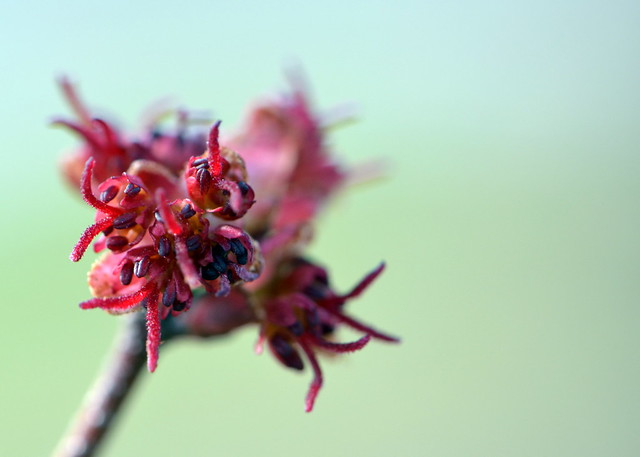
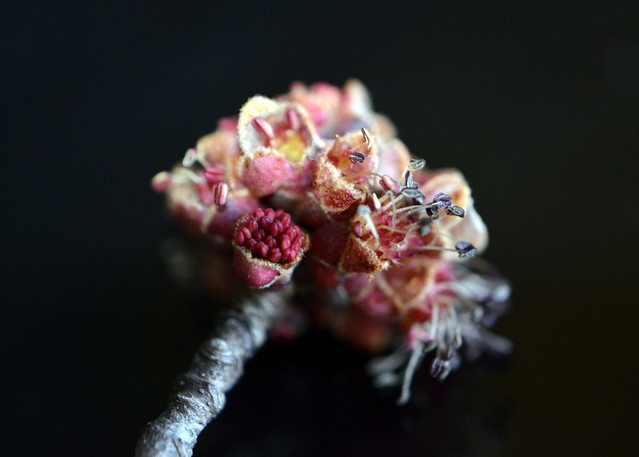
Red Maple flowers


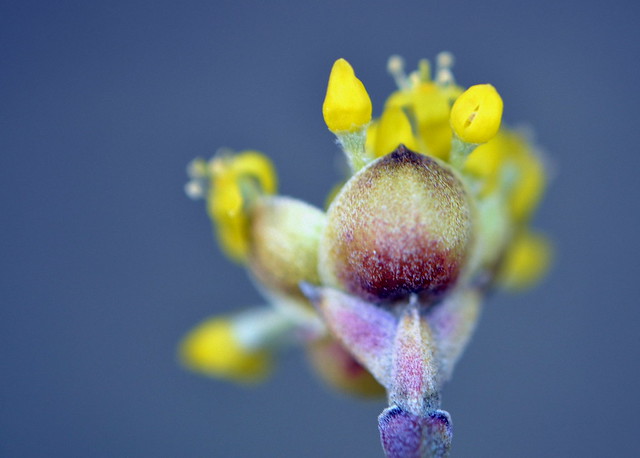
Emerging Cornelian Cherry Dogwood flower cluster


Red Maple flower cluster, photographed on black table

The Remains of the Season

22 Mar

Last weekend, a stroll around the National Arboretum revealed that, yes, spring has arrived and may soon work its way a few miles north and visit my garden, too:


Dwarf Dutch Iris


Crocus

While I am waiting for Spring 2014 to put in an appearance in my garden and usher in the new , I wanted to give a shout out to the some of the remains of 2013, all beautiful in their own way:

  
Dried Pomegranates, US Botanic Garden


Rose of Sharon seed pod, my garden


Azalea seed pod, my garden


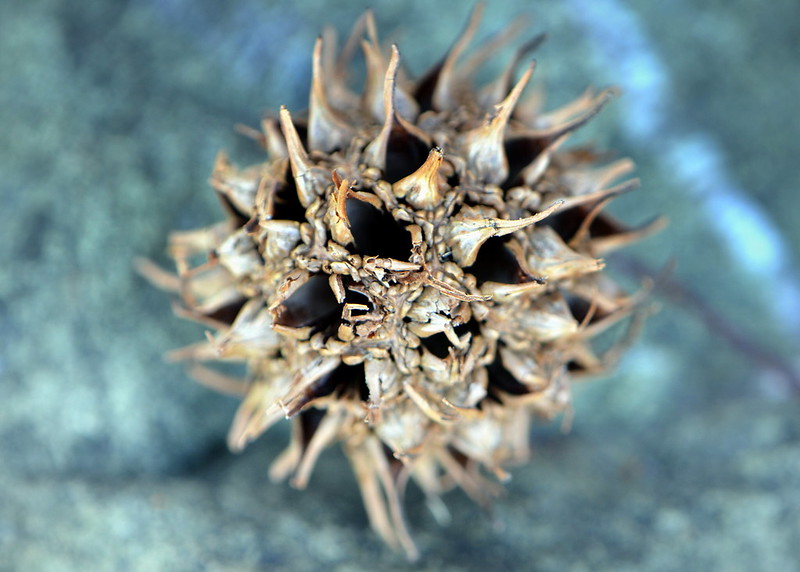
Dried Fruit of the Sweetgum tree, US National Arboretum