Tag Archives: rosemary

Recipe: No-Fail, No-Knead Focaccia

22 Sep

This is a recipe I turn to time and again when serving Italian antipasti. It is the quick version of a Bon Appetit recipe, cutting the first rise time from 8-24 hours, to just 3-4. Even with the shorter first rise, this recipe has never failed me. I start the focaccia in the morning and it is ready at meal time, with only a few brief interventions in between while I am making other dishes. If you do have more time, definitely make the original, longer version. But if you need a quicker focaccia fix, search no further.

Note: Wherever possible, it is best to weigh key ingredients on a kitchen scale to preserve the correct ratios between them.

No-Fail, No-Knead Focaccia

Ingredients:
¼ oz. (7 gr.) active dry yeast
2 tsp. honey
2.5 c. (590 ml.) lukewarm water
22 oz. (625 gr.) all-purpose flour
5.5 tsp. (about 16 gr.) Diamond Crystal kosher salt
6 tbsp. extra-virgin olive oil, divided, plus more for hands
butter
Maldon sea salt flakes
fresh rosemary (optional)

Preparation:

1. Whisk the honey and lukewarm water in a medium bowl; add the yeast, whisk again, and let sit 5 minutes (the mixture should look foamy or at least creamy; if it doesn’t, you should start again with new yeast).

2. Add the all-purpose flour and kosher salt and mix with a rubber spatula until a shaggy dough forms and no dry streaks remain.
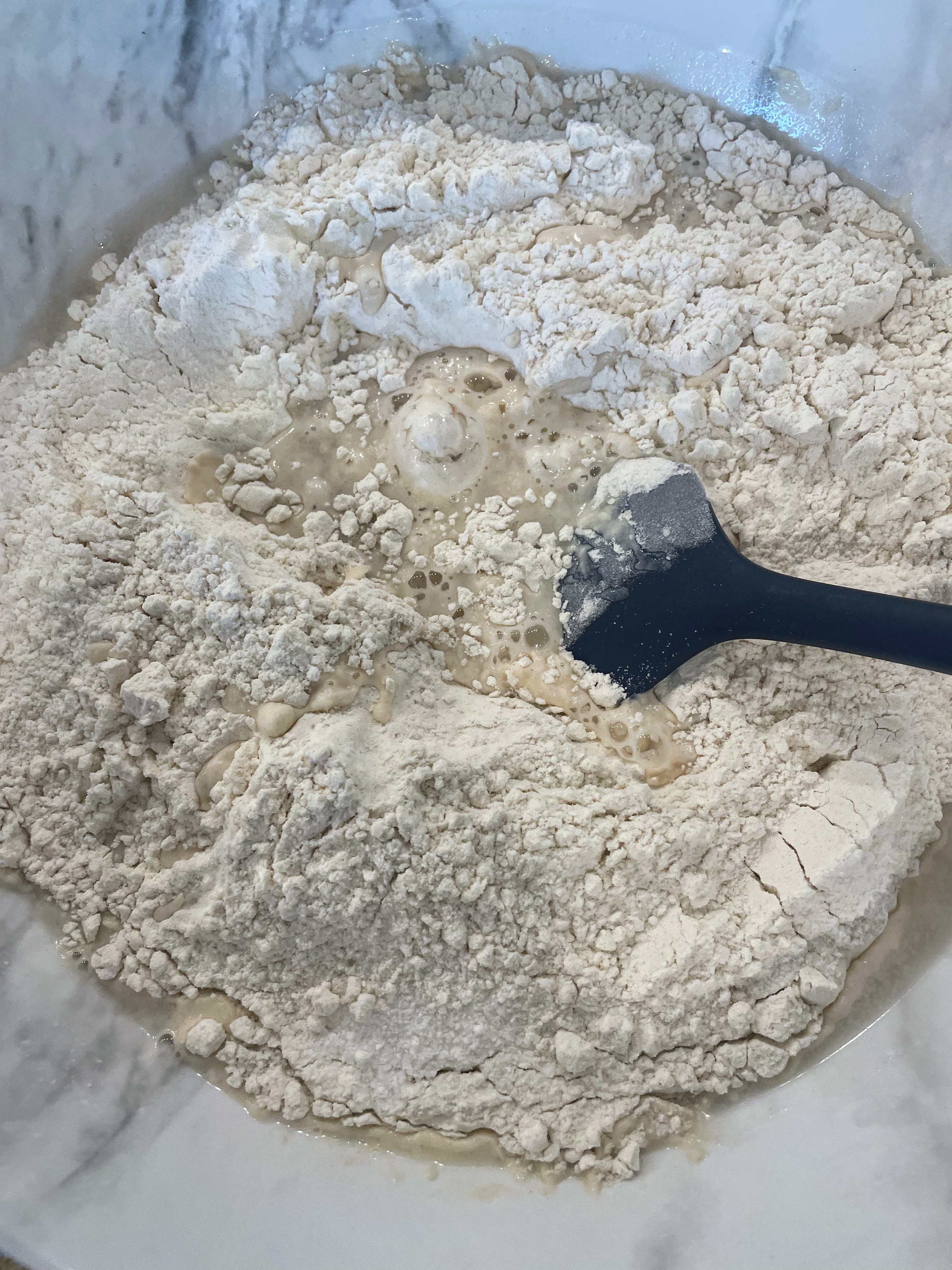
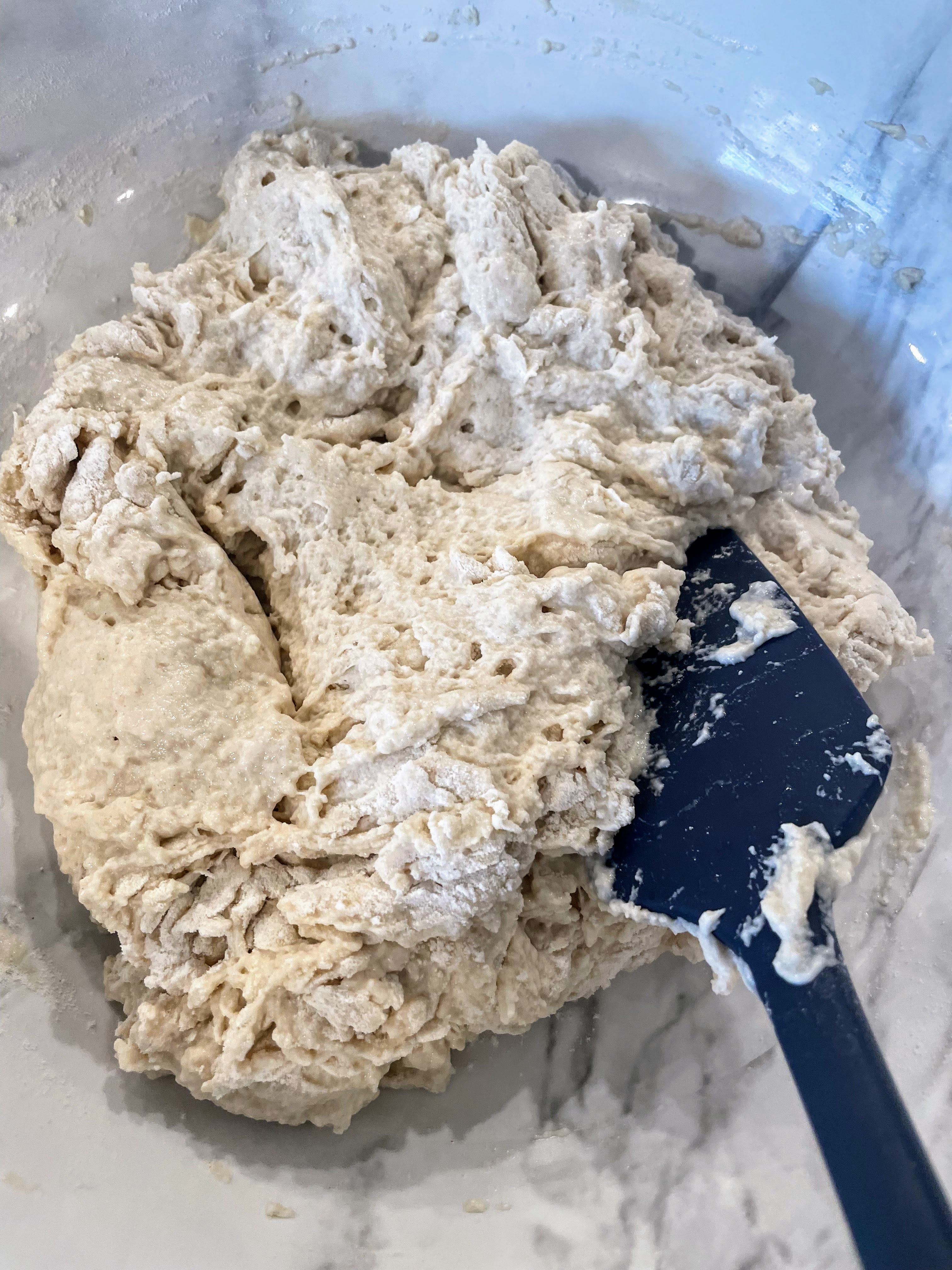
3. Pour 4 tbsp. of the extra-virgin olive oil into a large bowl, as the dough will rise a lot. Transfer the dough to the bowl and turn to coat in oil. Cover with a lid or plastic wrap and let rise at room temperature until doubled in size, 3–4 hours. This is the first rise (quick version).

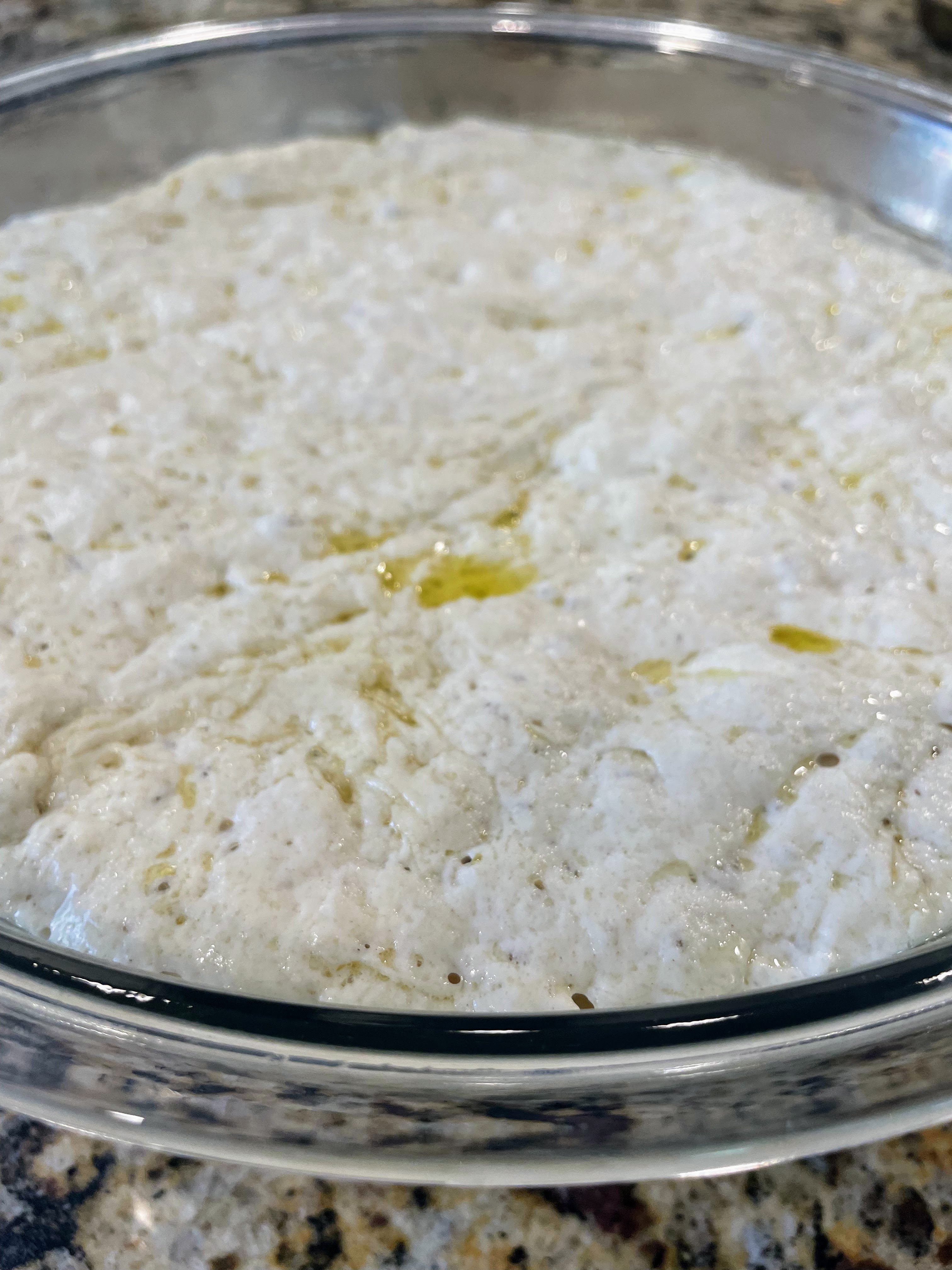
4. Generously butter a half-sheet (18×13 in./45×33 cm.) rimmed baking sheet. The butter will ensure that your focaccia doesn’t stick. After buttering, pour 1 tbsp. extra-virgin olive oil into the center of the sheet.

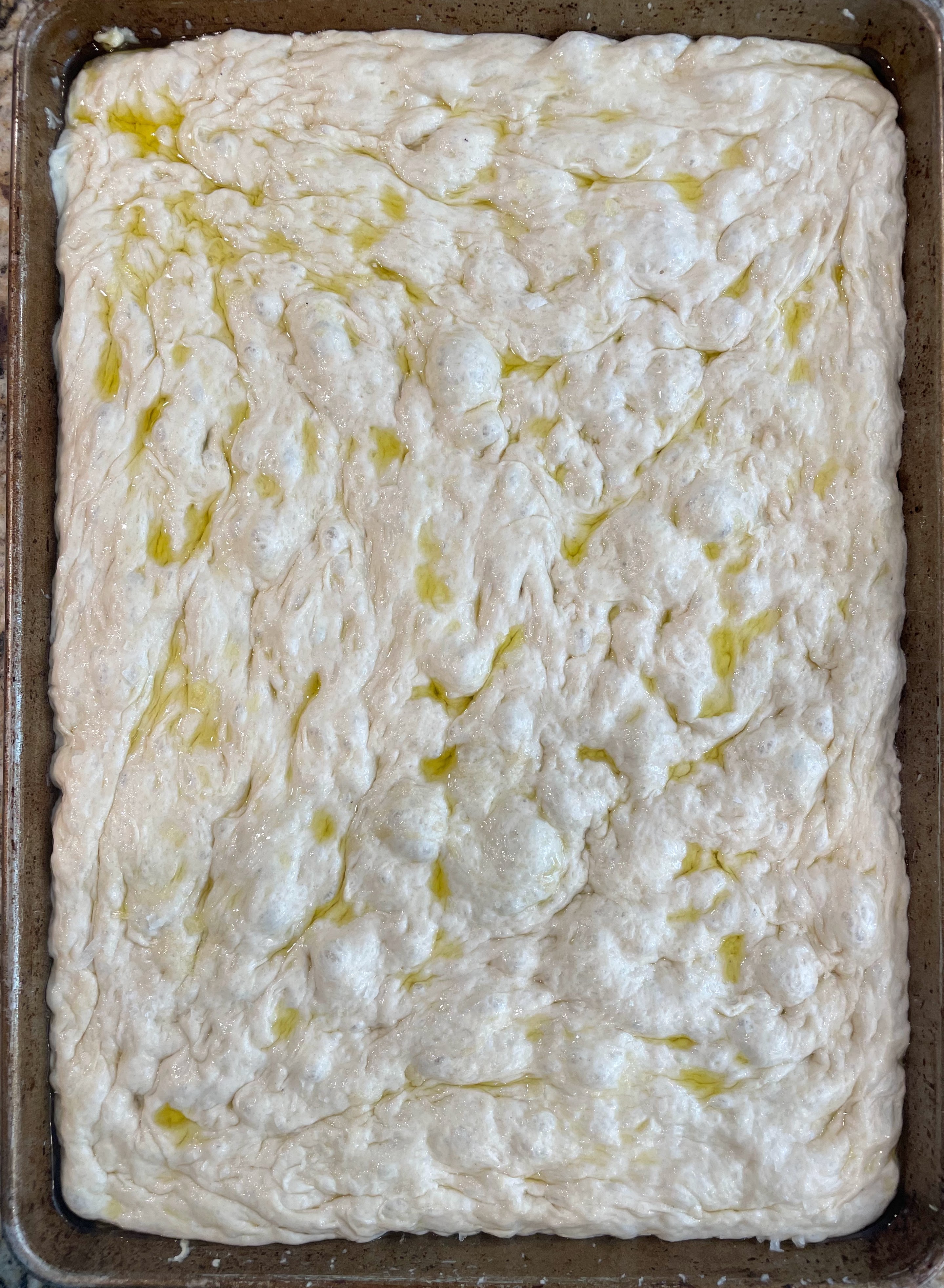
5. Keeping the dough in the bowl and using a fork in each hand, gather up the edges of the dough farthest from you and lift up and over into center of bowl. Give the bowl a quarter turn and repeat the process. Do this two more times until you have made it all the way around the bowl; you want to deflate the dough while slowly forming it into a rough ball. Transfer the dough to the buttered baking sheet. Pour any oil left in the bowl over and turn the dough to coat. Let rise, uncovered, in a warm, dry spot until doubled in size, at least 1½ hours and up to 4 hours. This is the second rise. By the end of it, the dough should have expanded toward the edges of the baking sheet.

6. Place a rack in the middle of the oven; preheat to 450F/230C.

7. To see if the dough is ready, poke it with your finger. It should spring back slowly, leaving a small indentation. If it springs back quickly, the dough isn’t ready. (If at this point the dough is ready to bake but you aren’t, you can chill it up to 1 hour.)

8. Lightly oil your hands. Gently stretch the dough to completely fill the sheet. Dimple the focaccia all over with your fingers, creating very deep depressions in the dough (reach your fingers all the way to the bottom of the pan). Drizzle with the remaining 1 tbsp. extra-virgin olive oil and sprinkle with the flaky sea salt (and rosemary, if using). Bake the focaccia until it is puffed and golden brown all over, 20–30 minutes.

Photos below are from two different bakes; one with flaky salt only, the other with rosemary and coarsely ground salt as I didn’t have the Maldon at the time. Both versions are delicious–you really can’t go wrong.
9. The focaccia is best the day it is made, but is delicious toasted the next day, too. My current favorite toppings: burrata and good-quality anchovies. Or burrata and mortadella. Or burrata and marinated tomatoes or marinated roasted peppers. Or no toppings at all….

Recipe: Marinated Feta

14 Feb

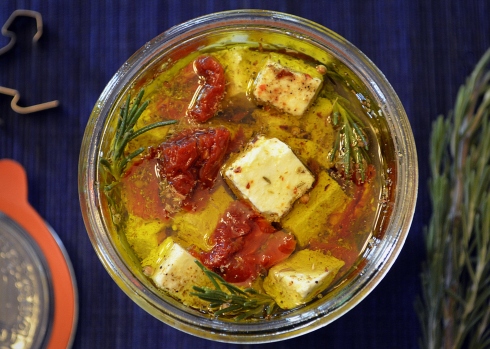
A jar of marinated feta in the fridge will more than earn its place there, especially since it takes 10 minutes–at most–to prepare it. That doesn’t count marinating time, but once you’ve introduced all the ingredients to each other, you can step back and let the magic happen on its own. Marinated feta is good with bread and crackers, in sandwiches and salads (including pasta salads), and as that little something extra in many other dishes. And the leftover olive oil is fantastic in a Greek salad dressing or tossed with vegetables prior to roasting. Amazing to think that a mere 10 minutes of matchmaking leads to so many happy returns.

MF2
Marinated Feta

12 oz. feta
4 oz. sun-dried tomato halves, in oil
1 tbsp. dried oregano
1 tsp. coriander seeds
1/2 tsp. chili flakes (can add more if you like extra heat)
freshly ground black pepper
3-4 sprigs fresh rosemary
extra-virgin olive oil

Preparation
1. If the feta is wet, pat it dry. Cut it into 3/4-inch cubes. Cut each sun-dried tomato half into four pieces.
2. Transfer half of the feta and half the sun-dried tomato pieces to a canning jar or glass bowl with a tight-fitting lid. Sprinkle the feta and tomatoes with half of the oregano, coriander seeds, chili flakes, and ample black pepper. If using a canning jar, place the rosemary sprigs upright around the edges of the jar; otherwise, scatter them about. Add the remaining feta and tomatoes and sprinkle with the remaining spices. Pour the oil from the sun-dried tomatoes over top, then add enough extra olive oil to cover the feta.
3. Tightly cover/seal the jar or bowl, and refrigerate the feta for at least a couple days (and ideally, for one week) to let the flavors marry–if you can wait that long. The olive oil will solidify, which is normal — it will return to liquid form at room temperature (allow the feta to reach room temperature before serving).

MF1

Recipe: Roast Leg of Lamb with Red Wine and Herbs

17 Apr

On the Thursday before Easter, we always have a leg of lamb as part of our evening meal, a tradition that started before my husband and I were married–when we were young and foolish. We bought our first leg of lamb on impulse at a butcher shop in Greenwich Village, New York, on the Wednesday before Easter (we happened to be visiting NYC). We sprinkled some herbs over it, doused it with a bottle of wine, wrapped it up, refrigerated it overnight, and then drove it to Washington, DC the next day in time to roast it for dinner. It was a slightly boozy, but very delicious lamb we ate that evening; the excess alcohol probably helped preserve it, unrefrigerated, during the 4-hour trip.

Though we have very fond memories of that lamb, I have since refined the recipe, ensuring proper food-safety techniques and (unfortunately) eliminating the need for any road trips.

Lamb6

Roast Leg of Lamb with Red Wine and Herbs
Serves 6-8
Note: This lamb needs to marinate overnight (or for at least 8 hours) prior to roasting.

1 bone-in leg of lamb (6-8 lb.)
salt and pepper
4-5 cloves garlic, cut into slivers
fresh rosemary, separated into small sprigs

Marinade:
1/3 c. olive oil
1/4 c. red wine of your preference
1 tsp. Dijon mustard
1/2 tsp. each dried basil, oregano, parsley, mint, etc.
1/2 tsp. sugar

Preparation

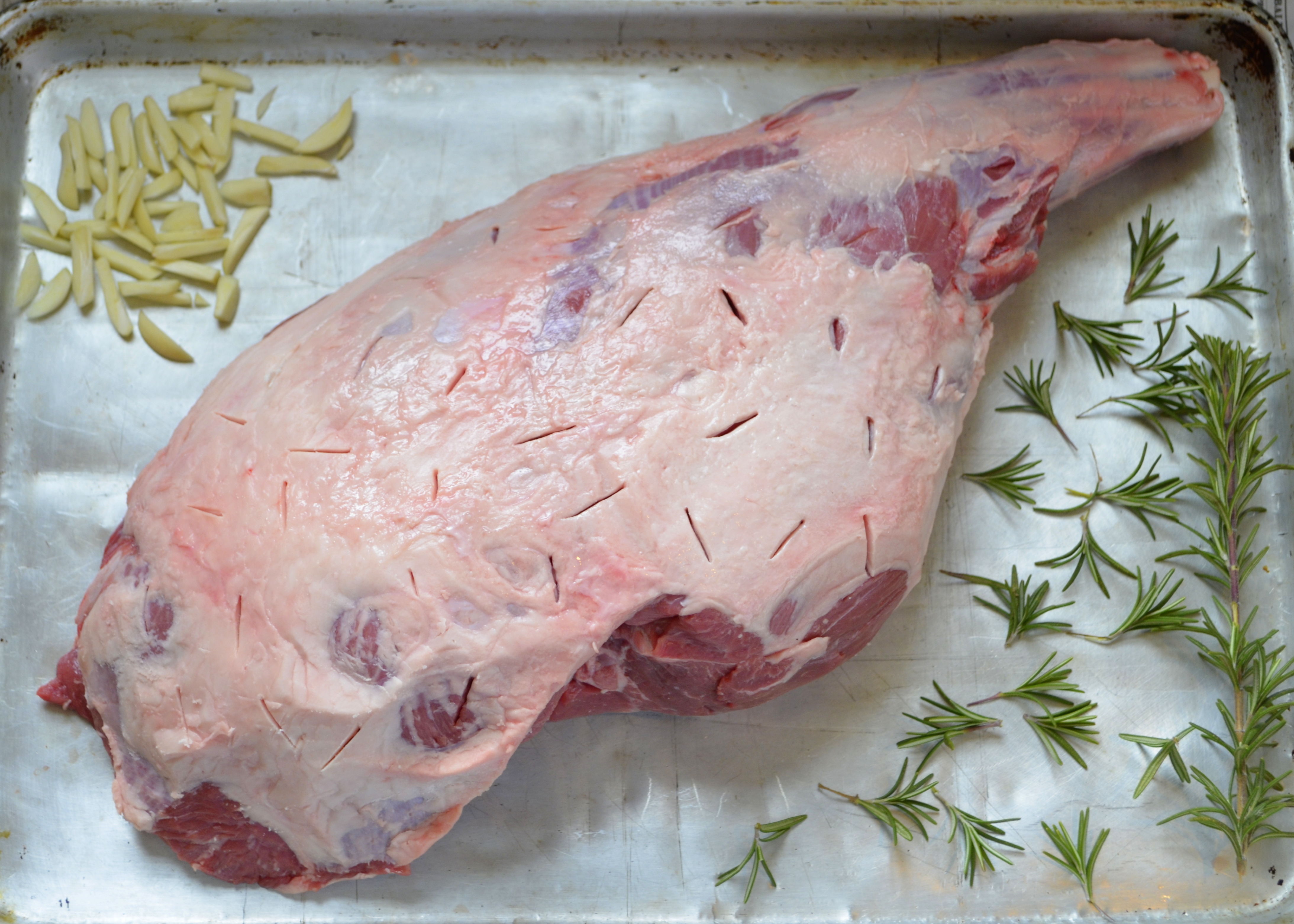
1. Rinse lamb and pat dry. Then, using a sharp knife, cut off  as much of the top, papery thin layer (the “fell”) as possible; it is not necessary to remove all of it. (Some cooks prefer to leave it on to help keep the lamb moist. Others remove it because they think it has a strong flavor. I remove it for aesthetic reasons; family members don’t like seeing the fell on the lamb.)
2. Trim off  excess fat, but make sure to leave a nice layer to ensure moistness and to help carry the flavor of the rosemary, garlic, and marinade.
3. Using the same sharp knife, make deep slits into the meaty portions of the leg.

L1
4. Insert one sliver of garlic and a small sprig of rosemary into each slit in the lamb. Sprinkle lamb with salt and freshly ground pepper.

L2
5. In a bowl, combine marinade ingredients.
6. Place lamb in 2-3 layers of clean, plastic grocery bags (or other large sealable bags) on a rimmed baking sheet large enough to hold the lamb. Holding the bags open, pour the marinade over the lamb, taking care to pour some of the marinade into each of the slits filled with garlic and rosemary.

Lamb
7.  Tie the plastic bags together tightly so that the marinade cannot leak out, then place the lamb (still on the baking sheet) in the refrigerator overnight (or for at least 8 hours). If you are so inclined, feel free to massage the marinade into the lamb every so often.

Lamb2
8. In the morning (or after about 4 hours), turn the lamb over so that the other side of the lamb can soak up some of the marinade.
9. Preheat oven to 450 °F. Remove the lamb from the bags (reserving the marinade), pat dry, sprinkle with a bit more salt and pepper, then place the  lamb on a rack set inside a rimmed baking sheet or pan. Insert a meat thermometer into the thickest part of the lamb, but not near the bone. Cook lamb at 450°F for 20 minutes, then reduce heat to 325 °F. Roast lamb until meat thermometer reaches between 145 °F (medium rare) and 160 °F (medium), basting periodically with leftover marinade. For a 6 lb. leg of lamb, total cooking time should be about 2 hours, depending on preferred degree of doneness.
10. Remove lamb from oven, then let rest for at least 15 minutes before carving.

Lamb7


A Not So Bleak Midwinter

7 Feb

Thus far, our winter has been relatively mild, but nonetheless, the garden looks like a shell of its former self: gaps where perennials have died back or where old growth was pruned to make way for new–and all remaining plants a monochromatic brown relieved only by occasional bits of evergreen.

A fleeting snowfall transformed this landscape for a day, accentuating the stark beauty of the plants that have soldiered on. A reminder that there are bright spots even in the depth of winter.

Presenting three “roses”: a frozen Hybrid Tea Rose bud, a sprig of Rosemary, and the dried seed pods of Rose of Sharon.