Tag Archives: recipe

Recipe: Black-Eyed Pea Curry

29 Oct

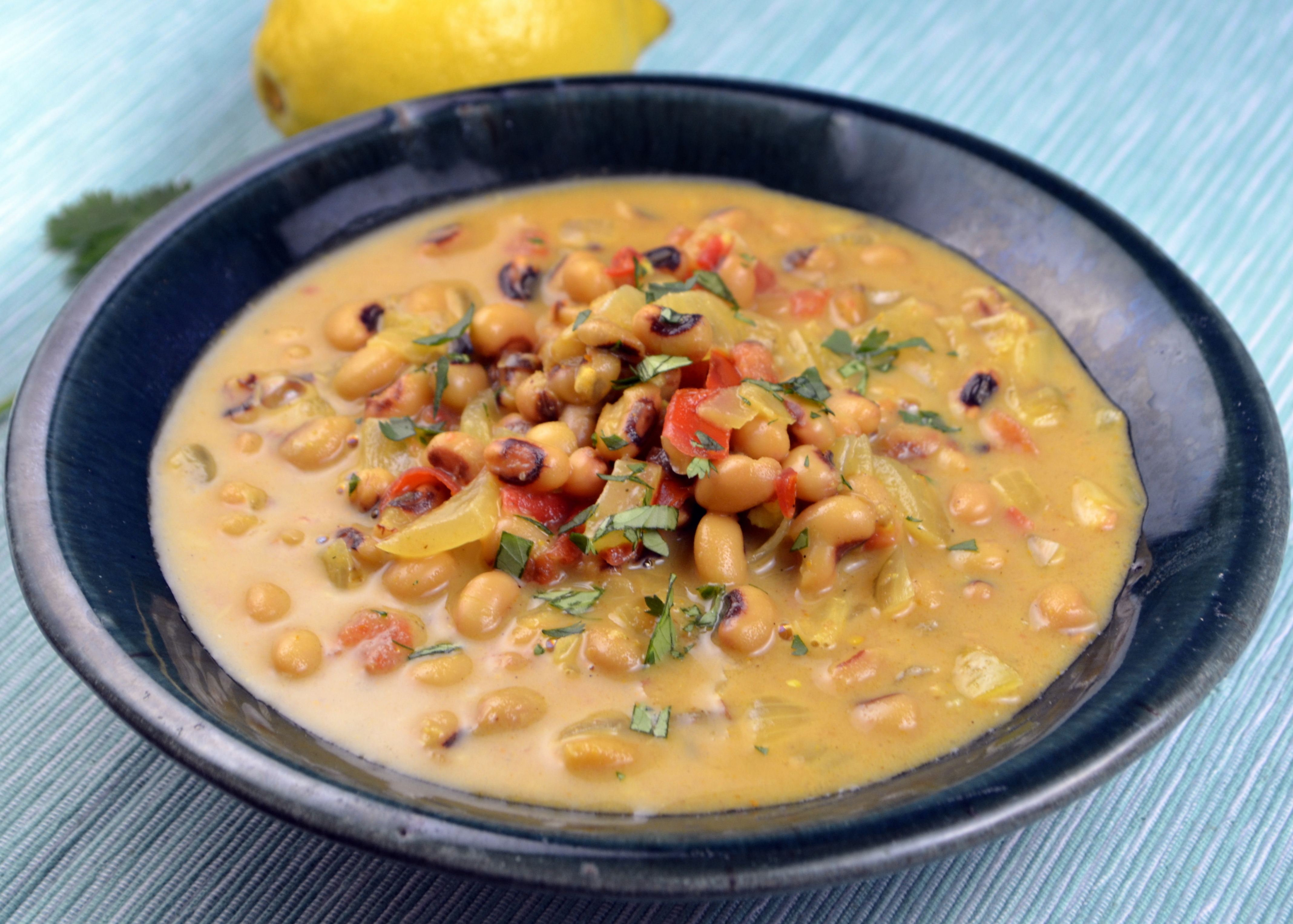
Part of the Indian meal I prepared recently for friends with divergent dietary preferences included this Black-Eyed Pea Curry. It answered a number of needs: it is vegetarian (vegan, actually) and is an excellent source of protein. And it goes nicely with drier, less saucy dishes such as the Spicy Indian Eggplant with Tomatoes. Not that dry dishes can’t be saucy in their own ways–that eggplant was quite a palate teaser. This dish, with mellow coconut milk, is a nice counterpoint.

Black-Eyed Pea Curry
Serves 4-6

2 (15-oz.) cans black-eyed peas, drained
2 tbsp. canola oil
1 large onion, chopped
3 large cloves garlic, minced
1.5 tsp. ground cumin
1.5 tsp. ground coriander
1/2 tsp. ground ginger
1/2 tsp. ground turmeric
1/4 tsp. cayenne or sprinkle of chili flakes
1 large tomato, seeded and diced
1 c. hot water
1/2 tsp. salt, or one small vegetable bouillon cube
1/2 tsp. sugar
1 c. canned coconut milk
1 tbsp. lemon juice (or to taste)
2 tbsp. minced cilantro leaves

Preparation
1. Heat the oil in a large pan over medium heat and sauté the onion until it starts turning golden brown at the edges. Add the next 6 ingredients (through the cayenne/chili flakes) and stir for 2 minutes. Add the tomatoes and cook for a couple more minutes, mashing the tomatoes with the back of a slotted spoon until they disintegrate.
2. Add the black-eyed peas, the water, the salt/bouillon cube, and the sugar. Turn heat to low, cover, and simmer for about 10 minutes. Stir in the coconut milk and simmer uncovered for another 10 minutes, or until liquid has reduced slightly.
3. Add the lemon juice, cook for one more minute, then sprinkle with the cilantro just before serving.

Recipe is adapted from 5 spices, 50 dishes by Ruta Kahate.

Recipe: Spicy Indian Eggplant with Tomatoes

27 Oct

I have always loved logic problems. You know–the kind where a man in a blue coat on a bus is sitting two seats away from a woman with red hair who is diagonally across from another woman using an iPhone and one seat away from a man with a green scarf reading the paper.  Eventually, given more clues, you’d have to say where everyone was sitting, what color hair they had, what they were wearing, and what they were doing.

Perhaps that is why I also greatly enjoy certain culinary challenges. For example, tonight we had friends over for dinner and had a lovely time with them. But having lived in Berkeley, we learned early on to ask if our guests had any dietary preferences or restrictions. This time around, several of our guests could not eat dairy, gluten, or meat (two friends are each avoiding one of those items, the other cannot have two of them–but no one friend is avoiding all three). The remaining five people at the table tonight eat anything and everything. No one was vegan.

So, what to serve? In cases such as this, I find that Indian food is perfect. There are myriad vegetarian and non-dairy options, and rice does not contain gluten. So I decided to use this opportunity to experiment by making several dishes I haven’t tried before. This eggplant dish is one of them, and one of the reasons I chose it is that it can be served at room temperature. Anything that can be made ahead of time, I like. This recipe, which family members deemed a keeper, is adapted from Madhur Jaffrey’s Indian Cooking.

Spicy Indian Eggplant with Tomatoes
Serves 6
[Updated 9 March 2021]

1 tsp. ground ginger
6 large cloves garlic, minced
1/8 c. (30 ml.) water

1 3/4 lb. (795 gr.) baby eggplant
about 1.5 c. (415 ml.) canola or vegetable oil

1 tsp. whole fennel seeds
1/2 tsp. whole cumin seeds
1 (15-oz./425 gr.) can petite diced tomatoes, drained, liquid reserved
1 tbsp. ground coriander
1/4 tsp. ground turmeric
1/8 tsp. cayenne (or chili flakes)
1 tsp. salt
1/2 tsp. sugar
1 tbsp. fresh lemon juice

Preparation

  1. Combine the ginger, garlic and water in a small bowl; set aside.
  2. Cut the eggplant lengthwise into halves, then cut each half lengthwise into four strips; cut the strips in half crosswise.
  3. Heat 1/2 c. (140 ml.) of the oil in a deep frying pan over medium-high heat; when hot, add one layer of eggplant and cook until the eggplant is golden-brown, turning pieces over as they cook. Remove eggplant and drain on a layer of paper towels.
  4. Repeat until all eggplant slices have been cooked, adding additional oil to the pan each time as needed.
  5. Once all the eggplant has been cooked, keep about 3 tbsp. of the oil in the pan, and discard the rest.
  6. Add the fennel and cumin seeds to the hot oil in the pan. Stir for a few seconds, then add the tomato, the ginger-garlic mixture, and the coriander, turmeric, cayenne, salt, and sugar.
  7. Stir and cook for 5-6 minutes, breaking up the tomato pieces with the back of a slotted spoon. Continue to cook until the mixture gets thick and paste-like.
  8. Return the eggplant to the pan and gently mix in; add the lemon juice. Cook on medium-low for about 10 minutes, adding some of the reserved tomato liquid if the eggplant looks too dry.
  9. Check the seasonings and adjust as needed (you may like to add more salt, or a pinch more sugar, or a bit more lemon juice).
  10. Serve warm or at room temperature.

Recipe: Cornbread

25 Mar

In our early marriage days, my husband and I used to make cornbread, corn muffins, and cornmeal pancakes from a well-known small-box mix.  But then we moved overseas, where there were no boxed mixes, and a whole new world opened up–we had to bake everything from scratch. Today, we still bake from scratch — no longer out of necessity, but because it tastes so good and requires very little extra effort. And of course, any excuse to bake is a good excuse. Here is a very basic but very good cornbread recipe, not out of the box.

Cornbread
9 servings

1 c. flour
1. c cornmeal
3 tbsp. sugar
4 tsp. baking powder
1 tsp. salt
1 c. milk
1/4 c. canola oil
1 egg, lightly beaten

Preparation

1. Heat oven to 425 degrees. Spray a 8- or 9-inch square pan with cooking spray.
2. In medium bowl, combine first 5 ingredients. Stir in remaining ingredients, beating by hand just until smooth.
3. Pour batter into prepared pan and bake for 20-25 minutes, or until toothpick inserted in center comes out clean.

Slightly adapted from Pillsbury Kitchens’ Cookbook.

Recipe: Baked Sweet Potato Fries

13 Mar

In the United States, grocery stores offer both sweet potatoes and yams, which are not botanically related. Except that here, they are one and the same.  The “yams” sold in the United States are orange-fleshed sweet potatoes. Real yams are starchy and drier than sweet potatoes and have a rough and shaggy exterior. The problem is that white-fleshed sweet potatoes arrived on American shores first, so when the orange-fleshed versions put in an appearance, they were labeled as “yams” to avoid confusion. In the end, Americans have become more confused than ever.

On the plus side, the orange-fleshed sweet potato (AKA “yam” in the United States) is an excellent source of beta-carotene, which is responsible for the orange color. Beta carotene protects cells from pesky free radicals and is also converted into Vitamin A.

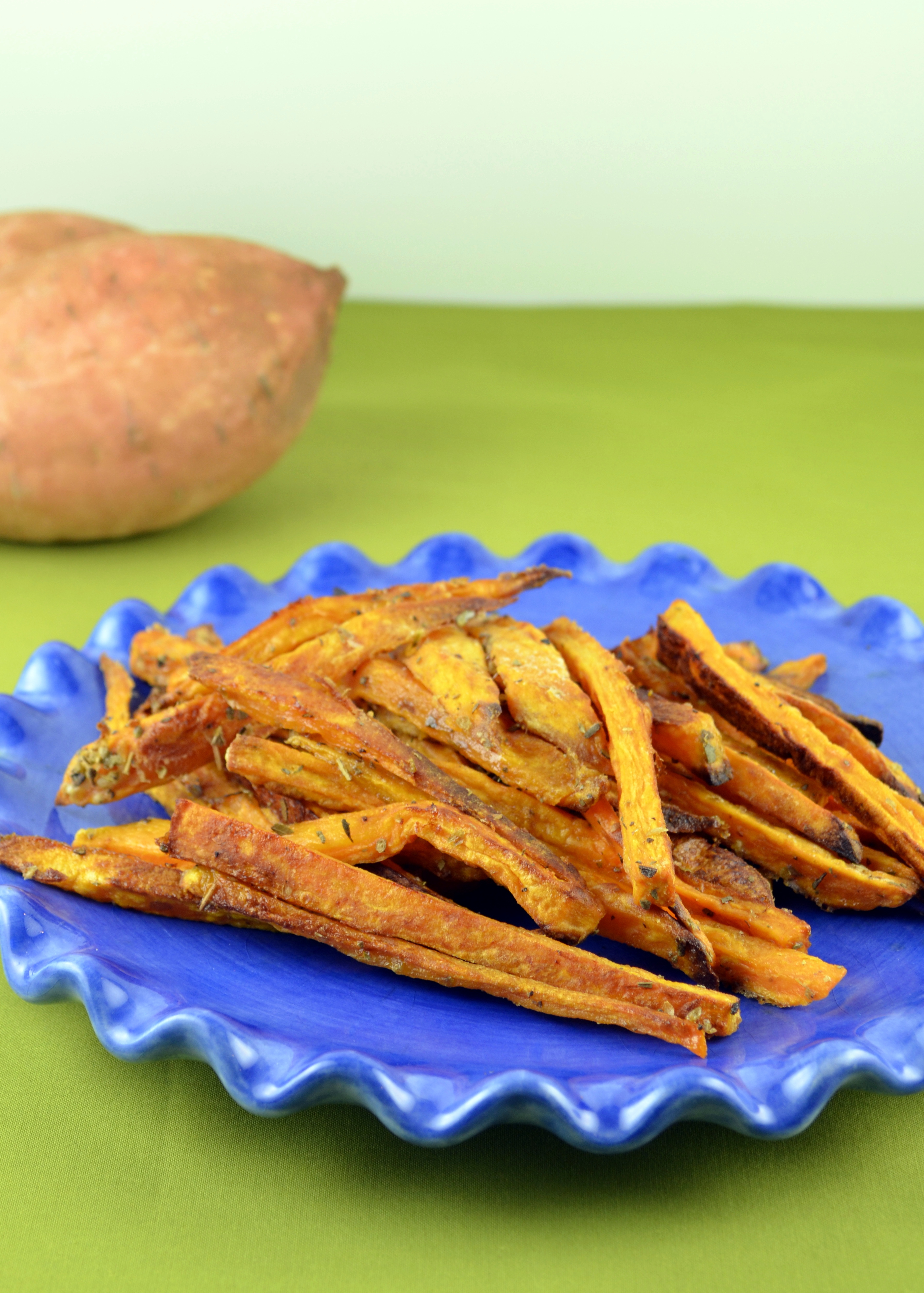
But all that aside, sweet potatoes are delicious — especially in the form of sweet potato fries, which make a regular appearance (and disappearance) at our house. These fries are crispy on the outside and soft, sweet, and rich on the inside. And since the olive oil they are tossed in enhances the absorption of the beta carotene, eating these super fries is a win-win situation all around.

Baked Sweet Potato Fries
Serves 4-6

4 sweet potatoes, peeled and sliced into thin strips
6 tbsp. olive oil
2 tbsp. cornstarch/arrowroot powder/wheat flour/rice flour
2 tsp. salt
2 tsp. dried oregano

Preparation

1. Heat oven to 450 degrees. Spray two large baking sheets with cooking spray.
2. Place sweet potato strips in large bowl; toss with olive oil.
3. Add remaining ingredients; toss well to combine.
4. Place the sweet potato strips on the baking sheets, in one layer.
5. Bake for 40-45 minutes, or until golden.
6. Enjoy!

Recipe: Raspberry Oatmeal Bars

25 Feb

Quick, easy, and full of oaty goodness, these bars work multiple jobs: they can be a snack, dessert, or even part of breakfast. They are also a good way to use up jam or preserves if, like us, you have a variety of half-full jam jars in the fridge (a state of affairs that arises when family members each have a favorite). Whenever I want to clear out the fridge, I make these bars. But truthfully, fridge clearing isn’t the main reason to make these; we quite frequently open new jars of jam just for this recipe, starting the cycle all over again. The bars are worth it.

This weekend, I actually did use up all that remained of a jar of regular raspberry preserves, but there wasn’t quite enough for the recipe. Solution? I topped up the measuring cup with a bit of black raspberry jam. That’s the other good thing about these oatmeal bars –they are very versatile: a blackberry, blueberry, cherry, or strawberry/rhubarb filling would work quite nicely, too.

Raspberry Oatmeal Bars
9 or 16 servings

3 c. quick-cooking oats
2/3 c. whole wheat flour
1/2 tsp. salt
2/3 c. canola oil
1/2 c. maple syrup
2 tsp. vanilla
2/3 c. raspberry (or other fruit) preserves/jam, stirred until smooth

Preparation

1. Preheat oven to 350 degrees. Spray a 9×9-inch baking pan with cooking spray (or lightly oil the pan).
2. Combine dry ingredients in a large bowl.
3. Combine wet ingredients, and add to dry ingredients, mixing well.
4. Put half of oat mixture into baking pan, and press firmly and evenly into place with the back of a spoon.
5. Spread the preserves/jam evenly over the oat layer. Loosely cover the filling with the remaining oat mixture.
6. Bake for 35-40 minutes; let cool 15 minutes before serving.
7. Cut into 9 squares for hearty servings, or 16 squares for smaller bites.

Recipe: Tortilla Soup

5 Feb

Twenty-four years ago today, my husband and I had our first date at an El Torito Mexican restaurant in Georgetown, Washington DC, whereupon I not only polished off a full platter of food, but found extra room for dessert, too. Ah, the joys of youth (and first dates). My future husband was amazed, but that was because he did not yet appreciate the magnitude of my sweet tooth — in my view, there’s always room for at least a little dessert.

The restaurant is now gone and my ability to eat that much dinner has gone with it. So on the anniversary of that first date, I present a light meal that was an El Torito favorite: Tortilla Soup. If you have this for dinner, you will certainly have room to satisfy any sweet cravings afterward.

This recipe calls for chicken, but a vegetarian version could easily be made without the chicken and using vegetable broth/bouillon instead of chicken broth/bouillon. A vegan version would also omit the cheese.
Tortilla Soup

[Updated instructions 2/7/2015]

3 chicken breast halves (about 1.5 lb.)
7 c. chicken broth
1 onion, diced
2 carrots, diced
2 stalks celery, diced
1/2 green bell pepper, seeded and diced
1 potato, diced
1/4 c. tomato paste
2 bay leaves
2 cloves garlic, sliced
1 tsp. oregano
1 tsp. cumin
salt and pepper to taste
1 zucchini, diced
1 tomato, diced
1/4 jalapeno pepper, seeded and thinly sliced
chicken (or vegetable) bouillon powder or cubes to taste
juice of 1/2 lime

Accompaniments:
corn tortilla strips (see cooking instructions below; will need 5 corn tortillas and canola oil)
1 1/2 c. shredded Monterey Jack cheese
2 avocados, sliced
3/4 jalapeno pepper, seeded and thinly sliced
chopped fresh cilantro

Preparation

1. Heat the broth in a large pot over medium heat. Add chicken breasts, reduce heat, and gently poach the chicken. [Note: Whenever possible, I like to poach the chicken ahead of time and let it cool in the broth: bring the chicken and broth to a simmer, turn down the heat so that the liquid ripples but doesn’t actually boil, cover the pot, poach the chicken for about 15 minutes–skimming the broth as needed–then turn off the heat and let the chicken breasts cool in the broth for about half an hour. If time is short, poach the chicken for 20-25 minutes, skimming as needed, remove from the pot, and transfer to a plate to cool.]
2. Add onion, carrots, celery, bell pepper, potato, tomato paste, bay leaf, garlic, oregano, cumin, and a dash of salt and pepper to the broth in the soup pot. Bring to a boil,  reduce heat and simmer, covered, 25 minutes.
3. While soup is simmering, cut the 5 corn tortillas into quarters and then cut each quarter into thin strips; leave the strips on the cutting board until ready to cook. Shred the cool chicken with a fork or clean fingers, and set aside.
4. Heat canola oil over high heat in heavy skillet (should be at least 1- to 1.5-inch depth of oil). When oil is very hot, add a layer of corn tortilla strips. Fry until golden, flipping as needed to ensure even coloring. Drain tortilla strips on a layer of paper towels. Repeat until all strips have been cooked; reserve.
5. Add zucchini, tomatoes, jalapeno, and shredded chicken to the soup pot, then simmer 10 more minutes. Check seasonings; if broth needs a bit more flavor, add chicken (or vegetable) bouillon powder or cubes and more pepper as needed. Add lime juice just before serving.
6. Serve soup in individual bowls, with avocado slices, jalapenos, tortilla strips, cheese, and cilantro as accompaniments.

Recipe: Savory Baked Salmon

26 Jan

Nine times out of ten when deciding how to prepare fish, I opt for lightly marinated or seasoned fish that is then broiled or grilled — a fresh and simple preparation.  It is a choice that makes me feel virtuous and happy (because, of course, a wise dinner decision opens up all sorts of possibilities for dessert).  But sometimes I find myself yearning for a slightly heartier fish dish that warms the soul in a different way. I don’t pretend this Savory Salmon is light, but it is good–the topping would work on almost any fish. And children like it. I serve it with oven-roasted asparagus and a cucumber-tomato salad.

Savory Baked Salmon
Serves 6

2.5 lb. (1.1 kg.) salmon or other fish fillets
salt and pepper

Topping
1/2 c. mayonnaise
2 tbsp. fresh lemon juice
2 tsp. paprika
sprinkle crushed red pepper (chilli flakes)–roughly 1/4. tsp. , or tiny pinch cayenne pepper
1 tbsp. finely chopped fresh parsley (or 1.5 tsp. parsley flakes)
3 tbsp. grated Parmesan cheese or Pecorino Romano cheese

Preparation

1. For Topping: Combine mayonnaise and lemon juice and stir until smooth; add remaining ingredients and mix well to combine.
2. For Salmon: Sprinkle each fillet with salt and pepper, then generously coat each fillet with topping. Bake at 400 degrees for about 20-30 minutes, or until salmon is cooked through and flakes easily. If topping is not golden, broil briefly, keeping a careful eye on the fish.

Recipe: Mulligatawny Soup (Curried Rice Soup)

11 Dec

What do you do when 1) you have omnivores and vegans coming to dinner, and 2) it’s cold outside and you want something warm and filling that everyone will enjoy? Well, you could offer your guests a deconstructed curried rice soup to suit every palate (and dietary preference). Mulligatawny–with or without chicken–is another example of cross-cultural fusion: an Anglo-Indian soup with a name that means “pepper water.”  And like many other hybrids, there are infinite variations on the theme; this is just one version that can be served two ways.

When I am making this for the family, I prepare it with chicken broth and chicken as in the photo below. But it is just as good (and more versatile) made with vegetable broth and served with a variety of accompaniments on the side, so guests can add the ingredients they prefer.

Note: The instructions below are for making the soup to suit both omnivorous and vegan guests. If not meant to be vegan, the soup can be made with chicken broth and chicken; cook the chicken in the pot before you cook the onions, celery, and carrots. Remove the chicken from the pot when it is no longer pink, add the onions, celery, and carrots to the pot and proceed with the recipe as indicated below; return chicken to soup along with the apple and rice.

Mulligatawny Soup (Curried Rice Soup–with or without Chicken)

Soup Base

3 tbsp. canola oil
1 onion, finely chopped
4 stalks celery, finely diced
2 carrots, grated
3 tbsp. flour
1.5 tbsp. curry powder
10-12  c.  vegetable broth (or water and equivalent bouillon cubes)
1 green apple, peeled, cored, and grated
1 c. rice (I usually use white jasmine rice, but have also made this with brown basmati)
salt and lots of freshly ground pepper to taste
1 (13.5-oz.) can lite coconut milk

Accompaniments
[Choose as many as desired and serve each separately alongside the soup]

2-3 boneless chicken breast halves, cooked and cubed
1 (15-oz.) can chickpeas/garbanzos, simmered in their liquid until warm, then drained
8 0z. mushrooms, sliced and cut in half, sauteed in olive oil and seasoned with salt and pepper
2 zucchinis, sliced and cut into quarters, prepared same as mushrooms
1 small head broccoli, cut into small florets and steamed
handful baby spinach, raw

Preparation

1. Saute onion, celery, and carrots in oil in large soup pot until soft and golden. Add flour and curry powder, and cook 5 minutes. Add broth (start with 10 c.), mix well, and bring to a boil. Simmer 30 minutes.
2. Add apple, rice, salt, and pepper, and simmer 15-20 minutes more, or until rice is done. Add more broth as needed to maintain a fairly soupy consistency.
3. Just before serving, add coconut milk and adjust seasonings to taste.
4. Serve soup in bowls and allow your guests to add any of the accompaniments they desire.

Recipe: Lasagna Roll-Ups with Spinach and Ricotta

8 Dec

Sometimes, you want something fairly simple for dinner, but still want it to have a little flair. This dish meets that need. It is a different take on an old favorite: lasagna. Instead of layering the lasagna, you roll it up. It is fun to make, and a pleasure to eat.

Lasagna Roll-Ups © G. Stansbury

Lasagna Roll-Ups with Spinach and Ricotta
Makes 10-12
[Updated  Dec. 9, 2012]

15 pieces lasagna from a 1-lb. box
16 oz. ricotta cheese
2 cloves garlic, crushed
1 (10-oz.) package frozen chopped spinach, thawed and well drained
1 egg, lightly beaten
1.5 c. shredded mozzarella cheese, divided
1/2 c. grated Pecorino Romano or Parmesan cheese
3/4 tsp. salt
freshly grated pepper to taste

pasta sauce of your preference (at least 24 oz./4 c. — may need more)

Preparation
1. Cook lasagna al dente in large pot of boiling water according to directions on package. Drain, and rinse with cold water to cool.
2. While lasagna is cooking, combine ricotta, garlic, spinach, egg, 1/2 c. mozzarella, Pecorino Romano/Parmesan cheese, and salt and pepper. Mix well.
3. Preheat oven to 400 degrees. Spray a 9×13 baking pan with cooking spray, then pour about 2 c. pasta sauce into pan, spreading evenly. Add more sauce as needed to ensure there is a healthy layer of sauce in bottom of pan.
4.  Lay out a lasagna noodle and spoon about 1/3 c. filling in an even layer down the entire noodle (you can also spread the filling on the noodle with very clean fingers). Roll the lasagna noodle up as tightly as possible, and nestle into sauce in pan. Repeat with remaining noodles–you will end up with between 10-12 roll-ups  (the extra noodles are back-ups in case of any breaks or tears). Pour remaining sauce over and in between roll-ups.
5. Cover pan with aluminum foil and bake for about 30 minutes, or until bubbly. Remove aluminum foil and sprinkle remaining 1 c. mozzarella over the roll-ups. Broil until golden, and serve immediately.

Recipe: Pakistani Chicken Patties

3 Dec

These patties are from an old New York Times recipe for Pakistani Seekh Kebabs. I first tasted them cold, at a picnic on the edge of a river after a hike with our friends. Our friends brought the patties as their picnic contribution, and they (the patties) were heavenly (though our friends are quite nice, too).

You could grill these, but you would miss out on the main reason to pan fry them in olive oil: the onions. As the patties cook, some of the onions fall out and turn golden brown in the olive oil. There is a battle at our house for those onion bits; their appeal cannot be underestimated.

So, hot or cold–all parts of these patties are delectable. We eat them with curried couscous (a bit of cross-cultural fusion) and the accompanying Cilantro Mint Chutney.

Pakistani Chicken Patties
Serves 8

Patties
2 lb. (.90 kg.) ground chicken or turkey, or a combination of both
1 egg yolk
1 large onion, minced
4 garlic cloves, minced
2 tbsp. tomato paste
1 tsp. ground ginger
1 tsp. ground cumin
1 tsp. ground black pepper
1 tsp. garam masala
1 tsp. turmeric
¼ c. cilantro, leaves and stems–finely chopped  (Note: if you are buying the cilantro in a bunch, you can use 1/3 for the patties 2/3 for the chutney)
2 teaspoons salt

olive oil

Cilantro Mint Chutney
1 c. (240 gr.) plain yogurt
1/4 c. (25 gr.) mint leaves
1/2 c. (50 gr.) cilantro, leaves and stems
1 tbsp. lemon juice (I’ve used 1/2 tbsp. vinegar in a pinch)
1/2 tsp. sugar

Preparation
1. For patties, combine all ingredients in a large bowl, mix well. Heat olive oil in a heavy skillet, shape meat mixture into patties with a spoon, and cook the patties in batches until golden. Serve with couscous and Cilantro Mint Chutney.

2. For chutney, combine ingredients in a blender or a small food processor and process until smooth, scraping down sides of bowl once or twice. Refrigerate up to 2 days.