Tag Archives: oregano

Recipe: Mediterranean Chicken with Feta and Olives

25 Aug

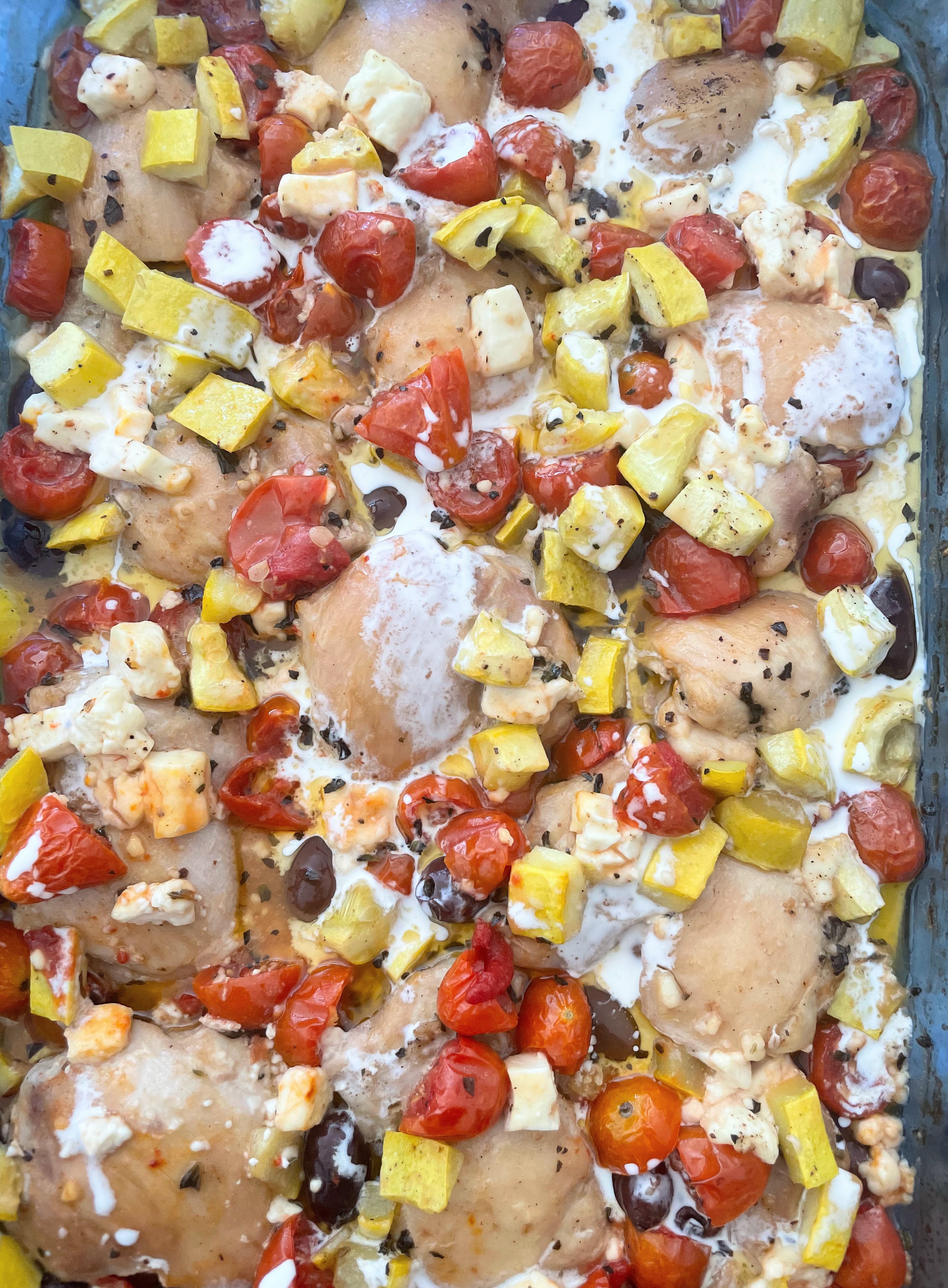
Necessity is the mother of invention. In this case, I had recently purchased a pack of chicken thighs, without a clear idea of what to do with them — except that now I was home from work and dinner time was looming, I needed an easy solution, and a fairly quick one. So I opened the fridge and cupboards to see what my options were. I guess I could have asked ChatGPT to come up with a recipe, but that would have meant inputting the available ingredients into a prompt, which 1) I was too lazy to do, and also, 2) I like to think that the non-artificial intelligence center within my cranium is still capable of putting 1+1, or 2+3, together to come up with something to eat. (But ask me next week…).

The result of my kitchen scan? I had cherry tomatoes that definitely needed using and some yellow squash from the garden that was now languishing in the crisper bin. Hmmm. What else was in the fridge? There was feta, kalamata olives, and cream. And rosemary outside. An idea began to form. So, what follows is a non-recipe recipe, without actual amounts. I’m confident that no matter how you yourself approach this dish, you can’t go wrong. The ingredients combine into something really, really good!

Mediterranean Chicken with Feta and Olives

Boneless, skinless chicken thighs
Salt and pepper
Dried oregano
Fresh rosemary, finely chopped
Olive oil (I used garlic-infused olive oil)
Cherry tomatoes, cut in half
Yellow summer squash (or zucchini if you have it), diced
Kalamata olives
Feta cheese (cubed or crumbled)
Heavy cream
Oregano (dried or fresh)

Preparation

  1. Preheat oven to 350 F (180C).
  2. Sprinkle both sides of the chicken thighs with salt, pepper, oregano, and rosemary.
  3. In a large heavy-bottomed pot, saute the thighs in olive oil over high heat until they are no longer pink on the outside and have picked up a bit of color.
  4. Place the thighs, and any juices or crispy bits from the pot, into a casserole dish large enough to fit the thighs in one layer.
  5. Sprinkle the olives, tomatoes, squash, and feta around the thighs, drizzle with some cream, and sprinkle a little more salt, pepper, and oregano over top.

6. Bake, covered, for about 30 minutes, or until the tomatoes and squash are soft.

    You can serve this multiple ways: with crusty bread to soak up the creamy, tomato-ey broth, over quinoa or rice, with potatoes or other roast vegetables, etc.

    Recipe: Marinated Feta

    14 Feb

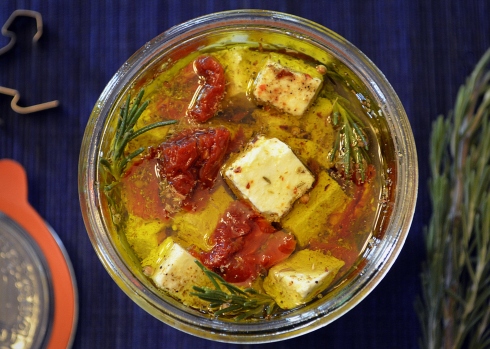
    A jar of marinated feta in the fridge will more than earn its place there, especially since it takes 10 minutes–at most–to prepare it. That doesn’t count marinating time, but once you’ve introduced all the ingredients to each other, you can step back and let the magic happen on its own. Marinated feta is good with bread and crackers, in sandwiches and salads (including pasta salads), and as that little something extra in many other dishes. And the leftover olive oil is fantastic in a Greek salad dressing or tossed with vegetables prior to roasting. Amazing to think that a mere 10 minutes of matchmaking leads to so many happy returns.

    MF2
    Marinated Feta

    12 oz. feta
    4 oz. sun-dried tomato halves, in oil
    1 tbsp. dried oregano
    1 tsp. coriander seeds
    1/2 tsp. chili flakes (can add more if you like extra heat)
    freshly ground black pepper
    3-4 sprigs fresh rosemary
    extra-virgin olive oil

    Preparation
    1. If the feta is wet, pat it dry. Cut it into 3/4-inch cubes. Cut each sun-dried tomato half into four pieces.
    2. Transfer half of the feta and half the sun-dried tomato pieces to a canning jar or glass bowl with a tight-fitting lid. Sprinkle the feta and tomatoes with half of the oregano, coriander seeds, chili flakes, and ample black pepper. If using a canning jar, place the rosemary sprigs upright around the edges of the jar; otherwise, scatter them about. Add the remaining feta and tomatoes and sprinkle with the remaining spices. Pour the oil from the sun-dried tomatoes over top, then add enough extra olive oil to cover the feta.
    3. Tightly cover/seal the jar or bowl, and refrigerate the feta for at least a couple days (and ideally, for one week) to let the flavors marry–if you can wait that long. The olive oil will solidify, which is normal — it will return to liquid form at room temperature (allow the feta to reach room temperature before serving).

    MF1

    Recipe: Roast Leg of Lamb with Red Wine and Herbs

    17 Apr

    On the Thursday before Easter, we always have a leg of lamb as part of our evening meal, a tradition that started before my husband and I were married–when we were young and foolish. We bought our first leg of lamb on impulse at a butcher shop in Greenwich Village, New York, on the Wednesday before Easter (we happened to be visiting NYC). We sprinkled some herbs over it, doused it with a bottle of wine, wrapped it up, refrigerated it overnight, and then drove it to Washington, DC the next day in time to roast it for dinner. It was a slightly boozy, but very delicious lamb we ate that evening; the excess alcohol probably helped preserve it, unrefrigerated, during the 4-hour trip.

    Though we have very fond memories of that lamb, I have since refined the recipe, ensuring proper food-safety techniques and (unfortunately) eliminating the need for any road trips.

    Lamb6

    Roast Leg of Lamb with Red Wine and Herbs
    Serves 6-8
    Note: This lamb needs to marinate overnight (or for at least 8 hours) prior to roasting.

    1 bone-in leg of lamb (6-8 lb.)
    salt and pepper
    4-5 cloves garlic, cut into slivers
    fresh rosemary, separated into small sprigs

    Marinade:
    1/3 c. olive oil
    1/4 c. red wine of your preference
    1 tsp. Dijon mustard
    1/2 tsp. each dried basil, oregano, parsley, mint, etc.
    1/2 tsp. sugar

    Preparation

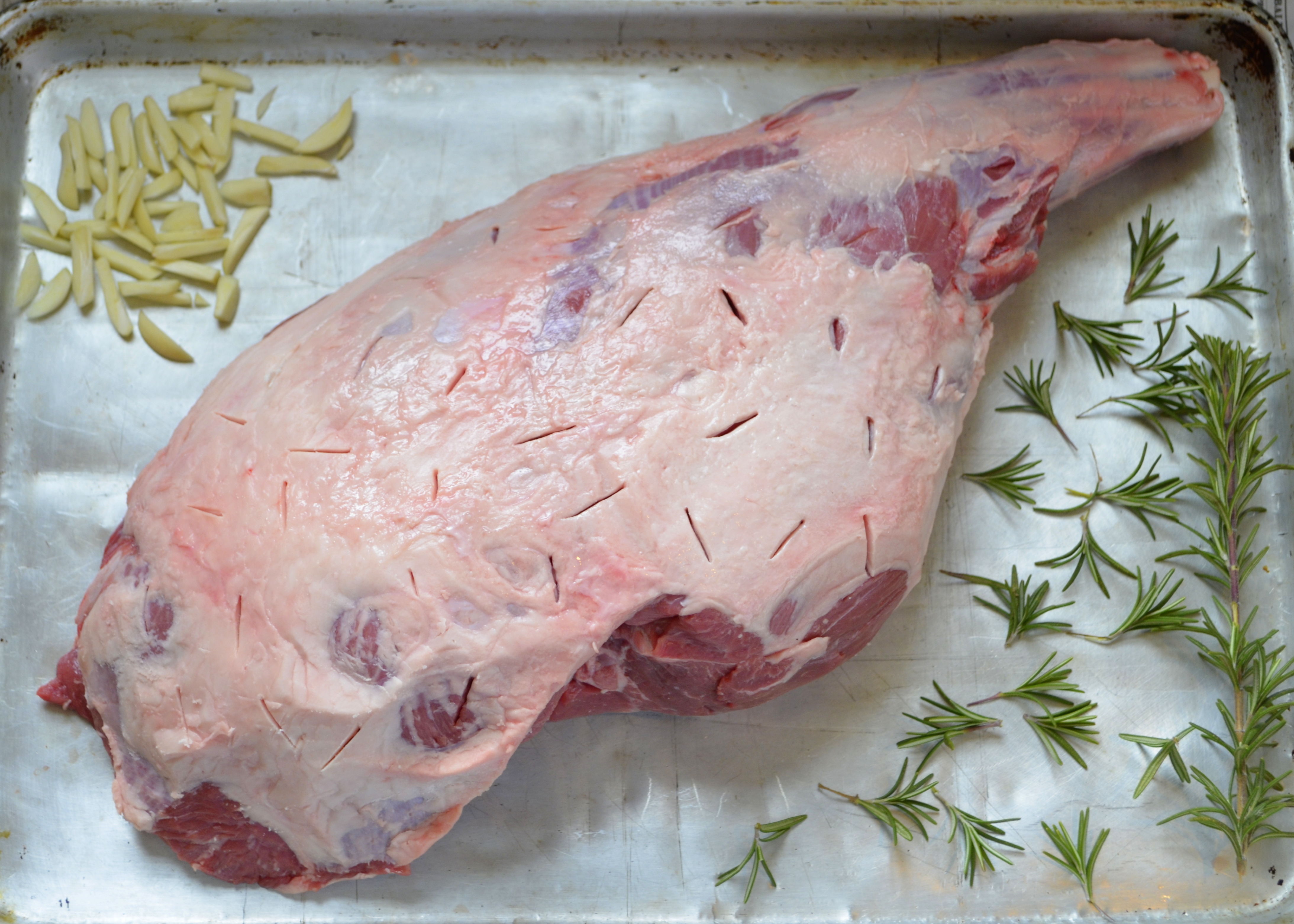
    1. Rinse lamb and pat dry. Then, using a sharp knife, cut off  as much of the top, papery thin layer (the “fell”) as possible; it is not necessary to remove all of it. (Some cooks prefer to leave it on to help keep the lamb moist. Others remove it because they think it has a strong flavor. I remove it for aesthetic reasons; family members don’t like seeing the fell on the lamb.)
    2. Trim off  excess fat, but make sure to leave a nice layer to ensure moistness and to help carry the flavor of the rosemary, garlic, and marinade.
    3. Using the same sharp knife, make deep slits into the meaty portions of the leg.

    L1
    4. Insert one sliver of garlic and a small sprig of rosemary into each slit in the lamb. Sprinkle lamb with salt and freshly ground pepper.

    L2
    5. In a bowl, combine marinade ingredients.
    6. Place lamb in 2-3 layers of clean, plastic grocery bags (or other large sealable bags) on a rimmed baking sheet large enough to hold the lamb. Holding the bags open, pour the marinade over the lamb, taking care to pour some of the marinade into each of the slits filled with garlic and rosemary.

    Lamb
    7.  Tie the plastic bags together tightly so that the marinade cannot leak out, then place the lamb (still on the baking sheet) in the refrigerator overnight (or for at least 8 hours). If you are so inclined, feel free to massage the marinade into the lamb every so often.

    Lamb2
    8. In the morning (or after about 4 hours), turn the lamb over so that the other side of the lamb can soak up some of the marinade.
    9. Preheat oven to 450 °F. Remove the lamb from the bags (reserving the marinade), pat dry, sprinkle with a bit more salt and pepper, then place the  lamb on a rack set inside a rimmed baking sheet or pan. Insert a meat thermometer into the thickest part of the lamb, but not near the bone. Cook lamb at 450°F for 20 minutes, then reduce heat to 325 °F. Roast lamb until meat thermometer reaches between 145 °F (medium rare) and 160 °F (medium), basting periodically with leftover marinade. For a 6 lb. leg of lamb, total cooking time should be about 2 hours, depending on preferred degree of doneness.
    10. Remove lamb from oven, then let rest for at least 15 minutes before carving.

    Lamb7


    Recipe: Mediterranean Chicken/Vegetable Wrap

    19 Aug

    This is a recipe you can adapt in countless ways to suit omnivorous or vegetarian tastes. It is an excellent way to use up leftovers, though pan frying or grilling the chicken/vegetables just beforehand works, too.  The overriding theme is a Mediterranean one. Our kids rummage through the fridge, take out whatever appeals to them at the moment, cook what they need, and make killer wraps out of it all.

    The open wrap pictured here is courtesy of my daughter, who waited very patiently to eat her lunch today until after I had taken the photo. She used a tomato-basil wrap, hummus,  leftover grilled chicken and eggplant (both of which she reheated in a small cast-iron skillet), Kalamata olives, lettuce, and tomatoes. The one constant is the hummus. Other ingredients that make frequent appearances include feta cheese, sun-dried tomatoes, thinly sliced red onion, other grilled vegetables, etc.  Fresh oregano or basil from the garden and a drizzle of Italian dressing or vinaigrette add the finishing touches.

    Mediterranean Chicken/Vegetable Wrap
    Servings: Flexible

    Possible Ingredients

    Wraps or tortillas
    Hummus
    Grilled/pan-fried chicken breast (marinated in olive oil, garlic, oregano, other herbs of your choice, and salt and pepper, then sliced or chopped after cooking)
    Grilled/pan-fried eggplant or other vegetables
    Kalamata olives (chopped)
    Fresh tomatoes (chopped)
    Sun-dried tomatoes (drained if in oil and sliced)
    Lettuce (shredded)
    Feta cheese (crumbled)
    Red onions (thinly sliced)
    Fresh/dried herbs (oregano or basil)
    Italian dressing, or a vinaigrette of your preference