Tag Archives: soup

Recipe: How to Make Bright Green Pesto

5 Oct

The very last of my basil has flowered, so today I headed out and harvested all the remaining good leaves. It took a while, but the sun was warm on my back, the bees were buzzing gently by, and the smell of the basil as I plucked each leaf one by one, was intoxicating. There are worse ways to spend part of an October morning.

My aim? To make a few batches of pesto to freeze. But the end result looked (and smelled) so good, I couldn’t wait; I decided to use one batch tonight. It will get drizzled over a Sausage, Kale and Bean soup, the thought of which is already making me hungry!

This recipe calls for blanching the basil, which I find is a key way to get the greenest color. Today, I used another trick, too: I added a handful of baby spinach leaves that needed using up as spinach also amplifies the emerald factor. The addition of a few drops of lemon juice makes the pesto a bit brighter, too; I almost feel like it makes the pesto taste greener (is that possible?).

Note: When I am making pesto to freeze, I do not add the cheese or lemon juice. Instead, I add both those things later on to the thawed pesto. So the photos below are pre-cheese, and thus, represent a vegan version that would be delicious on its own, too.

Bright Green Pesto
(makes 2 cups total = 3 batches)

6 c. (slightly compressed but not packed) fresh basil leaves (about 120 gr.); can substitute up to 1 c. baby spinach leaves
3/4 c. toasted pine nuts
6 large garlic cloves
1/2 tsp. salt
1 c. extra-virgin olive oil
*1.5 c. freshly grated Pecorino Romano cheese (preferred) or Parmesan
*lemon juice, to taste

Preparation

1. Set a large pot of water to boil.
2. Pick over the basil leaves to make sure there are no blemishes (or stems). Fill a large bowl with ice water and set aside. When the water in the pot is boiling, add the basil and garlic, and push down on the basil leaves with a slotted spoon (to submerge them), just until they turn bright green. This blanching process should take less than a minute.

3. Immediately drain the basil and garlic in a colander, and then set the colander in the bowl of ice water to stop the cooking.
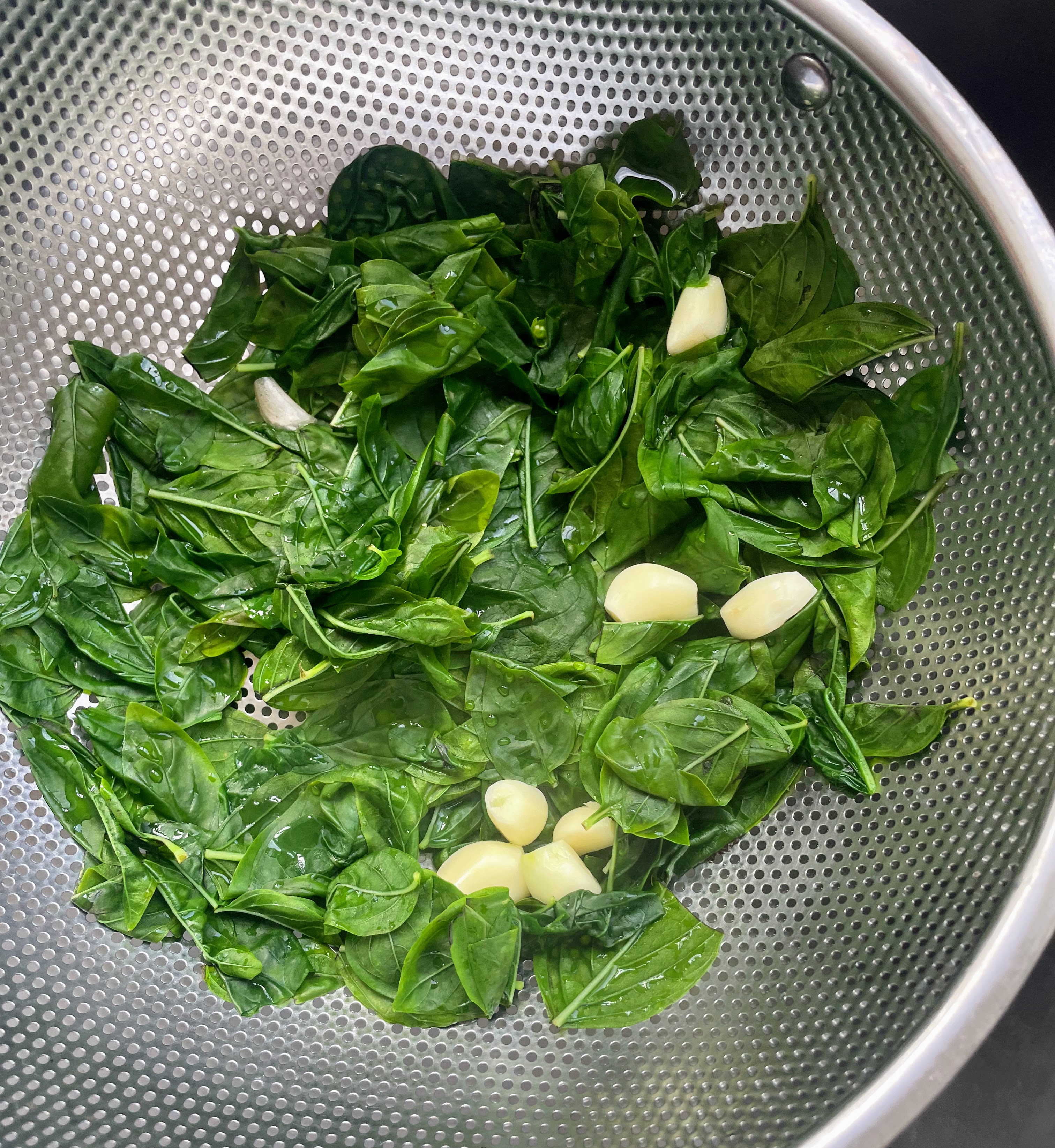
4. Once the spinach is cold, remove the colander from the bowl, set in the sink, and let the basil and garlic drain for a few minutes. Then place the basil and garlic on a clean dish towel and pat as dry as possible.

5. Put the basil and garlic in a food processor, add the pine nuts and salt, and pulse until the mixture is finely chopped and begins to come together. With the food processor still running, slowly pour in the olive oil and process until smooth.
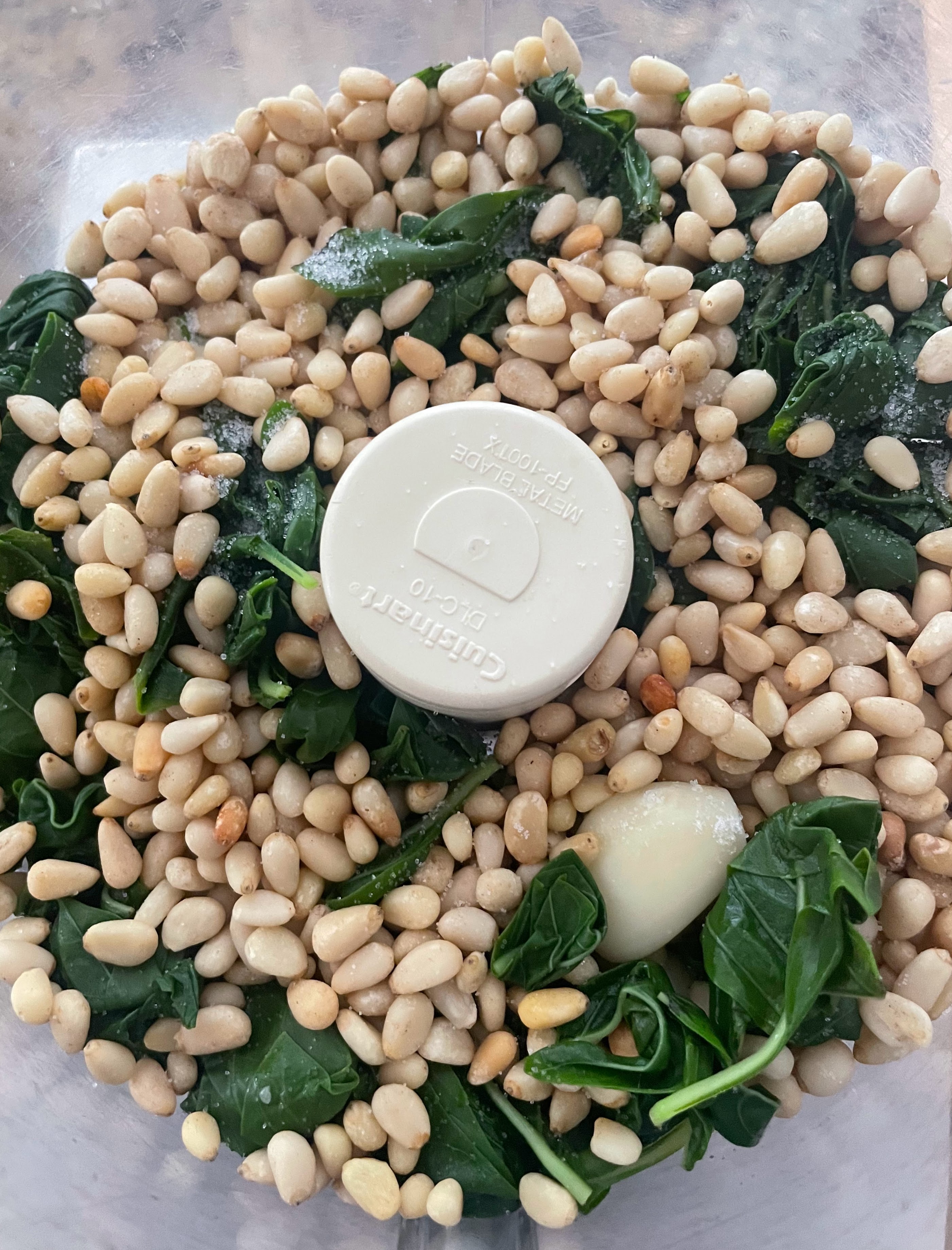
6. If using the pesto the same day, add the cheese and lemon juice, and pulse again very briefly, just long enough to combine. Do a quick taste test to gauge lemon and salt levels; add more if needed. You can also add a bit more olive oil if the pesto seems too thick.

*7. If freezing the pesto, omit the cheese and lemon juice, divide the pesto among three freezer-proof containers, and freeze. When you want to use a batch, thaw it fully and let it come to room temperature. Prior to using, add 1/2 cup grated cheese and a few drops of lemon juice, and mix well. Do a quick taste test to gauge lemon and salt levels; add more if needed. You can also add a bit more olive oil if the pesto seems too thick.

Recipe: Minestrone

8 Oct

I remember a teacher in elementary school bringing our class a batch of “Everything But the Kitchen Sink” cookies, which I’d never had before. I didn’t quite understand the name, so the teacher explained that it meant she had put all sorts of things into the cookies, almost everything in her kitchen but the kitchen sink. That day, I tasted a new cookie and learned a new phrase.

For me, Minestrone is an “Everything but the Kitchen Sink” soup. When the leaves start turning colors in the fall — ie, when soup weather is upon us — and I have vegetables to use up, I immediately think “Minestrone.” In Italian, minestra means “soup;” minestrone means “big soup.” And it really is a big soup, full of so many good things.

Of those good things, there is one without which this cannot be Minestrone, in my view: the cheese rinds. We usually have a wedge of Pecorino Romano cheese in the fridge, and as we get to the last of each wedge, I save the rinds. Without some rind, the soup will not taste like Minestrone; the slow-simmered cheese is a huge part of what makes the broth so delicious.

Aside from the rinds and the soffritto ingredients (onion, carrot, celery; see below), I like to add canned tomatoes, zucchini, white beans, and cabbage or spinach or both (or any other leafy green). Plus pancetta when I have it, potatoes if I need to use some up, and small pasta if there is room.

Today this is what I had at hand:

Fridge:

  • two onion halves (one red, one white)
  • four stalks of celery
  • some leftover grated carrots (about 1.5 c.)
  • zucchini (I had 2, but ended up using only 1 big one)
  • some shredded cabbage, ie ‘cole slaw’ mix (about 4.5 oz/127 gr)
  • baby spinach (about 3-4 handfuls)
  • Some Pecorino Romano and Parmesan ‘heels’ (see photo)

Freezer:

  • Cubed pancetta (4 o oz/113 gr)

Pantry:

  • Yukon Gold potatoes (I had 3, but ended up using only 2)
  • Whole peeled tomatoes
  • Cannellini beans (2 cans, 15.5 oz/440 gr each, undrained)
  • Garlic (3 large cloves)
  • Bay leaves
  • Vegetable bouillon cubes
  • Salt and pepper

Perfect–I had everything I needed for Minestrone! I also had mini pasta sea shells, which I’ve used in Minestrone before, but I did not use them this time; by the time I got to the point where I would have added them, there was no more room in the pot! Plus, dry pasta keeps and I had to use up the potatoes. (If you have pasta but no potatoes or just prefer the pasta, add a handful of that instead.)

For me, Minestrone is a soup I make in ‘layers,’ meaning I start with the first ingredients and while they are cooking, I prep the others, adding them to the pot as I go. Today, I started by cooking the pancetta in olive oil in a large Dutch Oven until it got crispy. (If you are vegetarian, omit the pancetta).

While the pancetta was cooking, I diced the onions and celery, then added them–and the already-grated carrots and a couple bay leaves–to the pot along with a splash more olive oil. This mixture of onions, celery, and carrots is what the Italians call soffritto and the French call mirepoix, and it is the foundation of many great soups. When the veggies got soft, I crushed the garlic cloves straight into the pot, added some freshly ground black pepper, and cooked everything for a couple more minutes. This is what I consider to be Layer 1, made up of a few subparts. [I forgot to take a photo of this, however.]

To start building Layer 2, I added some hand-crushed tomatoes and their juices to the soup pot. If I’d had a can of diced tomatoes, I would have used that instead–but necessity is the mother of hand crushing. With a very clean hand, I gently took a whole peeled tomato from the can, and crushed it into the soup pot, repeating until I had crushed all the tomatoes. [Note: If you will also crush the tomatoes by hand, lower your hand as far as possible into the pot, and crush each tomato very slowly. Otherwise, the likelihood of having crushed tomato all over your back stove wall, and yourself, is extremely high–as I’ve learned from experience.]

Successfully hand-crushed tomatoes; all in the pot, none on me

Then I added the cheese rinds (trimmed of the outer, colored parts) and 4 cups of water and let everything simmer while I diced the potatoes. When the potatoes were ready, I added them, the canned cannellini beans with all their liquid, and a vegetable bouillon cube to the pot, along with more freshly ground pepper. This is Layer 2. I let this simmer, partially covered, for about 10 minutes while I prepped the zucchini for Layer 3.

Nestling cheese rinds into the soup

In Layer 3, I added the diced zucchini and the already-shredded cabbage, and continued to simmer the soup until the zucchini and potatoes were both soft. I also checked the seasonings and decided to add another bouillon cube and a little salt. At that point, my Minestrone was essentially done and ready to serve, so I did the very last thing: I put the handfuls of spinach on top and stirred until the spinach was wilted in.

Then I set the soup pot out for everyone to serve themselves (with everyone getting at least one piece of the now-soft cheese rinds–an absolute treat), along with some freshly grated Pecorino Romano to sprinkle on top. Mmmm. So good on a fall day.

Recipe: Bolivian Soup with Wheat Berries (Sopa de Trigo)

29 Jan

There are probably as many versions of this soup as there are Bolivian families, and all of them likely to be delicious, but this is the version that has evolved at our house over the years. I love the bright-red color that comes from the tomato and chili pastes; it brightens even the coldest, most dreary day. I also love the soup’s many layers of flavor, each one contributing to the overall symphony. It’s even better the next day, so it’s a great make-ahead dish. And it’s very adaptable: make a vegetarian version by eliminating the beef/lamb, adding more veggies, and using vegetable broth/bouillon. Or substitute quinoa for the wheat if gluten is an issue.

dsc_0370-1

Bolivian Soup with Wheat Berries (Sopa de Trigo)

Wheat/Hominy:
1/3-1/2 c. (60-95 gr.) dry wheat berries/trigo pelado
1 can (14 oz./400 gr.) cooked hominy/mote blanco, undrained, OR 1/2 c. (60 gr.) dried cracked hominy/maiz blanco trillado–see photo below

½ c. freeze-dried potato/black chuño (optional)

Soup broth:
12 c. (3 liters) beef broth
1 lb. (500 gr.) meaty, bone-in beef or lamb
1 large onion, halved
1 large tomato, quartered
2 carrots, peeled and halved
2 bay leaves
beef bouillon cubes (optional)

Soup Vegetables:
3/4 c. (100 gr.) frozen petite peas
2 large carrots, julienned
3 large potatoes, julienned (it’s traditional to julienne both the carrots and the potatoes, but I have been known to dice both instead…)

Sofrito:
2 tbsp. olive oil
1 lg. onion, finely diced
1 tbsp. finely chopped parsley
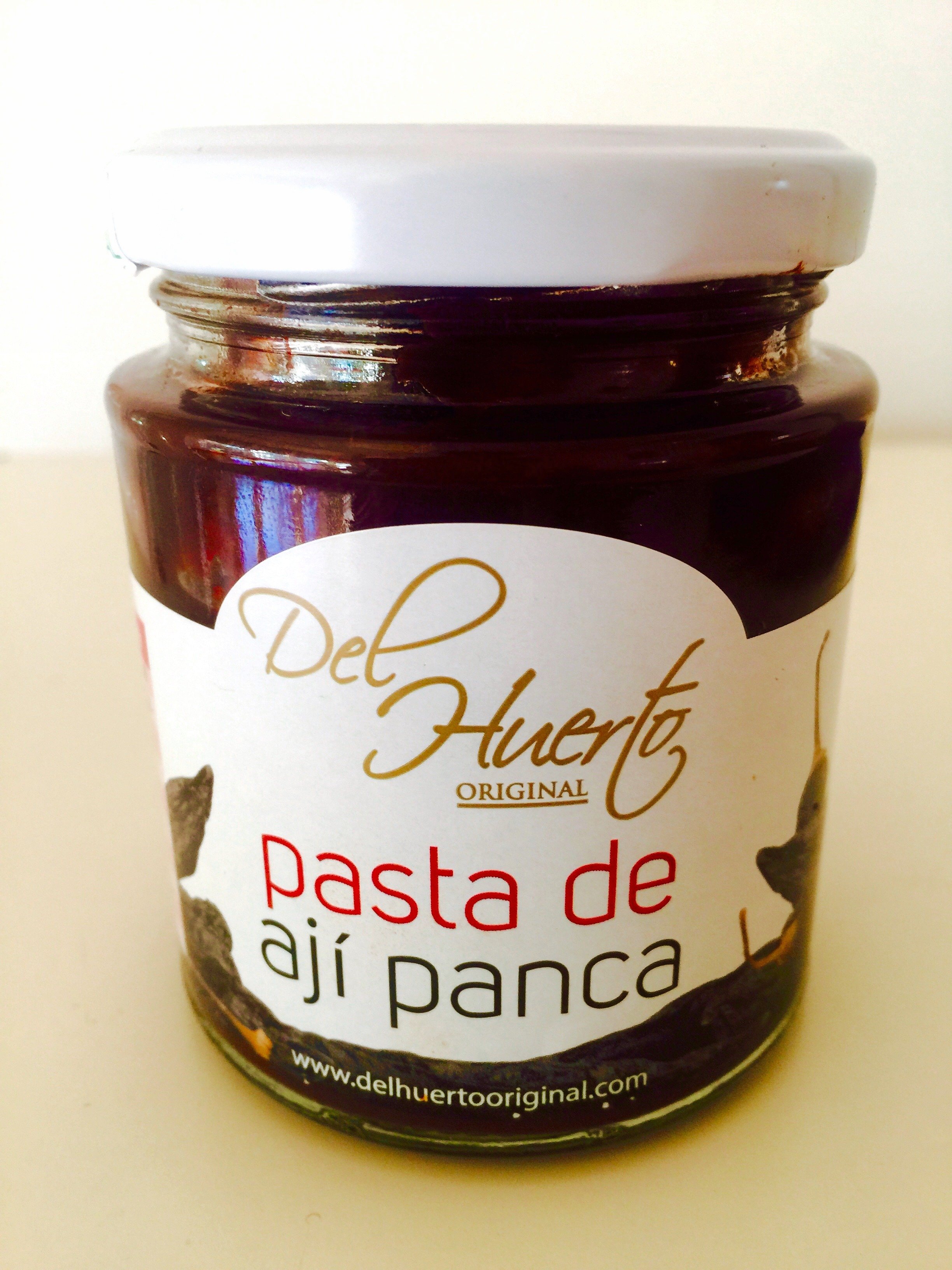
1-2 tbsp. red aji (chili) paste (aji colorado/aji panca)–see photo below
2 tbsp. tomato paste
1 tsp. dried oregano
coarsely ground black pepper, to taste

Toppings:
2 green onions, finely sliced
1 tsbp. finely chopped fresh parsley
1 tbsp. finely chopped fresh oregano
1 tbsp. finely chopped  fresh mint

1-fullsizerender-14
Dried cracked hominy

1-fullsizerender-13
Red aji (chili) paste

Preparation:

  1. Note: If using  the optional freeze-dried potato/chuño, soak it in warm water overnight prior to making the soup. Before adding it to the soup in step #5, drain it and squeeze as much water out as possible. If necessary, chop into small pieces.
  2. Place the wheat berries (and, if using, the dried hominy) in a medium saucepan, cover with several inches of water, and bring to a boil. Reduce heat, cover, and simmer for about 60-90 minutes or until both wheat and hominy are soft. Drain and set aside. If using canned hominy, pre-cook only the wheat, and add the undrained canned hominy to the soup in step #5.
  3. Meanwhile, add the broth and meat/bones to a large pot and bring to a low simmer, skimming periodically until no more foam is produced. Add the halved onion, quartered tomato, halved carrots, and the bay leaves and continue simmering slowly until the vegetables are soft, about 30 minutes. Check the seasonings and add beef bouillon cubes to taste, if needed.
  4. Remove the beef/lamb to a dish and let cool. Strain the broth through a fine-meshed sieve into a large bowl, mashing the tomato pieces to extract any remaining liquid. Return the broth to the pot and discard the vegetables.
  5. Shred the meat, discarding the bones and any fat, and add the shredded meat to the pot along with 1 c. of the cooked wheat, the hominy, the freeze-dried potato/chuño (if using), and the peas, carrots, and potatoes. Bring to a low simmer and cook for 15 minutes.
  6. Meanwhile, prepare the sofrito: Heat the olive oil  in a skillet over medium-high heat, add the onion, and cook until soft and slightly golden. Add the remaining ingredients to the skillet and cook for a few minutes, stirring frequently, to make a fragrant paste. Add the paste to the soup pot, stir to mix, and continue simmering the soup, covered, for 15 minutes or more to develop the flavors and ensure all vegetables are soft. If the soup seems too thick, add more water. If it needs more salt, add another bouillon cube.
  7. Serve with the sliced green onions and herbs sprinkled on top, and with plenty of crusty bread.

Recipe: Creamy Double Mushroom Soup with Green Onions

5 Mar

Mother Nature is really letting us have it this winter; we have been hit with yet another snow storm. The government has shut down and so has my office: today is an official snow day. Being home on a day such as this, my thoughts turned to warm and comforting things such as soup. Specifically, to an earthy soup featuring two types of mushrooms and lots of green onions–hence the name. I might have called it quadruple mushroom soup because it features mushrooms four ways: dried (and soaked) mushrooms, sautéed sliced mushrooms, fresh chopped mushrooms–and sliced raw mushrooms as a garnish. This is definitely a soup for mushroom lovers, of which I am one. But it is also a good soup for anyone needing some flexibility (that would be me, too). Not enough dried mushrooms on hand? Add more of the fresh ones. Don’t like (or have) button mushrooms? Substitute portabella or another type. Use one, two, or all three of the broths suggested below. Make it vegan, or not (see below). This is a forgiving soup perfectly suited to an unforgiving day.

Mushroom Soup

Creamy Double Mushroom Soup with Green Onions
Serves 4-6

2 oz. dried mushrooms (porcini, shitake, etc.)
2-3 tbsp. olive oil
20 oz. white button mushrooms–slice half the mushrooms, finely chop the other half (save two mushrooms to slice later for garnish)
2 bunches green onions/scallions, trimmed at both ends, rinsed clean, and thinly sliced (save one green onion to slice later for garnish)
3 cloves garlic, minced
freshly ground pepper, to taste
dash of dry sherry or splash of white wine (optional)
5 c. beef broth (or veggie broth or miso broth, or combination of broths)
1 tbsp. soy sauce (optional)
pinch of sugar (about 1/2 tsp.), to taste
1 c. heavy cream (or unsweetened coconut milk or soy creamer)

Preparation
1. Place the dried mushrooms in a bowl and pour enough boiling water over them to cover; soak for 30 minutes.
2. Meanwhile, heat half the olive oil in a soup pot over medium-high heat, add the sliced white mushrooms, and sauté until they start to turn golden; remove the mushrooms from the pot and reserve.
3. Add  the remaining olive oil to the soup pot and sauté the green onions until soft. Add the minced garlic and pepper; cook for another two minutes. Add the sherry/wine (if using) and reserved sautéed mushrooms. Turn heat to low.
4. Strain the soaked mushrooms through a fine sieve, saving the dark mushroom liquid. Rinse the mushrooms twice in a small amount of water, adding the first rinse to the dark mushroom liquid and discarding the second rinse. 5. Add the rinsed mushrooms to the soup pot. Strain the saved mushroom liquid and add it to the soup pot, along with the broth, soy sauce (if using), and sugar. Turn the heat back to medium high.
6. Using an immersion blender, blend the contents of the soup pot (or blend in batches in a blender and return to pot).
7. Add the chopped mushrooms to the soup and simmer for 20 minutes. Turn off the heat and add the heavy cream (or coconut milk/soy creamer). Check seasonings, adding more pepper, soy sauce, or sugar as desired.
8. Serve soup in individual bowls and top with a few thin mushroom slices and a sprinkle of sliced green onions.

Recipe: Bolivian Peanut Soup with Chicken (Sopa de Mani)

3 Mar

Bolivian Peanut Soup is a one-bowl wonder, the ultimate comfort food–especially with fried potatoes and queso fresco (or the un-Latin American but perfectly substitutable feta cheese) sprinkled on top. Traditionally, the soup is made with beef bones, but I prefer to make it with small pieces of boneless chicken breast instead; chicken and peanuts have a natural affinity for each other, and chicken makes the soup a bit lighter. This can easily be made vegetarian or vegan, too, by omitting the chicken and making the soup with vegetable broth. The 1 tbsp. chili paste listed here adds a mild kick to the soup–if you like heat, add more.

Bolivian Peanut Soup with Chicken (Sopa de Mani)

1 cup (150 gr.) roasted unsalted peanuts
3 tbsp. peanut or canola oil, divided in half
2 large boneless chicken breast halves (about 1.5 lb./680 gr. total), cut into small bite-sized pieces (about 1/4 inch)
1 lg. white onion, diced
1 large carrot, coarsely grated
2 tsp. cumin
1 tsp. oregano
1/2 tsp. turmeric (or palillo)
1 tbsp. aji amarillo paste (yellow chili paste), available at international/Latin food markets
2 lg. potatoes, peeled and diced
6 cup (1.4 liters) chicken broth
salt and pepper
chicken bouillon cube or powder (if needed)

Garnish
2 large potatoes, julienned, and fried in oil until golden
crumbled queso blanco (or feta)
chopped parsley or cilantro

Preparation
1. Grind the peanuts almost to a powder in a food processor (or pound them in a mortar and pestle in several batches); set aside.

Crushed peanuts

2. Heat 1.5 tbsp oil in large Dutch oven over medium-high heat, add the chicken, and cook until no longer pink; remove the chicken from the pot along with any juices that may have accumulated, and keep warm.
3. Add the remaining oil to the pot, then cook the onion and carrots until the onion is soft, stirring occasionally.  Mix in the spices and aji amarillo (yellow chili) paste and cook 1-2 minutes.

One of the many brands of aji amarillo paste

4. Add the potatoes and peanuts to the pot, and stir well to coat.

Onions, carrots, potatoes, peanuts, and spices

5. Pour the broth over the vegetables, cover the pot, reduce the heat to low, and simmer about 20-30 minutes until the potatoes are tender. Blend the soup with an immersion blender (or in a standard blender, in batches, returning soup to pot after it is blended). Add chicken pieces and accumulated juices to the soup  and simmer another 15 minutes, adding a bit more broth if the soup appears thick. Season to taste with salt, pepper, and/or a chicken bouillon cube or bouillon powder if needed.


Soup, pre-garnish

6. Before serving the soup, fry potatoes until crisp; salt lightly.
7. Ladle soup into bowls, top with fried potatoes, then sprinkle with cheese and parsley (or cilantro). Serve immediately.

Recipe: Beef Barley Mushroom Soup

19 Jan

One thing to appreciate about winter is that it is soup weather. Take a steaming bowl of hearty soup, add a crusty baguette and a crisp salad, and you’re set: both body and soul will sigh in appreciation. This soup features some whole-grain goodness in the form of barley, plus that deeply satisfying umami taste from the beef and mushrooms. More flavor comes from searing the beef and bones (which results in the rich crusty drippings known as sucs, or also in the United States as fond). That is followed by deglazing the pot with aromatic vegetables and a dash of soy sauce until the vegetables are also golden and offering up their own richness, and then continuing to build the soup from there.

*See note below for how to make a vegetarian/vegan version of this soup.

Beef Barley Mushroom Soup
Serves 8

2-3 tbsp. olive oil
1 1/2 lb. beef stew meat, trimmed of fat, and cut into small cubes
1 lb. beef bones
1 lg. onion, diced
2 carrots, diced
3 celery stalks, diced
1 tbsp. soy sauce
8 oz.  mushrooms, diced
6 garlic cloves, crushed
2 bay leaves
1 tsp. dried thyme
freshly ground pepper
1 c. tomato puree
8 c. beef stock or broth (if using prepared stock/broth, find a low-fat, low-sodium brand)
2 c. water
2 beef bouillon cubes (optional, but if using, find a brand without MSG)
2/3 c. pearl barley
1 c. frozen corn kernels
1/2 c. frozen petite peas

chopped parsley as a garnish

Preparation

1. Heat a Dutch oven or other heavy-bottomed pot over high heat. Add the olive oil, and when hot, brown the meat and bones; you want to get golden-brown crusty drippings on the bottom of the pot. Remove the meat and bones and reserve.
2. Add the onions, carrots, and celery to the pot and sauté for a few minutes, stirring often to deglaze the pot (to loosen the crusty drippings), until the onions begin to soften and turn golden brown at the edges. (If the vegetable mixture gets too dry at any stage, add a tiny bit of olive oil.)
3. Add the soy sauce to the vegetables in the pot; cook for a couple minutes, then add the mushrooms. Cook until the mushrooms have released their liquid and the liquid has mostly evaporated. Add the garlic, bay leaves, and thyme, and grind a generous amount of black pepper over the vegetables; cook for three to five minutes. Add the tomato puree; mix well.
4. Return the beef and bones to the pot, add the stock/broth, the water, and the bouillon cubes (if using); bring to a boil. Lower the heat, cover the pot, and begin simmering the soup.
5. Meanwhile, toast the barley on a baking sheet in a 450-degree oven for about 10 minutes, checking every few minutes, until the barley is golden brown. Carefully add the barley to the soup; there will be a very satisfying hissing and bubbling when you do this. Note: this step is optional; you can also add the barely to the soup without having toasted it. But toasted barley adds a nice nutty flavor.
6. Continue simmering the soup for about 30 minutes to an hour  — until the beef and barley are tender (the timing will depend on the size of the beef cubes). If needed, skim the top of the soup during the simmering stage  to remove any extra oil. Add the corn and peas for the last 15 minutes or so of the cooking time.
7. Remove the bones and bay leaves from the soup, and discard. If the beef cubes are on the larger side, you may want to take them out of the soup once they are tender and shred them (as I did for the accompanying photo).
8. If the soup has gotten too thick, add additional water or stock/broth. Check seasonings, garnish with chopped parsley if desired, and serve immediately.

Note: To make this vegetarian/vegan, omit the beef and bones and begin with Step 2 (sauteing the onions, carrots, and celery in olive oil). Double the amount of mushrooms used in Step 3. In Step 4, add two diced potatoes to the pot (instead of the beef/bones) and substitute vegetable broth for the beef stock/broth and vegetable bouillon cubes (or some nutritional yeast) for the beef bouillon cubes. Total simmering time should be about 30 minutes. 

Recipe: Tortilla Soup

5 Feb

Twenty-four years ago today, my husband and I had our first date at an El Torito Mexican restaurant in Georgetown, Washington DC, whereupon I not only polished off a full platter of food, but found extra room for dessert, too. Ah, the joys of youth (and first dates). My future husband was amazed, but that was because he did not yet appreciate the magnitude of my sweet tooth — in my view, there’s always room for at least a little dessert.

The restaurant is now gone and my ability to eat that much dinner has gone with it. So on the anniversary of that first date, I present a light meal that was an El Torito favorite: Tortilla Soup. If you have this for dinner, you will certainly have room to satisfy any sweet cravings afterward.

This recipe calls for chicken, but a vegetarian version could easily be made without the chicken and using vegetable broth/bouillon instead of chicken broth/bouillon. A vegan version would also omit the cheese.

Tortilla Soup

[Updated instructions 2/7/2015]

3 chicken breast halves (about 1.5 lb.)
7 c. chicken broth
1 onion, diced
2 carrots, diced
2 stalks celery, diced
1/2 green bell pepper, seeded and diced
1 potato, diced
1/4 c. tomato paste
2 bay leaves
2 cloves garlic, sliced
1 tsp. oregano
1 tsp. cumin
salt and pepper to taste
1 zucchini, diced
1 tomato, diced
1/4 jalapeno pepper, seeded and thinly sliced
chicken (or vegetable) bouillon powder or cubes to taste
juice of 1/2 lime

Accompaniments:
corn tortilla strips (see cooking instructions below; will need 5 corn tortillas and canola oil)
1 1/2 c. shredded Monterey Jack cheese
2 avocados, sliced
3/4 jalapeno pepper, seeded and thinly sliced
chopped fresh cilantro

Preparation

1. Heat the broth in a large pot over medium heat. Add chicken breasts, reduce heat, and gently poach the chicken. [Note: Whenever possible, I like to poach the chicken ahead of time and let it cool in the broth: bring the chicken and broth to a simmer, turn down the heat so that the liquid ripples but doesn’t actually boil, cover the pot, poach the chicken for about 15 minutes–skimming the broth as needed–then turn off the heat and let the chicken breasts cool in the broth for about half an hour. If time is short, poach the chicken for 20-25 minutes, skimming as needed, remove from the pot, and transfer to a plate to cool.]
2. Add onion, carrots, celery, bell pepper, potato, tomato paste, bay leaf, garlic, oregano, cumin, and a dash of salt and pepper to the broth in the soup pot. Bring to a boil,  reduce heat and simmer, covered, 25 minutes.
3. While soup is simmering, cut the 5 corn tortillas into quarters and then cut each quarter into thin strips; leave the strips on the cutting board until ready to cook. Shred the cool chicken with a fork or clean fingers, and set aside.
4. Heat canola oil over high heat in heavy skillet (should be at least 1- to 1.5-inch depth of oil). When oil is very hot, add a layer of corn tortilla strips. Fry until golden, flipping as needed to ensure even coloring. Drain tortilla strips on a layer of paper towels. Repeat until all strips have been cooked; reserve.
5. Add zucchini, tomatoes, jalapeno, and shredded chicken to the soup pot, then simmer 10 more minutes. Check seasonings; if broth needs a bit more flavor, add chicken (or vegetable) bouillon powder or cubes and more pepper as needed. Add lime juice just before serving.
6. Serve soup in individual bowls, with avocado slices, jalapenos, tortilla strips, cheese, and cilantro as accompaniments.

Recipe: Mulligatawny Soup (Curried Rice Soup)

11 Dec

What do you do when 1) you have omnivores and vegans coming to dinner, and 2) it’s cold outside and you want something warm and filling that everyone will enjoy? Well, you could offer your guests a deconstructed curried rice soup to suit every palate (and dietary preference). Mulligatawny–with or without chicken–is another example of cross-cultural fusion: an Anglo-Indian soup with a name that means “pepper water.”  And like many other hybrids, there are infinite variations on the theme; this is just one version that can be served two ways.

When I am making this for the family, I prepare it with chicken broth and chicken as in the photo below. But it is just as good (and more versatile) made with vegetable broth and served with a variety of accompaniments on the side, so guests can add the ingredients they prefer.

Note: The instructions below are for making the soup to suit both omnivorous and vegan guests. If not meant to be vegan, the soup can be made with chicken broth and chicken; cook the chicken in the pot before you cook the onions, celery, and carrots. Remove the chicken from the pot when it is no longer pink, add the onions, celery, and carrots to the pot and proceed with the recipe as indicated below; return chicken to soup along with the apple and rice.

Mulligatawny Soup (Curried Rice Soup–with or without Chicken)

Soup Base

3 tbsp. canola oil
1 onion, finely chopped
4 stalks celery, finely diced
2 carrots, grated
3 tbsp. flour
1.5 tbsp. curry powder
10-12  c.  vegetable broth (or water and equivalent bouillon cubes)
1 green apple, peeled, cored, and grated
1 c. rice (I usually use white jasmine rice, but have also made this with brown basmati)
salt and lots of freshly ground pepper to taste
1 (13.5-oz.) can lite coconut milk

Accompaniments
[Choose as many as desired and serve each separately alongside the soup]

2-3 boneless chicken breast halves, cooked and cubed
1 (15-oz.) can chickpeas/garbanzos, simmered in their liquid until warm, then drained
8 0z. mushrooms, sliced and cut in half, sauteed in olive oil and seasoned with salt and pepper
2 zucchinis, sliced and cut into quarters, prepared same as mushrooms
1 small head broccoli, cut into small florets and steamed
handful baby spinach, raw

Preparation

1. Saute onion, celery, and carrots in oil in large soup pot until soft and golden. Add flour and curry powder, and cook 5 minutes. Add broth (start with 10 c.), mix well, and bring to a boil. Simmer 30 minutes.
2. Add apple, rice, salt, and pepper, and simmer 15-20 minutes more, or until rice is done. Add more broth as needed to maintain a fairly soupy consistency.
3. Just before serving, add coconut milk and adjust seasonings to taste.
4. Serve soup in bowls and allow your guests to add any of the accompaniments they desire.