Tag Archives: Echinacea

Echinacea or Rudbeckia hirta? The Clues I Failed to Notice

6 Aug

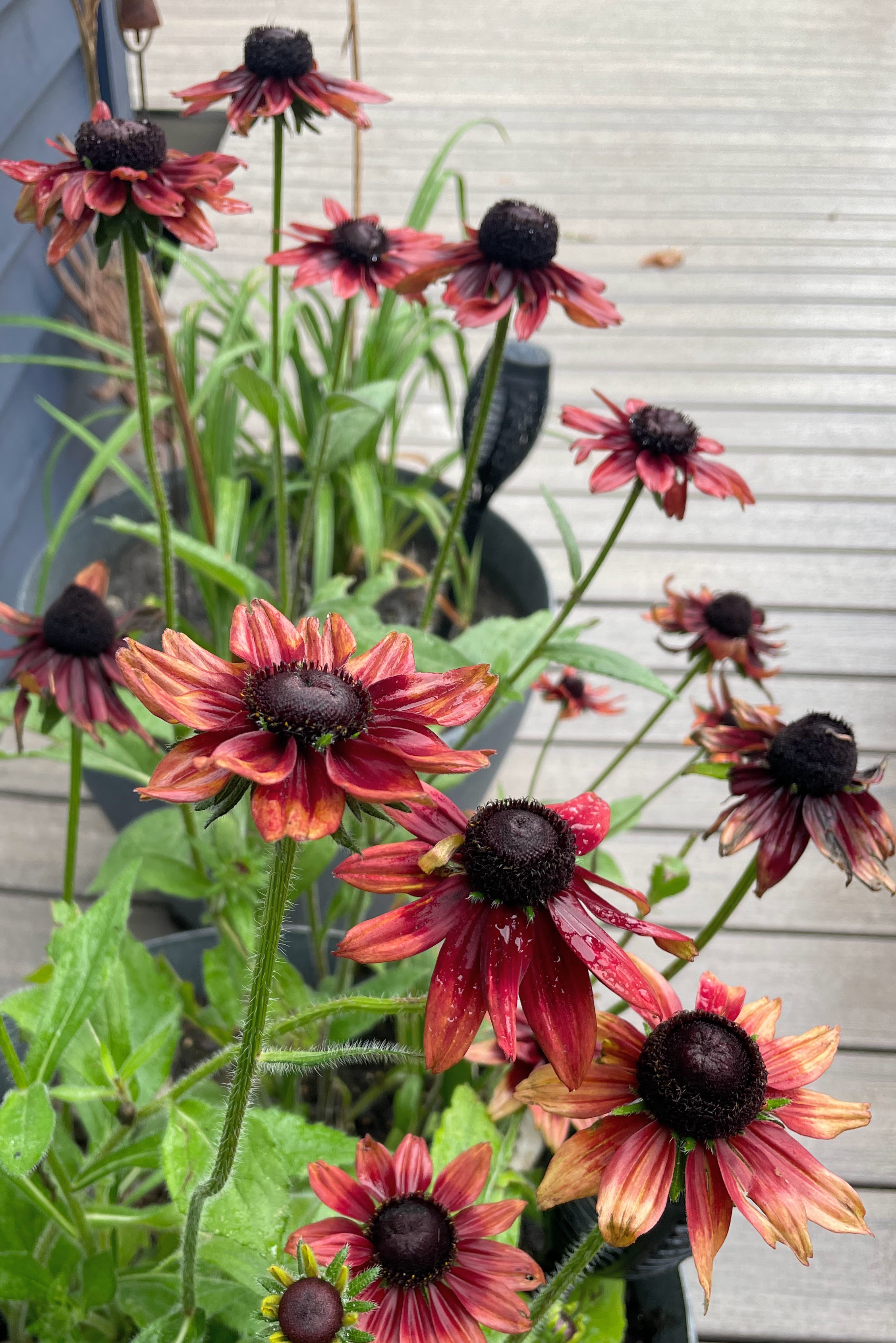
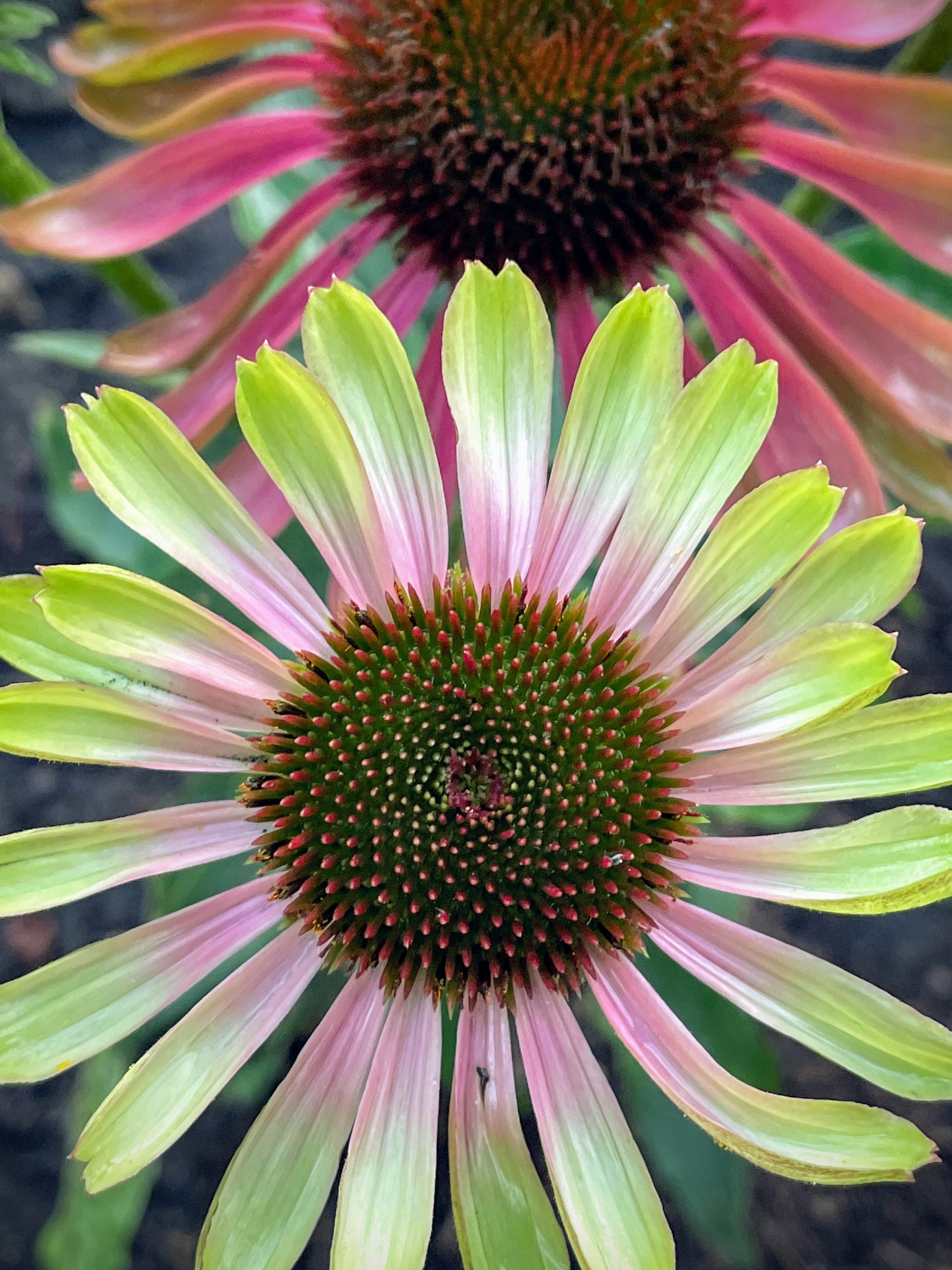
You may look at the beautiful potted flowers above and know right away what they are. When I look at them now, I also know. And forever more, I will know. But for the past couple of weeks, every time I walked by this part of the deck, I reveled in how beautiful these ‘echinacea’ were, and what an unusual color, too. I would then glance over to a different part of the garden and marvel at how many other beautiful varieties of echinacea existed:

But I was wrong about the potted flowers in the first photo, despite abundant evidence. My disregard for the facts started when I forgot what was written on the original plant tags and did not feel I needed to re-check; it spiraled from there and led me to overlook the obvious.

Mostly, it was hubris; I thought I knew, so I failed to observe properly, or fact check. What clues did I miss? Many. As this blogger stated, a gardener confusing a rudbeckia with an echinacea is like a farmer confusing a sheep with a goat. Ouch. In my defense, sheep and goats are very closely related genetically– as are rudbeckia and echinacea. And until a couple of weeks ago, I did not have this ‘Cherry Brandy’ rudbeckia in my garden. But I get the point, and now I can see the obvious differences between the “sheep” and “goats” in my garden.

Here’s how to tell them apart:

1. First, it’s not by how hairy one plant is, vs the other. I read that one way to tell them apart is that echinacea have hairier leaves. But both plants have hairy leaves; echinacea leaves feel rough like a cat’s tongue, while Rudbeckia hirta leaves are softer and more velvety (see photo below):

Since both plants have hairy leaves, it’s not the best test. There is a better one (in fact, the best and easiest one):

2. Examine the cones. Rudbeckia hirta cones (l) are relatively soft and usually look like black button tufts (hence the name Black-Eyed Susans), while echinacea cones (r) are harder and pricklier and more conical — and are not black, but orange or green or brown.

3. Look at the “petals” (though technically, they are ray florets, not petals): This can often help, but not always. According to this way of telling the difference between the two plants, echinacea petals tend to droop and point downward while rudbeckia petals tend to stick straight out. But in the photo below, some of the echinacea petals are drooping and some are sticking straight out. It depends on the variety and the plant’s stage of development. So use the “petal” test as a first form of evidence gathering if you like, but be sure to confirm with the cone test; it will give you the right answer.

In seeking the right answer today, I learned something new. Not just about the difference between Rudbeckia hirta and echinacea, but about assumptions and facts. And about taking the time to stop and smell the roses — and see the petals and leaves, and touch the cones.

Photo of the Month: June 2013 (Echinacea Ruby Star)

30 Jun

An Echinacea (Ruby Star), petals just beginning to open–in soft focus.

A Remembrance of Things Past

21 Mar

At the moment, the wind is biting, the temperature is dropping rapidly, and we are in for a frost tonight. Still, I am on the verge of getting carried away by spring and all the promise it holds — new growth, new surprises waiting to be discovered, and oh-so welcome color. Spring is just on the horizon, I know it. But today is a reminder that we are not quite there yet. It seems a good moment to give a shout out to some of last year’s plants that came through winter and managed to retain a stark splendor even though their color had long faded. These old plants will soon make way for the new, but here is a brief photographic remembrance that will last even after their time has well and truly passed.


Hydrangea Paniculata


Dried Seed Pods, Unidentified Tree


Echinacea (Ruby Giant)

Tall, Colorful, and Handsome

5 Jul

In an earlier post, I included a photo of Garden 2 (G2) in 2011. Here is a photo of G2 last month:

As you can see, G2 has exploded. The focal plant, Crape Myrtle (Siren Red) is now well over fence height, with the Porcupine Grass on either side towering more than 6′. Ultimately, the Crape Myrtle will be taller than the Porcupine Grass; I just hope it doesn’t get suffocated before it gets there. A recurring lesson: check the spread (width) of your plants before planting them.  I only had eyes for height; width wasn’t really a consideration. I was looking for tall, colorful, and handsome, and in some cases ended up with fat and jolly instead. But it’s hard to be upset with a happy plant.

The new Gauras (Passionate Rainbow) on both sides in the front filled in quite nicely, but have yet to bloom. I suspect they will not this year. Maybe I am fated to not have Gauras, though I love them. But the yellow Euphorbia is still pulling its weight, as it has been since March. And new this year are two Azaleas–the two lighter green plants at the far left- and right-hand sides of the photo, just below fence level. I planted them in April, and am already fairly certain they are getting too much sun, so a relocation may be in the works. Another lesson worth repeating from 2011: don’t be afraid to move plants around. Of course, it would be best not to do it at high noon in 100+ degree weather (of the kind we have been experiencing lately); even the hardiest plant would have a rough time under those conditions. In fact, I can’t blame them. I’d wilt, too, if I were unceremoniously dumped into a hot hole with the sun beating down on my head. So I will keep my eye on the azaleas  and move them if needed–on a cooler, overcast day when rain is predicted.

I leave you with a couple other photos of the garden from June: a corner of Garden 1 (G1) featuring some pink and orange Echinacea, as well as Rudbeckia Giant Coneflower, which is stunningly tall, colorful, and handsome, and a total bird magnet.

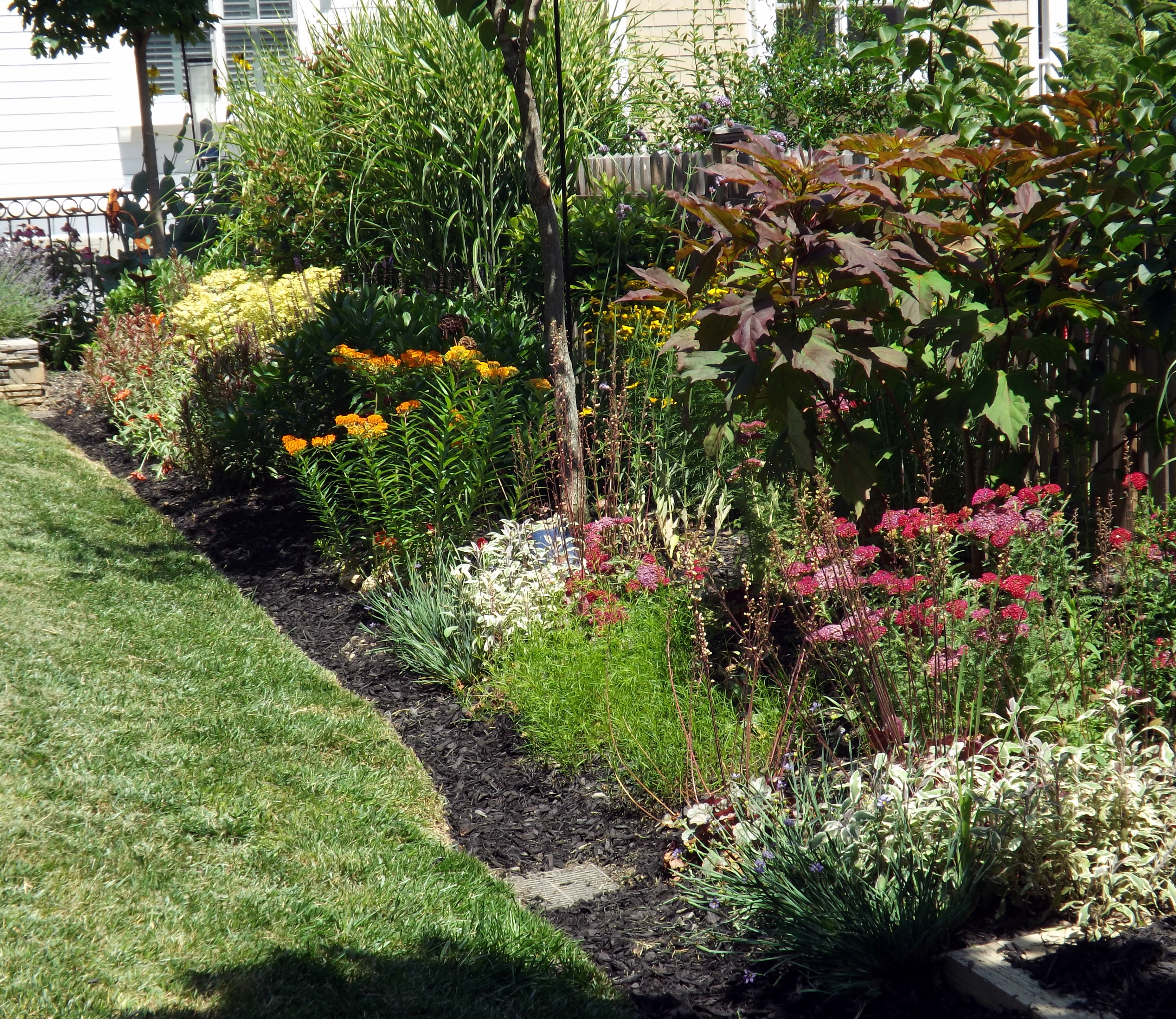
And Garden 3 (G3) looking down toward G2, with the coppery Hibiscus and crimson-colored Yarrow in the foreground, and orange Butterfly Weed by the tree. Don’t be fooled by the Yarrow, however. It is proving to be all show and no substance. More on that soon.