Tag Archives: pollination

The Hidden Parts of Lupines

26 May

I had bad luck growing lupines from seed last year; the resulting plants started out well but didn’t make it past spring. I’d like to blame the local rabbits, except for the fact that lupines are poisonous, so maybe a very brave rabbit could have eaten one of my small lupines, but certainly not all of them. So it was probably the fault of a human who shall not be named, not a leporid.

Still traumatized from last year’s lackluster lupine experience, I decided I would not start any from seed this year. In fact, I would not have any lupines at all. But then, while at a garden center for something else entirely, I walked past three magnificent specimens in full bloom (with many more blooms to come) and couldn’t resist. They were far more spectacular than my seed-started lupines had ever been, and I had three large, empty deck pots back home. So I decided to try them as container plants. If that doesn’t work, I’ll need a Plan C.
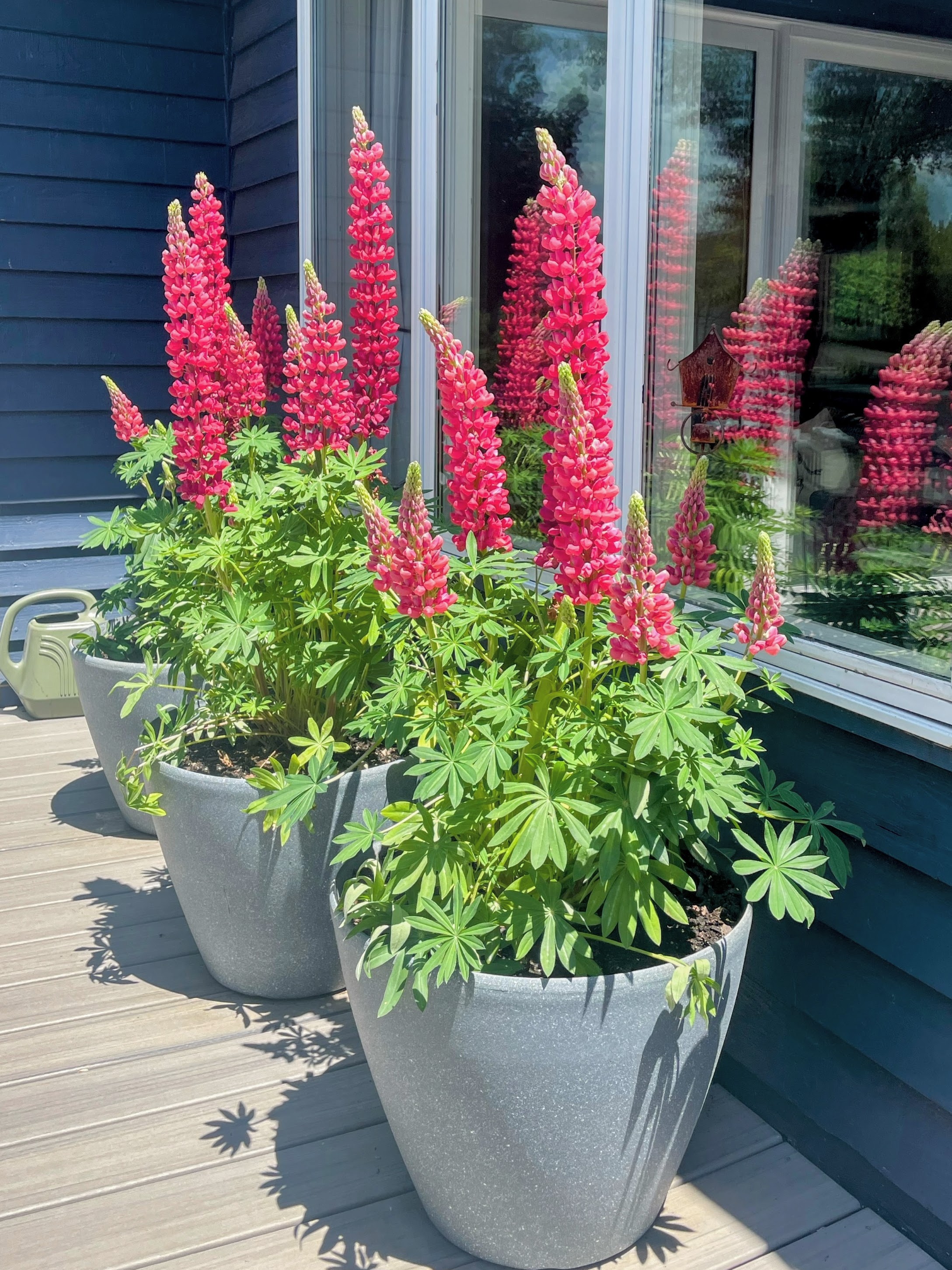
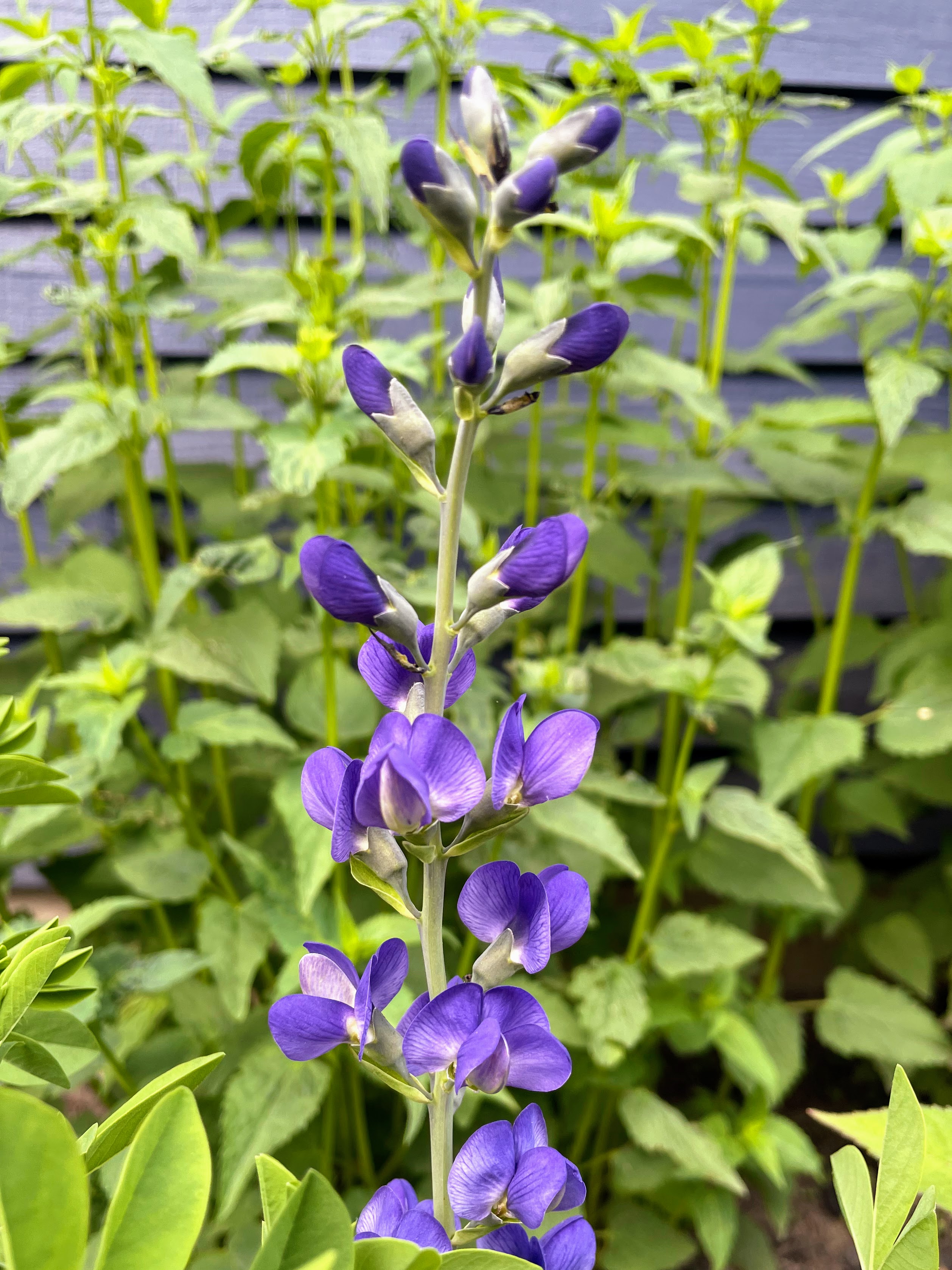
Lupines are part of the Pea family (Fabaceae) along with baptisia,* broom, clover, milkvetch, trefoil, and others. The flowers grow on long spikes called racemes, with the flowers blooming from the bottom of the spike on up. The flowers themselves are distinctive, consisting of five petals. One forms an upright banner, two are lateral wings, and two are fused together to form a curved keel (so called because it resembles a boat’s keel).
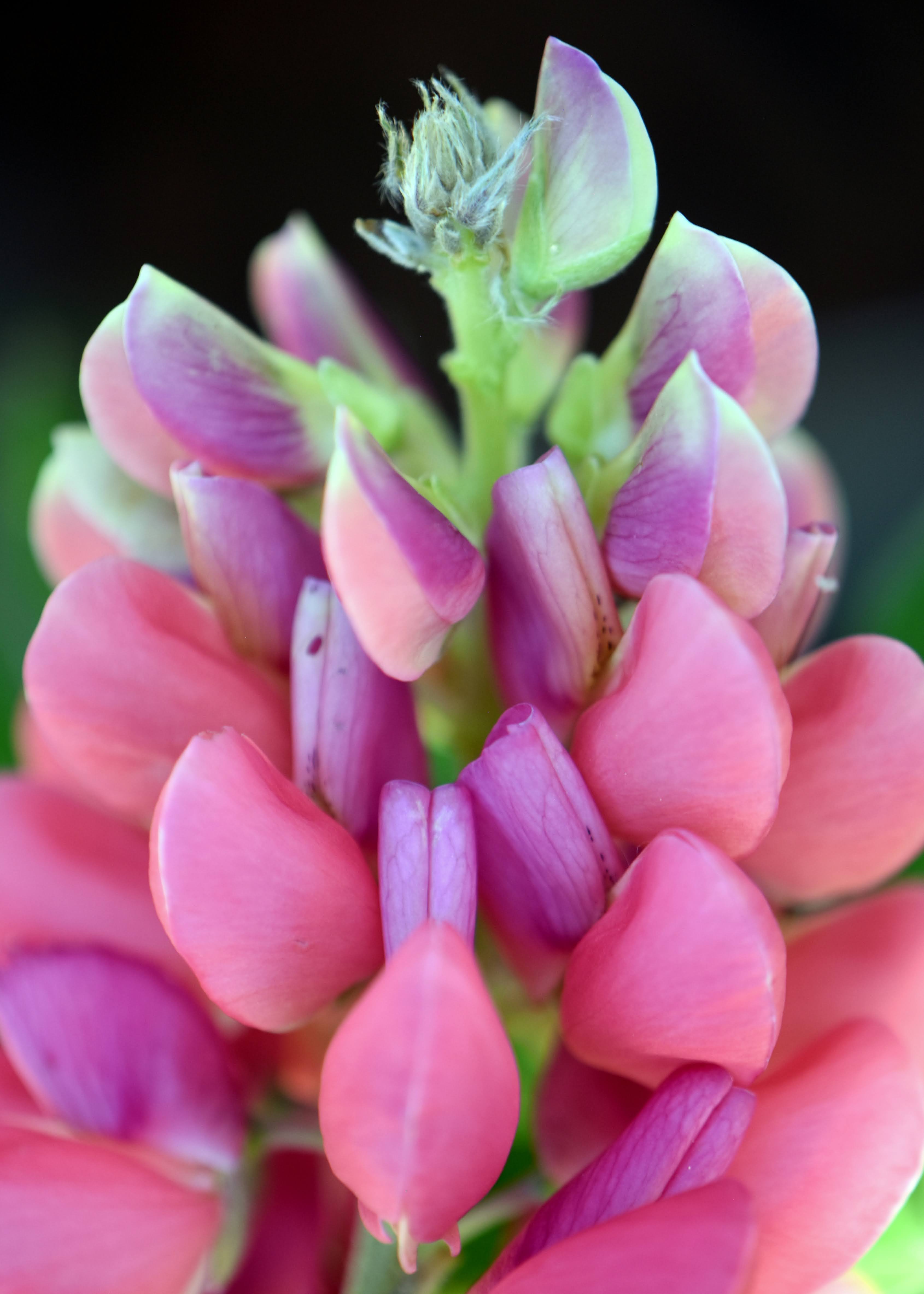
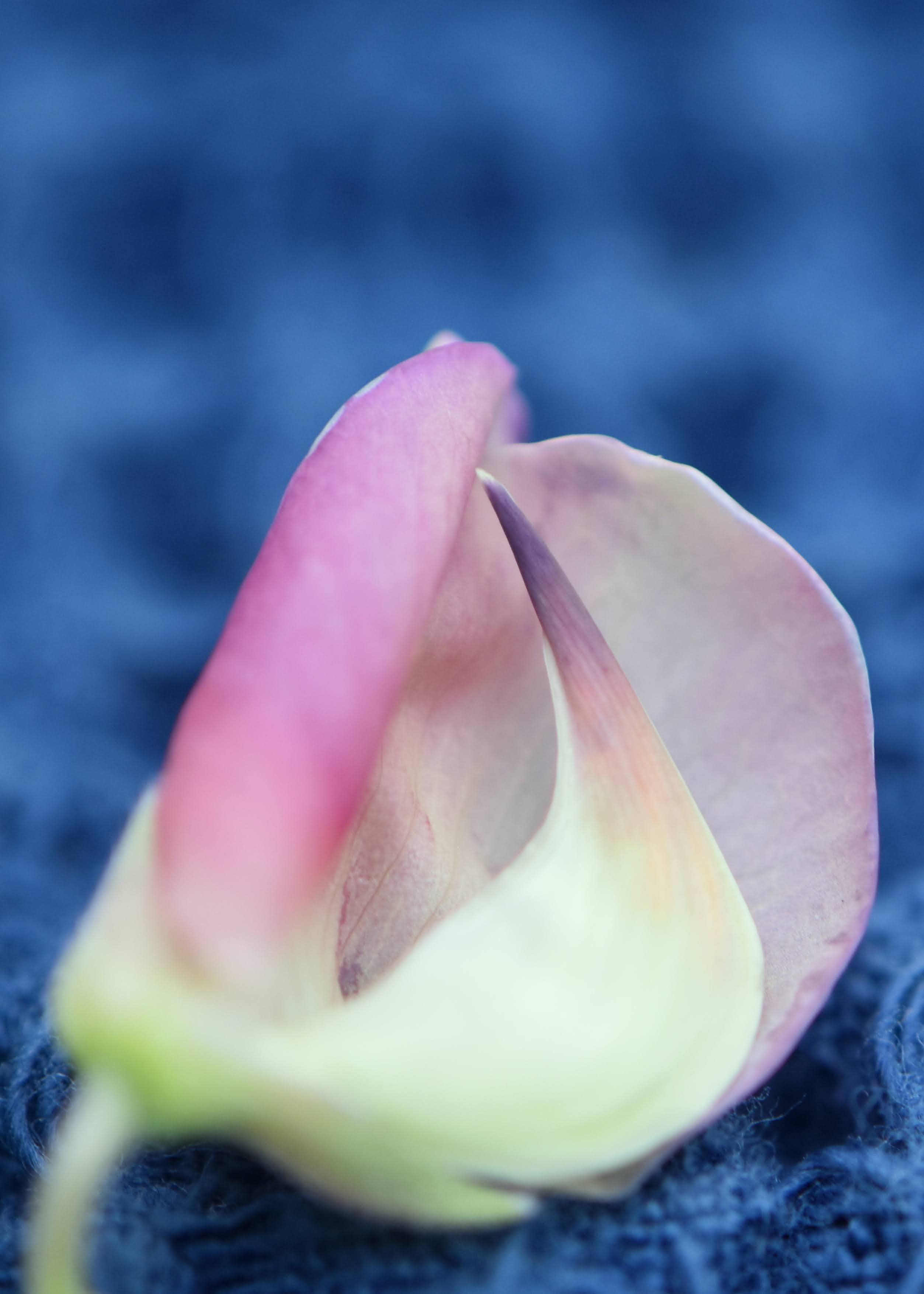
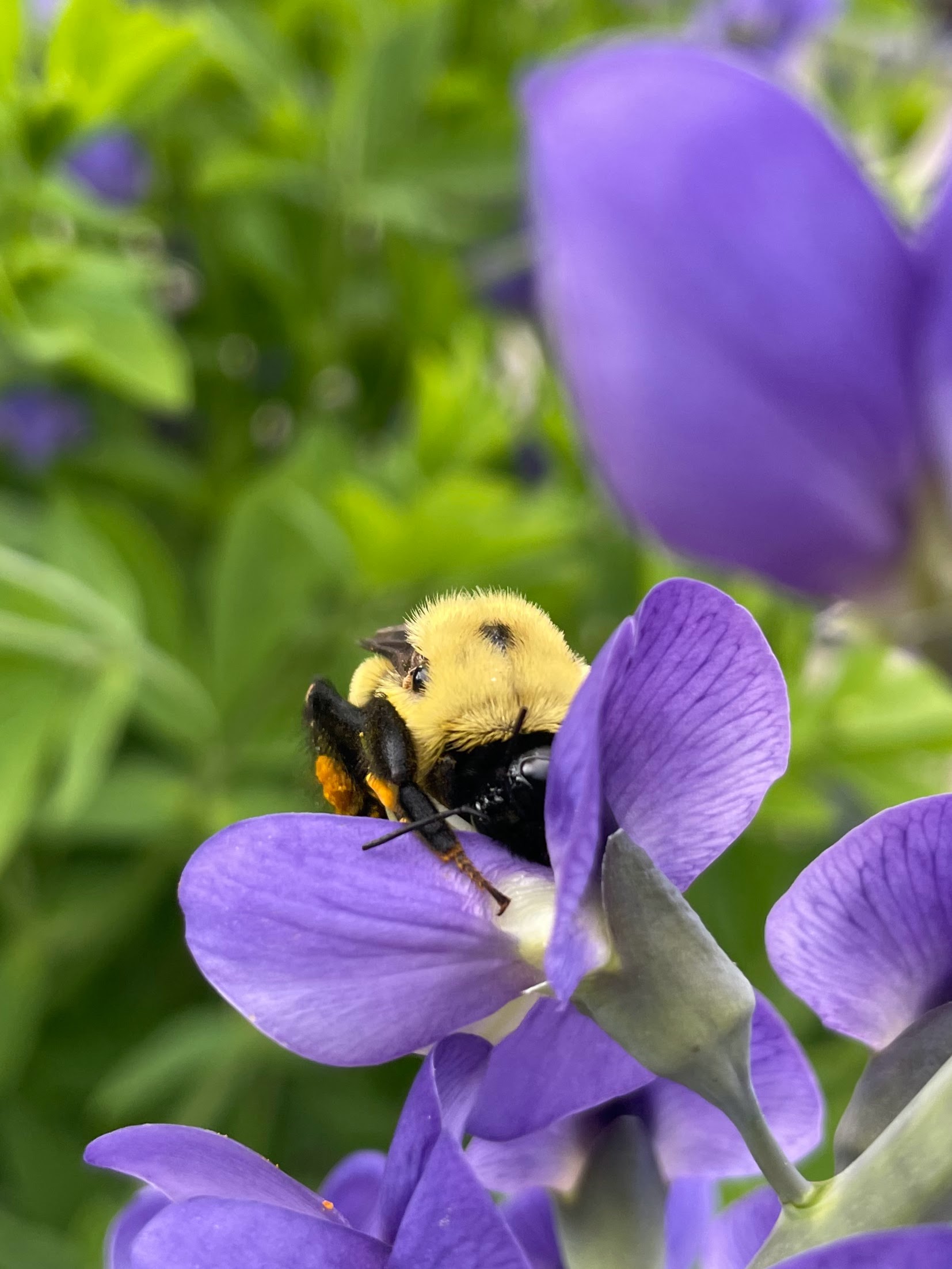
With their lighter-colored center markings, the banners act as sign posts to attract pollinators, ie, bees. (Though most lupines can self pollinate, bees can also help). The two wings form the distinct pea-flower shape and surround the keel, making it hard to see; in the middle photo above, I peeled away one of the wings. The keel protects the flower’s reproductive parts, which are tucked inside it. When a bee lands on the wings, they open up like a clam and expose the keel, which also opens slightly. The bee pollinates the flower by knocking the stigma and anthers together, and in the process collects pollen to feed to its young. The banner then does a really cool thing: it changes color after pollination, to let the bees know there is no more pollen to be had at that particular flower.

So, while the beautiful exteriors of these flowers deserve all the admiration they receive, what they have going on within is pretty fascinating, too!

*For flower-comparison sake, here are two photos of Baptisia australis, which also belongs to the Pea family and has banners, wings, and keels. In the last photo, a bee has found its way to the pollen thanks to the banner markings.
The Unusual Jaboticaba Fruit Tree

20 Apr

Ok, if you live in any of the tree’s native habitat areas in South America, the Jaboticaba and its fruit may not be so unusual to you. But for the rest of us, the tree is a sight to behold:

Jaboticaba; photo taken at the Missouri Botanical Garden in St. Louis.

The Jaboticaba (Plinia cauliflora, aka Jaboticabeira, aka Brazilian Grape Tree) is a showstopper because it exhibits an unusual botanical trait, ie, its fragrant white flowers and sweet/tangy fruits grow directly on the trunk of the tree, rather than from new growth or shoots. In botanical terms, this is called cauliflory; hence the “cauliflora” part of the Jaboticaba’s Latin name. (“Plinia” refers to a genus of flowering plants in the myrtle family, Myrtaceae, to which the Jaboticaba belongs.) Other cauliflory plants include Durian, Cacao, Jackfruit, Papaya, and the lesser-known Cannonball Tree — which, though they all share this same botanical trait of cauliflory, are not actually related to the Jaboticaba.

Cauliflory is most common in tropical areas; in the United States, the Jaboticaba can be grown in Zones 9-11. Botanists believe cauliflory evolved for a couple reasons: 1) accessibility: insects and fruit-eating animals that can’t easily get to the highest parts of trees can access the flowers and fruits on the lower parts of the trunk of a cauliflory plant, thus helping ensure the tree’s reproduction via cross-pollination and seed dispersal. Another reason for cauliflory may be due to 2) structural support: the trunks and main stems can more easily bear the weight of heavy fruits like Durians, Jackfruits, and Papayas.

Though Jaboticabas are very slow growing, once they reach maturity, they can produce up to 100 pounds of berries, which look like very large grapes and come in different varieties and colors (purply-black, red, and white). The skins are a bit thick and tannic; some people eat the berries skin and all for a nice “pop,” while others squeeze the juicy pulp into their mouths and discard the skin. The pulp is translucent and jelly-like, with a few seeds. It looks a little like the inside of a lychee or blueberry. Depending on the “jabo” variety, the berries are said to taste like Muscadine grapes, blueberries, and/or lychees — or a combo of all those flavors — with slight acidic undertones. Jaboticaba berries are also quite nutritious; they contain lots of Vitamin C and other antioxidants, as well as amino acids and nutrients such as calcium, phosphorus, and iron.

In addition to being eaten fresh, the Jaboticaba fruits can be made into juice, syrup, jam, and other usually sweet concoctions. The important thing is to use the fruit quickly after picking it, as it has a very short shelf life (which explains why those of us who cannot grow this tree also cannot find the fruit in our local supermarkets).

Recipes:
Jaboticaba Juice (video)
Jaboticaba Syrup
Jaboticaba Liqueur
Jaboticaba Jam w/Pectin
Jaboticaba Jam w/o Pectin
Jaboticaba Sorbet
Jaboticaba Cheesecake
Jaboticaba Sparkling Wine

Bearded Iris: ‘Spartan’

26 May

In Greek mythology, Iris was the goddess of the rainbow; the flower’s name pays homage to the many colors of irises that exist. In the language of flowers, an iris is viewed as the bearer of good tidings–a reflection of the goddess Iris’ other role as messenger to the gods. I was swayed to include irises in the garden solely because of their beautiful display–but if they also bring good luck, even better.

This year, I added a maroon-colored bearded Iris: ‘Spartan.’ Its name is a nod to ancient Greek history, though their enemies would probably not have equated Spartan warriors with good tidings. I at least hope the name means the three plants I now have in my garden will be hardy.

They are the first bearded irises I have had the pleasure to observe at close range, and though they are now at the end of their brief blooming season, I kept an eager eye on them from the moment they were first in bud:

  
Bud and emerging bloom.


Three upward-facing petals (standards); three downward-facing petals (falls), with the beards resting atop the falls.

  
Close-up of a beard, which helps to guides pollinators (bees) into the flower. With the standard removed and this section of the plant opened up a bit (right), it is easier to see how the beard–and the color pattern–point the way to the nectar at the inner base of the flower. The stamen (male reproductive organ) with its pollen-covered anther is visible at the back, just in front of another petal-like structure that is called the style arm. The style arm is a highly modified pistil (female reproductive organ). Normally it’s a tight squeeze for a bee to get to the nectar; as it heads downward, it will brush up against the anther and get dusted with pollen. When the bee visits another iris, the pollen on its back rubs off and attaches to the sticky stigmatic lip (the arched line toward the top of the style arm, below the upper crest), allowing pollination to begin.

Weekly Photo Challenge: Spring

3 May

When I think of Spring, I think of flowers and new life.  This Tulipa “Ballerina” is one the the earliest and cheeriest flowers in my garden, and a look inside the tulip reveals some essentials about plant reproduction.


This close-up focuses on the three-lobed stigma (the top-most section of the tulip’s female reproductive parts, known collectively as the pistil), which catches pollen via its sticky and fuzzy surface. The pollen then travels down the tube-like style to the ovary where  fertilization takes place (if the pollen came from a tulip plant), ultimately leading to the production of seeds. The six pollen-covered anthers (the top-most parts of the male reproductive organs, known collectively as the stamens) are blurred in the background; the stamens emanate from the base of the pistil.

Tulips are considered “perfect” flowers because they contain both male and female reproductive organs. They can self pollinate, but can also cross pollinate in the wild with the help of bees and other pollinators. Alas, most commercial tulips, including this one, are sterile hybrids. But the good thing is that tulips also reproduce via their bulbs, which allows gardeners to enjoy them anew each spring.

A Master Pollinator in Action

4 Sep

The phrase “busy as a bee” came about for a reason. Bees never seem to stop. And we are all better off because of their tireless search for nectar, which makes them prime pollinators. This weekend, I watched one bee as it attempted to get into each flower on our two, tall Rose of Sharon plants. That’s a lot of flowers to visit. But according to my trusty Botany for Gardeners, a bee’s habit of flying back and forth between flowers of the same species is what leads to successful pollination. That, and a few incentives. First, there’s the nectar, usually found at the base of a flower — meaning the bee has to brush past the flower’s reproductive organs to reach the jackpot. Then, to make it easier for the bee (or any other pollinator) to get to the nectar, many flowers have nectar guides–markings that say “this way to the good stuff.” Those guides can be stripes, patterns, dots, or heightened color, etc.

In the photos below, a bee is lured inside a Rose of Sharon flower by the darker red stripes on each petal and the darker red inner circle that forms when all the petals come together at the base of the flower. The bee is already carrying pollen from the other Rose of Sharon flowers it has visited. It then burrows down to the base of the flower to reach the nectar — and in the process drops off some of the pollen it is carrying and picks up a bit more. Then, it heads up and out — off to pollinate the next flower.

Zucchini Flowers, Leaves, and Bees

3 Jul


Yes, it’s that time of year, a time when you realize you planted way too much zucchini. I have only one zucchini plant in the garden (not having much space for vegetables to begin with) — yet I find myself asking, how can one plant produce that much? And it’s barely gotten started.

Luckily, I love zucchini and am already thinking about what to do with my harvest. However, this post is not about cooking. It is about the plant itself, from flower to leaf. If you grow zucchini, you probably quite enjoy seeing the zucchini flowers/blossoms/blooms. I usually look at them and imagine them stuffed with a nice cheese, dipped in a light batter, and gently fried….heavenly! Some say the male flowers (which grow at the end of long stems, unlike female flowers, which grow at the end of the emerging zucchini) are the best for eating; I’ll happily sample either one. The flowers can also be eaten raw, sliced into salads or other dishes.

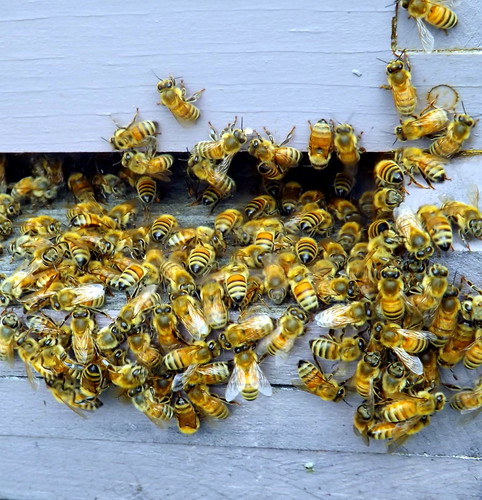
But I digress. My intention was to write about the plant–as a plant, not as a source of food. A couple of days ago, I was checking the status of the zucchini and was startled to see a fully open flower. I almost never see an open flower, which makes sense since they are only open for one day and usually from morning to early afternoon (when I am at work, or not paying sufficient attention). In order for any zucchini to be produced, bees must take advantage of this small window of opportunity and do their part by carrying pollen from the male flowers to the female flowers. [Ok, I have to digress again to show a completely unrelated photo of a friend’s beehive since I don’t have a photo of a bee on my zucchini flowers–and yes, honey bees are excellent pollinators of zucchini and many other fruits and vegetables. Go bees!]


Some of my baby zucchini seemed to wither on the stems and drop off before they even got going. I wondered if this was due to all the rain we’ve been having (or even worse, if it could possibly be the fault of our male dog–despite the barricades I erected). Luckily, I discovered it’s because the female flower didn’t get quite enough pollen from the male. Gardeners wishing to help the process along can try to hand pollinate by carefully removing the anther from the male flower and dabbing it onto the stigma of the open female flower (or by using cotton swabs to transfer the pollen). In my case, with plenty of zucchini already harvested and more to come, I may need to start tying all those flowers closed!

Here is a photo of a lovely, open zucchini flower (looks male)…

… and of another part of the plant that rarely gets mentioned: the leaf. I really like the way the leaves look, and I particularly like the downward angle in this photo. But zucchini leaves are a force of nature. They are so big and so prolific that they keep taking over the small space I allocated to the zucchini plant, and I have had to prune them several times. I felt guilty cutting them off at first, but then I learned that judicious pruning lets more light in and can help increase zucchini production. Wait–is that a plus?