Tag Archives: flowers

Flowers Above

27 Mar

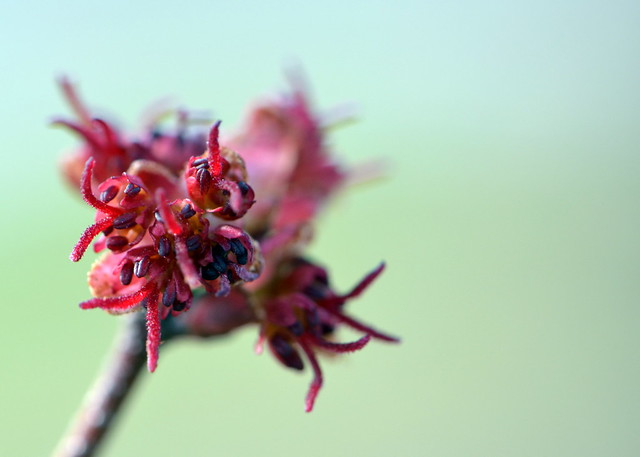
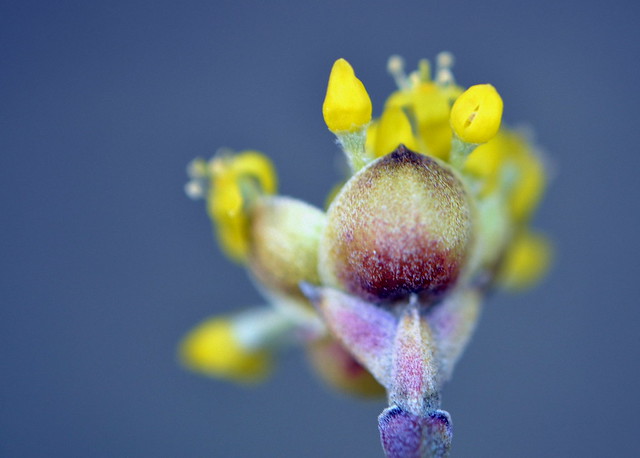
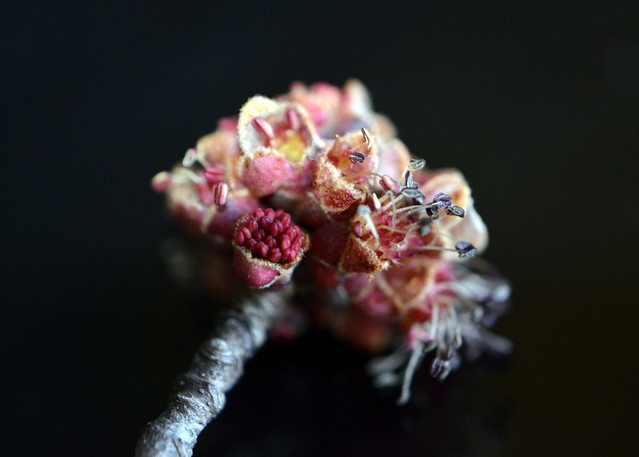
Recently, when walking to and from work or through my garden or around my neighborhood, I have tended to keep my eyes at ground level, on the alert for early blooms and signs of spring. But this evening, in the magical hour before sunset, I looked up… and was immediately rewarded by the sight of emerging flowers on local trees, a glorious sight indeed–and a reminder that good things also come from above.


Red Maple flowers


Emerging Cornelian Cherry Dogwood flower cluster


Red Maple flower cluster, photographed on black table

Weekly Photo Challenge: Unexpected

27 Nov

This photo is of something I was not expecting. During my recent trip to Rwanda, this gorgeous leaf formation caught my eye. I had never seen anything quite like it. It was a striking burst of color on an otherwise fairly bare branch. When I asked someone what it was, I was surprised to discover that it was a poinsettia, and that poinsettias can grow into small trees up to about 10 feet in height. I had no idea, because to my untrained eye this looks nothing like the potted poinsettias that abound at Christmastime (except perhaps for the red leaves). I’ll take the tree!

So an unexpected encounter led to an unexpected discovery — and I couldn’t be more delighted. The red leaves are called brachts; the actual poinsettia flowers are tiny and yellow.

Troopers in the Autumn Garden

23 Nov

I have sadly neglected the garden. I’d like to blame it on work and family obligations, but the real reason is that I find the autumn clean-up far less satisfying than the spring clean-up. In the spring, when I gather up the detritus from winter, I am delighted to see tiny new shoots pushing through the earth underneath. I love seeing new buds unfurling. The atmosphere in the garden is of one of eager anticipation. The prep work then is like priming a canvas before painting in order to set the stage for a masterpiece to emerge. It is a fantasy, I admit–but in June, when viewed at just the right angle in just the right light by someone who is squinting slightly, the garden does look somewhat like an Impressionist work of art.

In the autumn, the garden is a much sorrier sight (well, my garden is). And the clean-up then feels more like chore than delight. But there is no camouflage in the winter, so if anything, making sure the garden looks neat and tidy is even more important. So what did I do today? Did I spend hours pruning, deadheading, weeding, or transplanting? No, I procrastinated–I took photos of the few remaining spots of color and bits of interest, telling myself tomorrow is another day.

Here are a few autumnal troopers: Echinacea ‘Southern Belle,’ a Montauk Daisy featuring a slightly lethargic bee, and Hidcote Lavender. Plus, something to look forward to: buds on Witch Hazel ‘Birgit,’ ready to burst forth very early next year for some welcome late-winter color.


A Master Pollinator in Action

4 Sep

The phrase “busy as a bee” came about for a reason. Bees never seem to stop. And we are all better off because of their tireless search for nectar, which makes them prime pollinators. This weekend, I watched one bee as it attempted to get into each flower on our two, tall Rose of Sharon plants. That’s a lot of flowers to visit. But according to my trusty Botany for Gardeners, a bee’s habit of flying back and forth between flowers of the same species is what leads to successful pollination. That, and a few incentives. First, there’s the nectar, usually found at the base of a flower — meaning the bee has to brush past the flower’s reproductive organs to reach the jackpot. Then, to make it easier for the bee (or any other pollinator) to get to the nectar, many flowers have nectar guides–markings that say “this way to the good stuff.” Those guides can be stripes, patterns, dots, or heightened color, etc.

In the photos below, a bee is lured inside a Rose of Sharon flower by the darker red stripes on each petal and the darker red inner circle that forms when all the petals come together at the base of the flower. The bee is already carrying pollen from the other Rose of Sharon flowers it has visited. It then burrows down to the base of the flower to reach the nectar — and in the process drops off some of the pollen it is carrying and picks up a bit more. Then, it heads up and out — off to pollinate the next flower.

Zucchini Flowers, Leaves, and Bees

3 Jul


Yes, it’s that time of year, a time when you realize you planted way too much zucchini. I have only one zucchini plant in the garden (not having much space for vegetables to begin with) — yet I find myself asking, how can one plant produce that much? And it’s barely gotten started.

Luckily, I love zucchini and am already thinking about what to do with my harvest. However, this post is not about cooking. It is about the plant itself, from flower to leaf. If you grow zucchini, you probably quite enjoy seeing the zucchini flowers/blossoms/blooms. I usually look at them and imagine them stuffed with a nice cheese, dipped in a light batter, and gently fried….heavenly! Some say the male flowers (which grow at the end of long stems, unlike female flowers, which grow at the end of the emerging zucchini) are the best for eating; I’ll happily sample either one. The flowers can also be eaten raw, sliced into salads or other dishes.

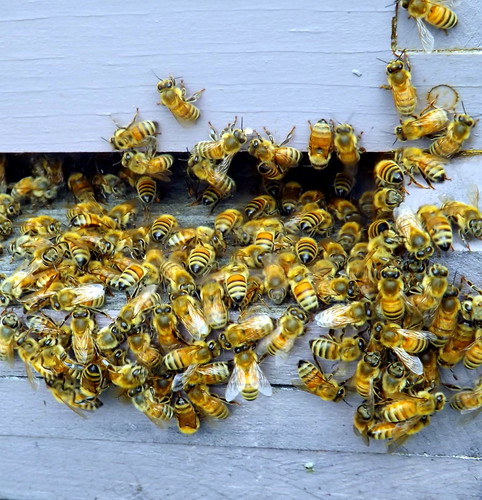
But I digress. My intention was to write about the plant–as a plant, not as a source of food. A couple of days ago, I was checking the status of the zucchini and was startled to see a fully open flower. I almost never see an open flower, which makes sense since they are only open for one day and usually from morning to early afternoon (when I am at work, or not paying sufficient attention). In order for any zucchini to be produced, bees must take advantage of this small window of opportunity and do their part by carrying pollen from the male flowers to the female flowers. [Ok, I have to digress again to show a completely unrelated photo of a friend’s beehive since I don’t have a photo of a bee on my zucchini flowers–and yes, honey bees are excellent pollinators of zucchini and many other fruits and vegetables. Go bees!]

Some of my baby zucchini seemed to wither on the stems and drop off before they even got going. I wondered if this was due to all the rain we’ve been having (or even worse, if it could possibly be the fault of our male dog–despite the barricades I erected). Luckily, I discovered it’s because the female flower didn’t get quite enough pollen from the male. Gardeners wishing to help the process along can try to hand pollinate by carefully removing the anther from the male flower and dabbing it onto the stigma of the open female flower (or by using cotton swabs to transfer the pollen). In my case, with plenty of zucchini already harvested and more to come, I may need to start tying all those flowers closed!

Here is a photo of a lovely, open zucchini flower (looks male)…

… and of another part of the plant that rarely gets mentioned: the leaf. I really like the way the leaves look, and I particularly like the downward angle in this photo. But zucchini leaves are a force of nature. They are so big and so prolific that they keep taking over the small space I allocated to the zucchini plant, and I have had to prune them several times. I felt guilty cutting them off at first, but then I learned that judicious pruning lets more light in and can help increase zucchini production. Wait–is that a plus?

Witch Hazel

9 Mar

Until today, I knew next to nothing about Witch Hazel. I had a vague idea it could be found in a bottle at the pharmacy, but thought of it as something from a bygone era, like cod liver oil. Not that it didn’t have its uses –I just wasn’t sure what those uses were….

But an absolutely glorious day propelled me to nearby Brookside Gardens in Wheaton, Maryland to see what might be of interest there. Turns out, there was a great deal of interest, not the least of which was Witch Hazel (Hamamelis). As I came around a bend I noticed a tree (ok, technically a very large shrub) with the most delicate, spidery looking flowers on it. It was striking not only because it was in bloom, but because the flowers were almost ethereal. I bent to read the sign beneath and learned it was a Witch Hazel, something I had not see before. But once I saw that one, I noticed many others, in different colors, all equally stunning. I immediately experienced garden envy. Or perhaps garden regret–there is only so much I can pack into my own small garden, and Witch Hazel will just have to be admired from afar.

Below are a few photos of a remarkable plant, the extract of which helps control blemishes, soothe burns (including sunburns and razor burns) and cuts and bruises, relieve insect bites and itchy poison ivy/poison oak, and relieve tired eyes. Now that I know this, I will certainly get some extract from the pharmacy in the near future, but for now I will feast my eyes on the lovely Witch Hazel flowers and feel glad that I learned something new today.


‘Diane’


‘Diane’


‘Orange Peel’


‘Moonlight’

Succulents: Jade Plant

20 Jan

In spy movies or thrillers, you sometimes see the protagonists pull out a cache of passports and decide who they will be that day.  They are maestros of multiple identities, but they have nothing on the Jade Plant. The Jade Plant is in the Crassula genus and has many, many names.  On the formal side it can be referred to as Crassula Ovata, Crassula Argentea, Crassula Portulacea, or Crasssula Obliqua. They are all synonyms for the same plant, though the last three are older classifications that have not quite cycled out of usage. Crassula Ovata is the correct form of reference.  And then there is Crassula Arborescens, which is very similar to (but not the same as)  Crassula Ovata–people mix them up all the time.

If all this weren’t enough, the Jade Plant is also commonly known as a Jade Tree, a Money Tree, a Silver Dollar (or just Dollar) Plant, or a Friendship Plant.  The Jade Plant has more aliases than Jason Bourne.

So, it is with some trepidation that I offer you two photos of Crassula Ovata taken during our recent trip to California; I think that’s what they are, but tomorrow I could discover they are something else entirely….


Succulents: Aloe

12 Jan

Upon arriving in San Diego just before Christmas, one of the first things I noticed was a profusion of striking Red Hot Pokers in flower; they were everywhere, or so I thought. Upon closer inspection, I realized they weren’t Red Hot Pokers. Or were they? The  dark-orange spires I saw everywhere in San Diego were aloes. And the Red Hot Pokers I know and love (and have in my garden) are kniphofias.  Both plants are originally from Africa, and the flowers look remarkably similar.  But one is a succulent, and the other is not.

When most people talk about Red Hot Pokers, they mean kniphofias, which feature clumps of grass-like leaves.  Aloe plants have thick and frequently spiky foliage; you can snap off a piece of aloe vera and apply the soothing gel to burns. But some people refer to both aloes and kniphofias  as Red Hot Pokers. And in fact, the  genus Kniphofia is very closely related to the genus Aloe.

Here are three photos of aloes in bloom in San Diego in January, plus an inadvertent (and less than ideal) photo taken this past May in my garden of a Red Hot Poker Flamenco — a kniphofia — next to a Foxglove.


Aloe

 
Aloe                                                            Kniphofia (with Foxglove on left)


And an aloe that doesn’t look like a Red Hot Poker: Aloe Saponaria

Tis the Season for…Crape Myrtle

31 Jul

It’s that time of year. All over our neighborhood, Crape Myrtles (also known as Crepe Myrtles) are in bloom.  The long-flowering trees and shrubs originated in Asia, but made their way to the southeastern part of the United States more than 200 years ago after a pit stop in Europe. With so many different sizes and colors to choose from, there is bound to be a Crape Myrtle for almost every garden.

Our Siren Red is a relatively small variety–it will only be about 10 feet tall when fully mature, which is just right for our townhouse yard.  Of course, I also thought the Porcupine Grass was just right for our yard, but failed to adequately imagine what 8-foot tall clumps of  vibrant ornamental grass would look like at their peak; with two of them on either side of the Crape Myrtle, it is in danger of becoming the filling in a Porcupine Grass sandwich. I’m hoping the Crape Myrtle will soon outgrow the Porcupine Grass. If not, I’ll have to think of a Plan B.

I chose the Siren Red because of its size, and also because of its beautiful deep-red flowers. With crimson-colored new-growth foliage that turns green, and berry-like buds, every part of Siren Red is a pleasure to behold:


Flowers and Daughters

22 Jun

This will be a quick post in honor of my 15-year-old daughter, who is in Rome being a nanny for the summer. When we were all there as a family in 2005, we were walking through the Jewish Quarter behind the Teatro Marcello one day and stumbled upon an artist who had set up shop on a church stoop, painting flowers on strips of wood he had nailed together. We could not resist, and brought one back with us. It currently resides above the doorway of the office in our house, a permanent reminder of the cheerfulness of flowers. And that is why it is a good tribute to our daughter.

Here are more examples of the artist’s work. This photo was taken in 2005, but when I was there a few months ago,  I saw the artist and his wares at the same church stoop. Rome is truly the Eternal City.