Archive | Architecture/Buildings RSS feed for this section

Ancient Roman Building Techniques: Beautiful Examples In and Around Rome

4 Feb
Ruined dome of Western Palestra (gymnasium), Baths of Caracalla, Rome

The Ancient Romans were master architects, builders, and innovators. That we can still see the remains of many 2,000+-year-old structures is a testament to the Romans’ skill and to the materials they used. And also to the happy fact that in subsequent millennia, rather than be destroyed, many ancient buildings and structures were built over or incorporated into other buildings, or simply left where they were as the effort involved in removing them would be too great. Here is one example I’ve always enjoyed seeing: apartments built right into and around the ruins of the Baths of Agrippa near the Pantheon:

In contrast, I am certain that in 2,000 years, there will be nary a trace of my house here in the Midwest or any of the modern buildings nearby. So, how did the Romans make structures that have lasted so long? The answer is that they made excellent concrete and great bricks, and combined the two in various ways to construct extremely strong and long-lasting walls and other structures.

Of course, walls and buildings were also built with blocks carved from rock. In Rome, some of the earliest examples you can see are “dry walls,” built with blocks of volcanic rock called tufa without any mortar between the blocks. This technique of using blocks is called opus quadratum (also, ashlar or cuboidal masonry):

If you are walking around Rome and see these types of tufa-block walls, you can be sure they are quite old. They deserve a nod of appreciation, because cutting large blocks cleanly and evenly, hoisting them, and placing them perfectly with just their weight and position to keep them in place — that is a feat requiring a lot of hard work and skill.

Building techniques began to change in the second century BC, when the Romans discovered they could substitute volcanic ash (pozzolana) for the sand in concrete mixtures, yielding much stronger and more weather-resistant concrete. This super concrete turned out to be a perfect material for the inner core of walls (opus caementicium). Plus, it did not require as much hard work or skill to make, compared to the large block walls. The idea was that the concrete core would be covered (ie, faced) with stone or brick, and then, depending on the structure, faced again with stucco, paint, or polished stone veneers like marble.

One of the first ways of using this concrete core involved a construction technique called opus incertum: randomly inserting irregularly shaped, uncut stones and/or small tufa blocks into the concrete. This technique was used in building the Porticus Aemilia, a storehouse complex built in 193 BC along the Tiber river by Testaccio:

Though fired bricks had been around for a long time, the Romans did not really begin to use them significantly until the cusp of the first century AD. Two of the first structures to be made of fired brick in Rome were the Theatre of Marcellus (Teatro di Marcello) and the Tomb of Caecelia Metella on the Appian Way. The Teatro di Marcello was completed in 13 BC; miraculously, it still has its facade, though apartments were built on top of it in the 16th century. The Tomb of Caecilia Metella is thought to have been built somewhere between 30-10 BC.

Teatro di Marcello
Tomb of Caecila Metella

After these two structures were built, fired bricks began to be used all across the Roman Empire, in various ways. The most basic was a technique that involved facing the concrete core of a wall with courses of brick. It was called opus testaceum. The cut-away section in the photo below shows an inner concrete core and brick facing, from a wall at Portus, the ancient port of Rome, built around 50 AD. (Portus is about 35 minutes from central Rome, near Fiumicino Airport, and is definitely worth a visit if you can make it there.)

Inside view of ancient Roman wall, Portus.

Though bricks had come into fashion, tufa and other materials were still used as building materials. The photo below is of a section of the Aurelian Wall (270-275 AD) made with both brick and tufa. The technique used is called opus vittatum (ie, banded work, when the bricks and tufa are placed in alternating rows):

Opus vittatum, Aurelian Wall at Porta Tiburtina

Roman bricks came in different sizes: round, square, oblong, triangular, or rectangular. And walls were also built in different patterns. A pattern of pure brick rows (courses) was called opus testaceum, as mentioned above. Though it is hard to see, the skinny flat bricks used in these types of walls were often triangular, with the longest side lined up on the outside of the wall and the pointy side of the brick embedded in the concrete. A diamond or net-like pattern was called opus reticulatum. It consisted of small tufa blocks carved like little pyramids, with the square base being visible and the pointy part embedded in the concrete. When two techniques were used together, that was called opus mixtum.

The photos below show a wall in the Portico of Claudius, at Portus. On the right side of each photo is a section of opus testaceum (OT), ie, uninterrupted rows of bricks. The left part of the photo shows a section of opus mixtum (OM) consisting of a couple rows of brick (opus testaceum) interspersed with diamond-shaped sections of tufa blocks (opus reticulatum, OR).

Sometimes, the opus reticulatum was made with a combination of brick and black basalt instead of tufa to achieve a more distinct polychrome coloring, as in the first photo below from Ostia Antica (which is also an example of opus mixtum). Fun fact: The black cobblestones of Rome are also made out of black basalt.

Sometimes you will see brick arches in the walls. They are called relieving arches and they were used on tall walls, and above doors or windows or other openings, to help distribute weight and maintain structural integrity. The square holes you often see, too, are where the scaffolding was inserted when the wall was being built. They are called putlog (or putlock) holes. Other holes are where the exterior facades were attached.

Capitolium at Ostia Antica, circa 120 AD.
Putlog holes, facade holes, and a few remaining bits of a marble frieze, Baths of Caracalla, 216 AD.

I hope these notes on bricks, stones, structures, walls, and holes will help as you walk around Rome, take day trips, or find yourself seeing Roman ruins anywhere else in the world.

I’ll sign off with a question about a longstanding mystery. I have always loved the look of this wall in the Cortile Biblioteche at Hadrian’s Villa in Tivoli (about 40 min. drive from Rome). But I have never been able to figure out why it was constructed this way, with pointy bricks sticking out. So if anyone knows, please do tell!

Two Days in Bologna, Italy

7 Nov

Bologna has at least three nicknames: La Dotta– “the learned one,” for being home to the world’s oldest university, founded in 1088; La Grassa–“the fat one,” for its wonderful food; and La Rossa–“the red one,” originally for its terracotta rooftops, but also reflecting the city’s long-time political leanings. Speaking of leanings, the city also has two famous towers that–depending on your perspective–are now left of center. Plus miles and miles of porticoes, refuges from all the elements.

We were only there for one weekend. Two days will give you just a taste of the city’s delights. Okay, many tastes–it isn’t called La Grassa for nothing and you won’t be able to resist. And once you’ve tasted Bologna, you’ll want more.

Day 1: In the morning, we walked around the historic center of Bologna, including Piazza Maggiore, Basilica di San Petronio (with a trip up to its terrazza for a roof-top view of the city), Palazzo Archiginnasio (once the main building of the University of Bologna, and home to a gorgeous library and fascinating anatomical operating theater, built in 1636), and the food shops in Mercato di Mezzo. Then we went on a tour near Modena to visit a Parmigiano-Reggiano factory and a small balsamic vinegar producer.

Food: For lunch, we had an antipasto platter at Tamburini, followed by gelato at Cremeria Funivia and  coffee at Caffe Terzi.  At night, we headed to Ristorante Ciacco, where we had another antipasto platter (with prosciutto, mortadella, salame rosa, parmigiano-reggiano, and friggione–a tomato-onion accompaniment), meat-filled tortelloni, tagliatelle al ragu, and cotoletta alla Bolognese, with rice cake for dessert.

  
The two towers; Bologna portico


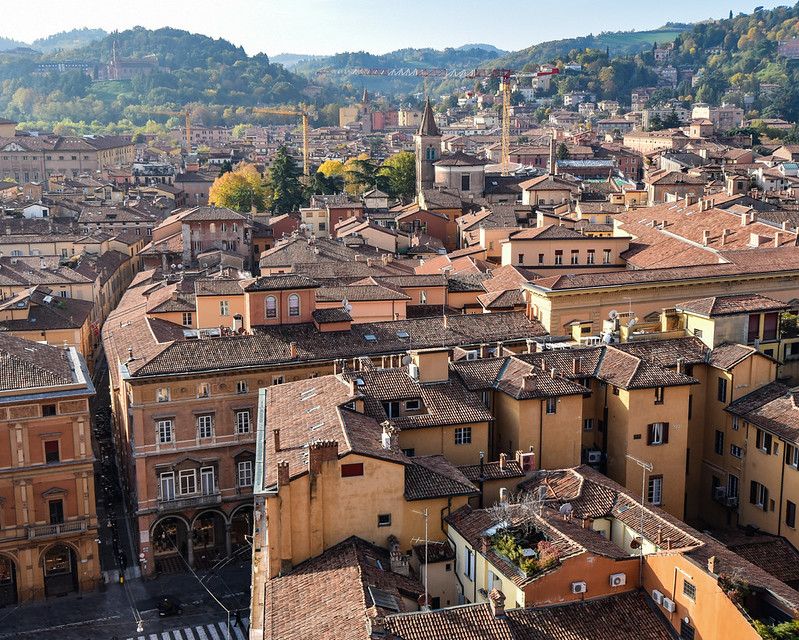
Roof-top view of Bologna from San Petronio


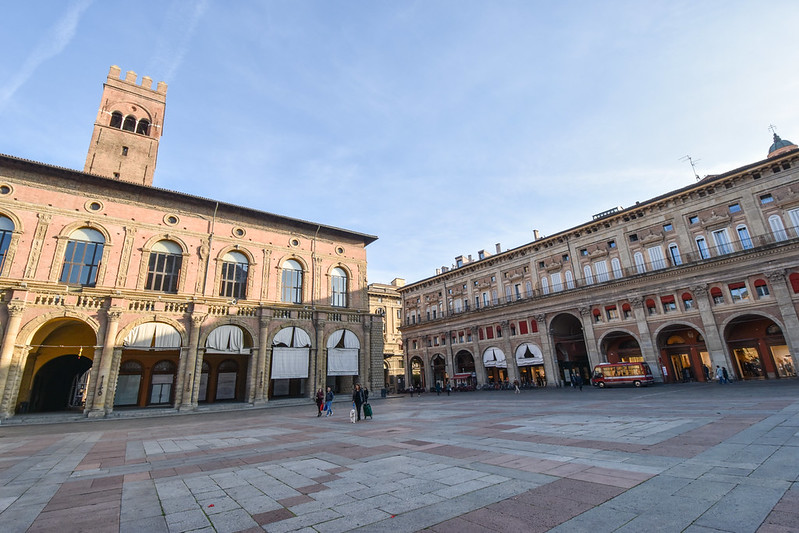
Piazza Maggiore: Palazzo del Podesta (l), Palazzo dei Banchi (r)


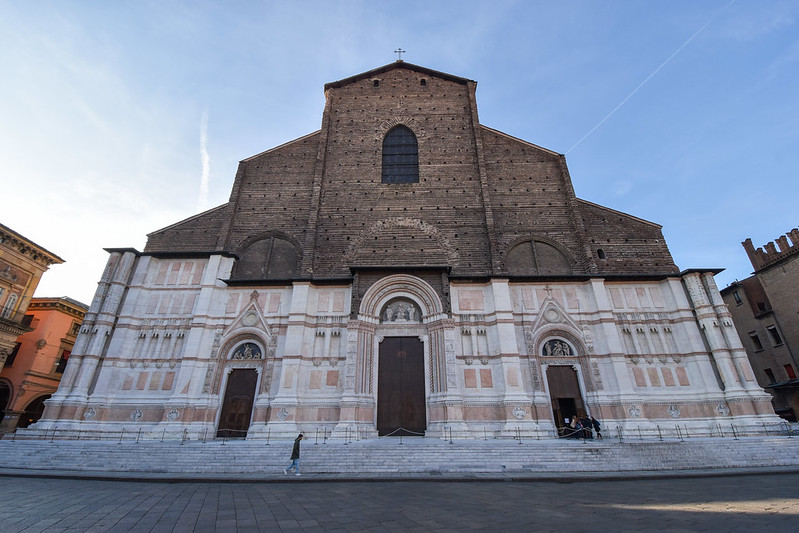
Unfinished facade of Basilica di San Petronio

  
Interior of Basilica di San Petronio; Candles at Bologna Cathedral


Palazzo di Archiginnasio


Anatomical Theater, Palazzo di Archiginnasio


Non-politically correct window-shop display: “Tortellini: To trick your husband into thinking you made them!”

  
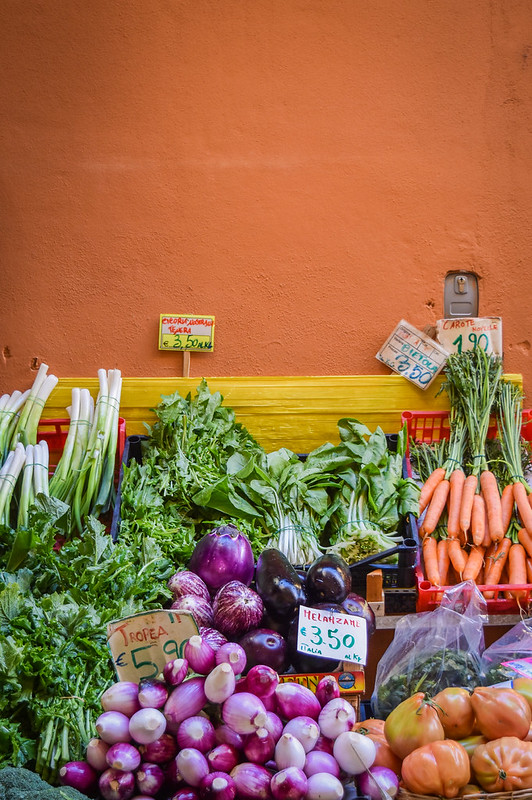
Produce stall in Mercato di Mezzo; window display at Tamburini (prosciutto, culatello, and mortadella)


Wheels of Parmigiano-Reggiano


Barrels of balsamic vinegar

Day 2: We worked off part of Day 1’s excesses by hauling ourselves up to the Sanctuary of the Madonna di San Luca, via one of the longest porticoes in the world: 666 arches, 3.5 km/2.17 miles long. Did I mention that at least half the route is steeply uphill, with many sets of stairs? It was, amazingly, a Sunday outing for many, with dogs, children, and power walkers making the trek. It’s an experience not to be missed–and there is a bus back down to town afterward if your legs have turned to spaghetti after reaching the top. Once we were on flat ground again, we headed to Piazza Santo Stefano to meander through the interconnected complex of seven churches therein, and then we walked back through the historic center, looking at shops and street art, listening to musicians under the porticoes, and dodging the many Bolognese residents out for a Sunday passeggiata.

Food: For Sunday dinner,  we went to a non-traditional but highly regarded eatery: È Cucina Leopardi, where you never know what you will get, but you know it will be good. Chef Cesare Marretti offers you three choices: meat, fish, or vegetarian. Then you sit back and see what will appear–the waiters don’t even necessarily know what the chef will hand out; it can vary from table to table depending on what is coming out of the oven (or off the stove) at any given time. We had buffalo ricotta with an apple/pineapple compote, roast chicken breast with roasted celery and apricot, lamb cutlets with a Grana Padano cheese souffle, roast pork loin with pureed pumpkin, and three desserts (they may have brought that many by accident; we did our duty, though we were about to burst): sweet mascarpone in a persimmon puree, ricotta mousse with roasted chestnuts and cinnamon and cocoa, and a molten chocolate cake.

Next time we are in Bologna, we will have to climb up to San Luca twice!

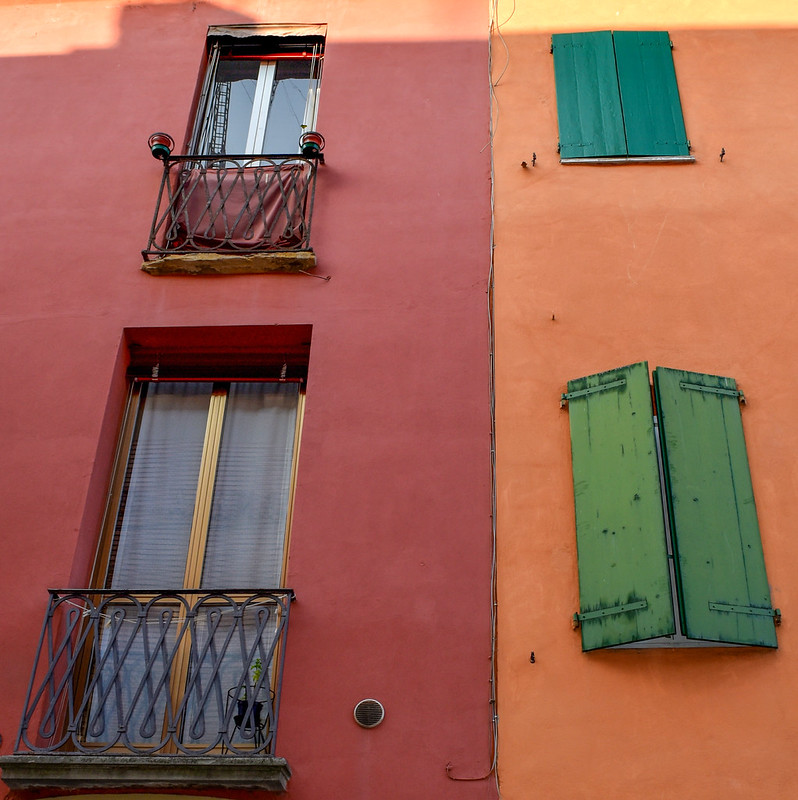
Colorful buildings en route to the portico to San Luca

  
The ascent to San Luca; Cyclists skirting the portico on their way up

  
Final stretch, inside and out views


San Luca


Piazza Santo Stefano

 
Stairs encircling the shrine of San Petronio in the Santo Stefano complex; the shrine

  
“Afghan Girl” street art, Anti-Renzi (Italian PM) graffiti ahead of the constitutional referendum

Two Days in Malta: Day 1

6 Apr

At the end of January, when we were contemplating where to go for a long weekend away from Rome, a friend said “Malta–it’s #3 on the New York Times’ list of 52 places to go in 2016!” Malta was #3 on the list? It was, and for 39 euros each way, off we went to discover why.


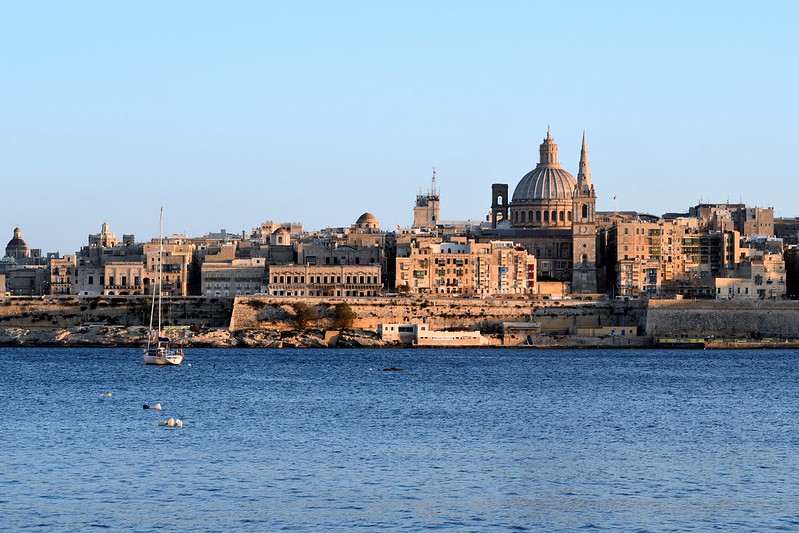
 Malta–a country that blends Italian, Arabic, and British cultures– is made up of three islands south of Sicily, east of Tunisia, and north of Libya. With a short amount of time, we limited ourselves to the largest island (“Malta”), which is home to the capital city of Valletta and has sights aplenty. We focused on Valletta on Day 1, then went to Marsaxlokk, Mdina, and Sliema on Day 2. Our day in Valletta included the following:

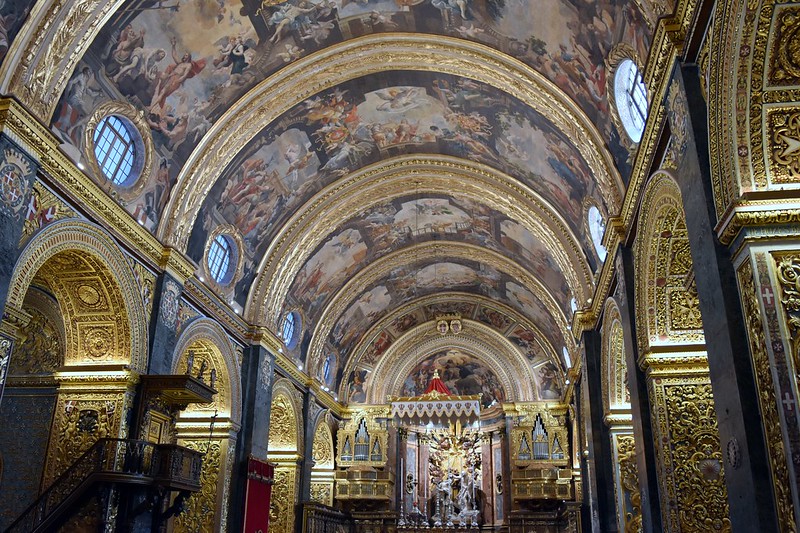
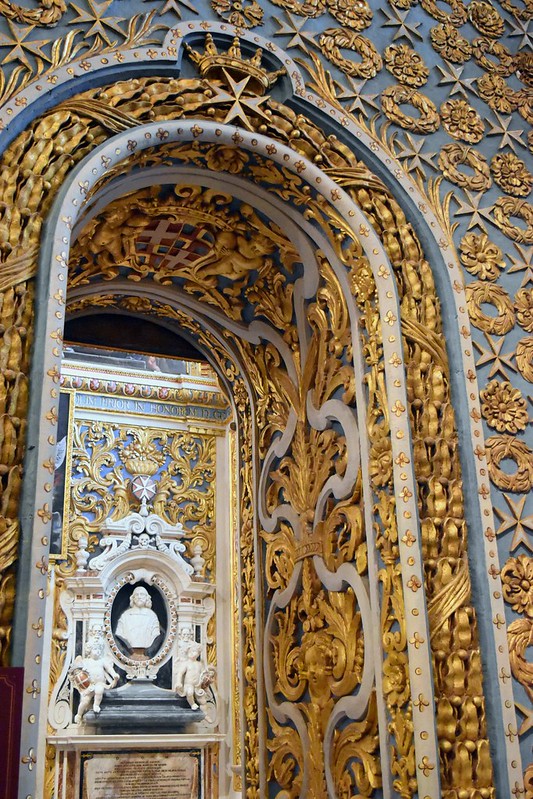
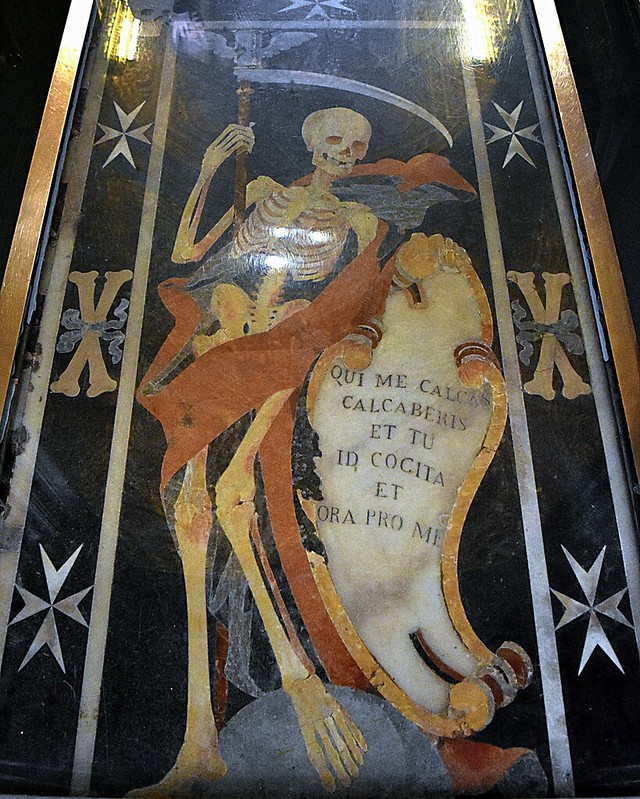
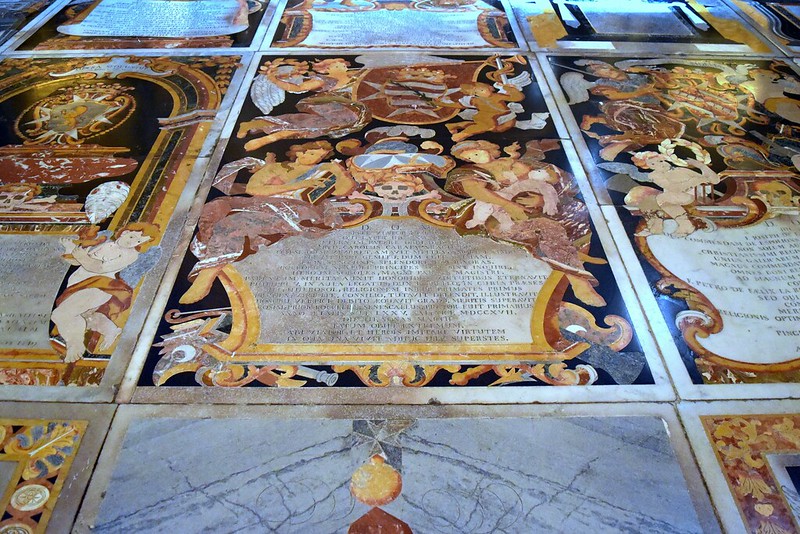
St. John’s Co-Cathedral: The cathedral was built by the Knights of St. John (Knights of Malta) in the 1570s, after they had been on the island for 40+ years following their defeat in Rhodes by the Ottomans. King Charles V of Spain gave the Knights the Maltese Islands for the annual fee of one Maltese falcon. People frequently ask “Why is the church called a “Co-Cathedral? Traditionally, the church over which a bishop presides is called a cathedral, and in Malta that honor fell to St. Paul’s Cathedral in the old medieval capital of Mdina. But in the 1820s, the bishop was allowed to use St John’s as an alternative see, and hence it too became a cathedral, after 250 years of being a simple church. Except that it hadn’t been a simple church for a long time and by then, the Knights were no longer in Malta. However, they did everything in their power to make their church memorable, even if it wasn’t a cathedral. There is barely an ungilded surface to be seen–except on the floor, which features a dizzying selection of marble tombstone decor teeming with mosaic skeletons. Though a somewhat morbid lot, those Knights were extremely fond of bling.


Aside from the lavish decor, another reason to visit the Cathedral is Caravaggio. After killing a man in Rome in 1606, he spent the last four years of his life on the run. He went to Malta in 1607 in the hopes of getting a Maltese knighthood with which to redeem himself. He paid for the knighthood with paintings, two of which are in the cathedral: The Beheading of St. John the Baptist, the only painting Caravaggio signed, and St. Jerome Writing. Caravaggio’s painting of the head knight himself, Grand Master Alof de Wignacourt, is in the Louvre. Alas, things did not go well for Caravaggio in Malta. After wounding another knight the day before the grand unveiling of The Beheading of St John in 1608, he was thrown into a hole carved in the rock to await further (worse) punishment. He languished there for about a month and then somehow got out (a hitherto unmanageable feat), off the island, and back to Italy without being caught. He obviously had help. But his luck ultimately ran out; his knighthood was not only revoked, but he was attacked by several assailants and slashed across the face in Naples in 1609; some biographers believe the knight he wounded in Malta was behind the attack. Caravaggio died in 1610 at the age of 38, on his way back to Rome after being pardoned by the Pope.

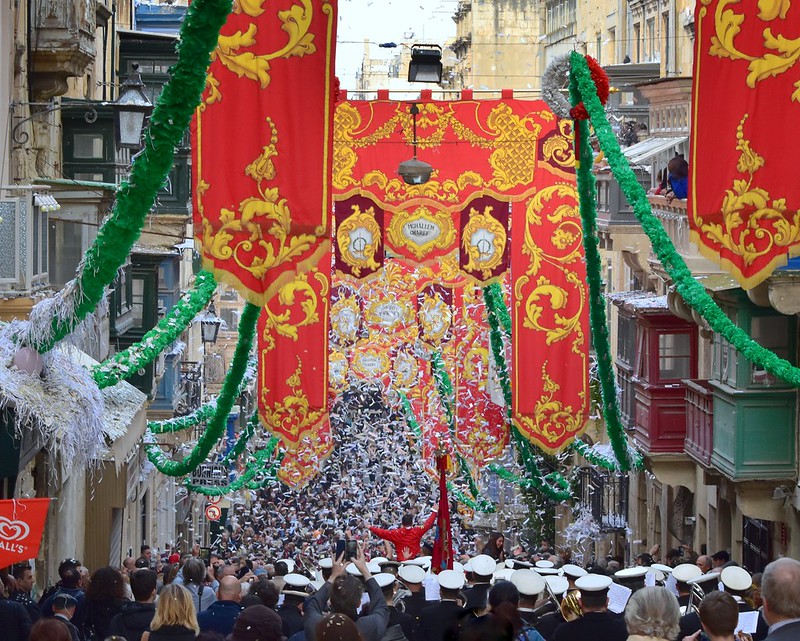
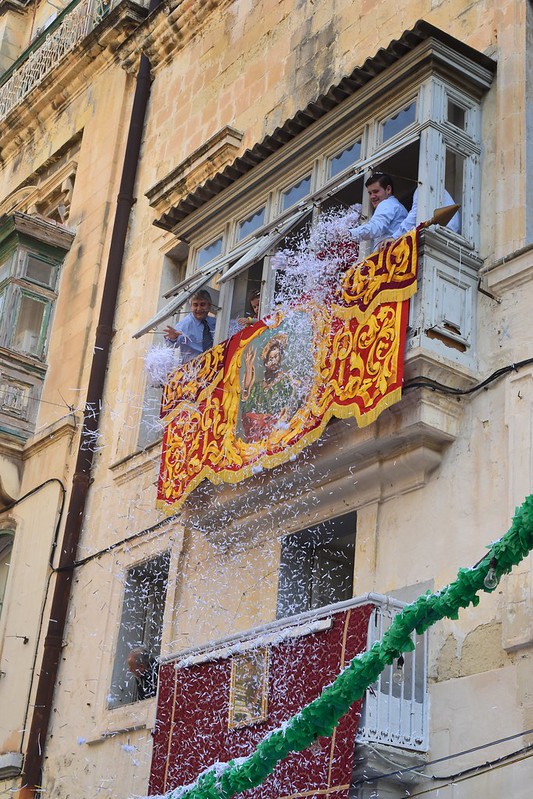
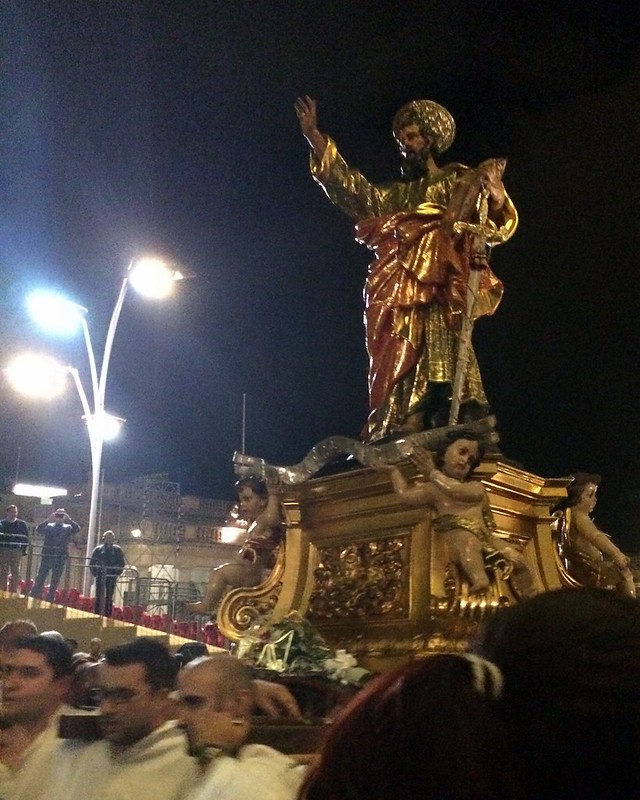
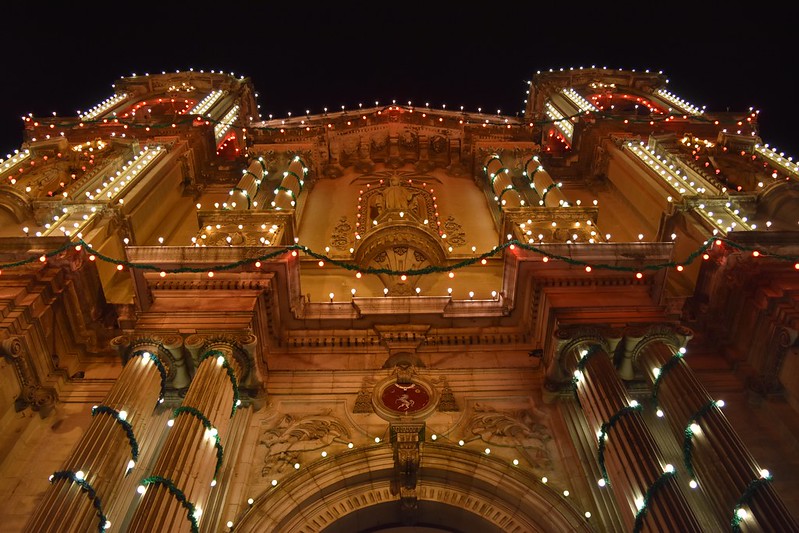
Feast of St. Paul’s Shipwreck: Unbeknownst to us, we arrived in Malta on the day of the Feast of St. Paul’s Shipwreck. According to tradition, Paul the Apostle was on his way to be tried in Rome when his ship capsized off the coast of Malta. He survived and remained on the island for a while and won the affection of the populace, which lasts to this day; references to St. Paul are visible everywhere. The Feast in his name involves marching bands, confetti tossing, processing (with an extremely heavy 350-year-old statue of St. Paul), and celebrations at the Church of St. Paul’s Shipwreck — and we were delighted to experience it throughout the day and into the night. The Feast is usually held on February 10, but even if you are not in Valletta on the day, the church is worth seeing. If you leave the Co-Cathedral with memories of gold, the Church of St. Paul’s Shipwreck will have you seeing red.


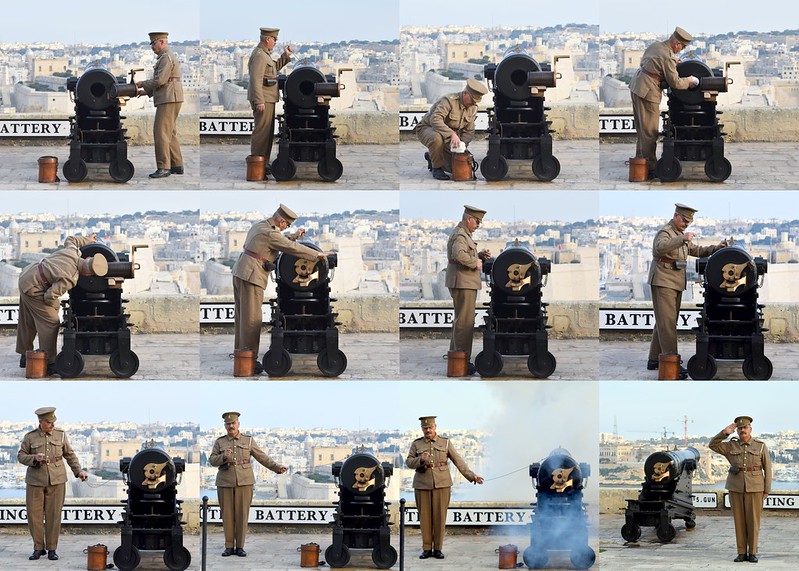
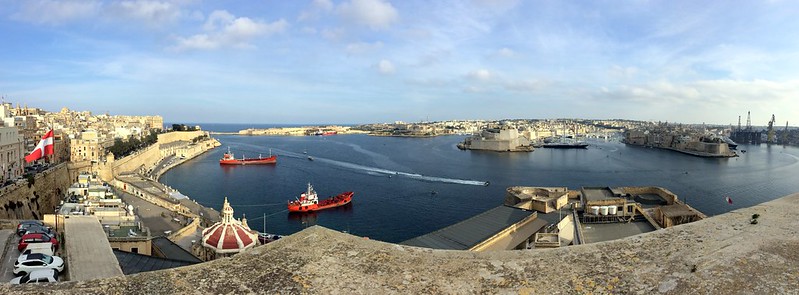
Saluting Battery: In between all the Feast-day celebrations, we made sure to get to the Upper Barrakka Gardens–not just for the stunning views of the Grand Harbour, but also for the Saluting Battery (the firing of a cannon), which occurs at 12 noon and 4 pm every day. Fans of Patrick O’Brian’s Aubrey-Maturin novels set during the Napoleonic Wars will have read about the custom of gun salutes for ships entering a harbor, and also about Malta. O’Brian’s eighth novel, Treason’s Harbour, is based there. In the novels and in Malta, Napoleon is not remembered fondly; the Knights of St. John surrendered the island to him in 1798 and were forced into exile (again, this time to Rome). Napoleon then dismantled the Roman Catholic Church on the island and stripped the churches of their valuables.

There are actually eight cannons on the Upper Barrakka battery, but the last time all were fired–in a rolling 21-gun salute–was when Queen Elizabeth visited Malta in November 2015. She and the Duke of Edinburgh lived in Malta for two years as newlyweds when he commanded a Royal Navy frigate there; Malta is the only place outside the United Kingdom the Queen has ever lived. In 2015, she arrived by ship, as her father had done in 1943 to offer words of comfort and condolence to the population. Because of its strategic location and the presence of a British base there, Malta was horrifically bombed by Axis pilots during World War II, with one stretch lasting a continuous 154 days. As a result, the Maltese population as a whole was awarded Britain’s highest civilian honor for bravery.


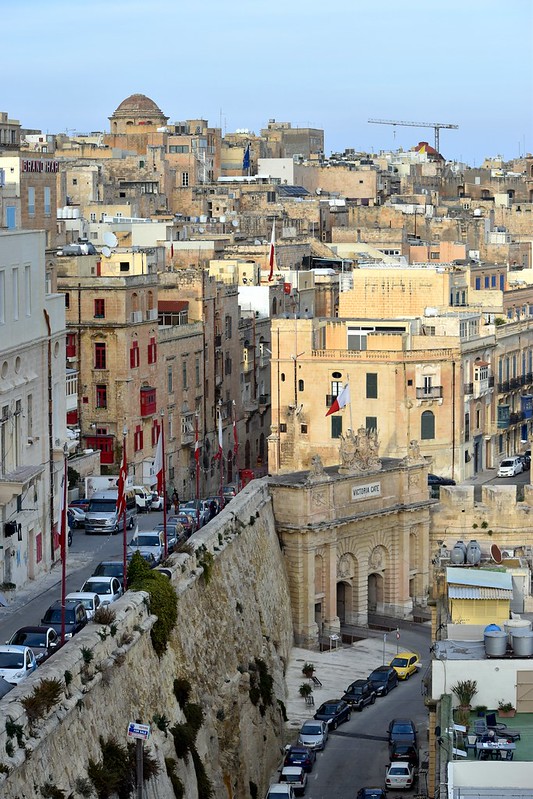
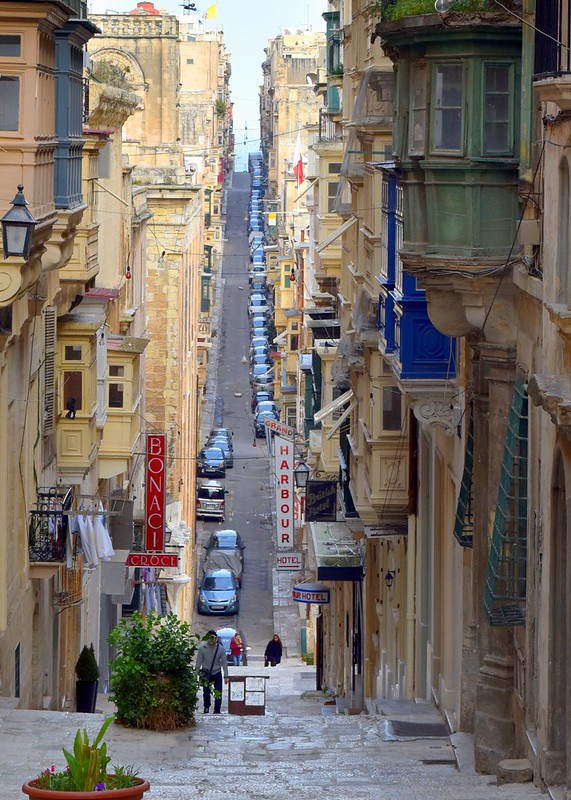
Other City Sights: One of the nicest things to do in Valletta is to just walk–up to the center of town and down to the water’s edge. It is a beautiful blend of old…


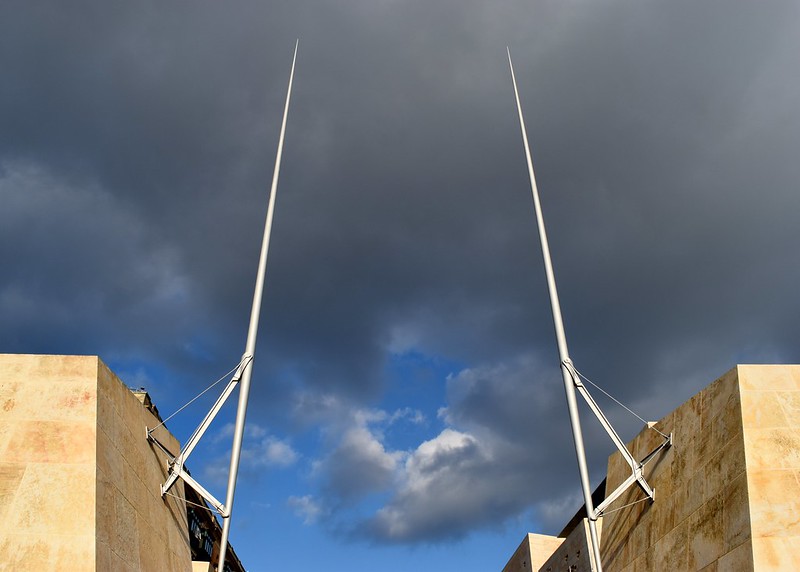
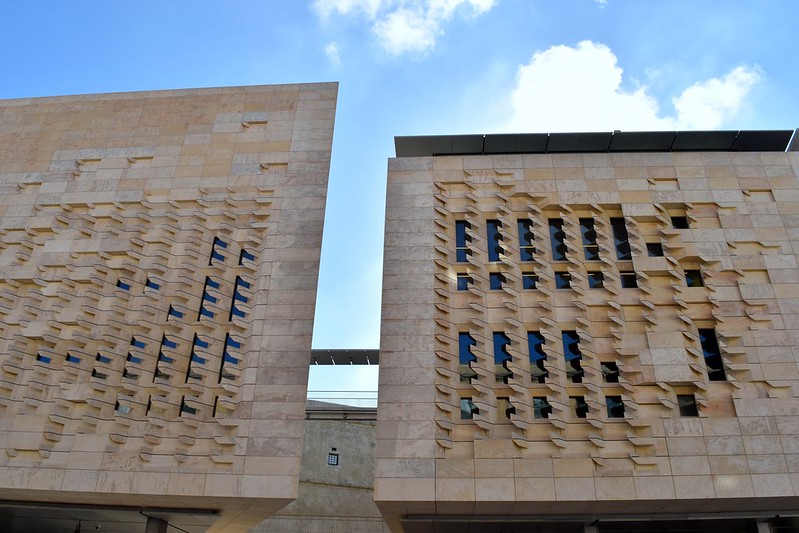
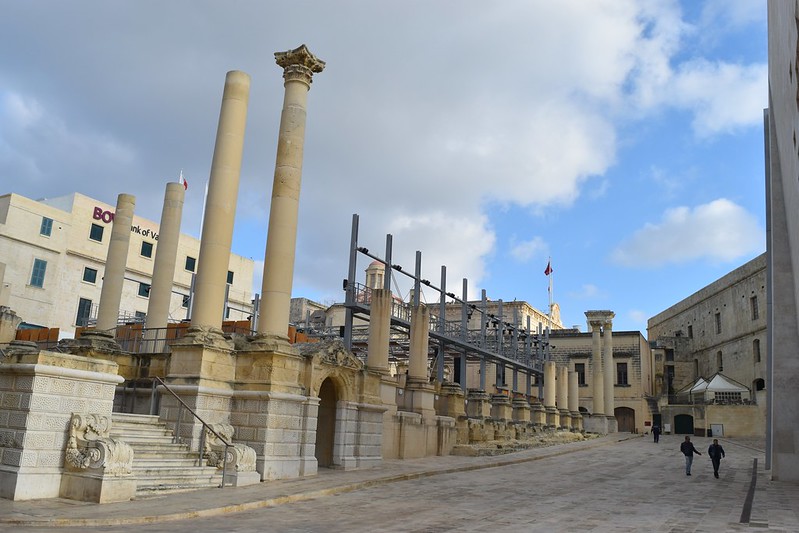
… and new. In terms of the new, there is the controversial but striking new City Gate, finished in 2014 and designed by Renzo Piano, who also designed the new Parliament building and the new open-air theater housed within the ruins of the bombed-out Royal opera house. If you are catching a bus to any other part of Malta, you will walk right by all three structures, as the main bus area is outside the City Gate.


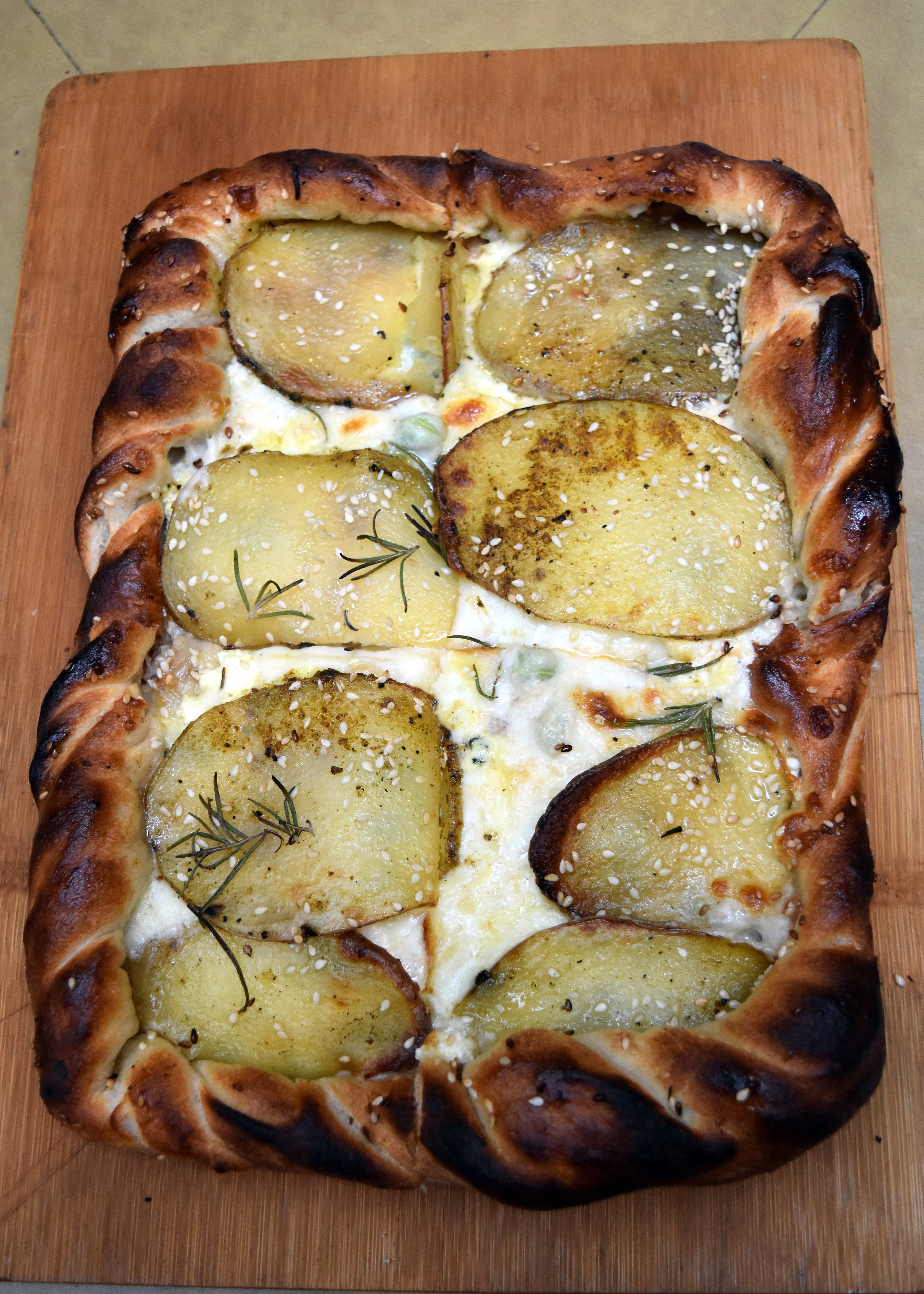
Finally–armies march on their stomachs, so if you are doing a lot of walking, you’ll need some fuel. Stop by  Nenu the Artisan Baker for Maltese-style pizza known as ftira. The version I tried included potatoes, pork belly, ricotta, broad beans, and rosemary. It was fantastic, but huge!

Ftira
And that was Day 1 in Valletta. We would also have liked to see the Casa Rocca Piccola, but we arrived just after it had closed for lunch. In Valletta, it is important to plan the timing of your visits; the Cathedral, for example, is closed Saturday afternoon and all day Sunday.

Postcard from Old San Juan

27 Jan

It has been ages since I last wrote, due to a hectic few months. A dinner party this weekend will force me to cook something a little more interesting than the usual fare, and may result in a food-related blog post if the heavens align, granting me enough time and light to take a photo or two. In the meantime, here is a brief look at a brief stop in San Juan, Puerto Rico, a place that truly merits more time than we had. What we had was just enough of a taste to know we would like to go back for a fuller meal, if ever possible. These photos are from the historic, colonial part of town, and looking at them makes us wistful for sunnier, warmer climes….


Patriotic graffiti

  
Colorful buildings, and a gorgeous sea-side cemetery


View of El Campo del Morro

  
Cobblestone streets and colorful wall tiles


Street-side mofongo: mashed fried plantains, topped with a ground beef stew

  
Piraguas: delicious Puerto Rican snow cones

And a fine set of pigeon toes

Bay Area 5: Stanford and Palo Alto

27 Aug

During the final leg of my week-long stay in California, I greatly enjoyed a couple days at Stanford University, which I had never visited before. I was given an hours-long bicycle tour by a fantastic tour guide, and pretty rapidly determined that it is a gorgeous campus:


But, buildings aside, there was another surprise awaiting me:  the Arizona Cactus Garden, which is on campus. Turns out it is a hidden treasure–one that not many Stanford students even know exists because it is in a more secluded area, hidden behind a grove of trees. When we arrived, we had the garden to ourselves, with only the occasional lizard and woodpecker to distract our attention from the cacti.

The final treat was a stop in Palo Alto at the Elizabeth F. Gamble Garden, a lovely oasis full of gorgeous flowers. It was truly a memorable visit.