Tag Archives: Peru

The Unusual Jaboticaba Fruit Tree

20 Apr

Ok, if you live in any of the tree’s native habitat areas in South America, the Jaboticaba and its fruit may not be so unusual to you. But for the rest of us, the tree is a sight to behold:

Jaboticaba; photo taken at the Missouri Botanical Garden in St. Louis.

The Jaboticaba (Plinia cauliflora, aka Jaboticabeira, aka Brazilian Grape Tree) is a showstopper because it exhibits an unusual botanical trait, ie, its fragrant white flowers and sweet/tangy fruits grow directly on the trunk of the tree, rather than from new growth or shoots. In botanical terms, this is called cauliflory; hence the “cauliflora” part of the Jaboticaba’s Latin name. (“Plinia” refers to a genus of flowering plants in the myrtle family, Myrtaceae, to which the Jaboticaba belongs.) Other cauliflory plants include Durian, Cacao, Jackfruit, Papaya, and the lesser-known Cannonball Tree — which, though they all share this same botanical trait of cauliflory, are not actually related to the Jaboticaba.

Cauliflory is most common in tropical areas; in the United States, the Jaboticaba can be grown in Zones 9-11. Botanists believe cauliflory evolved for a couple reasons: 1) accessibility: insects and fruit-eating animals that can’t easily get to the highest parts of trees can access the flowers and fruits on the lower parts of the trunk of a cauliflory plant, thus helping ensure the tree’s reproduction via cross-pollination and seed dispersal. Another reason for cauliflory may be due to 2) structural support: the trunks and main stems can more easily bear the weight of heavy fruits like Durians, Jackfruits, and Papayas.

Though Jaboticabas are very slow growing, once they reach maturity, they can produce up to 100 pounds of berries, which look like very large grapes and come in different varieties and colors (purply-black, red, and white). The skins are a bit thick and tannic; some people eat the berries skin and all for a nice “pop,” while others squeeze the juicy pulp into their mouths and discard the skin. The pulp is translucent and jelly-like, with a few seeds. It looks a little like the inside of a lychee or blueberry. Depending on the “jabo” variety, the berries are said to taste like Muscadine grapes, blueberries, and/or lychees — or a combo of all those flavors — with slight acidic undertones. Jaboticaba berries are also quite nutritious; they contain lots of Vitamin C and other antioxidants, as well as amino acids and nutrients such as calcium, phosphorus, and iron.

In addition to being eaten fresh, the Jaboticaba fruits can be made into juice, syrup, jam, and other usually sweet concoctions. The important thing is to use the fruit quickly after picking it, as it has a very short shelf life (which explains why those of us who cannot grow this tree also cannot find the fruit in our local supermarkets).

Recipes:
Jaboticaba Juice (video)
Jaboticaba Syrup
Jaboticaba Liqueur
Jaboticaba Jam w/Pectin
Jaboticaba Jam w/o Pectin
Jaboticaba Sorbet
Jaboticaba Cheesecake
Jaboticaba Sparkling Wine
Recipe: Peruvian Chicken in Creamy Walnut Sauce with Chili (Ají de Gallina)

4 Jun

We lived in Peru for a couple of years, and considered ourselves to be in gastronomic heaven. Peruvian cuisine takes advantage of the country’s geography (coast, jungle, mountains) and history (including the Inca, Spanish conquistadores, African slaves, Chinese indentured labor, and many other immigrants). All these influences–different foods and cooking techniques–came together to contribute to an absolutely wonderful cuisine, one that continues to evolve.

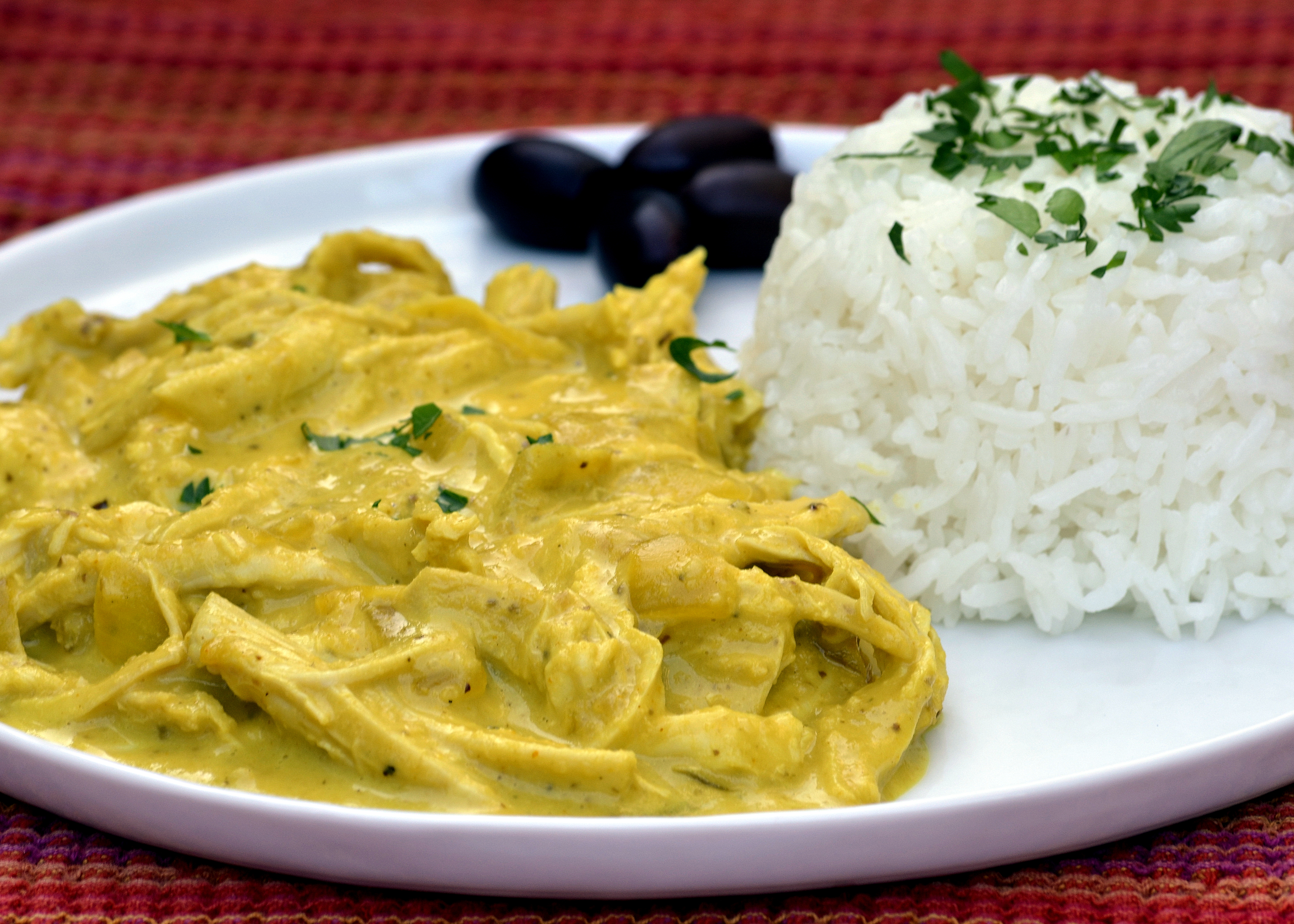
Of the many Peruvian dishes I like, Ají de Gallina is one of my favorites. Ají means chili; the yellow in this dish comes from the signature yellow chili peppers that symbolize Peruvian cooking (plus a bit of turmeric). Gallina means hen–in this case, shredded chicken. And the creamy, cheesy, nutty part of the dish speaks to European influences. It is traditionally served with black olives (which I had on hand) and boiled yellow potatoes and quartered hard-boiled egg (which I belatedly discovered I did not have on hand).

This is not a difficult dish to make, but does require some preparation time, so if your weekdays are busy, this may be best made on a weekend. I tend to make it in stages while taking care of other tasks around the house and in the garden.


Ají de Gallina (Peruvian Chicken in Creamy Walnut Sauce with Chili)
Serves 8

3 lb. (1.4 kg.) boneless chicken breast halves
½ onion
2 carrots, peeled
2 bay leaves
4 slices white bread, crusts removed, cut into quarters
1 (12-oz./354 ml.) can evaporated milk, plus extra milk if needed
3 tbsp. canola or vegetable oil
2 large onions, diced
4-6 large garlic cloves, minced
2 tbsp. aji amarillo paste (yellow chili paste)–available at international/Latin food markets
2 tsp. turmeric
1.5 tsp. salt
pinch pepper
1 cup (120 gr.) chopped walnuts, toasted (see below)
¾ cup (84 gr.) grated Parmesan cheese

Accompaniments:
boiled yellow potatoes, peeled and halved
black olives
hard-boiled eggs, quartered

Preparation

1. Place chicken breasts in a large pot, and add onions, carrots, and bay leaves. Add enough water to cover the chicken, then lightly salt the water. Bring water to a boil, immediately turn off the heat, cover pot, and let the chicken poach for about an hour. Remove chicken from the broth, let cool, and then shred with clean fingers. Reserve all of the broth.
2. Meanwhile, soak the bread in the milk.


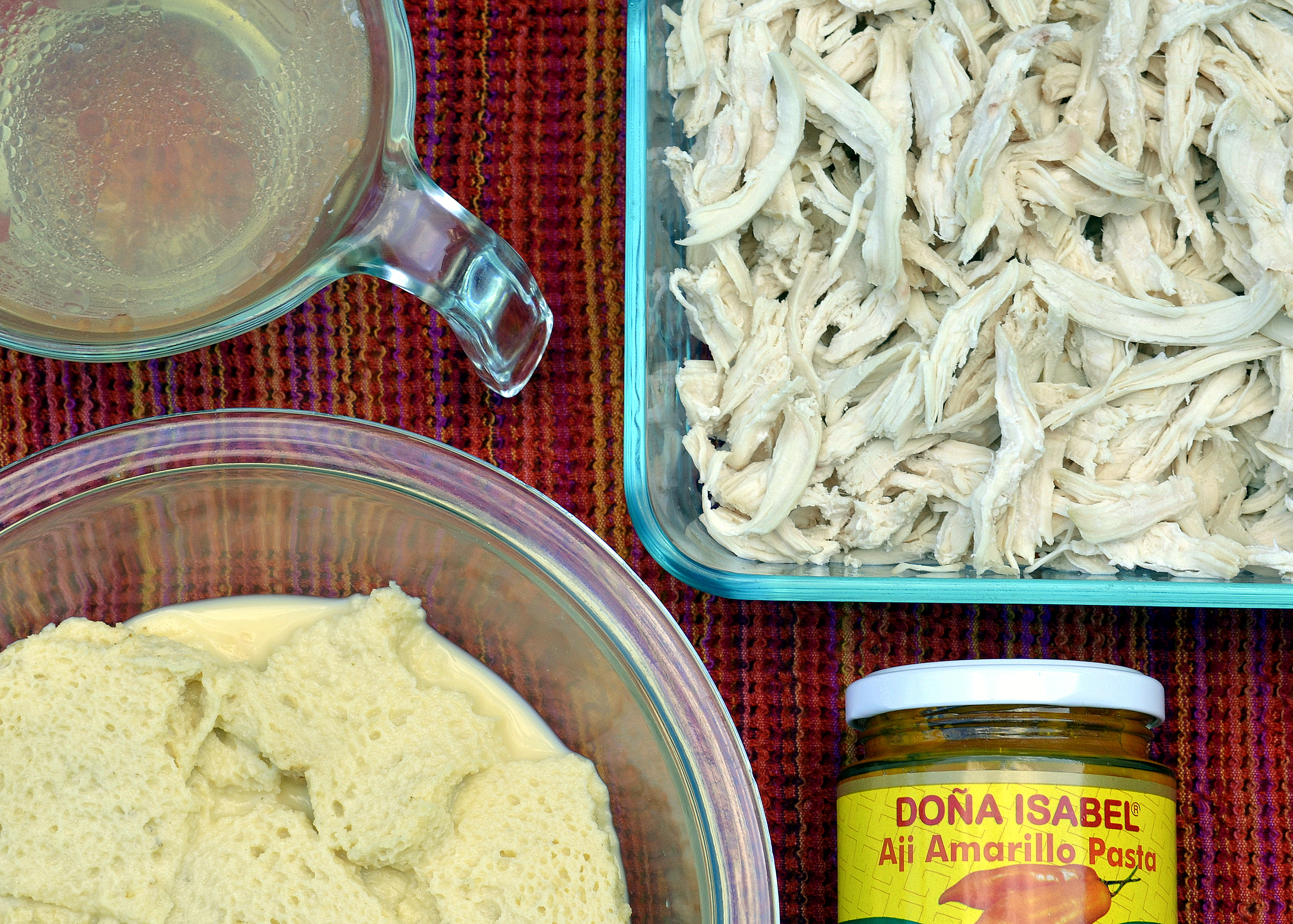
Clockwise from top left: chicken broth from poaching process, shredded chicken, aji amarillo (yellow chili) paste, bread soaked in milk.

3. Sauté onion in oil in a heavy-bottomed Dutch Oven or large pot over medium heat until softened and turning golden at edges. Add garlic, cook 2 more minutes, then add the turmeric, salt, and pepper. Cook for 2 minutes, then add aji amarillo paste and cook for 5 more minutes. Note: 2 tbsp. chili paste gives this dish a nice little kick; for more heat, add 3 tbsp.
4. Toast the walnuts (place walnuts on a baking sheet in a single layer, and toast in a 350-degree oven for about 5-10 minutes or until lightly golden and aromatic; be careful not to burn them, as I have done on more than one occasion when trying to do too much multitasking….).


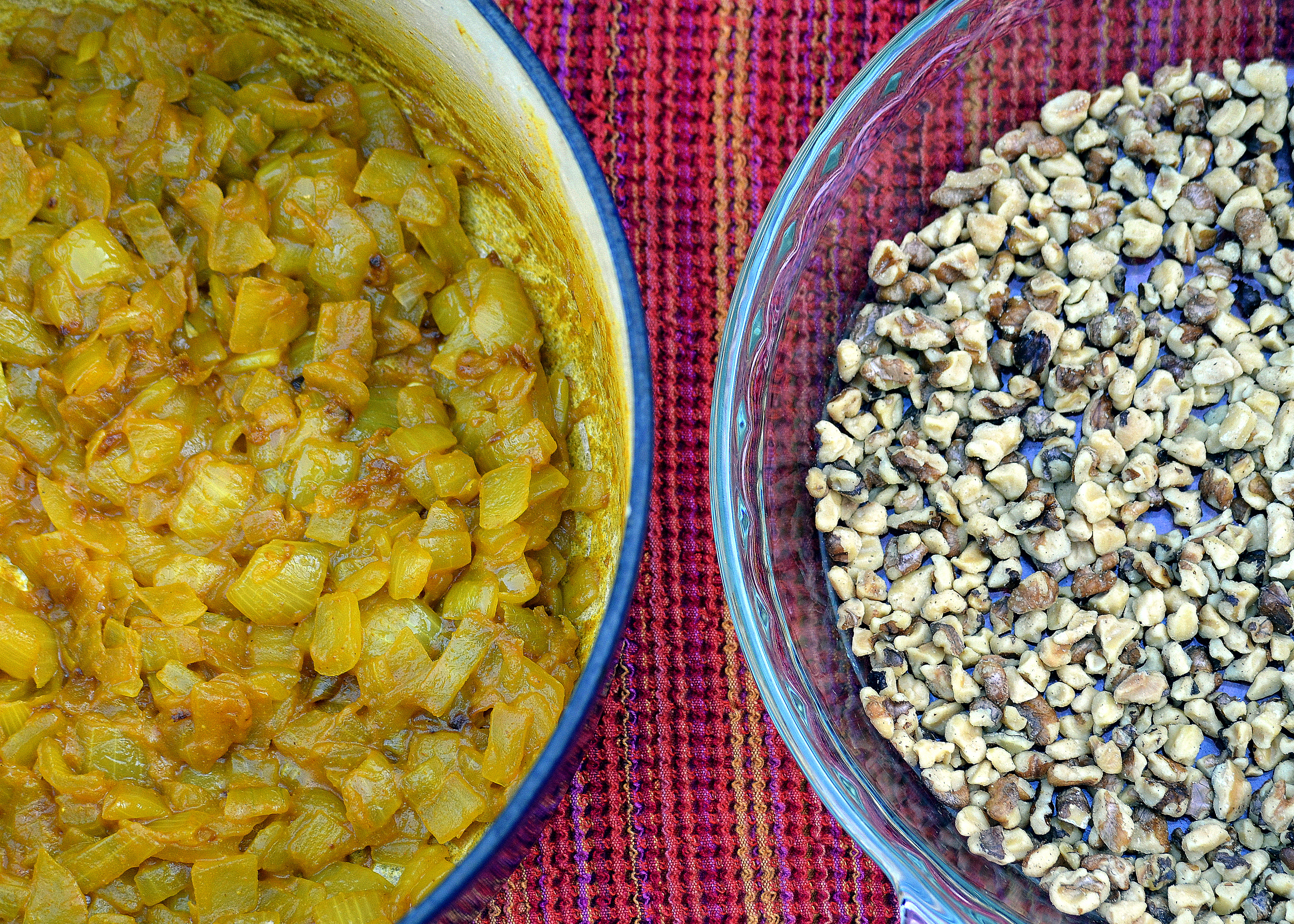
Left: onion-garlic-chili paste mixture. Right: toasted walnuts

5. Put the bread and milk into a blender or food processor, add the toasted walnuts and a splash of reserved chicken broth (about 1/4 c.), and blend until smooth. Add this mixture to the onions in the pot, cook for a few minutes, adding more broth if necessary to thin, then add chicken and parmesan cheese. Thin as needed with more milk or broth (you will probably need a fair amount; add more milk for a creamier texture, more broth for a lighter dish). Add more salt and pepper to taste.
6. Serve over rice and with suggested accompaniments. Garnish with some chopped parsley for additional color, if desired.