Archive | Travel RSS feed for this section

Ancient Roman Building Techniques: Beautiful Examples In and Around Rome

4 Feb
Ruined dome of Western Palestra (gymnasium), Baths of Caracalla, Rome

The Ancient Romans were master architects, builders, and innovators. That we can still see the remains of many 2,000+-year-old structures is a testament to the Romans’ skill and to the materials they used. And also to the happy fact that in subsequent millennia, rather than be destroyed, many ancient buildings and structures were built over or incorporated into other buildings, or simply left where they were as the effort involved in removing them would be too great. Here is one example I’ve always enjoyed seeing: apartments built right into and around the ruins of the Baths of Agrippa near the Pantheon:

In contrast, I am certain that in 2,000 years, there will be nary a trace of my house here in the Midwest or any of the modern buildings nearby. So, how did the Romans make structures that have lasted so long? The answer is that they made excellent concrete and great bricks, and combined the two in various ways to construct extremely strong and long-lasting walls and other structures.

Of course, walls and buildings were also built with blocks carved from rock. In Rome, some of the earliest examples you can see are “dry walls,” built with blocks of volcanic rock called tufa without any mortar between the blocks. This technique of using blocks is called opus quadratum (also, ashlar or cuboidal masonry):

If you are walking around Rome and see these types of tufa-block walls, you can be sure they are quite old. They deserve a nod of appreciation, because cutting large blocks cleanly and evenly, hoisting them, and placing them perfectly with just their weight and position to keep them in place — that is a feat requiring a lot of hard work and skill.

Building techniques began to change in the second century BC, when the Romans discovered they could substitute volcanic ash (pozzolana) for the sand in concrete mixtures, yielding much stronger and more weather-resistant concrete. This super concrete turned out to be a perfect material for the inner core of walls (opus caementicium). Plus, it did not require as much hard work or skill to make, compared to the large block walls. The idea was that the concrete core would be covered (ie, faced) with stone or brick, and then, depending on the structure, faced again with stucco, paint, or polished stone veneers like marble.

One of the first ways of using this concrete core involved a construction technique called opus incertum: randomly inserting irregularly shaped, uncut stones and/or small tufa blocks into the concrete. This technique was used in building the Porticus Aemilia, a storehouse complex built in 193 BC along the Tiber river by Testaccio:

Though fired bricks had been around for a long time, the Romans did not really begin to use them significantly until the cusp of the first century AD. Two of the first structures to be made of fired brick in Rome were the Theatre of Marcellus (Teatro di Marcello) and the Tomb of Caecelia Metella on the Appian Way. The Teatro di Marcello was completed in 13 BC; miraculously, it still has its facade, though apartments were built on top of it in the 16th century. The Tomb of Caecilia Metella is thought to have been built somewhere between 30-10 BC.

Teatro di Marcello
Tomb of Caecila Metella

After these two structures were built, fired bricks began to be used all across the Roman Empire, in various ways. The most basic was a technique that involved facing the concrete core of a wall with courses of brick. It was called opus testaceum. The cut-away section in the photo below shows an inner concrete core and brick facing, from a wall at Portus, the ancient port of Rome, built around 50 AD. (Portus is about 35 minutes from central Rome, near Fiumicino Airport, and is definitely worth a visit if you can make it there.)

Inside view of ancient Roman wall, Portus.

Though bricks had come into fashion, tufa and other materials were still used as building materials. The photo below is of a section of the Aurelian Wall (270-275 AD) made with both brick and tufa. The technique used is called opus vittatum (ie, banded work, when the bricks and tufa are placed in alternating rows):

Opus vittatum, Aurelian Wall at Porta Tiburtina

Roman bricks came in different sizes: round, square, oblong, triangular, or rectangular. And walls were also built in different patterns. A pattern of pure brick rows (courses) was called opus testaceum, as mentioned above. Though it is hard to see, the skinny flat bricks used in these types of walls were often triangular, with the longest side lined up on the outside of the wall and the pointy side of the brick embedded in the concrete. A diamond or net-like pattern was called opus reticulatum. It consisted of small tufa blocks carved like little pyramids, with the square base being visible and the pointy part embedded in the concrete. When two techniques were used together, that was called opus mixtum.

The photos below show a wall in the Portico of Claudius, at Portus. On the right side of each photo is a section of opus testaceum (OT), ie, uninterrupted rows of bricks. The left part of the photo shows a section of opus mixtum (OM) consisting of a couple rows of brick (opus testaceum) interspersed with diamond-shaped sections of tufa blocks (opus reticulatum, OR).

Sometimes, the opus reticulatum was made with a combination of brick and black basalt instead of tufa to achieve a more distinct polychrome coloring, as in the first photo below from Ostia Antica (which is also an example of opus mixtum). Fun fact: The black cobblestones of Rome are also made out of black basalt.

Sometimes you will see brick arches in the walls. They are called relieving arches and they were used on tall walls, and above doors or windows or other openings, to help distribute weight and maintain structural integrity. The square holes you often see, too, are where the scaffolding was inserted when the wall was being built. They are called putlog (or putlock) holes. Other holes are where the exterior facades were attached.

Capitolium at Ostia Antica, circa 120 AD.
Putlog holes, facade holes, and a few remaining bits of a marble frieze, Baths of Caracalla, 216 AD.

I hope these notes on bricks, stones, structures, walls, and holes will help as you walk around Rome, take day trips, or find yourself seeing Roman ruins anywhere else in the world.

I’ll sign off with a question about a longstanding mystery. I have always loved the look of this wall in the Cortile Biblioteche at Hadrian’s Villa in Tivoli (about 40 min. drive from Rome). But I have never been able to figure out why it was constructed this way, with pointy bricks sticking out. So if anyone knows, please do tell!

Two Etruscan Cities of the Dead: Cerveteri and Tarquinia

20 Aug

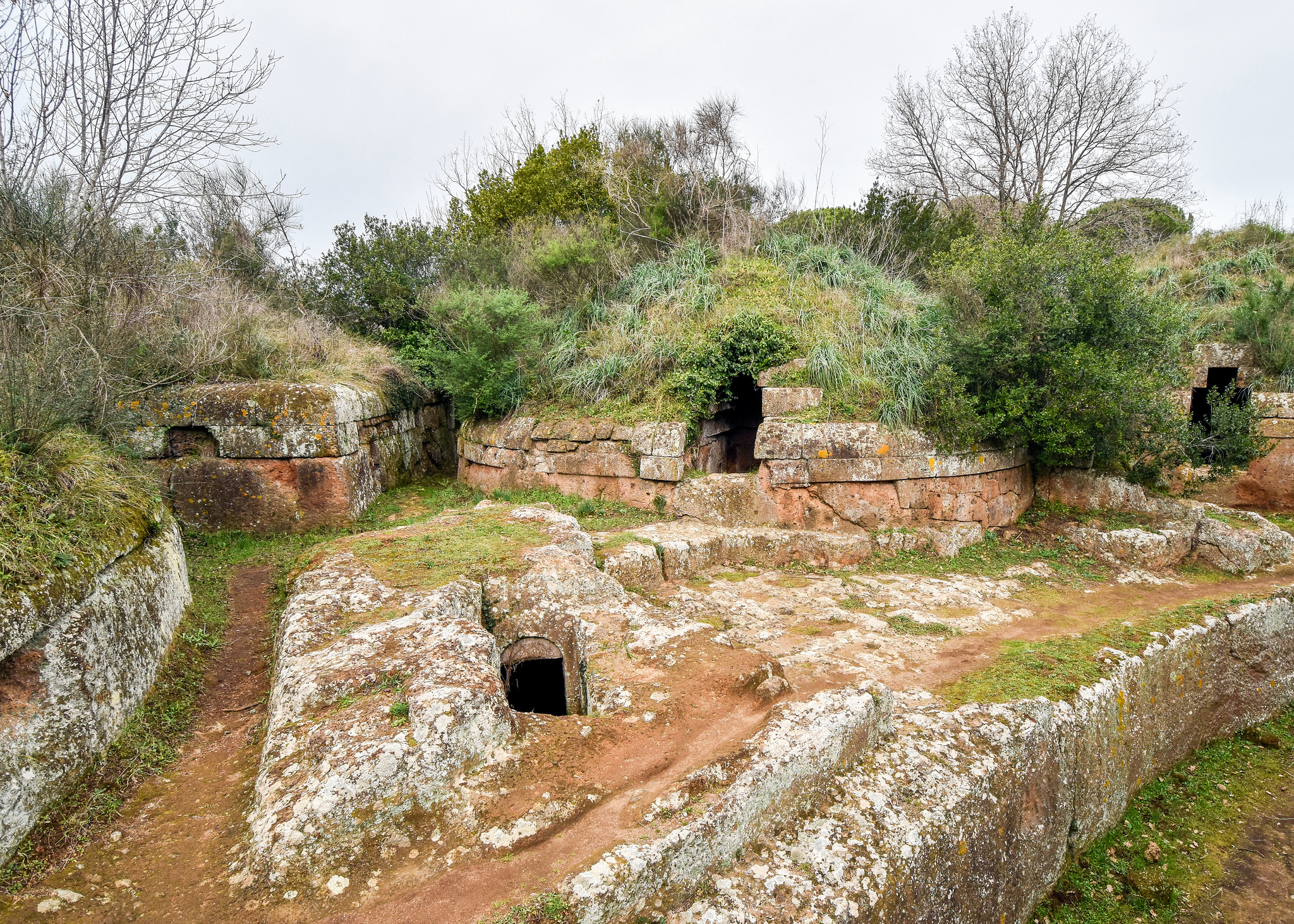
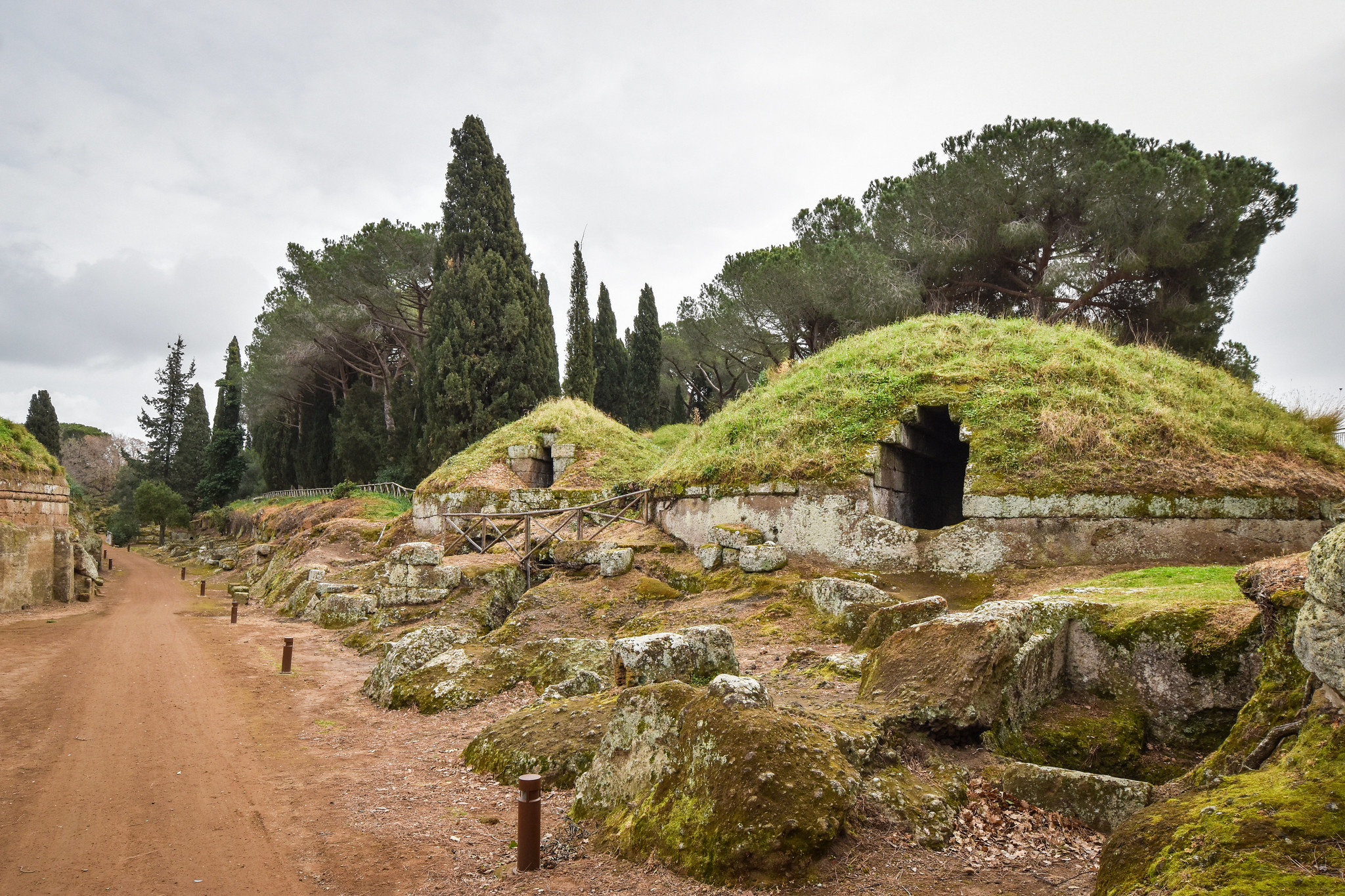
If you are in Rome and fancy a day trip to a place unlike any other you will see in Italy, then you should visit the Etruscan burial complex known as Necropoli della Banditaccia. It is about 45 km (28 miles) from Rome, along the western central coast. If you happen to be lucky enough to go when no one else is there, you will experience an almost Indiana Jones-like feeling as you walk among, and into, tombs that are even older than Rome. (The tombs date from the ninth to the third centuries BC, when the Etruscans were conquered and then assimilated by the Romans.)

The necropolis at Cerveteri is quiet, thick with vegetation, and full of thousands of ancient tombs–many of which are underground. The complex itself is organized like a city, with streets, open areas, and even neighborhoods; it was meant to emulate how the Etruscans lived in life. But as you walk around, you feel it was always a city of the dead.

Ancient road rutted by wagon wheels, Necropoli della Banditaccia, Cerveteri

Both the Necropoli della Banditaccia and another Etruscan burial complex in Tarquinia (about 45km further northwest than Cerveteri) are UNESCO World Heritage sites, and each is worth a visit. The landscape and setting of each necropolis is stunning…

… and the tombs themselves are fascinating, reflecting different burial practices over the centuries. The earliest (and simplest) tombs were just small pits where the ashes of the dead were kept; over time, the tombs evolved into circular burial mounds known as tumuli, which are carved out of the volcanic rock (tufa):

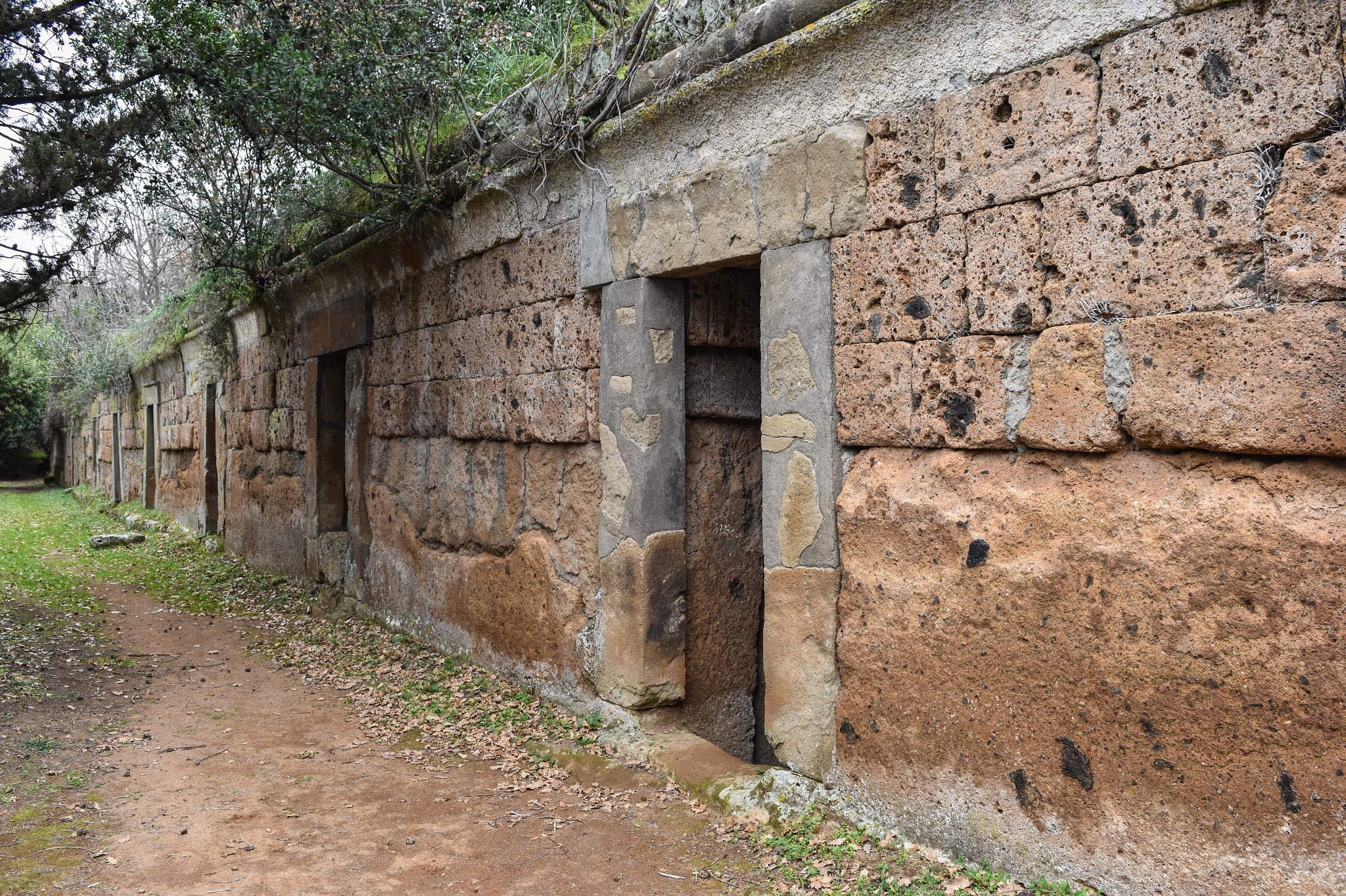
As the complex grew and more streets appeared, “square tombs” were built in long rows along the ancient roads:

Square tombs along Via dei Monti Ceriti, Necropolis of the Banditaccia, Cerveteri

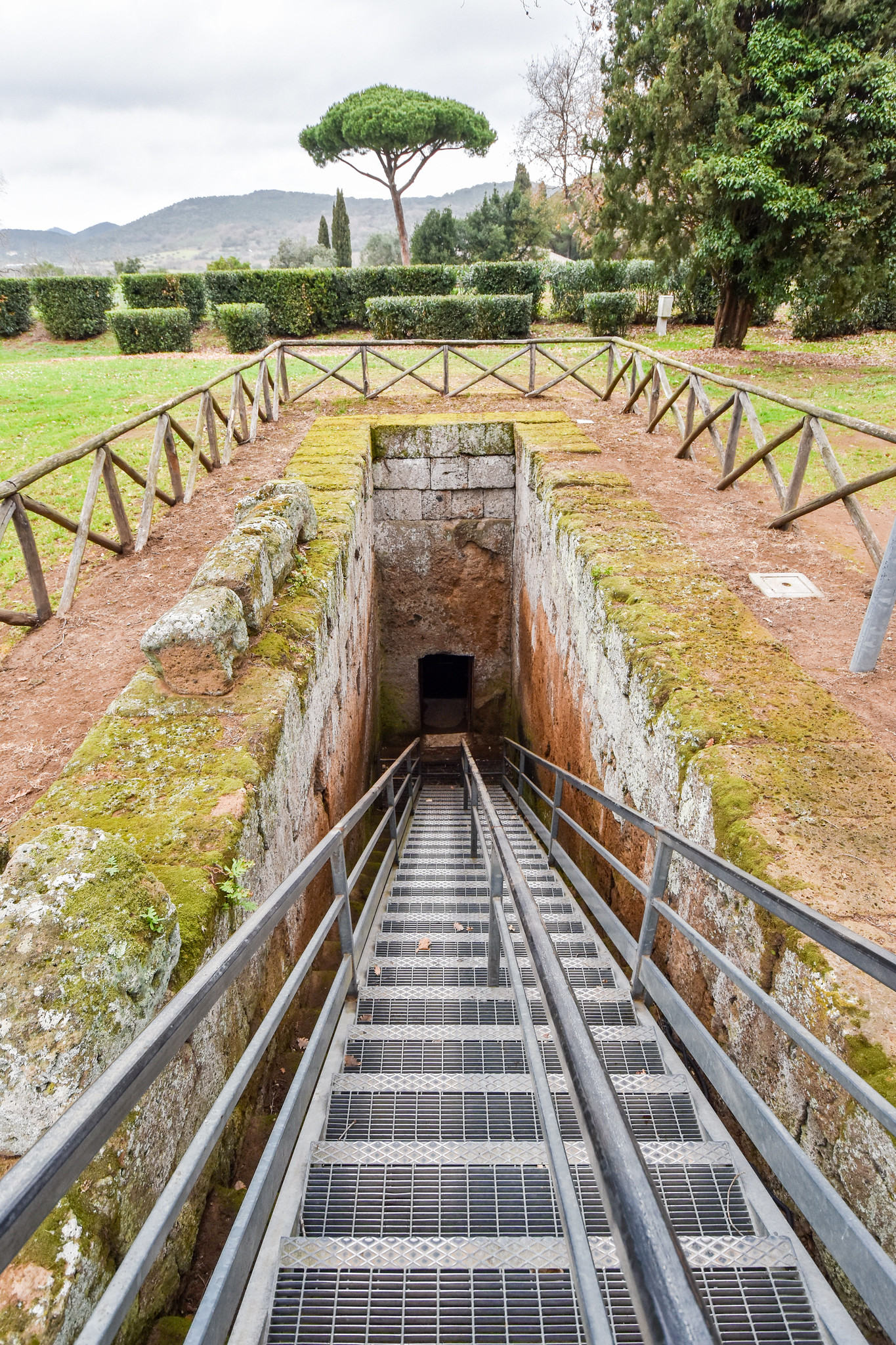
Other tombs were fully underground:

The Tarquinia site is also particularly known for its painted tombs:

As well as its group of funerary urns, which are believed to have housed the cremated remains of a pre-Etruscan, Early Iron Age community dating from 1020 to 750 BC:

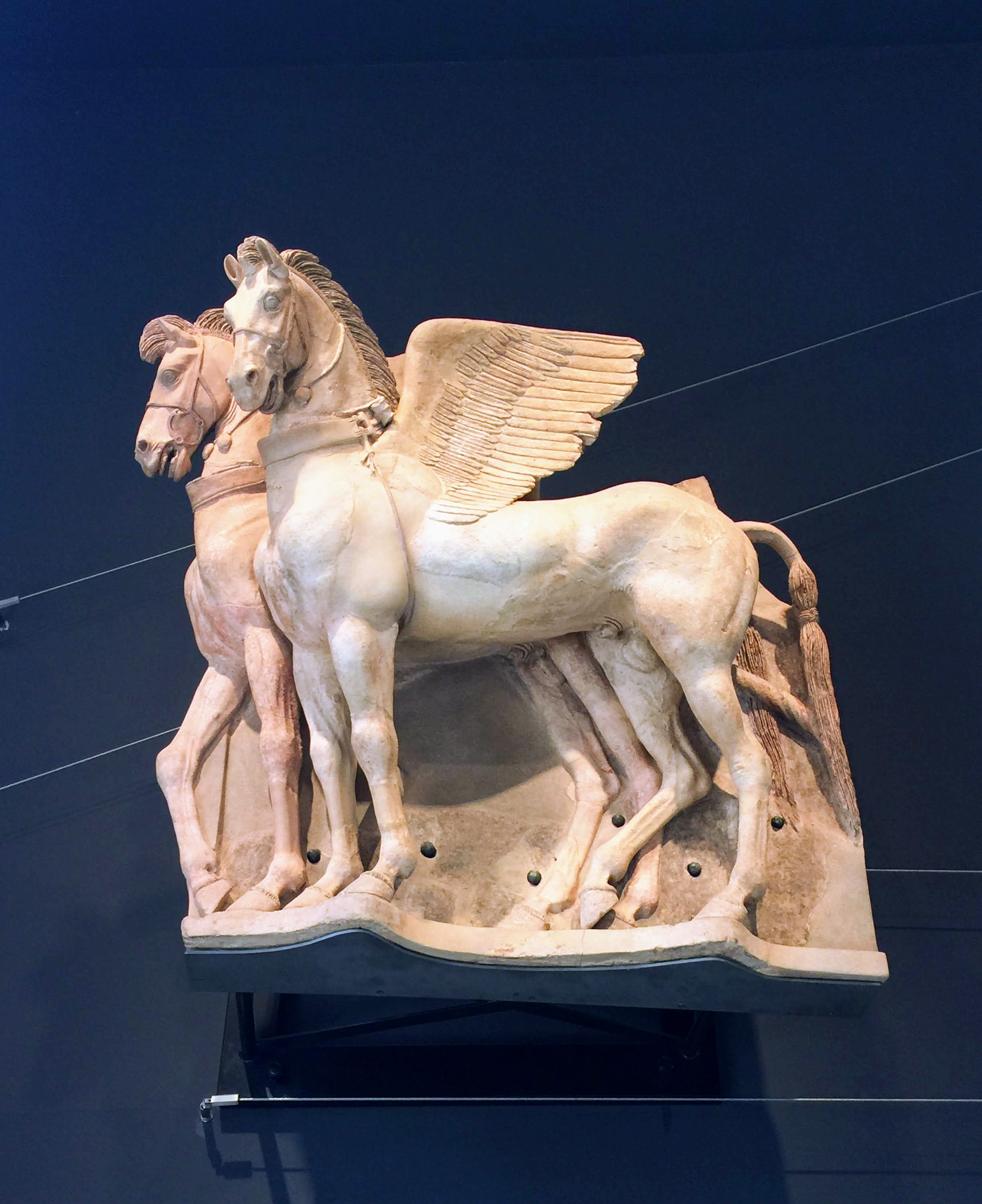
If you visit the Tarquinia site, make time to also go into town and also see the National Archeological Museum, with some spectacular works of art:

Amalfi Coast: Climbing the Stairs (Minori to Ravello) plus Villa Rufalo & Villa Cimbrone

18 Jun

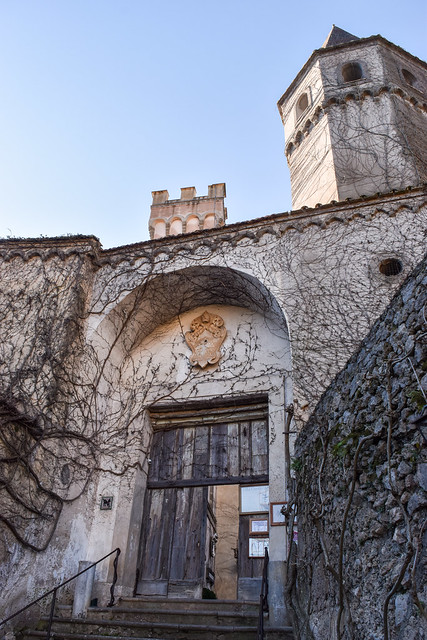
If you are ever ambitious (or, in my case, clueless) enough to take the stairs from Minori up to Ravello on Italy’s Amalfi Coast, you will not regret it. You may leave one or even both lungs along the way, but a piece of your heart will remain, too.  You will marvel at the views, the lemons groves, the mountainside terraces, and the churches–and at the people who live along the path, many of whom go up and down with a spryness that comes with long practice. It is a bit disconcerting to be passed up by septuagenarians carrying multiple bags of groceries, but if you persevere, there are two tremendous rewards to be had in Ravello: Villa Rufalo and Villa Cimbrone.


Minori, at sea level

We started out one morning in February, finding the path on Google Maps (though any shopkeeper can also point the way). Luckily, I didn’t have a good idea of what I was in for; the distance on the map didn’t look too bad at all. But up and up we went, roughly 1,500 steps by some counts–though not by ours; we didn’t have sufficient oxygen flow to keep up an accurate count. Ok, I’m exaggerating slightly–the climb is tough but doable, especial in cooler months and at cooler times of the day. It’s not all stairs, there are stretches of pathway and places to stop, too. But I wouldn’t recommend it at high noon in the middle of the summer, or for anyone who generally has trouble with lots of stairs. If you are game, however, it will be unlike almost anything else you do in Italy. And you can always do it in reverse–go down instead of up. We did both.


Signpost


Stairs going up; man trimming Mimosa tree


Altar along pathway; sea view


Mountain view


Last stretch of pathway between Minori and Ravello

When you finally make it to the top, you are in for a few more spectacular views. But first, a cappuccino or cold drink in the main piazza may be in order. After that, head to Villa Rufalo, home to the Rufalo family in the 13th century, restored by the Scottish businessman Francis Nevile Reid at the turn of the 20th century, and–since the 1950s–the venue for the famous Ravello Festival. Though how those musicians sit on a specially erected platform that appears to be dangling over the cliff, I do not know. The gardens and views are spectacular, but the villa itself is also worth a look.


Giardino


Umbrella pine; Torre Maggiore


Interior doorways; Tiled floors

After seeing Villa Rufalo, grab some lunch, then head to Villa Cimbrone, restored in the 19th century by the Englishman Ernest William Beckett (Lord Grimthorpe) and now a luxe hotel. The gardens, which can be seen separately from the hotel, were influenced by Edwin Lutyens and Gertrude Jekyll and benefited from the advice of Vita Sackville West, who chose many of the trees and plants. If you are afraid of heights, beware the Terrace of Infinity, a stunning spot from which to experience a vertiginous view of the sea 1200 ft (365 m) below. Yes, it’s a slab of concrete dangling on the cliff, but it has lasted this long and appears very sturdy. Just don’t lean too far over the dainty, waist-high, wrought-iron fencing….


Entryway to Villa Cimbrone; Cloister


Rose Terrace


Avenue of Immensity; Statue of Ceres


Terrace of Infinity


Sea view from Terrace of Infinity

So, after a good day in which we climbed a mountain and saw two spectacular gardens, we decided to treat ourselves to a cab back down to Minori. Except there wasn’t one; the lone cab driver working in February had gone on an extended lunch break. So, back down the 1,500 steps we went. My knees and calves were sore for a few days afterward, but I’d do it again in a heartbeat. Plus, there was a sweet reward at the bottom….


Pathway down; Lemon trees behind protective fencing


Rusted doorway; Donkey and cart decor along pathway


View of Ravello atop the cliff

   
Reward at the bottom; cake at Pasticceria Sal De Riso in Minori


A Mania for Tulips at Keukenhof

22 Mar

Anyone interested in passion and heartbreak need look no further than a flower garden. And there is no better place to look than Keukenhof (in Lisse, the Netherlands), which opens tomorrow for its 2017 season. It is the largest flower garden in the world and it specializes in tulips–which, like orchids, have driven people to distraction, debt, and death.


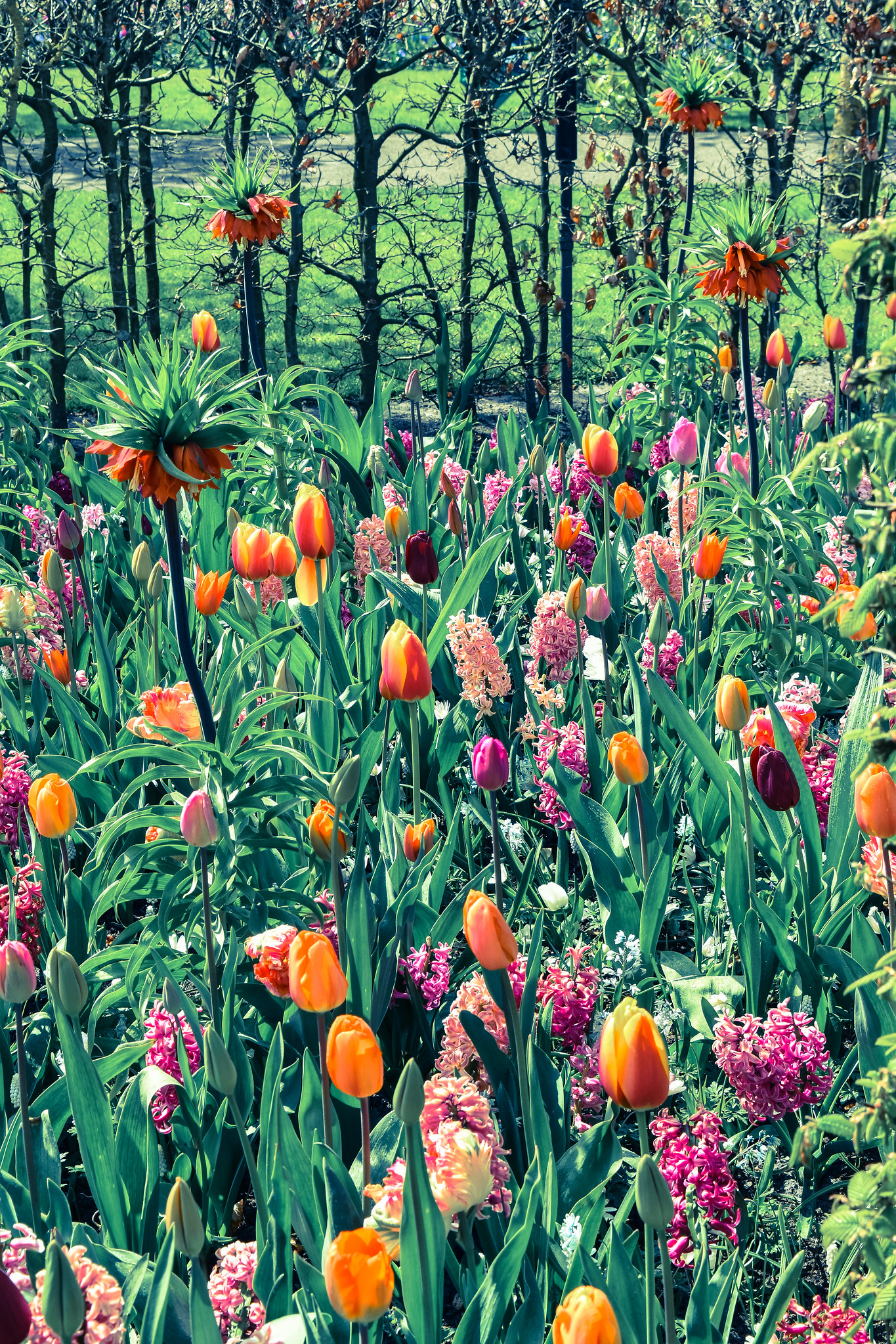
Keukenhof means ‘kitchen garden, but don’t let the name fool you into thinking it’s unobtrusively tucked round the back of a manor house; it covers 32 hectares (79 acres) and  is known as the Garden of Europe. This botanic wonderland features 7 million bulbs in bloom, including 800 varieties of tulips: botanical tulips; Greigii tulips; parrot tulips; single early, double early, single late, and double late tulips…. The list goes on.

  
Mixed beds; Double Late Tulip ‘Uncle Tom’

  
Tulip ‘Doll’s Minuet’; ‘Mysterious Parrot’ Tulip


A view of Keukenhof

High on that list are “broken” tulips, which originally were cultivars infected with a tulip breaking virus that  “broke” the plant’s single-color code, causing streaks, stripes, and flames of different colors to appear on the petals. Today, the same effects are achieved through breeding; only a few varieties of truly “broken” tulips still exist. But 380 years ago, the virus and those tulips caused people to lose their heads. While tip-toeing through the crowds at Keukenhof may not be for the faint-hearted, neither was the tulip trade in 17th-century Amsterdam.

  
Tulips are believed to have originated in current-day Iran; in fact, some scholars suggest the name “tulip” comes from the Persian word for “turban.” The flowers were highly prized by the Ottomans, and it is from ambassadors and visitors to the Ottoman courts that the flowers likely made their way to Northern Europe, and to the Netherlands. Carolus Clusius, a Flemish botanist and professor at the University of Leiden, planted the Netherlands’ first tulip bulbs in the university’s botanical garden in 1593.

Clusius’ tulips received a great deal of attention. Tulips were already considered an exotic flower in the Netherlands, and the virus only made them more so. As a result, there were regular raids on Clusius’ gardens and the market for tulips began to heat up, leading to the infamous Tulip Mania of 1634-37. At its height, a single, prized tulip bulb was worth exponentially more than the average person’s annual income, and more than a luxurious canal-side house. The tulip had become the ultimate status symbol. Some people put mirrors in their gardens to suggest there were more tulips than they actually had. Those who could not afford the bulbs bought furniture, art, and tableware decorated with tulips instead. And then the world’s first—but not last–speculative bubble burst, leaving a trail of shattered dreams and destitution in its wake. (This animated  Ted Ed video puts it in perspective.)


If you want to see the flowers that inspired these events, Keukenhof’s 2017  season runs from March 23 to May 21. As you wander the grounds, you will see that modern-day tulips still have the power to inspire; it is not unusual to see visitors climbing into the flower beds to pose for photos while lying among the blooms. But spare a moment for the many other flowers you are likely to see, too, because they are also worth the attention:


River of Muscari (Grape Hyacinth) ‘Blue Magic’ 


Fritillaria ‘Early Magic’


Anthurium bouquet

  
Lilium ‘Blushing Joy,’ Medinilla magnifica

Day Trip from Rome: Garden of Ninfa

19 Mar

Spring is in the air and that means the Garden of Ninfa, which has been called the most romantic garden in the world, will soon be open for its limited 2017 season. Ninfa is the Italian word for nymph. It is an apt name for this sylvan place that time forgot, with its flowers, trees, and gurgling streams, and its ruins covered in vines.


Located near Cisterna Latina 75 km (46 miles) southeast of Rome, Ninfa has a long and colorful history. A thousand years ago, it was a small town by a flowing stream, home to a temple dedicated to the water nymphs from whence it got its name. By 1100 it had become an important and wealthy place next to the only north-south road that was passable when the Appia Antica was flooded.

  
Pope Alexander III was crowned there in 1159, but the town’s honor and glory would not last long; the Pope’s enemy the Emperor Barbarossa sacked the town. It eventually passed into the hands of the Caetani family, though it suffered a long and steady decline starting in the 1300s. During subsequent centuries, nature took its course, engulfing the abandoned medieval town, which faded from sight.


But not from memory. In the early 1920s, Gelasio Caetani decided to reclaim the swampy land via a custom-built drainage and irrigation system, and establish a garden amid the ruined town with the help of his English-born mother and American-born sister-in-law. Gelasio’s’ niece Leilia Caetani and husband Hubert Howard continued the family’s work. They imported plants from all over the world; the 8-hectacre (20-acre) site is home to more than 1,000 plant species, including dozens of roses, clematis, climbing hydrangea, water irises, ornamental cherry trees, cypress, magnolias, oaks, and poplars, among many others.


Today, a foundation maintains the garden, which is only open on certain dates and is accessible only via a guided tour. In 2017, visiting season kicks off on April 1. The majority of open days are in the spring, though the season runs through November 5. Check online for dates and to buy tickets–and if you are going to go, get there early. If you have a few minutes before your tour starts (or after it ends), you can cross the road and visit the Horti Nympharum, a classic citrus garden across the lane complete with fountain, a family of swans, and castle ruins to wander through. There is a separate entry fee for that garden, but it is worth the price.

  
Finally, if you are making a day of it, head up to the walled hill town of Sermoneta for lunch; the town itself is charming, and the views of the valley from above are gorgeous.


View of Garden of Ninfa from above

Two Days in Bologna, Italy

7 Nov

Bologna has at least three nicknames: La Dotta– “the learned one,” for being home to the world’s oldest university, founded in 1088; La Grassa–“the fat one,” for its wonderful food; and La Rossa–“the red one,” originally for its terracotta rooftops, but also reflecting the city’s long-time political leanings. Speaking of leanings, the city also has two famous towers that–depending on your perspective–are now left of center. Plus miles and miles of porticoes, refuges from all the elements.

We were only there for one weekend. Two days will give you just a taste of the city’s delights. Okay, many tastes–it isn’t called La Grassa for nothing and you won’t be able to resist. And once you’ve tasted Bologna, you’ll want more.

Day 1: In the morning, we walked around the historic center of Bologna, including Piazza Maggiore, Basilica di San Petronio (with a trip up to its terrazza for a roof-top view of the city), Palazzo Archiginnasio (once the main building of the University of Bologna, and home to a gorgeous library and fascinating anatomical operating theater, built in 1636), and the food shops in Mercato di Mezzo. Then we went on a tour near Modena to visit a Parmigiano-Reggiano factory and a small balsamic vinegar producer.

Food: For lunch, we had an antipasto platter at Tamburini, followed by gelato at Cremeria Funivia and  coffee at Caffe Terzi.  At night, we headed to Ristorante Ciacco, where we had another antipasto platter (with prosciutto, mortadella, salame rosa, parmigiano-reggiano, and friggione–a tomato-onion accompaniment), meat-filled tortelloni, tagliatelle al ragu, and cotoletta alla Bolognese, with rice cake for dessert.

  
The two towers; Bologna portico


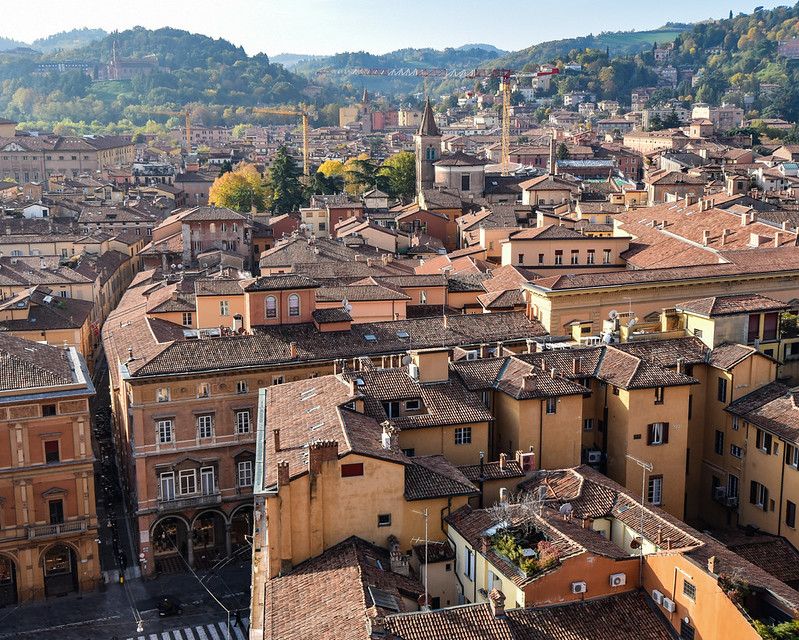
Roof-top view of Bologna from San Petronio


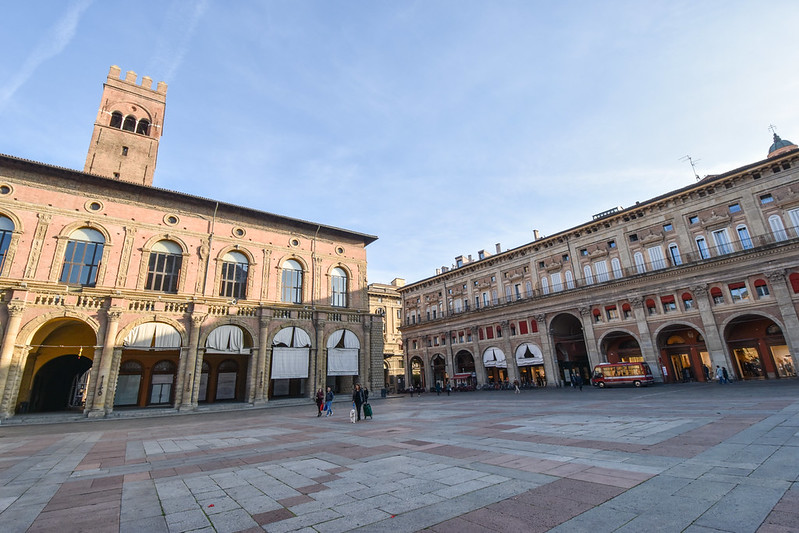
Piazza Maggiore: Palazzo del Podesta (l), Palazzo dei Banchi (r)


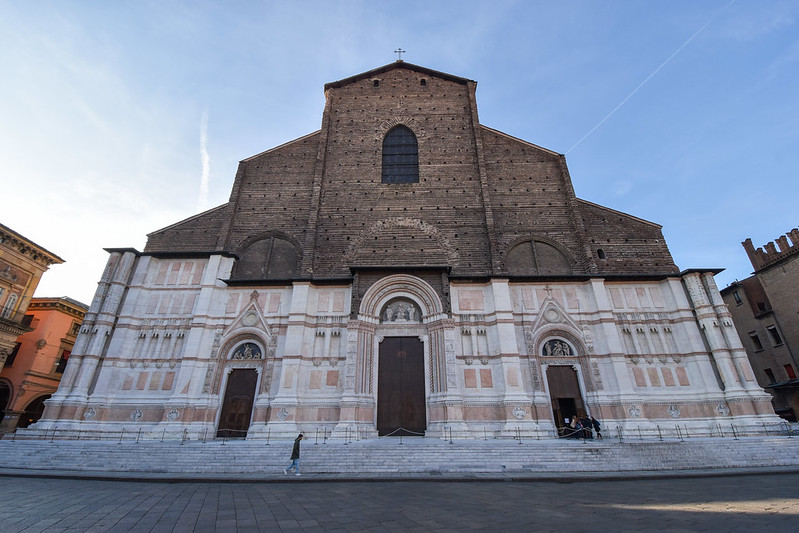
Unfinished facade of Basilica di San Petronio

  
Interior of Basilica di San Petronio; Candles at Bologna Cathedral


Palazzo di Archiginnasio


Anatomical Theater, Palazzo di Archiginnasio


Non-politically correct window-shop display: “Tortellini: To trick your husband into thinking you made them!”

  
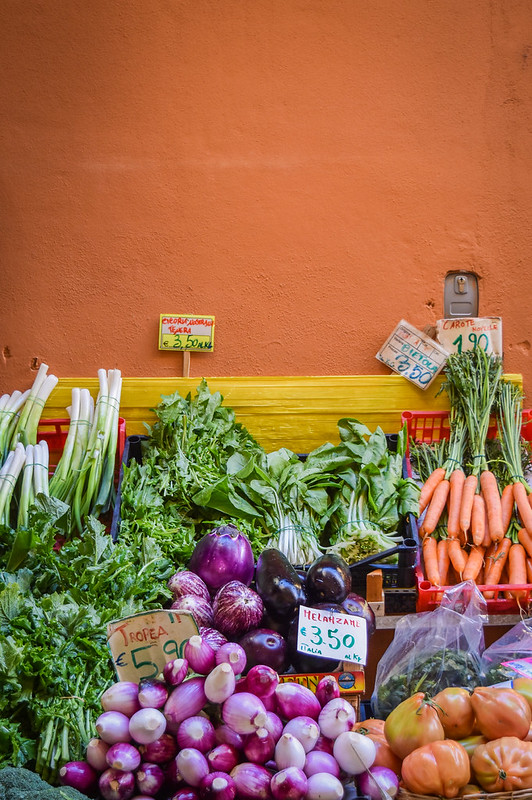
Produce stall in Mercato di Mezzo; window display at Tamburini (prosciutto, culatello, and mortadella)


Wheels of Parmigiano-Reggiano


Barrels of balsamic vinegar

Day 2: We worked off part of Day 1’s excesses by hauling ourselves up to the Sanctuary of the Madonna di San Luca, via one of the longest porticoes in the world: 666 arches, 3.5 km/2.17 miles long. Did I mention that at least half the route is steeply uphill, with many sets of stairs? It was, amazingly, a Sunday outing for many, with dogs, children, and power walkers making the trek. It’s an experience not to be missed–and there is a bus back down to town afterward if your legs have turned to spaghetti after reaching the top. Once we were on flat ground again, we headed to Piazza Santo Stefano to meander through the interconnected complex of seven churches therein, and then we walked back through the historic center, looking at shops and street art, listening to musicians under the porticoes, and dodging the many Bolognese residents out for a Sunday passeggiata.

Food: For Sunday dinner,  we went to a non-traditional but highly regarded eatery: È Cucina Leopardi, where you never know what you will get, but you know it will be good. Chef Cesare Marretti offers you three choices: meat, fish, or vegetarian. Then you sit back and see what will appear–the waiters don’t even necessarily know what the chef will hand out; it can vary from table to table depending on what is coming out of the oven (or off the stove) at any given time. We had buffalo ricotta with an apple/pineapple compote, roast chicken breast with roasted celery and apricot, lamb cutlets with a Grana Padano cheese souffle, roast pork loin with pureed pumpkin, and three desserts (they may have brought that many by accident; we did our duty, though we were about to burst): sweet mascarpone in a persimmon puree, ricotta mousse with roasted chestnuts and cinnamon and cocoa, and a molten chocolate cake.

Next time we are in Bologna, we will have to climb up to San Luca twice!

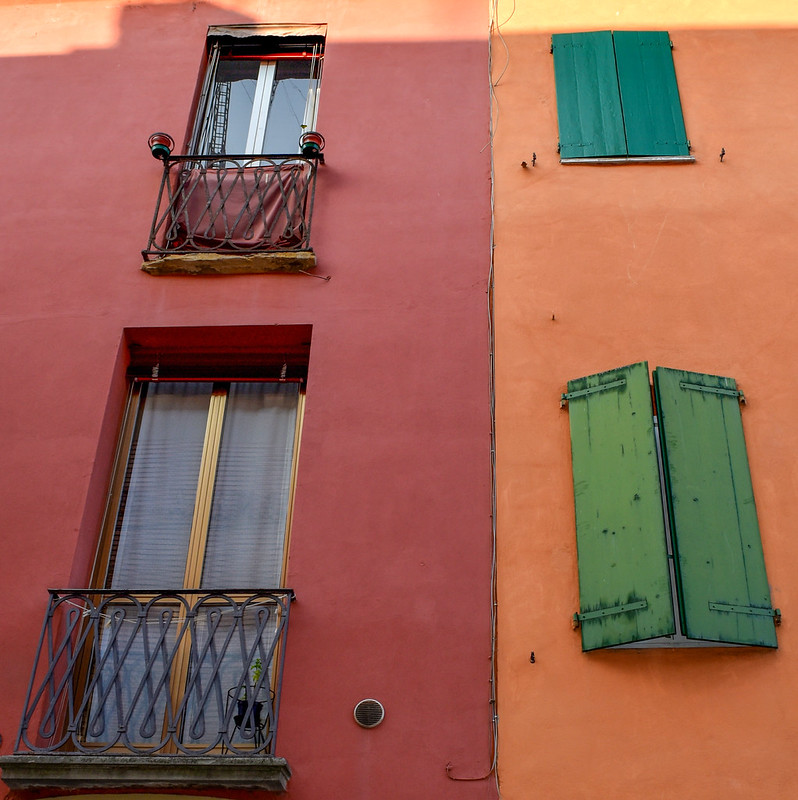
Colorful buildings en route to the portico to San Luca

  
The ascent to San Luca; Cyclists skirting the portico on their way up

  
Final stretch, inside and out views


San Luca


Piazza Santo Stefano

 
Stairs encircling the shrine of San Petronio in the Santo Stefano complex; the shrine

  
“Afghan Girl” street art, Anti-Renzi (Italian PM) graffiti ahead of the constitutional referendum

Photo Collage: A Year in Rome

27 Sep

A small sample of the beauty of the Eternal City.

5x7

Row 1: Teatro Marcello at night, Acanthus flower at the Roseto dei Bufalo, Fountain by Centrale Montemartini museum, Tree and Laundry-Via di Donna Olimpia, Rose at Roseto dei Bufalo, Angel on door at Basilica Sta. Maria degli Angeli e dei Martiri

Row 2: Triangular building in Monti, Ruins of the Baths of Caracalla, The Boxer at Palazzo Massimo museum, Carbonara at Trattoria Perilli in Testaccio, Bernini’s Medusa at the Capitoline Museums, Pigeon with walnuts and hazelnuts at Vicolo della Moretta farmers’ market

Row 3: Castel Sant’Angelo, Graffiti of Caravaggio’s Young Sick Bacchus in Trastevere, Tomatoes at Testaccio Market, The Pyramid of Caius Cestius, Phlomis (Jerusalem sage) at Roseto dei Bufalo, St Peter’s Colonnade

Row 4: Market in Piazze delle Coppelle, Tabernacle at the Basilica of Saint Paul Outside the Walls, Angel of Grief at Testaccio Cemetery, Artichokes at Testaccio Market, Pantheon dome and oculus, Pizza at Pizzarium

Row 5: View of  Capitoline Museum rooftops from Vittorio Emanuele II monument, Il Babuino talking statue and fountain, Sweets at Pasticceria Barberini in Testaccio, Buildings at sunset by Largo Argentina, Obelisk and Bernini’s elephant at Santa Maria Sopra Minerva church, Beer display at Open Balladin near Campo de’ Fiori

Row 6: Pomegranate flower at Villa Sciarra, Statue of Artemis at Centrale Montemartini museum, Graffiti  and chair by Via Ostiense underpass, Fresh sheep-milk ricotta at Antica Caciara in Trastevere, Arched doorway decor at Palazzo Altemps museum, Ceremonial procession by Italian Senate building

Steak de Cheval: Did We or Didn’t We?

21 May

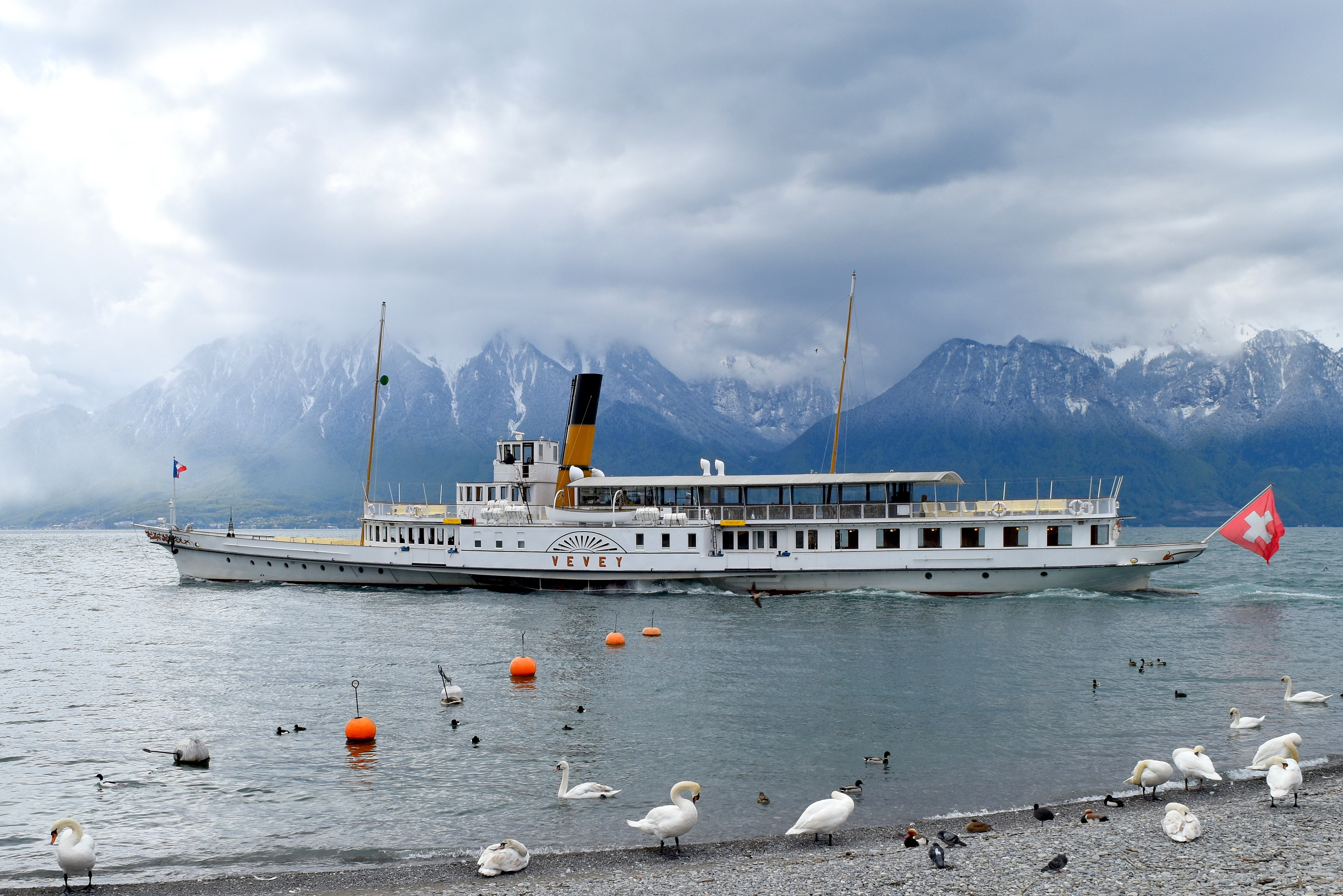
On a recent day trip out of Geneva, we made a spur-of-the moment decision to stop in the gorgeous old  lake-side resort town of Vevey for a scenic stroll and some lunch. The stroll was lovely, though it was a blustery day:

vevey1
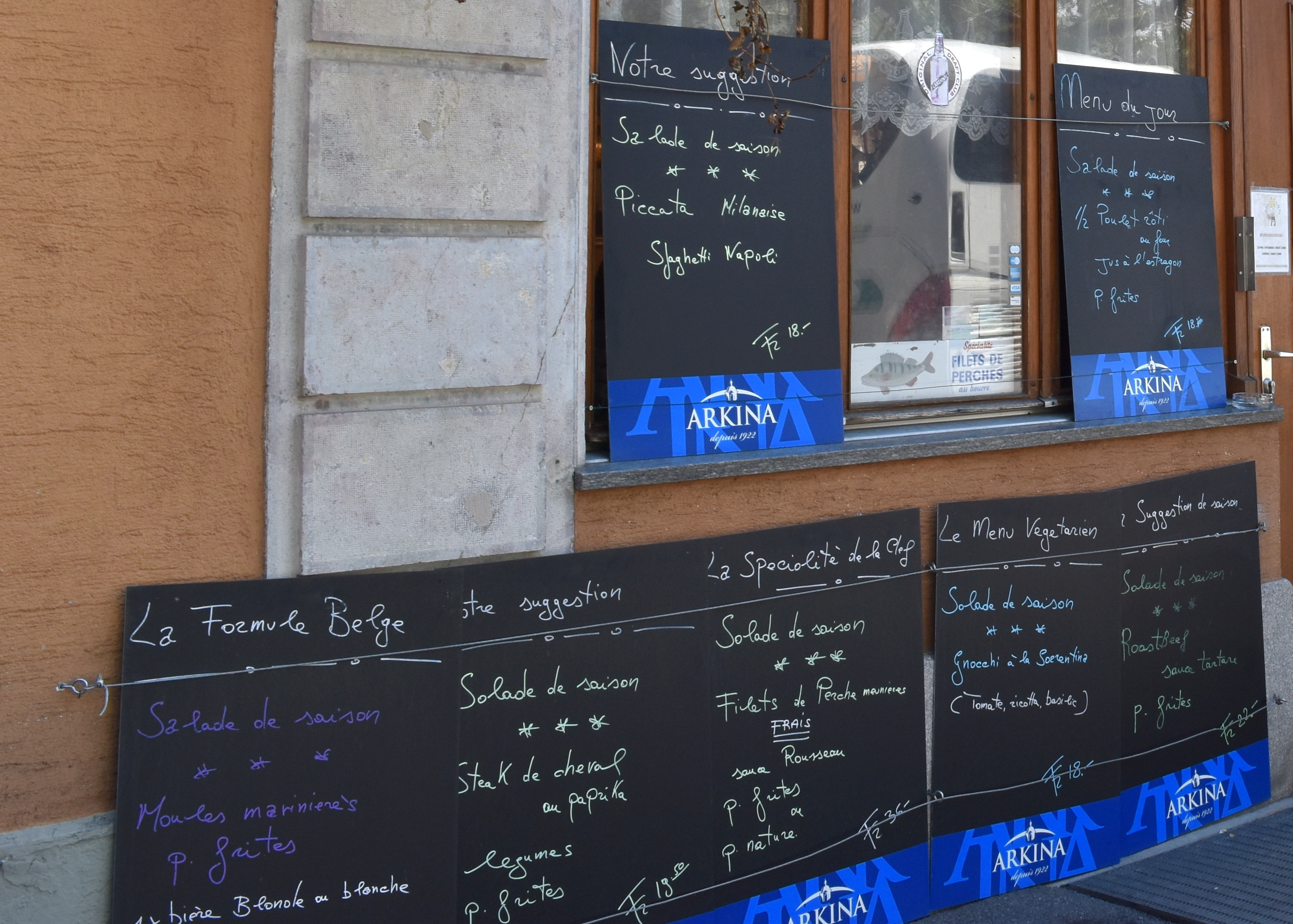
Having worked up an appetite, we were primed for the siren call of steak and pommes frites –and so when we spotted both words on a chalk-board menu in front of a charming restaurant frequented by locals, we headed straight in with barely a backward glance.  No need for menus—we knew exactly what we wanted. The steak was served “au paprika” – which traditionally means a sauce made with sautéed minced onion, paprika, cream, and butter.  The sauce enrobing our steaks was silky, savory, and plate-lickingly delicious. The medium-rare steaks themselves were succulent, and we ate every bite with a sigh on our lips. The pommes frites (french fries) and accompanying vegetables rounded out the dish, and we left the restaurant in a pleasant state of euphoria. I was reminded of the Virginia Wolf quote:  “One cannot think well, love well, sleep well, if one has not dined well.”

vevey2
In hindsight, it was clear I did not begin thinking until after lunch. First, I thought to take a photograph of the chalk-board menus outside, as a reminder of the excellent meal we had just eaten.  And then I thought to read the description of the chef-recommended dish a bit more carefully, as the steak we had eaten seemed to be a special kind of steak—steak de cheval. And then I thought—“Wait a second, doesn’t ‘cheval’ mean…”? Yes, it does. It means horse. Whereupon I thought, “Oh no.”

vevey3
So, did we or didn’t we? We did. For a brief moment, I hoped the dish was somehow “à cheval,” which is a (beef) steak with a fried egg on top. Except ours did not have an egg on top. And it was “de cheval” not “à cheval.”

I’ve eaten calf intestines, cartilage salad, chicken feet, slivered eel, fish eyeballs, squid ink, stewed pig skin, and assorted other animal parts. But this dish—as absolutely delicious as it was–struck a bit close to home. For Americans, eating horse meat is taboo. As the French food sociologist Claude Fischler has argued, we eat within a culture, and that culture determines what foods are considered edible, how to prepare them, when and how to eat them, and with whom. What we eat marks “us” vs. “others.”

Though people have been consuming horse meat  for millennia, in the United States (and in most English-speaking countries) it is culturally inappropriate to eat it, even though some commentators argue there could be good reasons to do so. But across Europe (including in Italy, where I live), and in Asia and Mexico, horse is on the menu.

If I’m honest, when I ate “steak de cheval au paprika” in Switzerland, I dined extremely well. But it also made me think—about cultural norms, and what is taboo, and why. My conclusion:  As someone who enjoys eating other domesticated animals, I cannot judge those who eat horse. And I have to remind myself that this squeamishness works both ways; many of the things we eat have historically disgusted others. This is how the Chinese once described cheese: “the putrefied mucous discharge of an animal’s guts.”

Umm, mmm good.

Two Days in Malta: Day 1

6 Apr

At the end of January, when we were contemplating where to go for a long weekend away from Rome, a friend said “Malta–it’s #3 on the New York Times’ list of 52 places to go in 2016!” Malta was #3 on the list? It was, and for 39 euros each way, off we went to discover why.


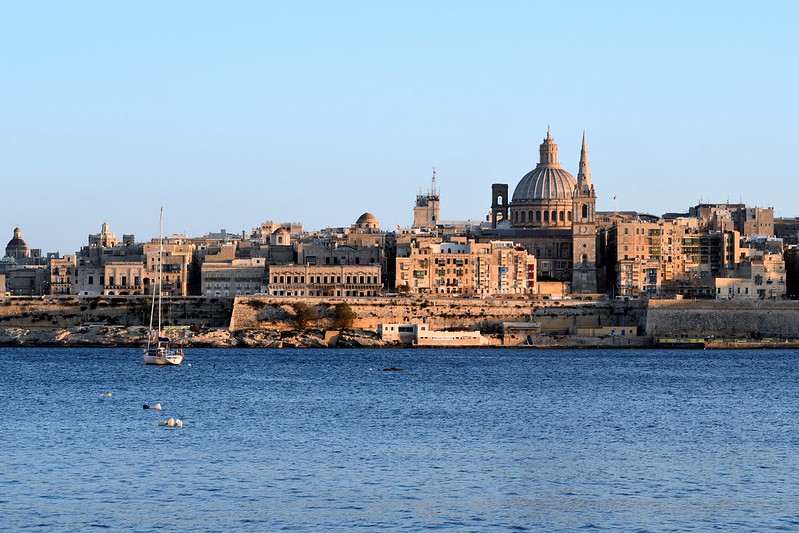
 Malta–a country that blends Italian, Arabic, and British cultures– is made up of three islands south of Sicily, east of Tunisia, and north of Libya. With a short amount of time, we limited ourselves to the largest island (“Malta”), which is home to the capital city of Valletta and has sights aplenty. We focused on Valletta on Day 1, then went to Marsaxlokk, Mdina, and Sliema on Day 2. Our day in Valletta included the following:

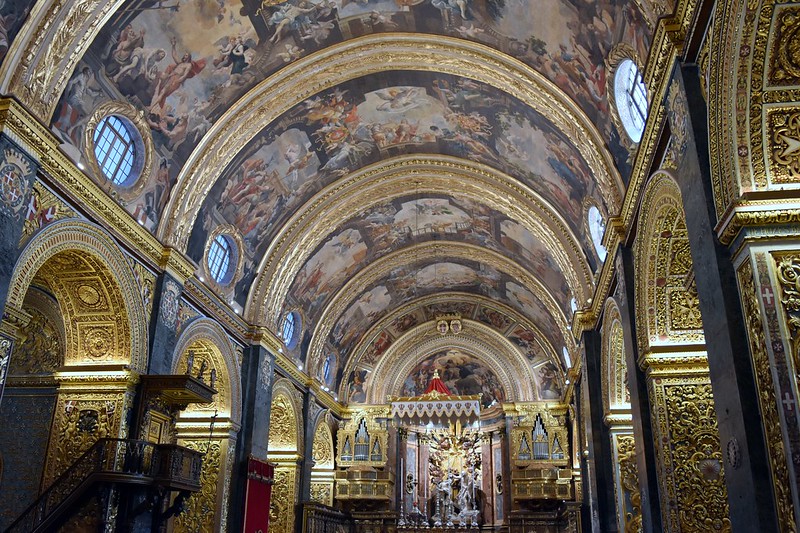
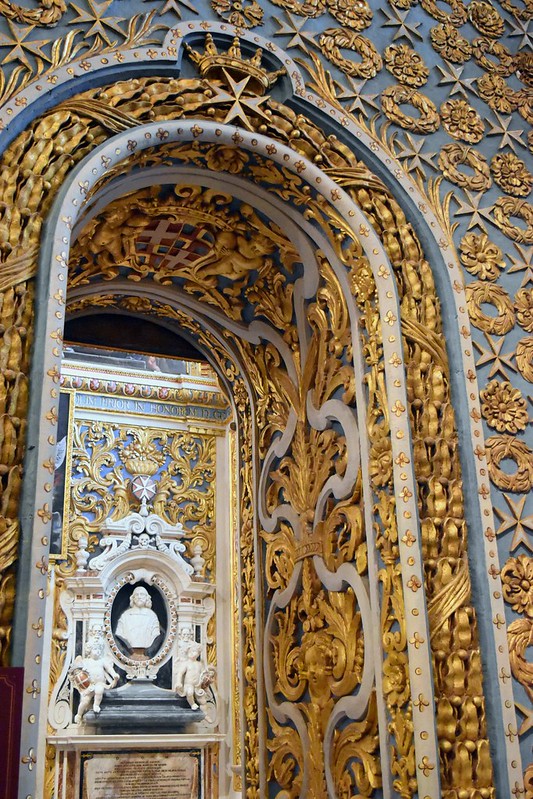
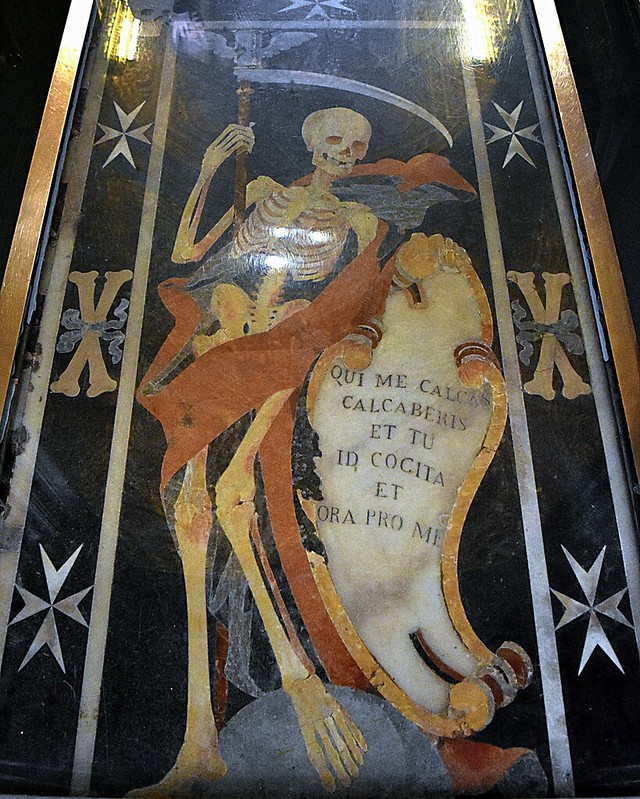
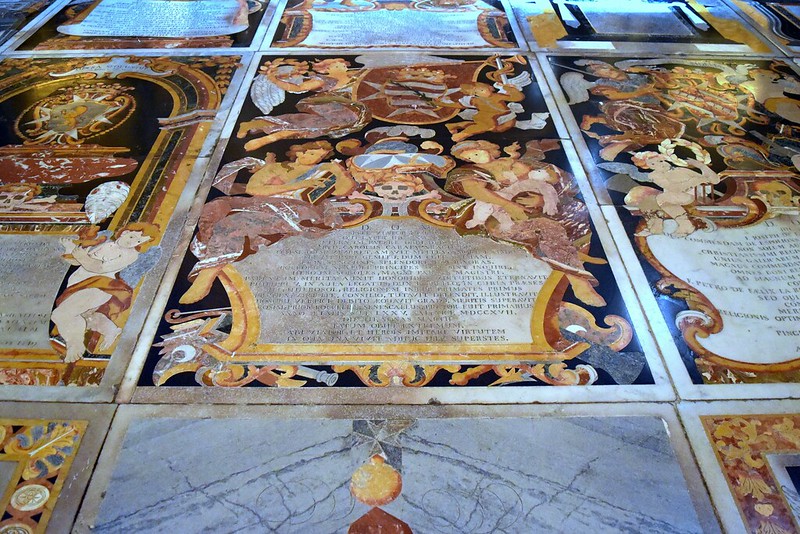
St. John’s Co-Cathedral: The cathedral was built by the Knights of St. John (Knights of Malta) in the 1570s, after they had been on the island for 40+ years following their defeat in Rhodes by the Ottomans. King Charles V of Spain gave the Knights the Maltese Islands for the annual fee of one Maltese falcon. People frequently ask “Why is the church called a “Co-Cathedral? Traditionally, the church over which a bishop presides is called a cathedral, and in Malta that honor fell to St. Paul’s Cathedral in the old medieval capital of Mdina. But in the 1820s, the bishop was allowed to use St John’s as an alternative see, and hence it too became a cathedral, after 250 years of being a simple church. Except that it hadn’t been a simple church for a long time and by then, the Knights were no longer in Malta. However, they did everything in their power to make their church memorable, even if it wasn’t a cathedral. There is barely an ungilded surface to be seen–except on the floor, which features a dizzying selection of marble tombstone decor teeming with mosaic skeletons. Though a somewhat morbid lot, those Knights were extremely fond of bling.


Aside from the lavish decor, another reason to visit the Cathedral is Caravaggio. After killing a man in Rome in 1606, he spent the last four years of his life on the run. He went to Malta in 1607 in the hopes of getting a Maltese knighthood with which to redeem himself. He paid for the knighthood with paintings, two of which are in the cathedral: The Beheading of St. John the Baptist, the only painting Caravaggio signed, and St. Jerome Writing. Caravaggio’s painting of the head knight himself, Grand Master Alof de Wignacourt, is in the Louvre. Alas, things did not go well for Caravaggio in Malta. After wounding another knight the day before the grand unveiling of The Beheading of St John in 1608, he was thrown into a hole carved in the rock to await further (worse) punishment. He languished there for about a month and then somehow got out (a hitherto unmanageable feat), off the island, and back to Italy without being caught. He obviously had help. But his luck ultimately ran out; his knighthood was not only revoked, but he was attacked by several assailants and slashed across the face in Naples in 1609; some biographers believe the knight he wounded in Malta was behind the attack. Caravaggio died in 1610 at the age of 38, on his way back to Rome after being pardoned by the Pope.

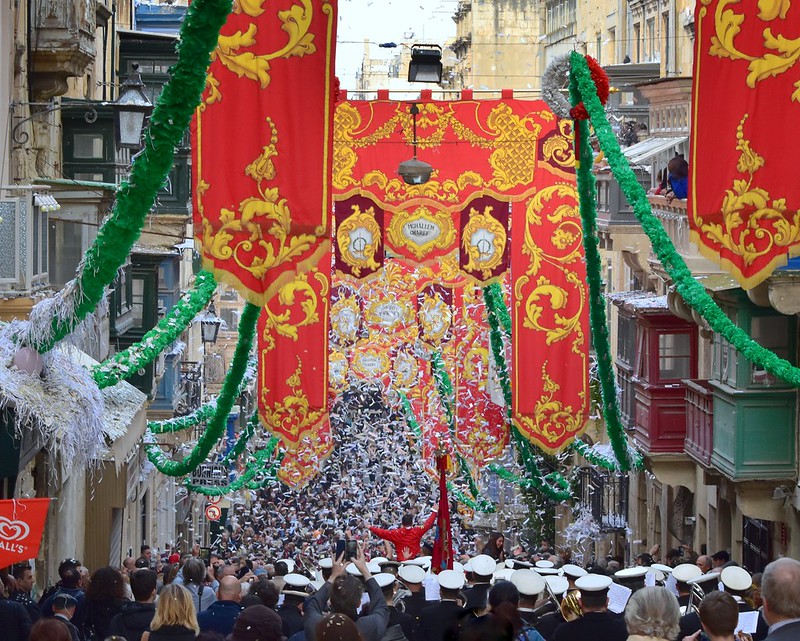
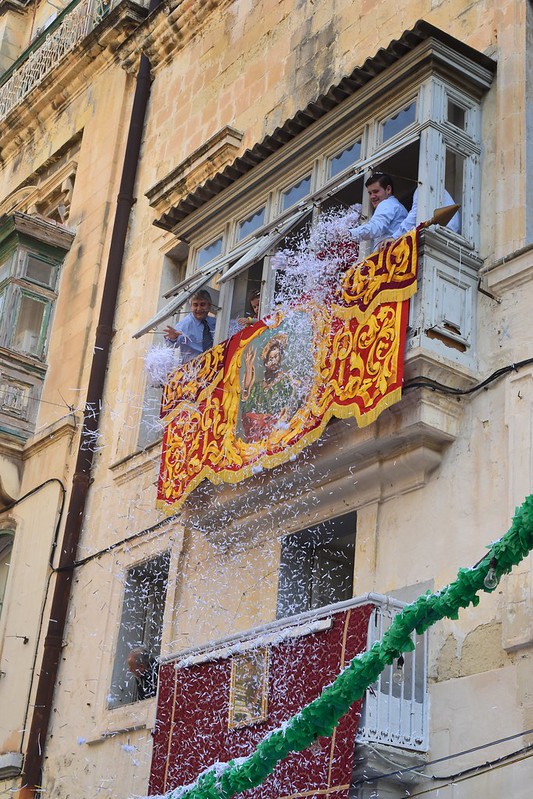
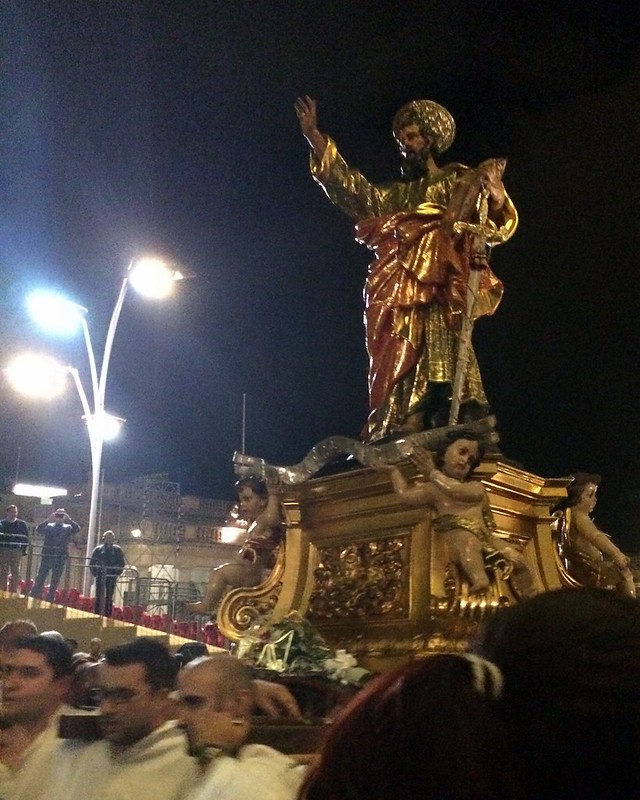
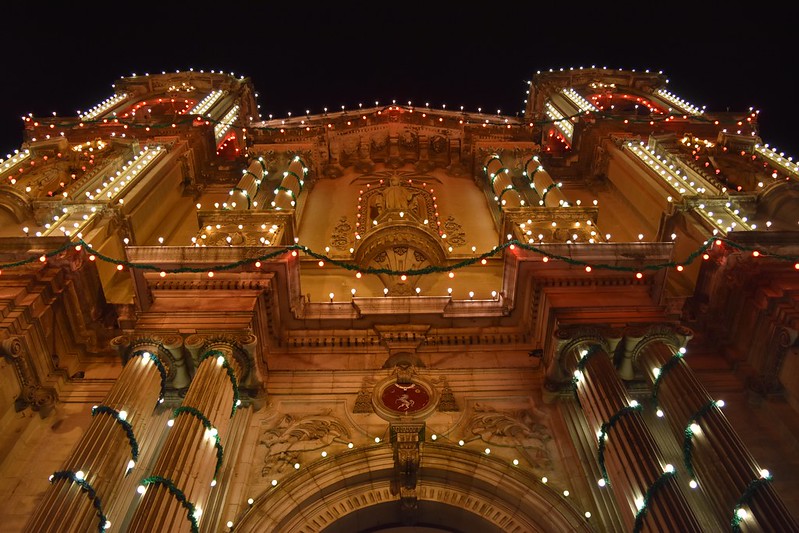
Feast of St. Paul’s Shipwreck: Unbeknownst to us, we arrived in Malta on the day of the Feast of St. Paul’s Shipwreck. According to tradition, Paul the Apostle was on his way to be tried in Rome when his ship capsized off the coast of Malta. He survived and remained on the island for a while and won the affection of the populace, which lasts to this day; references to St. Paul are visible everywhere. The Feast in his name involves marching bands, confetti tossing, processing (with an extremely heavy 350-year-old statue of St. Paul), and celebrations at the Church of St. Paul’s Shipwreck — and we were delighted to experience it throughout the day and into the night. The Feast is usually held on February 10, but even if you are not in Valletta on the day, the church is worth seeing. If you leave the Co-Cathedral with memories of gold, the Church of St. Paul’s Shipwreck will have you seeing red.


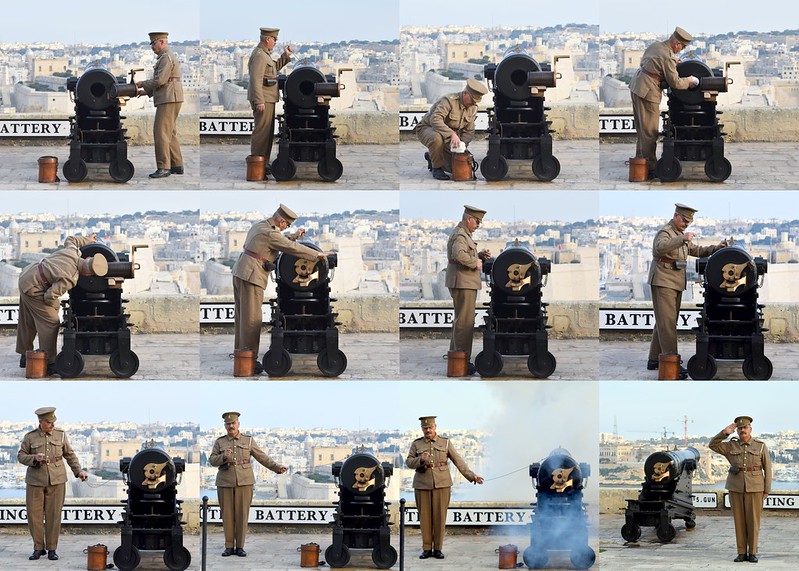
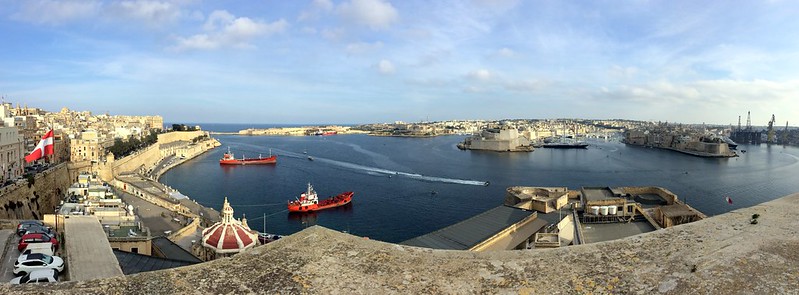
Saluting Battery: In between all the Feast-day celebrations, we made sure to get to the Upper Barrakka Gardens–not just for the stunning views of the Grand Harbour, but also for the Saluting Battery (the firing of a cannon), which occurs at 12 noon and 4 pm every day. Fans of Patrick O’Brian’s Aubrey-Maturin novels set during the Napoleonic Wars will have read about the custom of gun salutes for ships entering a harbor, and also about Malta. O’Brian’s eighth novel, Treason’s Harbour, is based there. In the novels and in Malta, Napoleon is not remembered fondly; the Knights of St. John surrendered the island to him in 1798 and were forced into exile (again, this time to Rome). Napoleon then dismantled the Roman Catholic Church on the island and stripped the churches of their valuables.

There are actually eight cannons on the Upper Barrakka battery, but the last time all were fired–in a rolling 21-gun salute–was when Queen Elizabeth visited Malta in November 2015. She and the Duke of Edinburgh lived in Malta for two years as newlyweds when he commanded a Royal Navy frigate there; Malta is the only place outside the United Kingdom the Queen has ever lived. In 2015, she arrived by ship, as her father had done in 1943 to offer words of comfort and condolence to the population. Because of its strategic location and the presence of a British base there, Malta was horrifically bombed by Axis pilots during World War II, with one stretch lasting a continuous 154 days. As a result, the Maltese population as a whole was awarded Britain’s highest civilian honor for bravery.


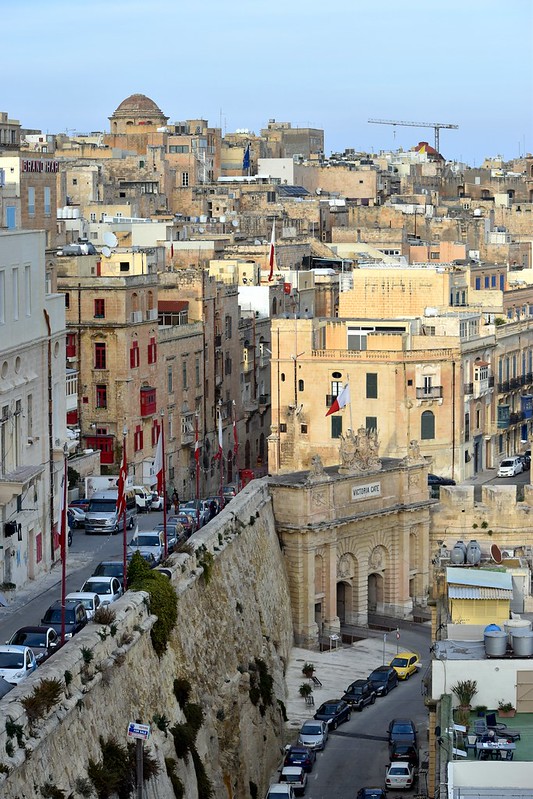
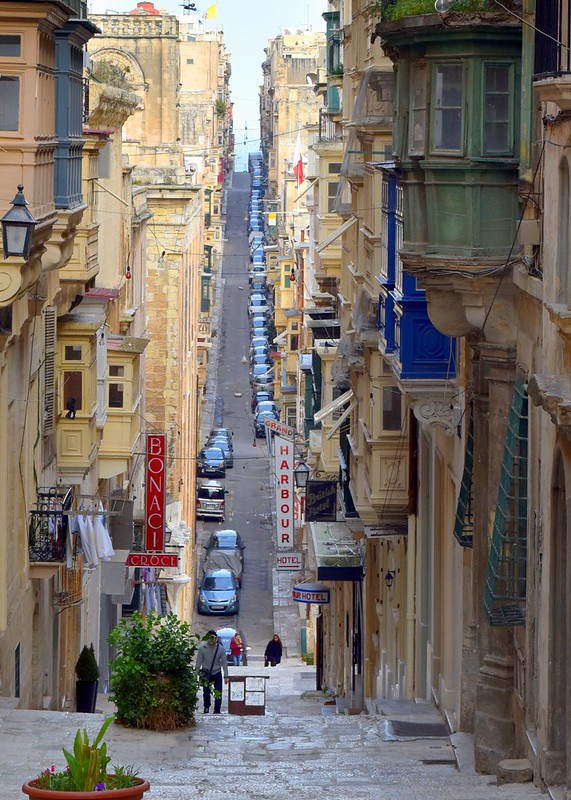
Other City Sights: One of the nicest things to do in Valletta is to just walk–up to the center of town and down to the water’s edge. It is a beautiful blend of old…


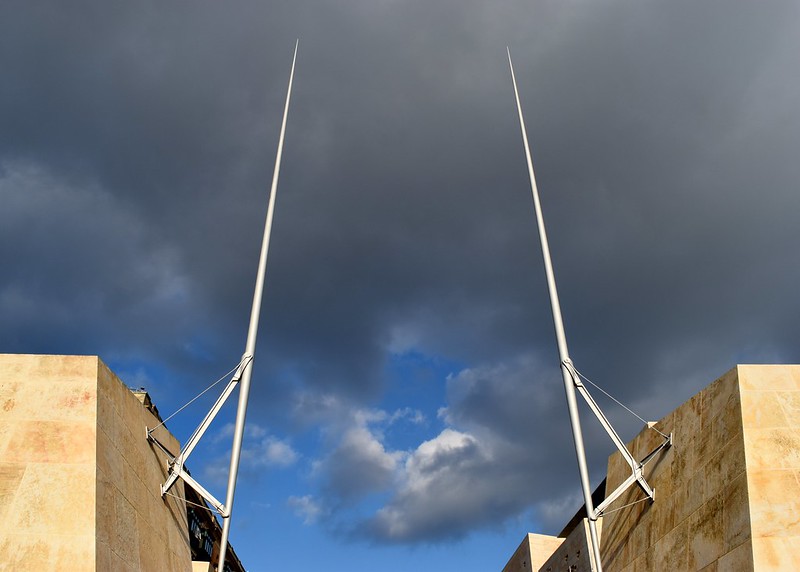
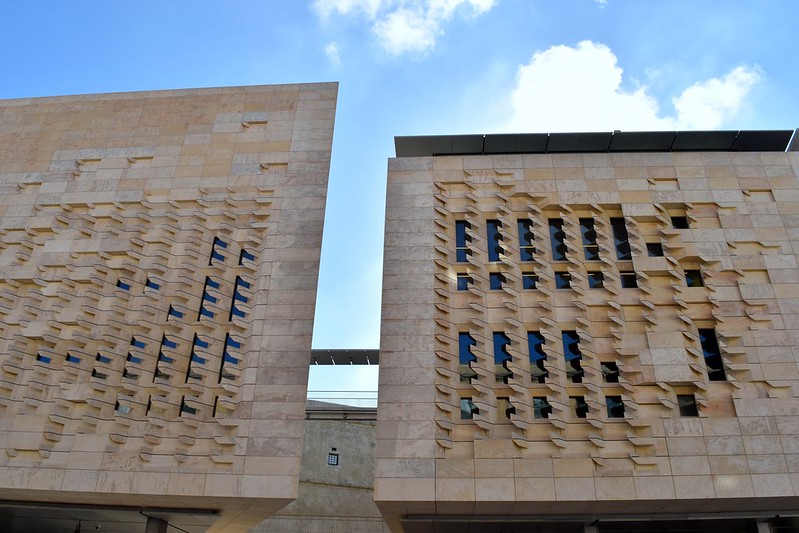
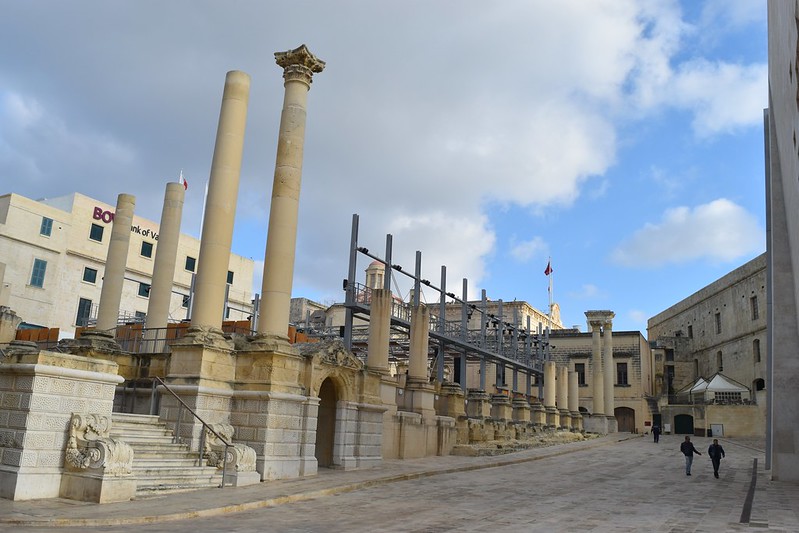
… and new. In terms of the new, there is the controversial but striking new City Gate, finished in 2014 and designed by Renzo Piano, who also designed the new Parliament building and the new open-air theater housed within the ruins of the bombed-out Royal opera house. If you are catching a bus to any other part of Malta, you will walk right by all three structures, as the main bus area is outside the City Gate.


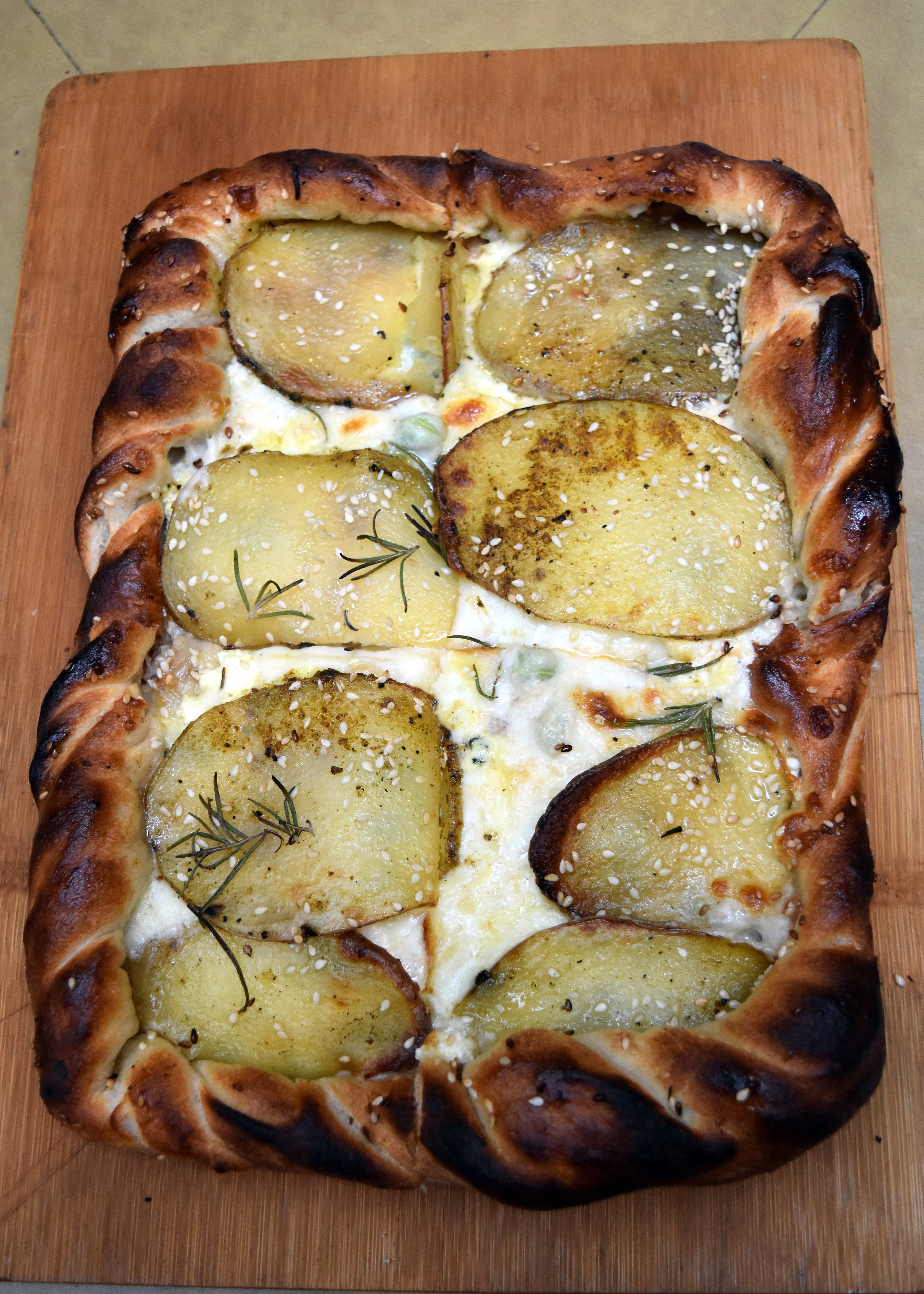
Finally–armies march on their stomachs, so if you are doing a lot of walking, you’ll need some fuel. Stop by  Nenu the Artisan Baker for Maltese-style pizza known as ftira. The version I tried included potatoes, pork belly, ricotta, broad beans, and rosemary. It was fantastic, but huge!

Ftira
And that was Day 1 in Valletta. We would also have liked to see the Casa Rocca Piccola, but we arrived just after it had closed for lunch. In Valletta, it is important to plan the timing of your visits; the Cathedral, for example, is closed Saturday afternoon and all day Sunday.

Truffles and Chestnuts: Two Festivals in One Day in Umbria

13 Nov

Last weekend, we took our first road trip. Destination: Umbria–specifically the Truffle Festival (Sagra del Tartufo) in Fabro. This medieval town is just under two hours away from Rome (slightly less if you can make it out of Rome without getting lost…). And its woods (below) are full of truffles.


The Festival is in the higher, older part of town and consists of about 50 stalls, many selling truffles, truffle sauces, truffled cheeses, truffled sausages, and almost anything else that can be truffled. Unfortunately, we were a day late to see (and taste) what was billed as the world’s biggest truffle omelette. But we did sample our way up and down the stalls; being equal-opportunity eaters, we devoted attention to non-truffled items, too:


I did a double take when I saw the sign below, thinking mule salame was on offer along with the wild boar and venison versions. But no–it was just salame shaped like mule testicles….

  
After visiting the festival, we stopped at a nearby restaurant for lunch (because really, the festival was just a long snack…), where we ordered truffled pasta to share and I had pheasant with a sauce made from truffles, pate, and cognac. That may sound expensive, but it wasn’t; during truffle season in Italy you can get all sort of truffle-related dishes for very reasonable prices. Of course, if you are hoping to buy a whole, hefty, wrinkled, earthy, deeply aromatic truffle–that’s an entirely different proposition. But we weren’t. I was happy with the few tastes I had. A blasphemous statement, I know–but I find that a very little truffle goes a very long way.  Now, porcini mushrooms, on the other hand….

After our very late lunch, we could have gone back to Rome, but we decided to (literally and figuratively) squeeze in one more festival–the Chestnut Festival (Sagra della Castagna) in Narni. The Festival itself was very small, with not much on offer. But Narni was striking at twilight and night, and we did happen upon chestnuts roasting over an open fire: