Tag Archives: Lazio

Two Etruscan Cities of the Dead: Cerveteri and Tarquinia

20 Aug

If you are in Rome and fancy a day trip to a place unlike any other you will see in Italy, then you should visit the Etruscan burial complex known as Necropoli della Banditaccia. It is about 45 km (28 miles) from Rome, along the western central coast. If you happen to be lucky enough to go when no one else is there, you will experience an almost Indiana Jones-like feeling as you walk among, and into, tombs that are even older than Rome. (The tombs date from the ninth to the third centuries BC, when the Etruscans were conquered and then assimilated by the Romans.)

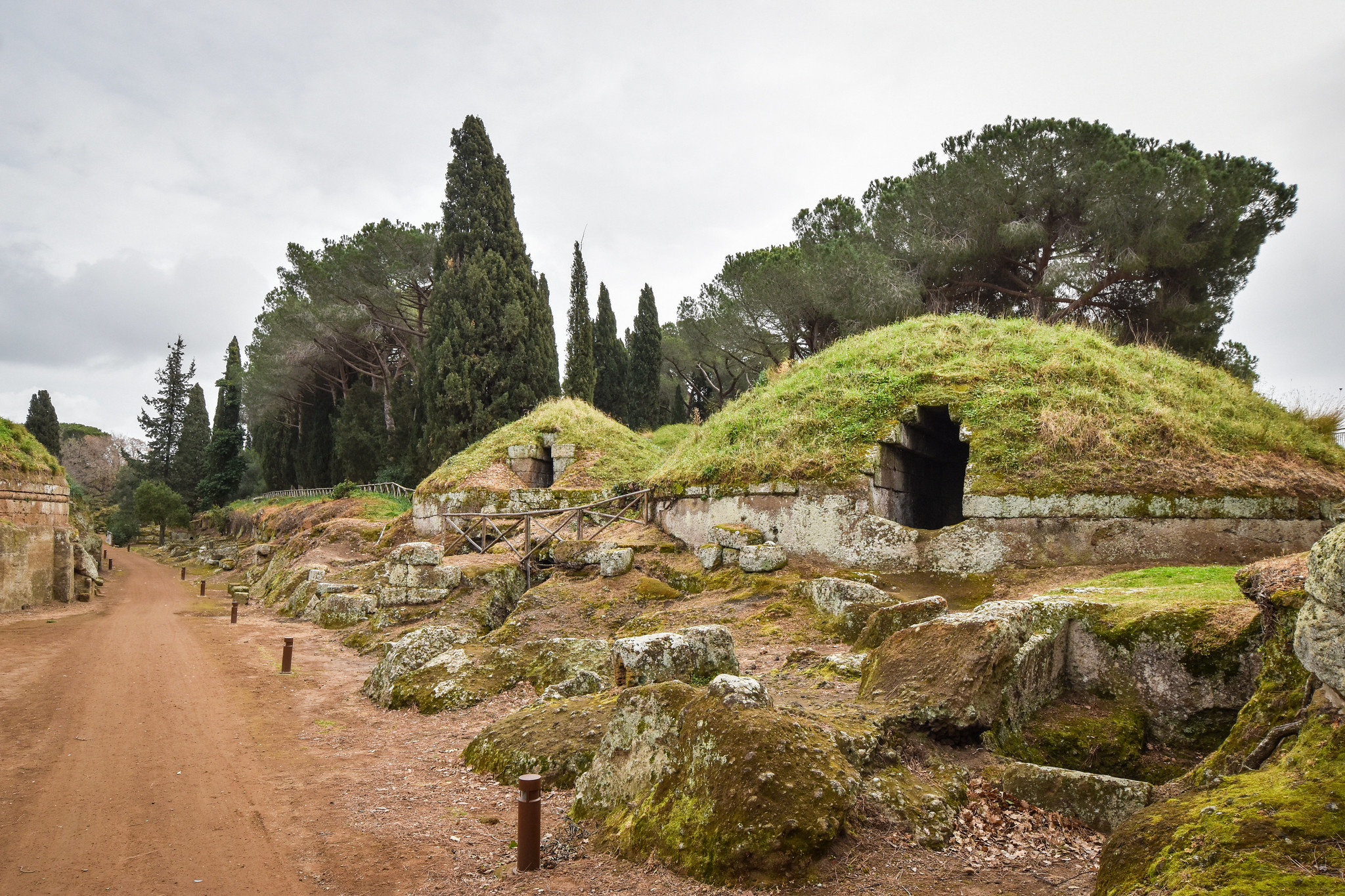
The necropolis at Cerveteri is quiet, thick with vegetation, and full of thousands of ancient tombs–many of which are underground. The complex itself is organized like a city, with streets, open areas, and even neighborhoods; it was meant to emulate how the Etruscans lived in life. But as you walk around, you feel it was always a city of the dead.

Ancient road rutted by wagon wheels, Necropoli della Banditaccia, Cerveteri

Both the Necropoli della Banditaccia and another Etruscan burial complex in Tarquinia (about 45km further northwest than Cerveteri) are UNESCO World Heritage sites, and each is worth a visit. The landscape and setting of each necropolis is stunning…

… and the tombs themselves are fascinating, reflecting different burial practices over the centuries. The earliest (and simplest) tombs were just small pits where the ashes of the dead were kept; over time, the tombs evolved into circular burial mounds known as tumuli, which are carved out of the volcanic rock (tufa):

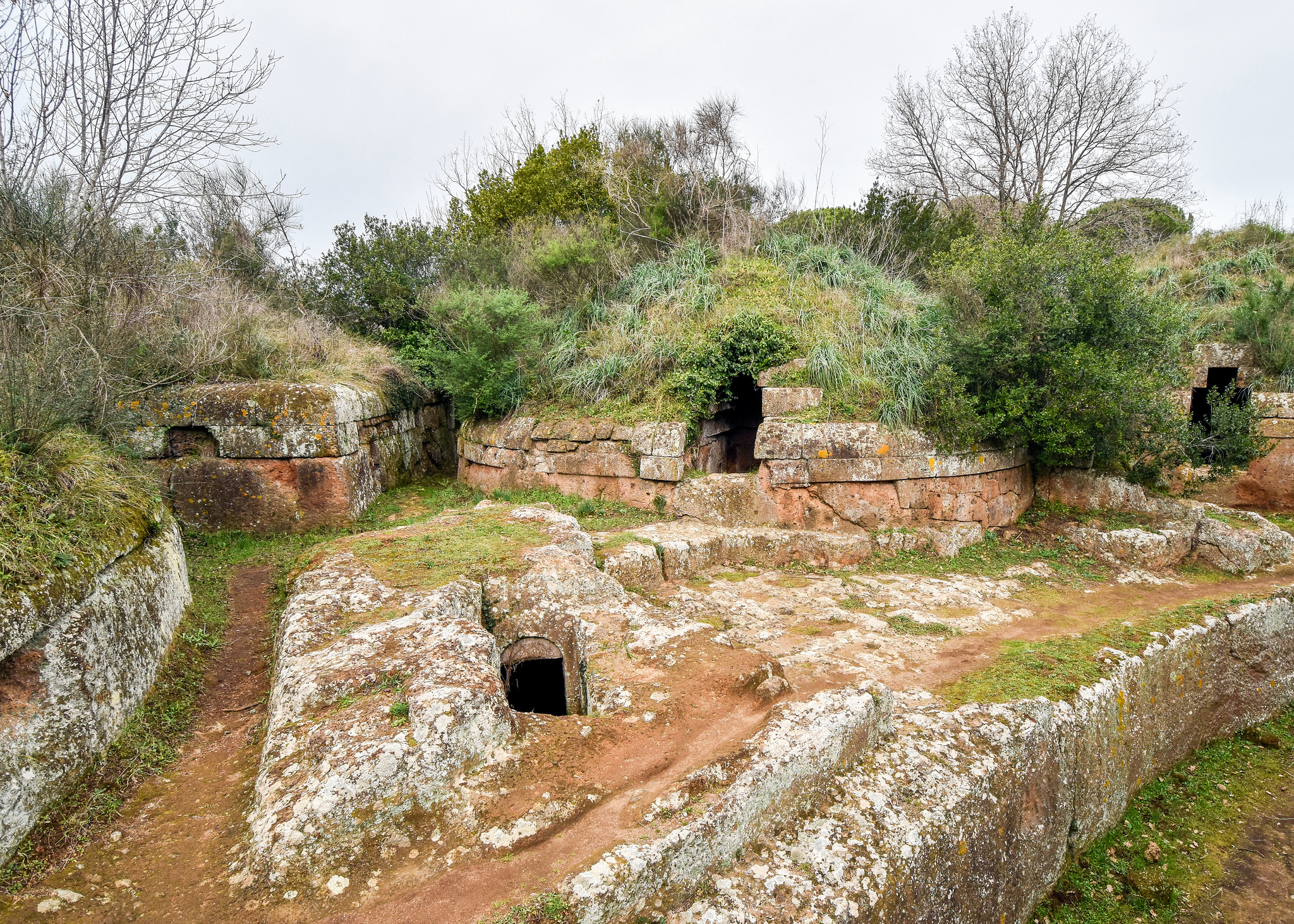
As the complex grew and more streets appeared, “square tombs” were built in long rows along the ancient roads:
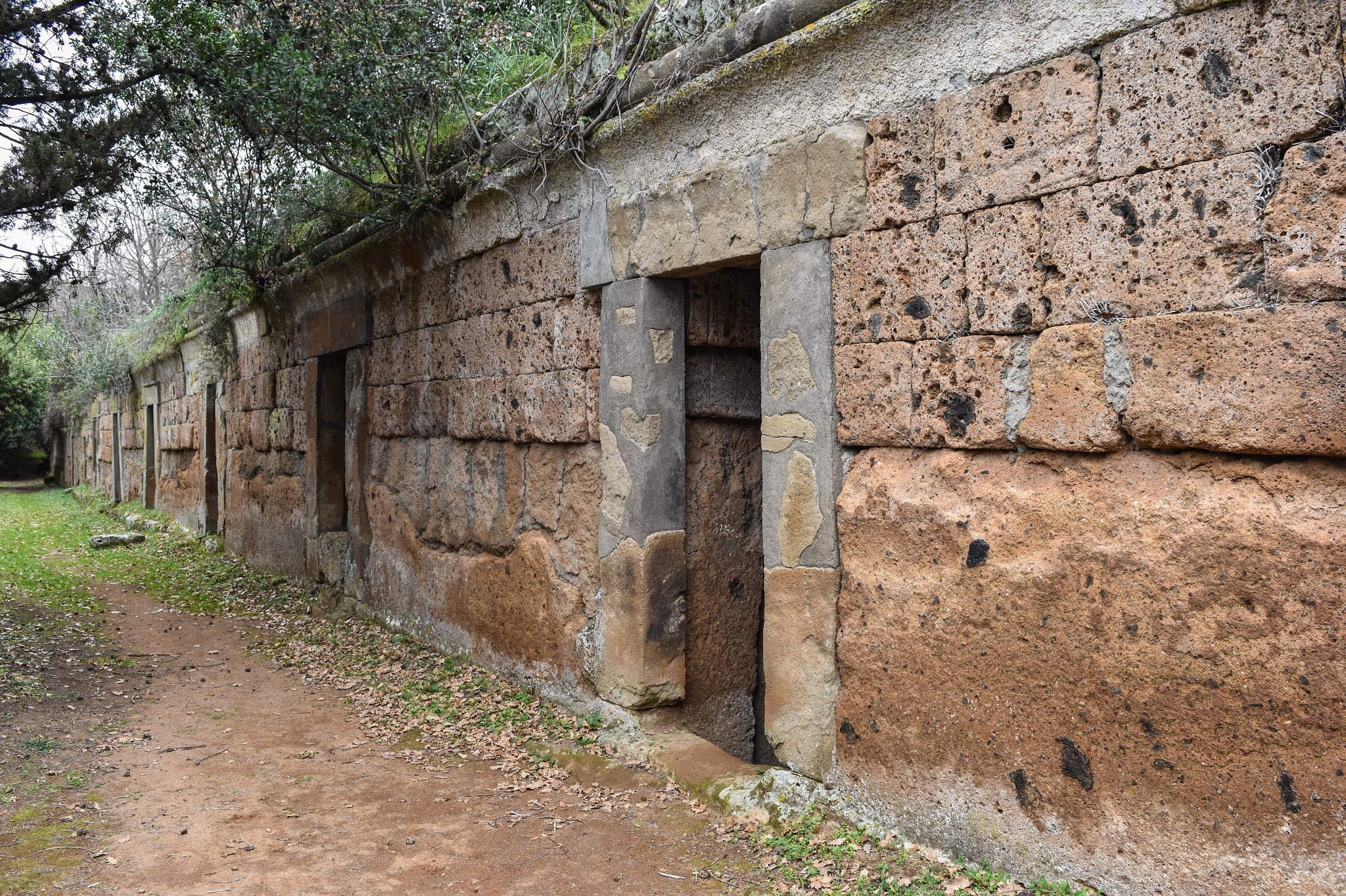
Square tombs along Via dei Monti Ceriti, Necropolis of the Banditaccia, Cerveteri

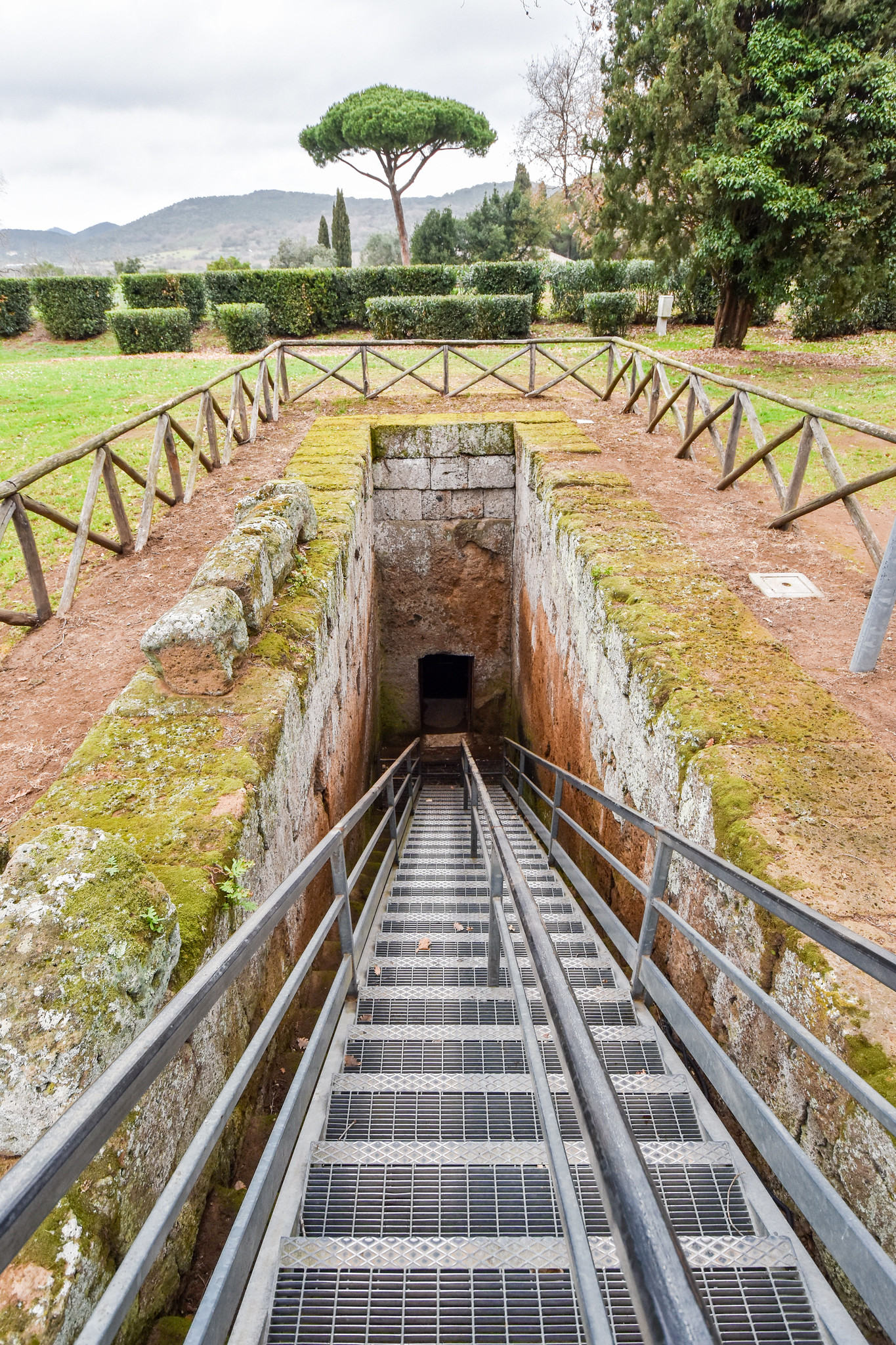
Other tombs were fully underground:

The Tarquinia site is also particularly known for its painted tombs:

As well as its group of funerary urns, which are believed to have housed the cremated remains of a pre-Etruscan, Early Iron Age community dating from 1020 to 750 BC:

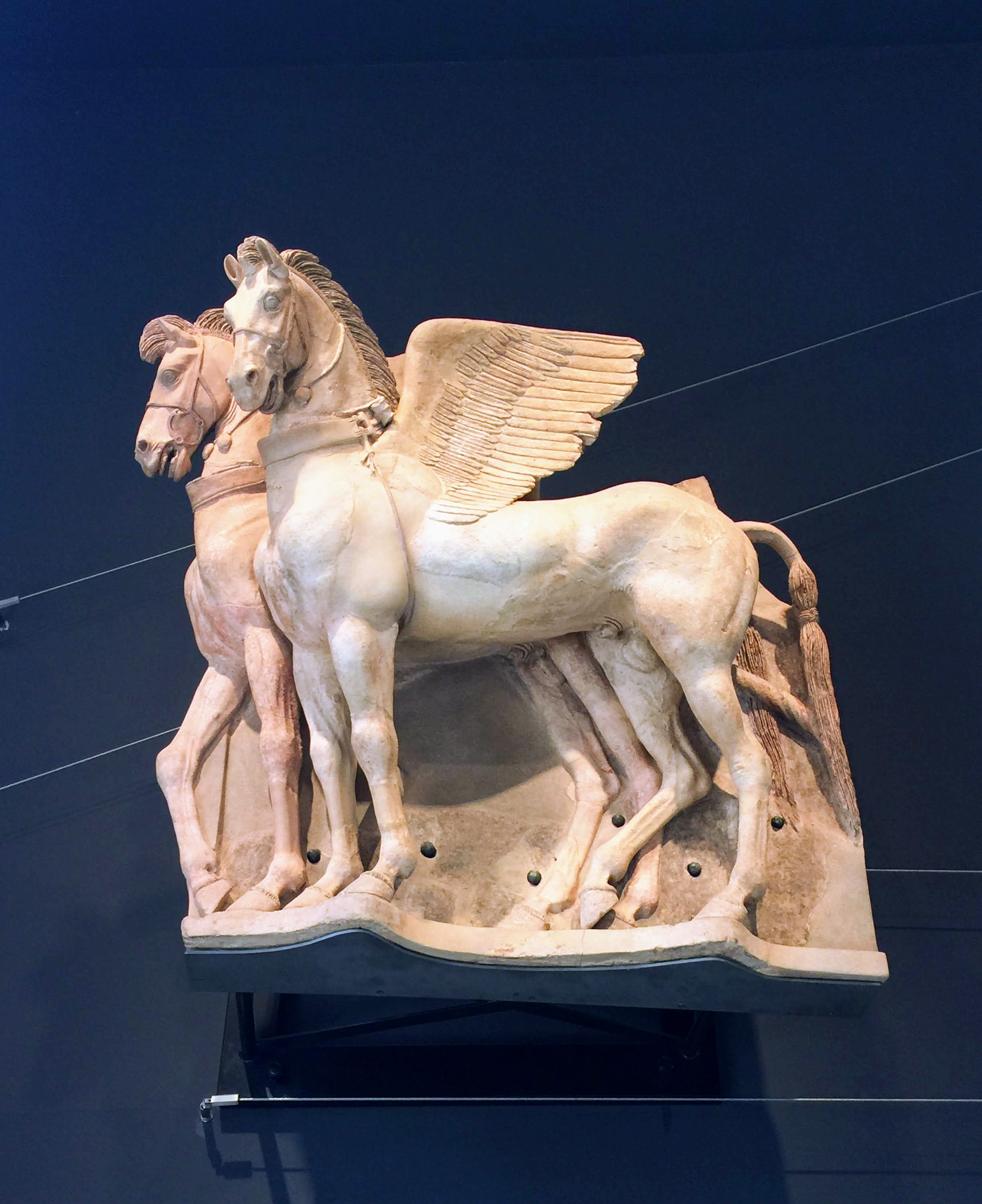
If you visit the Tarquinia site, make time to also go into town and also see the National Archeological Museum, with some spectacular works of art:
Day Trip from Rome: Garden of Ninfa

19 Mar

Spring is in the air and that means the Garden of Ninfa, which has been called the most romantic garden in the world, will soon be open for its limited 2017 season. Ninfa is the Italian word for nymph. It is an apt name for this sylvan place that time forgot, with its flowers, trees, and gurgling streams, and its ruins covered in vines.


Located near Cisterna Latina 75 km (46 miles) southeast of Rome, Ninfa has a long and colorful history. A thousand years ago, it was a small town by a flowing stream, home to a temple dedicated to the water nymphs from whence it got its name. By 1100 it had become an important and wealthy place next to the only north-south road that was passable when the Appia Antica was flooded.

  
Pope Alexander III was crowned there in 1159, but the town’s honor and glory would not last long; the Pope’s enemy the Emperor Barbarossa sacked the town. It eventually passed into the hands of the Caetani family, though it suffered a long and steady decline starting in the 1300s. During subsequent centuries, nature took its course, engulfing the abandoned medieval town, which faded from sight.


But not from memory. In the early 1920s, Gelasio Caetani decided to reclaim the swampy land via a custom-built drainage and irrigation system, and establish a garden amid the ruined town with the help of his English-born mother and American-born sister-in-law. Gelasio’s’ niece Leilia Caetani and husband Hubert Howard continued the family’s work. They imported plants from all over the world; the 8-hectacre (20-acre) site is home to more than 1,000 plant species, including dozens of roses, clematis, climbing hydrangea, water irises, ornamental cherry trees, cypress, magnolias, oaks, and poplars, among many others.


Today, a foundation maintains the garden, which is only open on certain dates and is accessible only via a guided tour. In 2017, visiting season kicks off on April 1. The majority of open days are in the spring, though the season runs through November 5. Check online for dates and to buy tickets–and if you are going to go, get there early. If you have a few minutes before your tour starts (or after it ends), you can cross the road and visit the Horti Nympharum, a classic citrus garden across the lane complete with fountain, a family of swans, and castle ruins to wander through. There is a separate entry fee for that garden, but it is worth the price.

  
Finally, if you are making a day of it, head up to the walled hill town of Sermoneta for lunch; the town itself is charming, and the views of the valley from above are gorgeous.


View of Garden of Ninfa from above