Tag Archives: hummingbirds

The Elusive ‘Kintzley’s Ghost’ Honeysuckle

12 Nov

I am lucky in that I have a neighbor who loves plants and gardening as much (if not more) than I do. She has a number of unusual plants in her garden, but one of my favorites is a vine I have never seen anywhere else. Nor had I ever heard of it before, either: a “Kintzley’s Ghost” honeysuckle (Lonicera reticulata). And doubly lucky for me, it grows against the fence between our two houses, so I get to see it in all its glory.
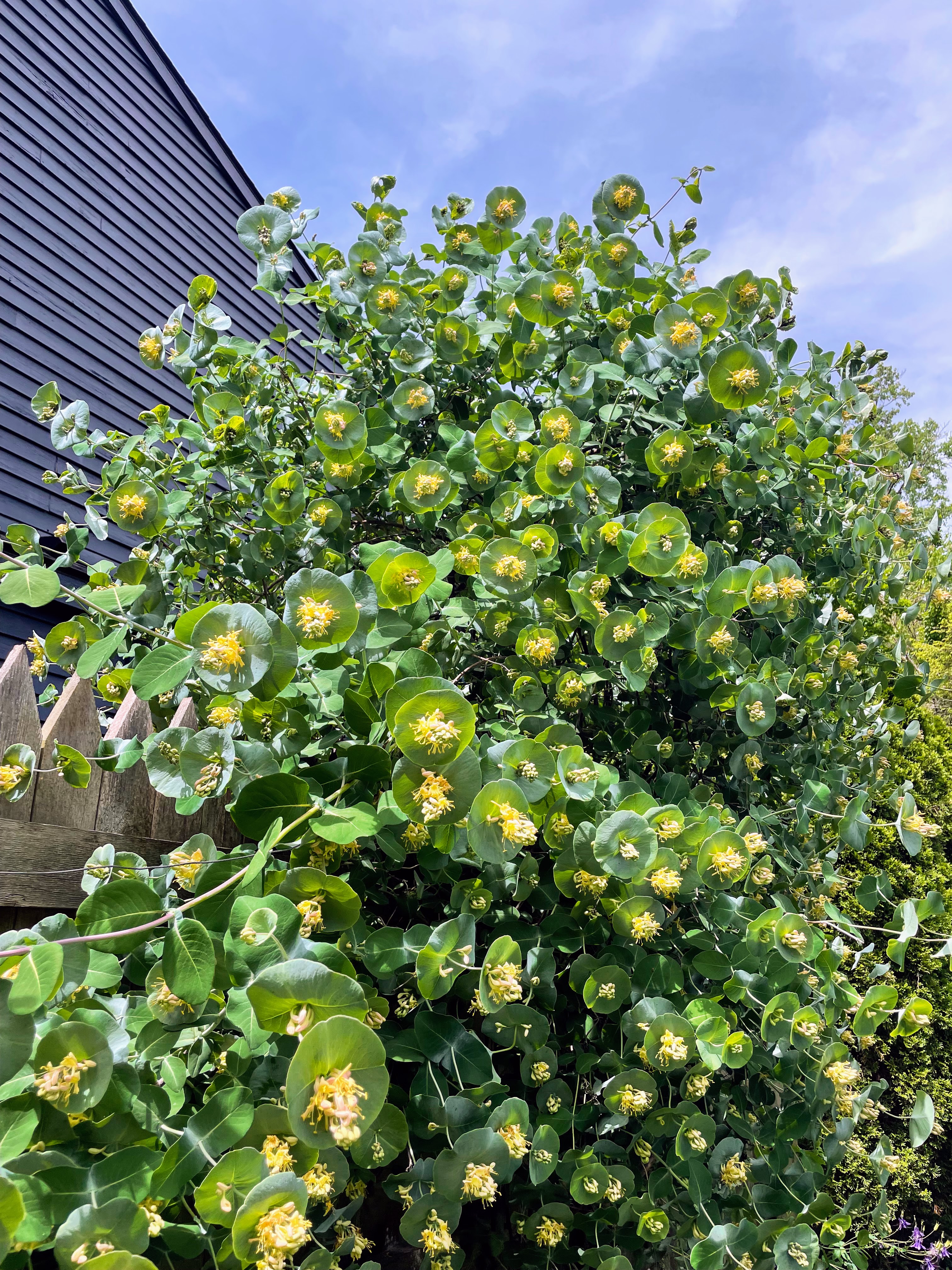
This photo was taken at the end of May. Its tubular yellow flowers are quite pretty and though they are slightly fragrant, they don’t have that full honeysuckle aroma. What sets “Kintzley’s Ghost” apart, though, are the circular bracts surrounding those flowers. Bracts are modified leaves; in this case, the circular bracts are different from the plant’s other, more usual-looking leaves. Since bracts often help play a reproductive role, perhaps these round bracts serve as a sort of bullseye, drawing pollinators’ attention to the center of the circles, where the flowers are, and later, drawing birds’ attention to where the berries have developed. Butterflies and hummingbirds are among the “Kintzley’s Ghost” many admirers, as are humans.

Not only are the bracts eye catching because of their shape, but also because they taken on a silvery-white cast that reminds some people of a Silver Dollar eucalyptus. Because of this coloration, the vine has been described as being “a galaxy of full moons” when it is in its silvery phase later in the season. Unfortunately I don’t have a photo of the full galaxy, just a couple moons (first photo below, taken in October). Eventually, the silvery-white green color gives way to yellow as winter approaches (second photo below).

There is a bit of mystery to the history of this heirloom native honeysuckle, which adds to its allure. It was propagated in the 1880s by William Kintzley, who worked in the greenhouses at Iowa State University, but it was never released commercially. Instead, Mr. Kintzley gave cuttings of the vine to family members. Over time, the plant dropped out of other people’s sight and minds. It was rediscovered in 2001, when someone from a local nursery in Fort Collins, Colorado saw the masses of yellow flowers and round bracts down a side street. As the story goes, he walked up to the house to ask about this very unusual honeysuckle vine and found himself speaking with the elderly grandson of William Kintzley.

The vine is now offered for sale, but can be hard to find. My neighbor was visiting a nursery in Wisconsin about five years ago, when she, too, was mesmerized by her first sight of a mature “Kintzley’s Ghost” vine growing up a barn at the nursery; they can get up to 12 feet high. She bought a small 8-inch clipping and brought it home; it clearly likes the mini ecosystem between our two houses, because it is now more than 8 feet tall.

In general, this honeysuckle variety is pretty happy-go-lucky. It will grow in almost any soil as long as it is relatively moist. And it is very cold tolerant; “Kintzley’s Ghost” is hardy to Zone 4 in the United States, which means it can tolerate temperatures as low as -30°F (-34.4°C). Since it is a vine, it needs some structural support such as a trellis, fence, or wall.

Should you be lucky enough to find one and to be able to grow it in your region, you will be forever grateful–as I am to my neighbor who shares it with me.
Crocosmia: Flower or Weed?

24 Sep

I came across this poem recently, by Ian Emberson:

A weed is a flower in the wrong place,
a flower is a weed in the right place,
if you were a weed in the right place
you would be a flower;
but seeing as you’re a weed in the wrong place
you’re only a weed –
it’s high time someone pulled you out.

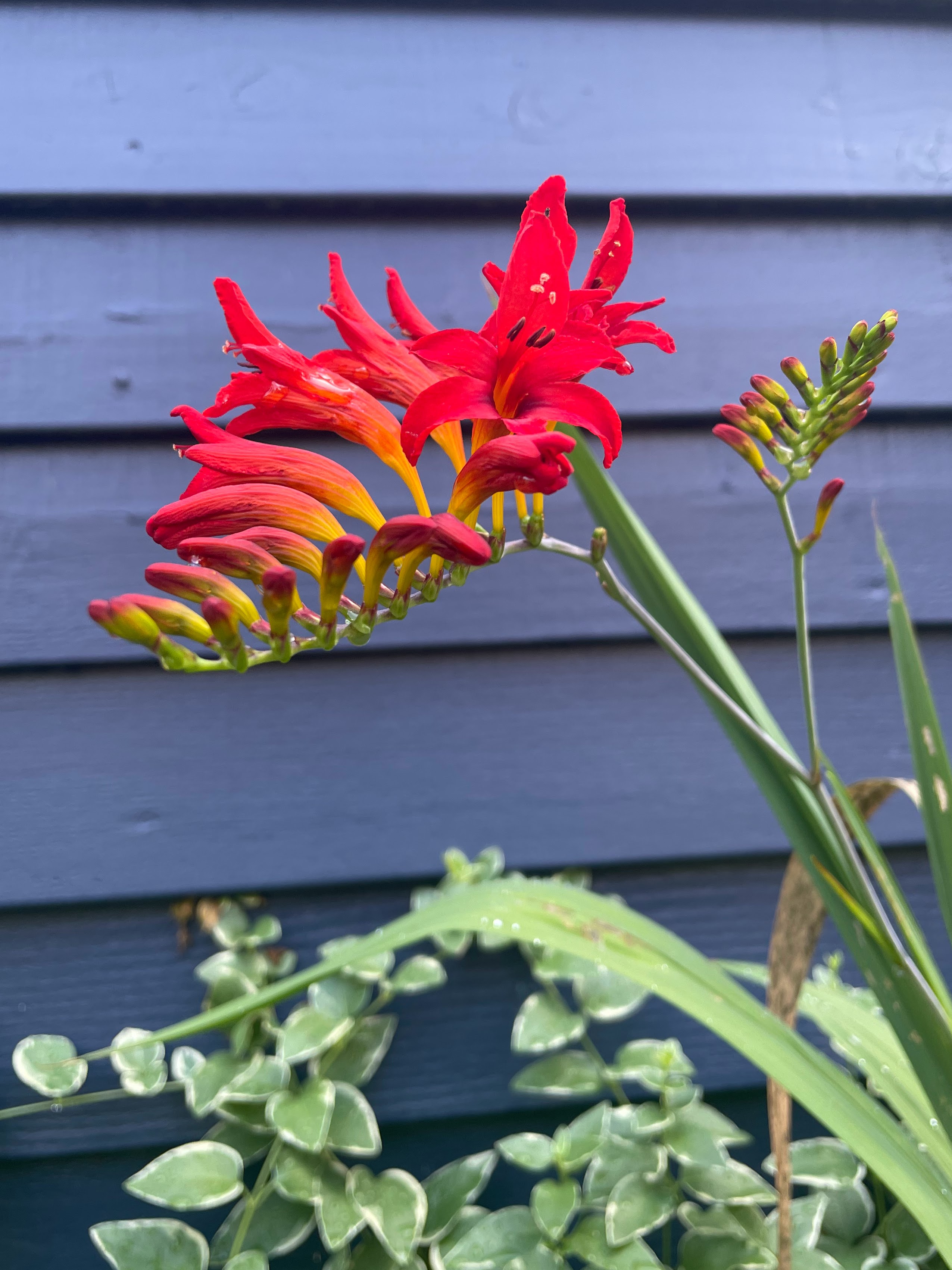
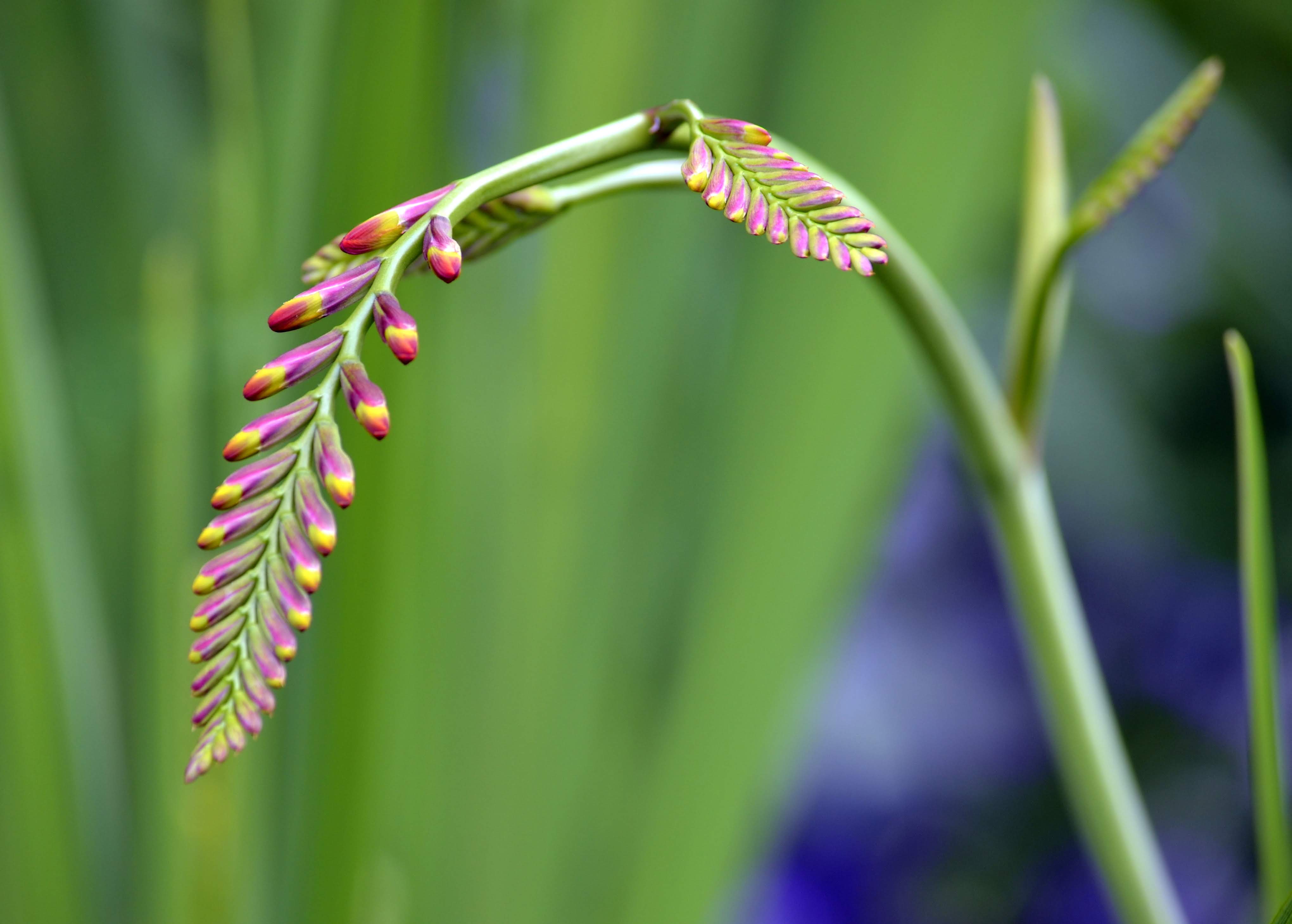
I suspect some difficult interpersonal dynamics led to the last few lines, so I won’t dwell on those. But I quite like the first two lines. They summarize my feelings about a beautiful flower in my garden, which I love when it’s in the right place and frown over when it pops up (again and again) in the wrong place(s): Crocosmia.

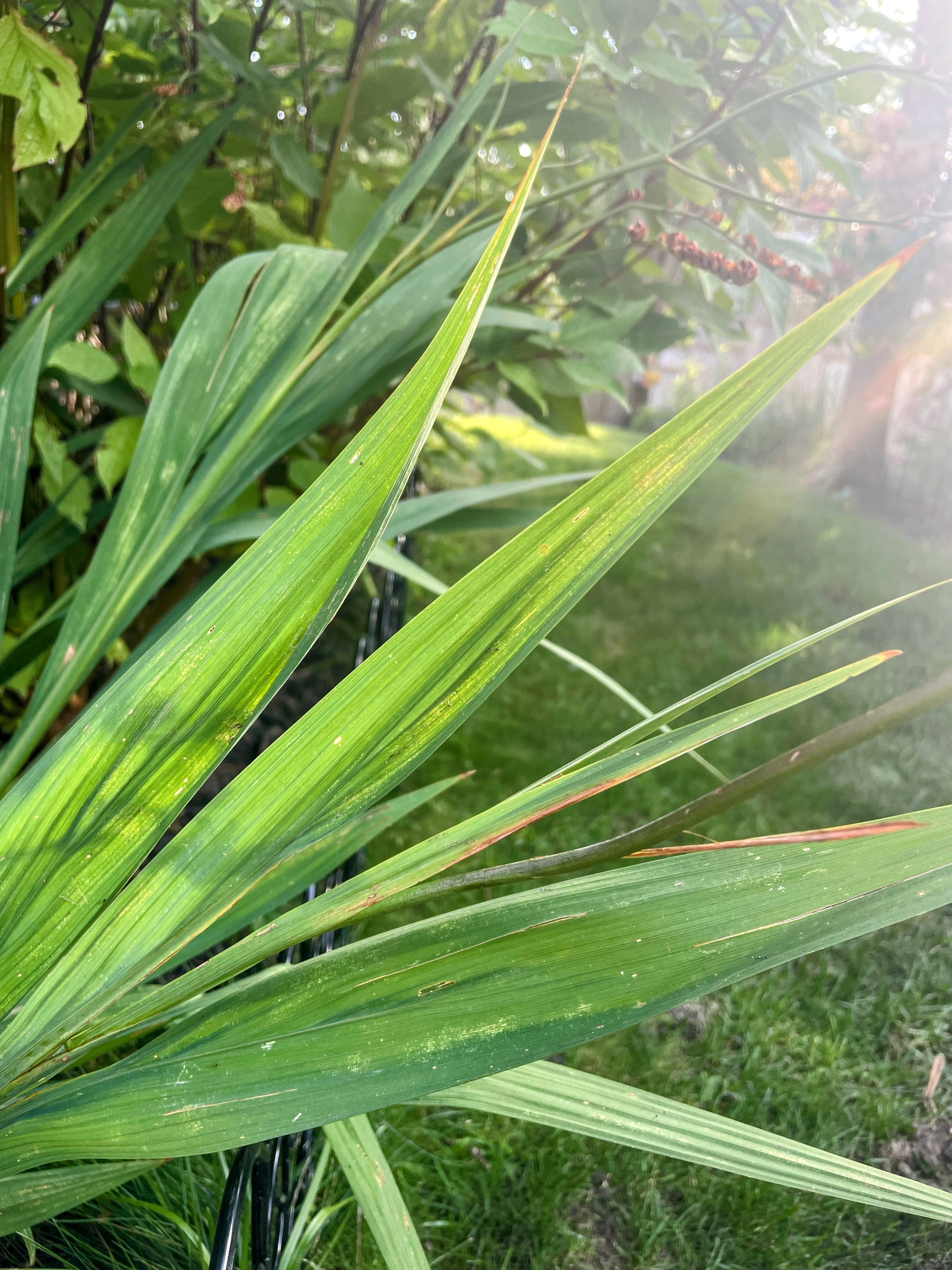
Crocosmia is a member of the Iris (Iridaceae) family, along with its gladiolus and crocus cousins. Plants in this family are perennial, and grow from bulbs, corms, or rhizomes. They have tall, upright foliage; Crocosmia leaves have been called “sword-like” and are easily spotted and admired in the garden.

The tubular, scarlet-red flowers are spectacular as well, and are wildly attractive to hummingbirds, who have been known to defend their Crocosmia patch against any and all interlopers. For hummingbirds, a Crocosmia is the proverbial Lady in Red.

So, what’s not to love? Crocosmia has great flowers, great leaves, and brings hummingbirds to the garden. How could it be a problem? Well, in the U.S. and other parts of the world, this Southern African native is considered an invasive species because of how well it grows, to the detriment of other plants. It really can grow almost anywhere; the ‘Lucifer’ cultivar (which has made itself a regular feature of my garden) is hardy to Zone 4. In the words of the California Invasive Plant Council:

“It prefers disturbed areas, including roadsides, coastal scrub, prairie and forests. Crocosmia is a superior competitor for water, light and nutrients, and it excludes native plants by growing in dense patches.”

I’ve seen mass plantings of Crocosmia, which can be stunning:

Intentional Crocosmia planting, Japanese Tea Garden, San Francisco

But where not controlled, Crocosmia could run riot. It is a determined grower whose corms multiply and multiply. You may think you’ve gotten them all, but you haven’t. In my own garden, no matter how often I have tried to transfer rogue Crocosmia from where I do not want it to grow, to where I do, it keeps cropping up in the old spots — and in new ones.

Crocosmia in yet another unplanned spot

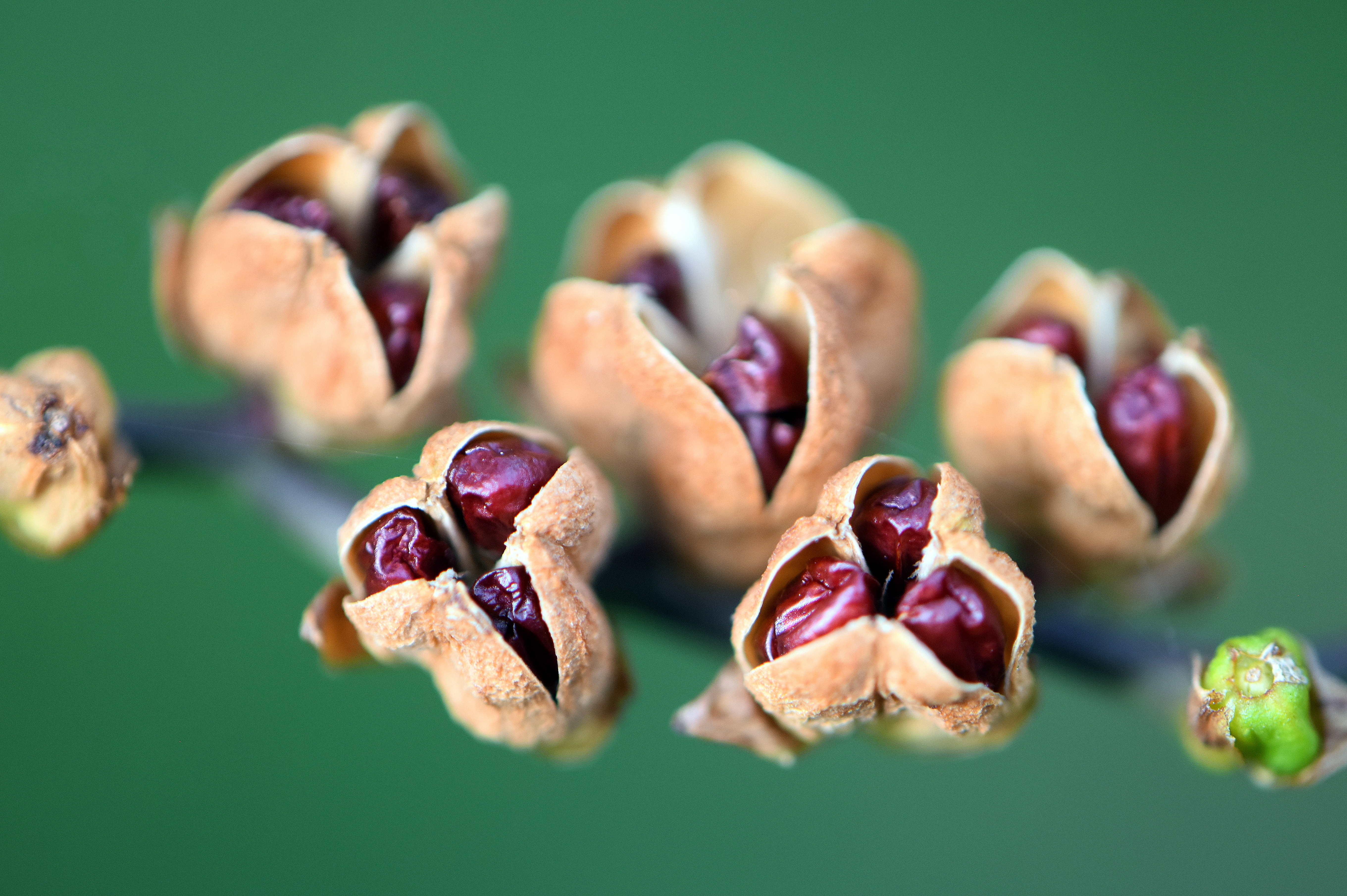
The reason I am finding it in new spots in my garden, is that — in addition to propagation by corms — Crocosmia can also grow from seed. I did not realize how sneaky and able Crocosmia was until now, so I naively let the seed pods develop and scatter, mostly because I did not perceive them as a threat. In my skirmishes with this flower (or weed?), it has outwitted me each time. I’ve been focused on battling corm-spreading Crocosmia, without realizing my garden was also being strafed by airborne seeds. Now I know I should have been cutting Crocosmia off at the pass, literally; I should have been cutting the flower stems at their base as soon as the flowers were spent. Instead, I have allowed the (admittedly beautiful) seed pods to develop, along with the mini paratroopers housed therein, just waiting to spread further red cheer throughout my garden. Clearly, I am no military strategist.

But… lesson learned for next year. I vow to be ruthless. Really.

Allium Update

20 May

A short while ago, I posted a photo from above of an Allium ‘Purple Sensation’ bud just before it was about to open. Here are side views of subsequent phases in the Allium lifecycle: opening, and fully open (ok, those might not actually be the technical terms).


Alliums look delicate, but pitted against squirrels, Alliums will usually win. Why? Because they are members of the onion/garlic family, and squirrels prefer slightly less aromatic bulbs for dinner. Hummingbirds and butterflies have more sophisticated palates, however, and love Alliums. It can’t get any better: a flower that deters pests but attracts welcome guests.

Adding to the Alliums’ charms is the fact that they 1) don’t take up much space and so can be tucked almost anywhere, 2) are long lasting, 3) are pretty hardy, and 4) are just pretty. In the language of flowers, the message Alliums convey is one of perfection and elegance. It’s hard to disagree with that.

Joseph Banks and the Bottlebrush Tree

10 Feb

During our wanderings around San Diego this past Christmas, we came across many striking trees with bright red, cylindrical flowers that looked like bottle brushes. I was delighted to see them, but they made me feel a bit homesick. Not for Maryland, which has been home for more than a decade now, but for Australia, where we lived for four wonderful years and where these trees are very popular.

They are Crimson Bottlebrushes (Callistemon citrinus)–a shrubby evergreen plant native to Australia that can grow to about 15 feet. It is a plant that loves warm climates with lots of sun, which explains why it is also well suited to Southern California. How it got to the United States, I don’t know, but Joseph Banks, an English naturalist/botanist, introduced it to England in the 18th century. Banks was a member of Captain James Cook’s voyage on the Endeavour (1768-1771), travelling to Madeira, Brazil, Tahiti, New Zealand, Australia, and what is now Indonesia. Banks later became an unofficial advisor to King George  III on the Royal Botanic Gardens at Kew, and ships returning to England from far and wide brought back plants for his collections. As a result, Kew Gardens became a pre-eminent botanical garden, introducing many of these plants to the rest of Europe.

As for the bottlebrush, it is greatly admired by humans and hummingbirds alike, as I discovered when walking up to the tree to take a photo. I realized at the very last second that a hummingbird was closing in on the flower I had targeted. Had I had my wits about me, I might have taken a better photo (see last photo below), but time and reflexes were not on my side.

Though I cannot grow bottlebrushes in Maryland, I have at least preserved a small but very fond memory of Australia in these photographs, by way of San Diego.