Tag Archives: birds

The Elusive ‘Kintzley’s Ghost’ Honeysuckle

12 Nov

I am lucky in that I have a neighbor who loves plants and gardening as much (if not more) than I do. She has a number of unusual plants in her garden, but one of my favorites is a vine I have never seen anywhere else. Nor had I ever heard of it before, either: a “Kintzley’s Ghost” honeysuckle (Lonicera reticulata). And doubly lucky for me, it grows against the fence between our two houses, so I get to see it in all its glory.
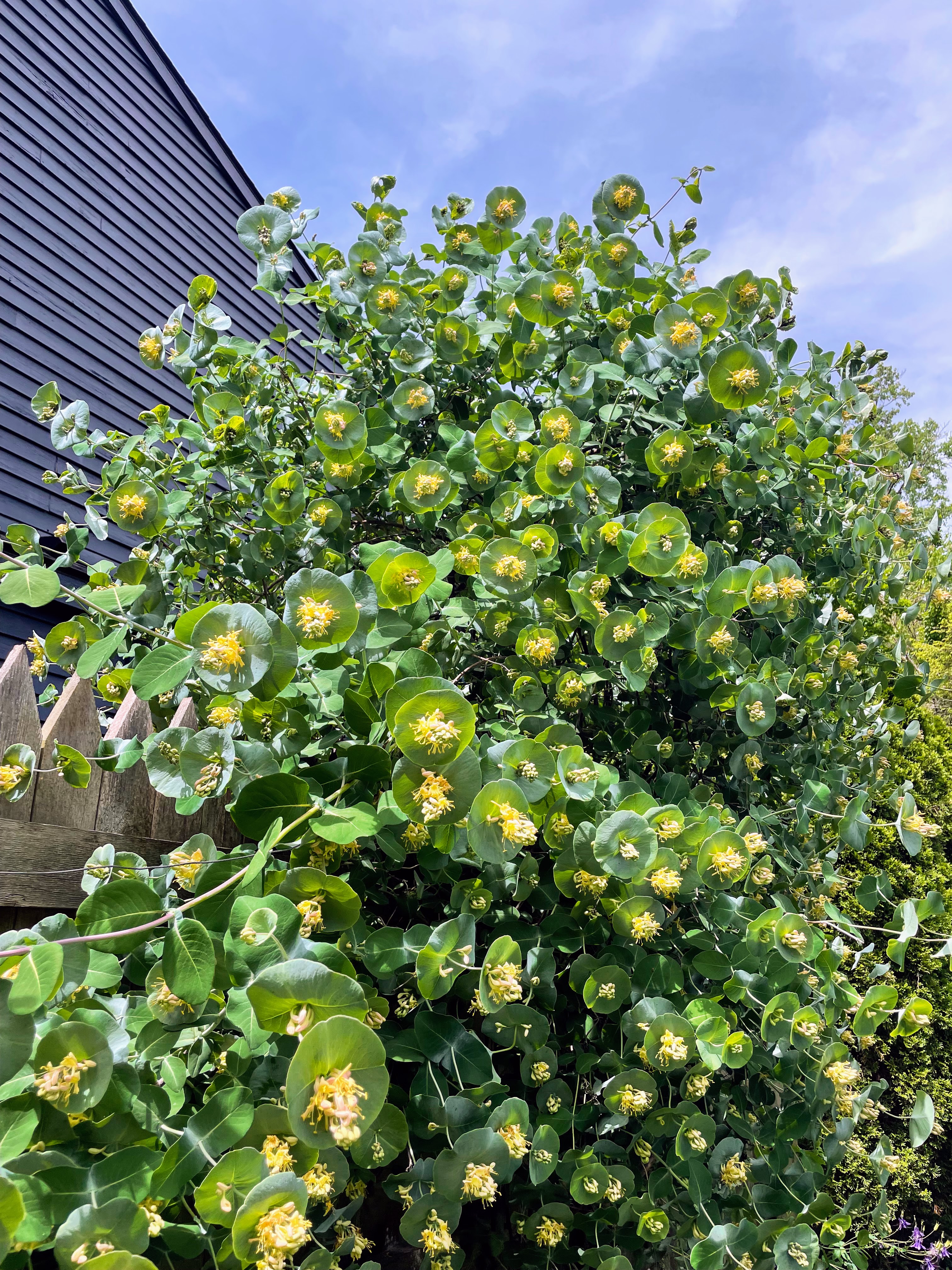
This photo was taken at the end of May. Its tubular yellow flowers are quite pretty and though they are slightly fragrant, they don’t have that full honeysuckle aroma. What sets “Kintzley’s Ghost” apart, though, are the circular bracts surrounding those flowers. Bracts are modified leaves; in this case, the circular bracts are different from the plant’s other, more usual-looking leaves. Since bracts often help play a reproductive role, perhaps these round bracts serve as a sort of bullseye, drawing pollinators’ attention to the center of the circles, where the flowers are, and later, drawing birds’ attention to where the berries have developed. Butterflies and hummingbirds are among the “Kintzley’s Ghost” many admirers, as are humans.

Not only are the bracts eye catching because of their shape, but also because they taken on a silvery-white cast that reminds some people of a Silver Dollar eucalyptus. Because of this coloration, the vine has been described as being “a galaxy of full moons” when it is in its silvery phase later in the season. Unfortunately I don’t have a photo of the full galaxy, just a couple moons (first photo below, taken in October). Eventually, the silvery-white green color gives way to yellow as winter approaches (second photo below).

There is a bit of mystery to the history of this heirloom native honeysuckle, which adds to its allure. It was propagated in the 1880s by William Kintzley, who worked in the greenhouses at Iowa State University, but it was never released commercially. Instead, Mr. Kintzley gave cuttings of the vine to family members. Over time, the plant dropped out of other people’s sight and minds. It was rediscovered in 2001, when someone from a local nursery in Fort Collins, Colorado saw the masses of yellow flowers and round bracts down a side street. As the story goes, he walked up to the house to ask about this very unusual honeysuckle vine and found himself speaking with the elderly grandson of William Kintzley.

The vine is now offered for sale, but can be hard to find. My neighbor was visiting a nursery in Wisconsin about five years ago, when she, too, was mesmerized by her first sight of a mature “Kintzley’s Ghost” vine growing up a barn at the nursery; they can get up to 12 feet high. She bought a small 8-inch clipping and brought it home; it clearly likes the mini ecosystem between our two houses, because it is now more than 8 feet tall.

In general, this honeysuckle variety is pretty happy-go-lucky. It will grow in almost any soil as long as it is relatively moist. And it is very cold tolerant; “Kintzley’s Ghost” is hardy to Zone 4 in the United States, which means it can tolerate temperatures as low as -30°F (-34.4°C). Since it is a vine, it needs some structural support such as a trellis, fence, or wall.

Should you be lucky enough to find one and to be able to grow it in your region, you will be forever grateful–as I am to my neighbor who shares it with me.

The Circle of Life: An Avian Point of View

30 Apr

I broke my ankle last Wednesday, but am on the mend. I was quite housebound the first couple days, and by the weekend had had enough. I slung my camera around my neck, picked up my crutches, and made it as far as the backyard. I had ordered Jon Young’s book What the Robin Knows and though it had not yet arrived, I was inspired to go outside, sit, prop my leg up, and observe the birds in our yard. Better than observing them from the sofa….

Of course, my hobbling around on crutches, dropping them, and banging them and my camera case against the picnic table greatly limited the avian activity at first, but after I settled down, the birds very slowly ventured back to inspect the bird feeders. The male cardinal was easy to spot, as was his mate; they maintained constant communication via “chip” calls, which made it easy to find them. Here is the male:

Male cardinal
Male and female cardinals remain paired for the entire season (and possibly for several seasons, or longer) and keep tabs on one another at all times. I have not yet seen our male cardinal feed his mate, which is common during the breeding season and is meant to show the male can be a good partner and father, but am hoping to have the chance. Does the female crave a certain kind of food during this time? I don’t know–but good on the male if he goes and gets it for her.

While I was outside, another flash of red caught my eye: a male House Finch. This photo isn’t the best, but that Finch was quite speedy:

Male House Finch
Like the Cardinal, the (male) House Finch gets its red coloring from the food it eats during the molting period (specifically from carotenoid pigments, mostly in fruits). In fact, males gravitate toward redder foods during this time. Why? Because the redder their feathers, the better–as far as the ladies are concerned. For female House Finches, there is a clear link between coloration and the male’s health and nutrition. Bright red plumage signals a male who can reproduce well, defend his territory, and be a good parent.  The male House Finch in the photo looks cut out for the job.

The last bird I saw before I went back in (ok, the last bird I saw that I was able to actually take a relatively non-blurry photo of) was a Robin, the subject of the aforementioned book.

Robin
I just started reading the book last night, and will undoubtedly learn a great deal about this copper-chested visitor to our yard. But already, I know that the Robin knows far more than I do when I’m outside. It can tell the difference between dogs, cats, and lunatics on crutches who aren’t fooling anyone with their cameras. And it can communicate with the other birds. When a song- and chatter-filled interlude abruptly transitions into instant and total silence by mutual agreement of all avian parties, something is up.

As it was earlier this evening. It has been raining torrentially, but even so, there was a lot of bird activity each time the rain let up. During one of those moments, all bird sound ceased and was immediately followed by several odd but alarming squeaks that had me wondering what possible kind of bird could be making them. I looked out an upstairs window and saw a large crow in the garden, pecking at a small, young rabbit laying prostrate on the wet earth. The rabbit had made the noise. The crow saw me at the window and flew away; but as I watched, the little rabbit shuddered several times and then was absolutely still. I grabbed a crutch, hobbled down the stairs, and went outside in a futile attempt to see if there was anything I could do, but in that short (-ish) amount of time, the crow had returned and claimed its prize. I think the heavy rain had forced the rabbit out of its burrow, with tragic results.

I was sorry for the rabbit and wanted to be mad at the crow, but it was doing what it had to do. At this time of year, it, too, has mouths to feed–big  and hungry ones–and so it will catch whatever it can to ensure the survival of the one brood it produces per season. Its booty can include the eggs and young of other birds– hence the total silence in our yard at the arrival of the crow. The alarm system worked well for the birds, but not for the rabbit. But that’s the circle of life.


A Bird’s-Eye View

4 Nov

We were very lucky in that we emerged relatively unscathed from Hurricane Sandy. Heartfelt thoughts to all those who are still coping with the aftermath, especially in Haiti, Jamaica, Cuba, New York, and New Jersey.

One small bright spot, at least in our area, is that after the rains came the birds. They were everywhere after the hurricane, flapping their wings, puffing up their feathers, and trying to dry out. But birds like water, so it was a cheerful exercise. As they hopped, skipped, and flew here and there looking for worms, berries, and seeds, they were an optimistic sight.

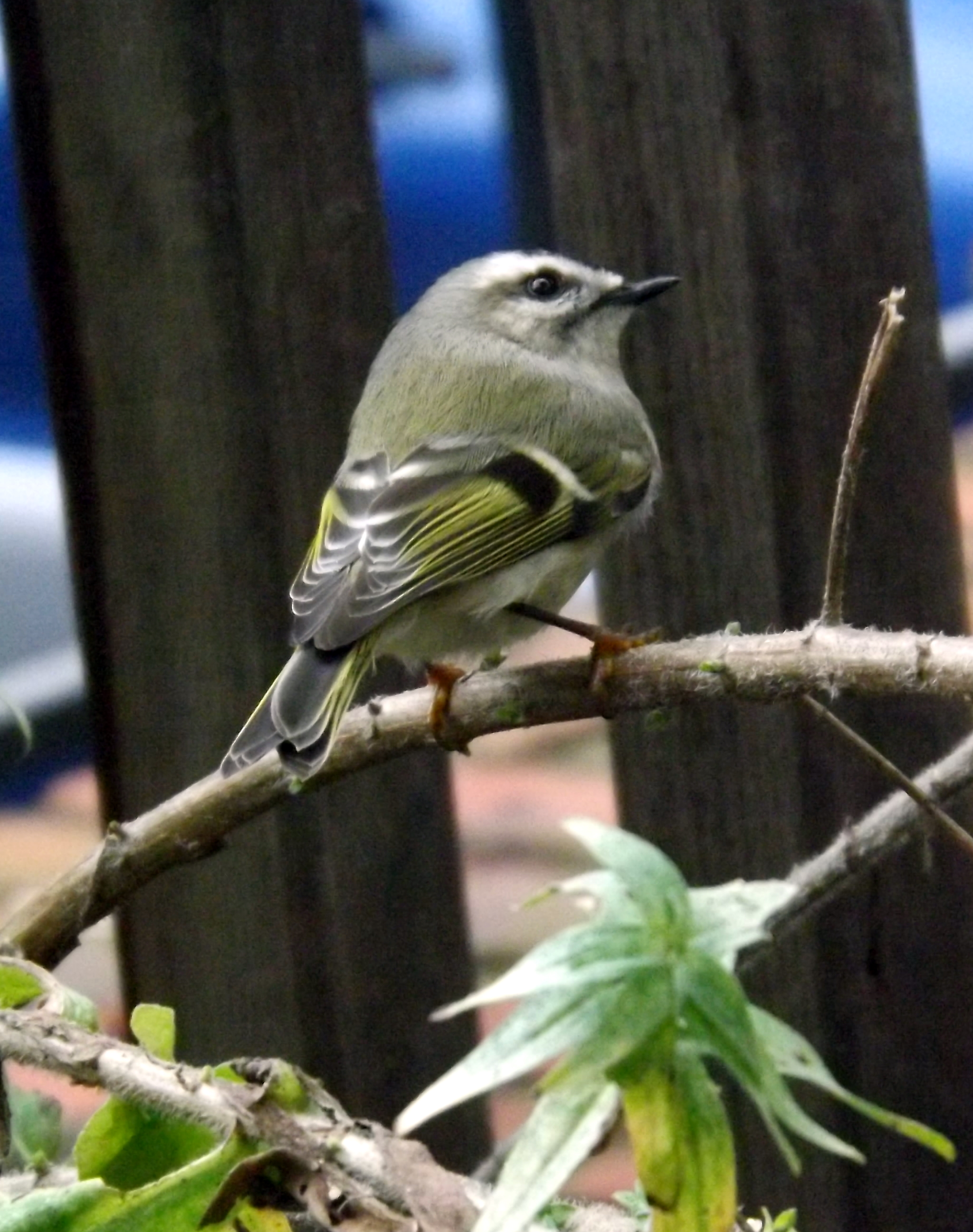
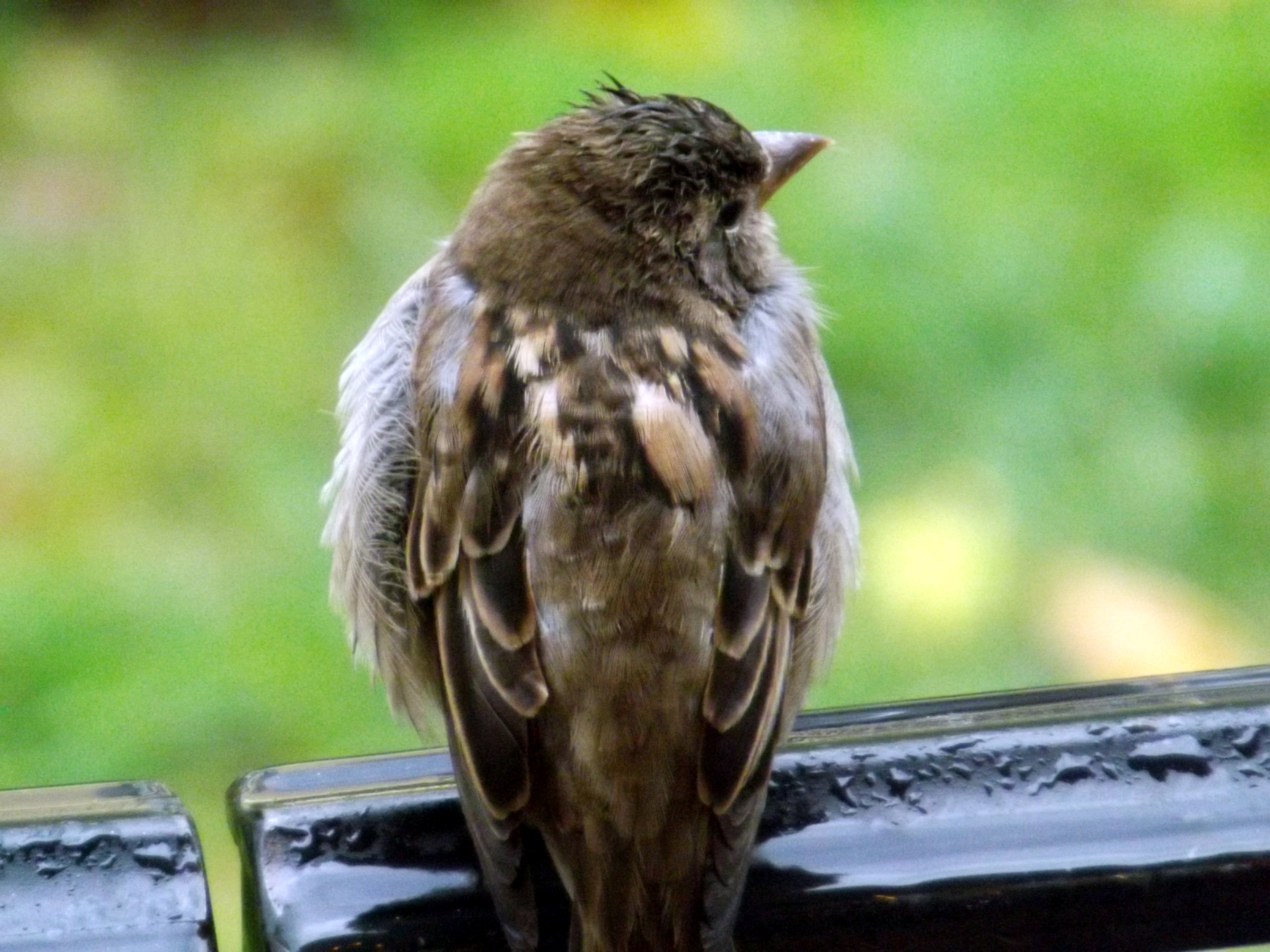
There were cardinals, finches, mourning doves, nuthatches, robins, sparrows, woodpeckers, and a tiny grey/yellow bird I hadn’t seen before: a Goldcrest, who hopped on shrubs to get the seeds that had fallen from the bird feeders above. There were other birds, too, whose names I do not yet know. I consider it a significant step that I can now recognize a sparrow well enough to deduce that it must be either a House Sparrow or Field Sparrow–beyond that, they are all brown/grey and fluffy to me. But known or unknown, the avian visitors to our yard are a joy to watch.

      
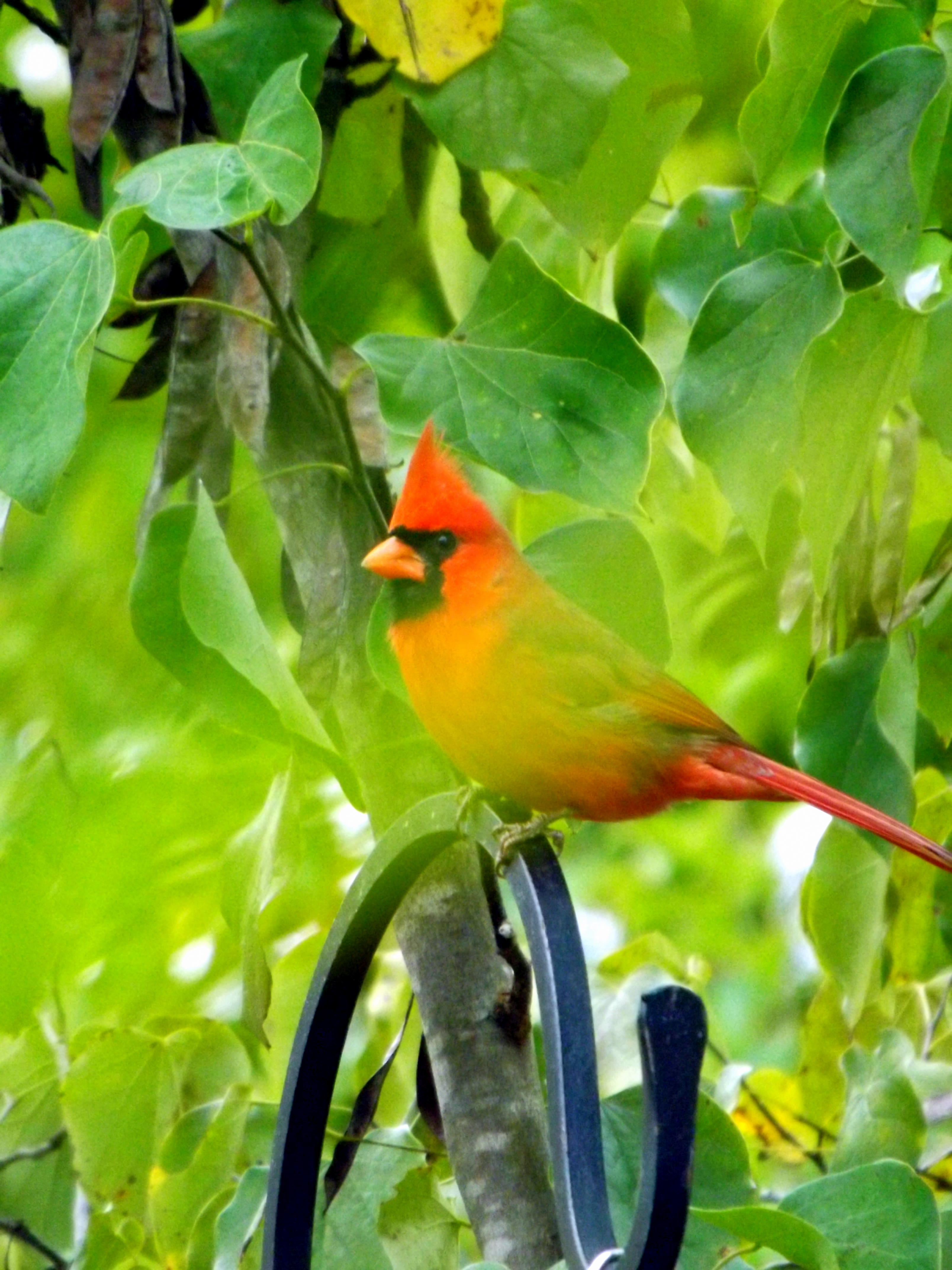
Female Cardinal                                               Male Cardinal

  
Goldcrest                                              Sparrow (House or…Field or…?)


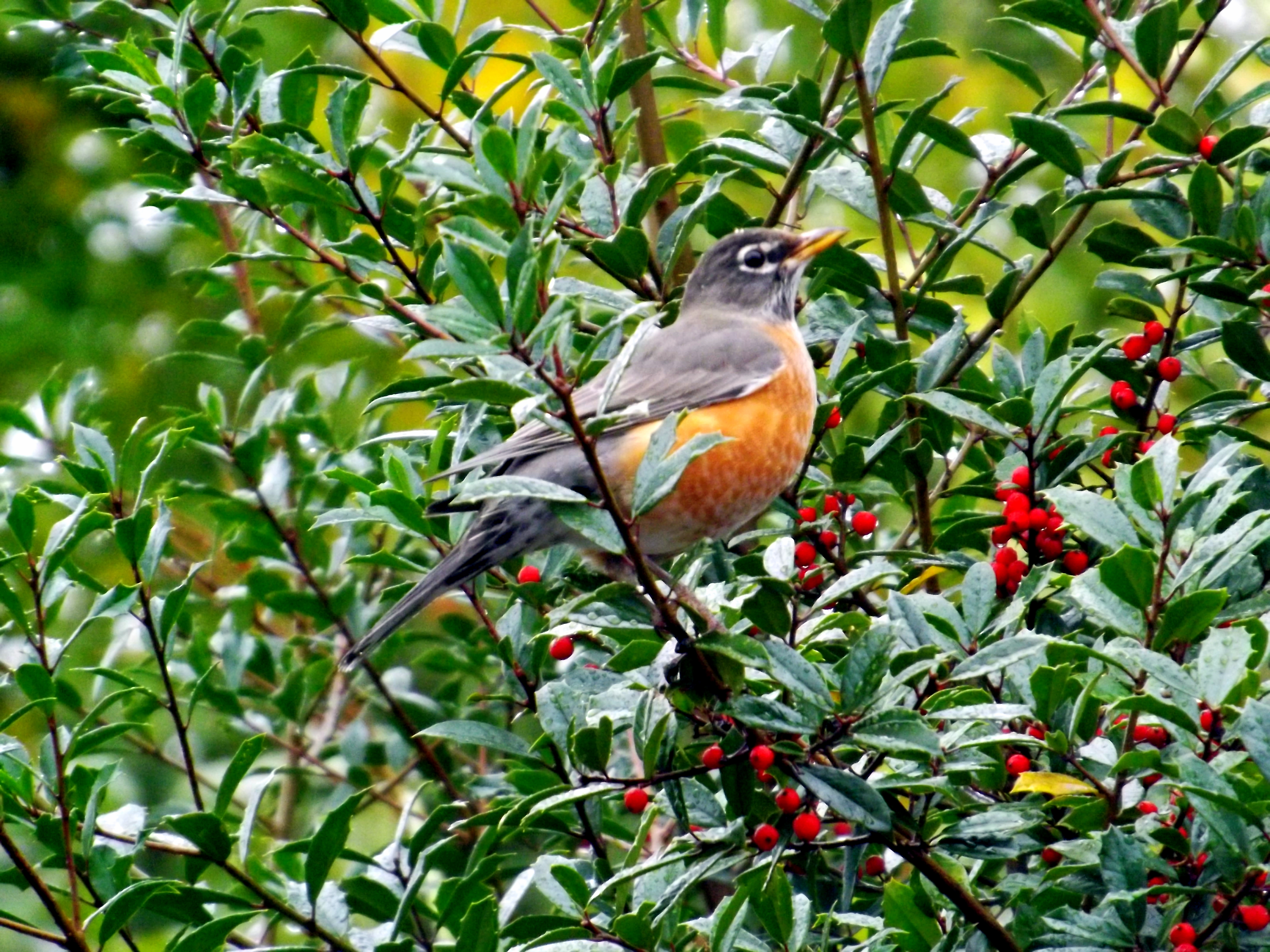
Robin

A Flock of Starlings

8 Oct

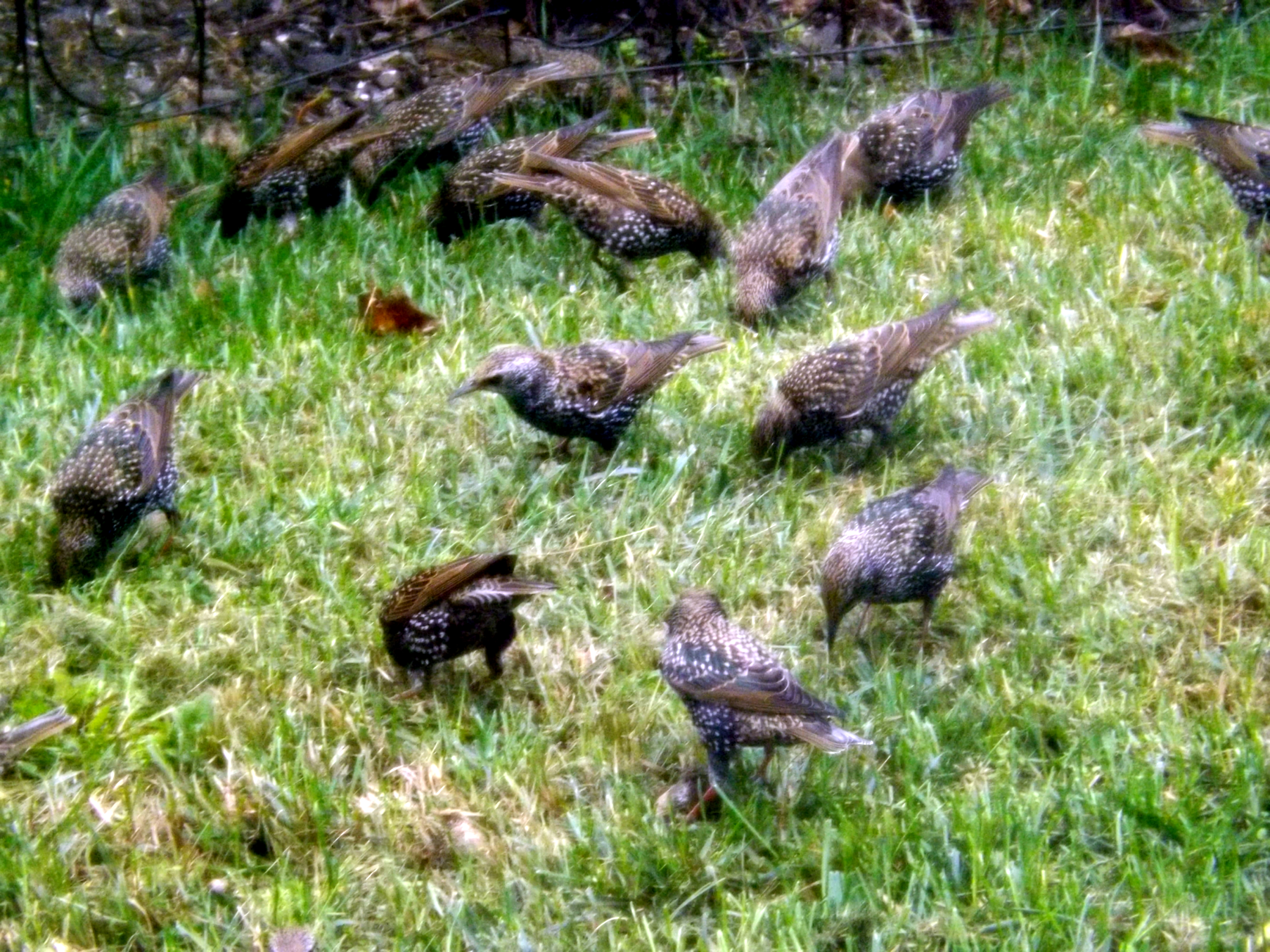
I was in the living room this afternoon when a spectacular dark wave passed by the window with a whooshing noise. I looked out and an enormous flock of birds was conducting an aerial ballet, swooping gracefully between our yard and our neighbors’, landing momentarily to search through the grass on each side for insects. They were a sight (and sound) to behold.

I grabbed my camera.  But I have a big problem when it comes to animal photography. Actually, I have two big problems: Schnauzer 1 and Schnauzer 2. As soon as they see me pick up the camera, they erupt in a cacophony of barking and make their way to the back door at full speed, sliding across the hardwood floors, scrambling frantically for purchase, and crashing into each other in a frenzy of anticipation. Why? Because somehow, they have come to associate the camera with good things to chase outside. I don’t know why–only a small fraction of the photos I take are of animals. But there you have it. All I have to do is pick up the camera, and the dogs will promptly bowl over anything in their wake–so desperate are they to go after my photographic prey.  This is a minor annoyance when I am planning to take a picture of salad indoors. When I actually do want to take a picture of animals outside, I have to resort to various levels of subterfuge.

But today, there was no time. I managed to get one not-so-great photo of the birds on our grass (through the window), but it fails to adequately capture the magnitude of the scene: the flock of black/brown birds completely covered our yard.

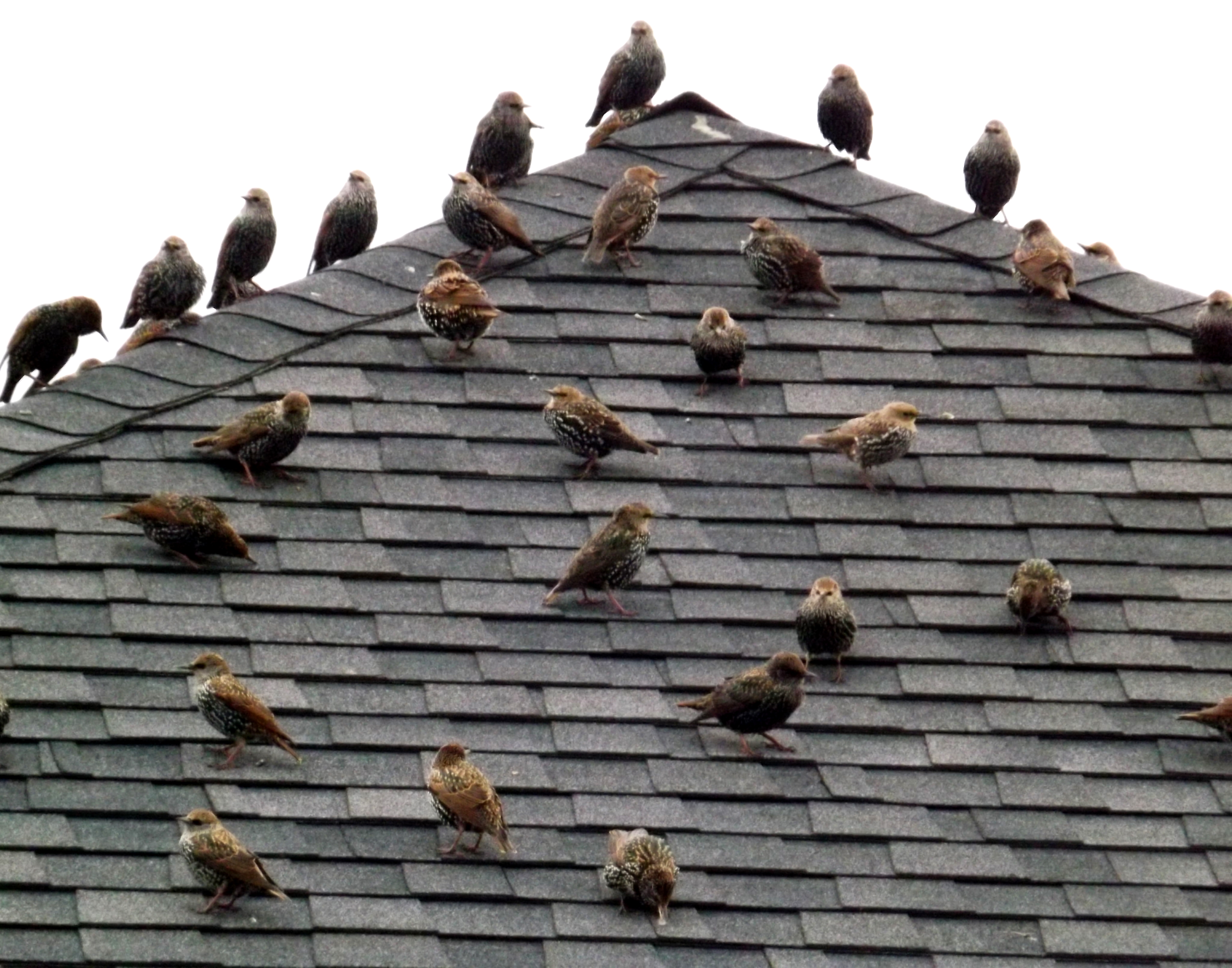
After a little investigating, I discovered the birds were Starlings, and they are beauty in motion. A Wired blog post, The Startling Science of a Starling Murmuration, features a must-see video and describes some of the physics behind the birds’ flight patterns.  I was watching the video when, lo and behold, the starlings returned, perching on my neighbors’ roof. This time, I stealthily snuck by the dogs and made it outside before their radars went off.  I managed to get a couple more photos of the birds before they again departed, leaving silence in their wake.

Nefarious Nuthatch?

15 Aug

The Monarch caterpillars are gone. In the end, there were three in total, one plumper than the others. I am hoping that the biggest one managed to make its way to another leaf under which to pupate. But the situation looks grim for the other two. Not wanting to name any culprits, I will simply say that most birds do not eat Monarch caterpillars because the caterpillars ingest toxins from the Butterfly Weed/milkweed leaves they eat, and as a result, the caterpillars taste terrible. Thus, smart birds only make that gastronomic mistake once.

But there is a bird that likes insects for another reason: to use them as mini brooms with which to sweep the entrance to its nest cavity. That bird is called a White-Breasted Nuthatch.

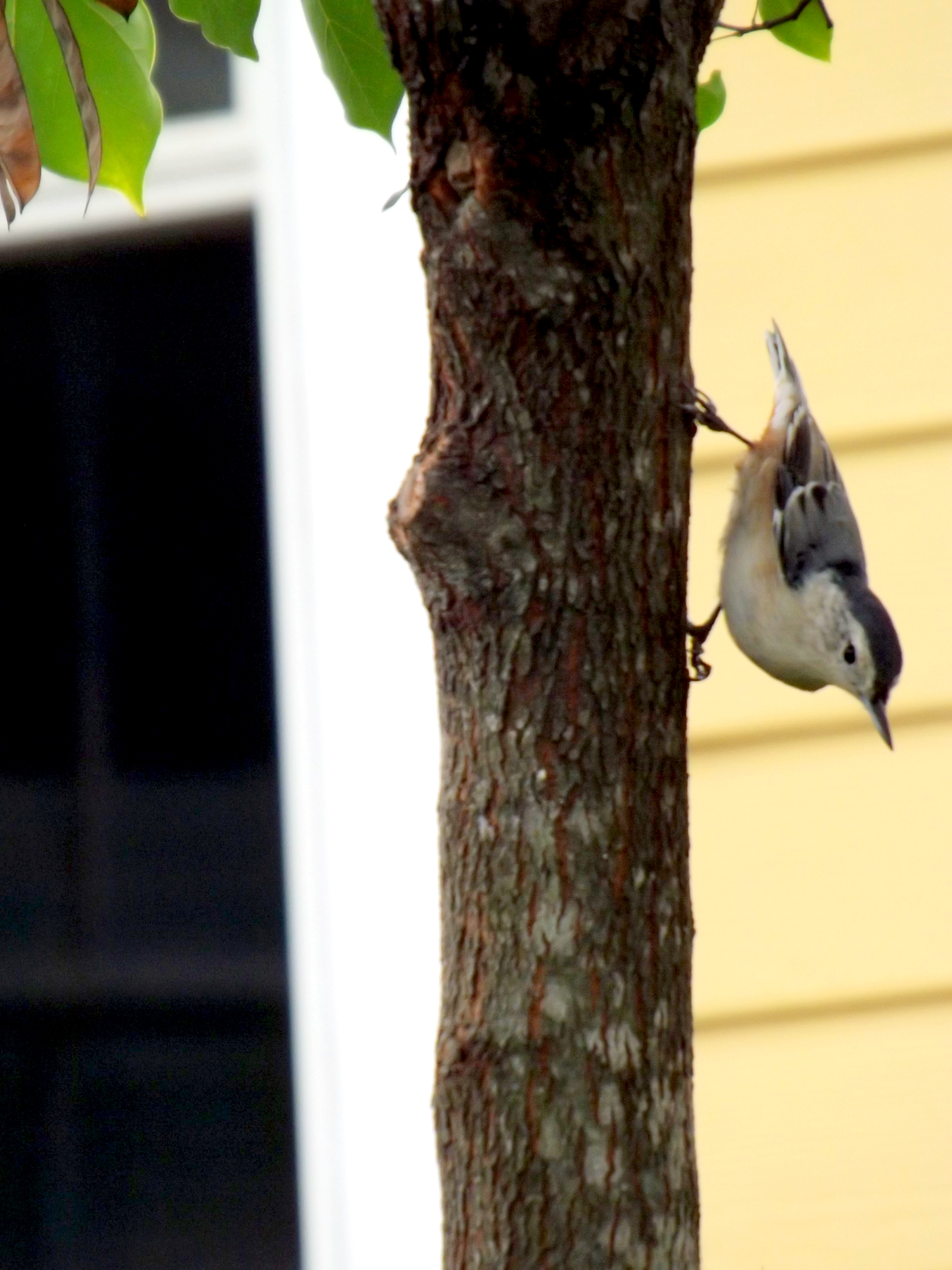
Among its other eccentricities, the Nuthatch likes to hang out on trees face down.

Now, I’m not pointing fingers, but in contemplating the loss of the caterpillars, I noticed a small bird that seemed immune to the forces of gravity on the tree trunk right above the Butterfly Weed  (previously home to the caterpillars). Furthermore, it remained immobile for long stretches of time, staring straight down at the Butterfly Weed in rapt concentration.The clues were piling up.

Appearance at the scene of the crime? Check. Motive? Check. Opportunity? Check.


Conclusion (based on total conjecture): having recently swept its nest with a couple Monarch caterpillars located very conveniently under the bird feeder and tree, the Nuthatch was so pleased with its efforts that it is now looking for a few more of those excellent brooms.

Lesson: Take the caterpillars indoor next year.